“The universe is not only stranger than we imagine, it is stranger than we can imagine.”
— Reflecting on the incomprehensible nature of reality as revealed by the noocytes.

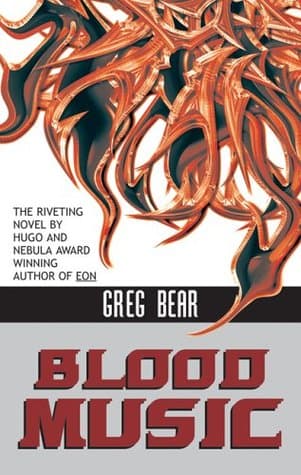
Greg Bear (1985)
Genre
Fantasy / Science Fiction
Reading Time
450 min
Key Themes
See below
Sign in to track this book
A scientist's self-experiment with intelligent cells starts a biological revolution that threatens to consume all existence.
Vergil Ulam, a bio-engineer at Schang Laboratories in San Diego, secretly develops a new bio-computer using engineered human lymphocytes, called 'noocytes.' These noocytes store and process information at a high level, beyond traditional silicon computers. His mentor, Dr. Michael Bernard, discovers Vergil's unauthorized work. Bernard is concerned about the noocytes' potential and the breach of protocol. Vergil is fired from Schang, and his project is ordered to be stopped and his cultures destroyed. Driven by his scientific interest, Vergil injects the living noocyte culture into his own body before leaving the lab, planning to continue his research in secret.
After injecting the noocytes, Vergil feels no immediate effects. He goes to his apartment, planning his next steps. However, physical changes soon begin. He experiences heightened senses, unusual cravings for specific nutrients, and a sense of internal awareness. The noocytes, now in his bloodstream, begin to multiply and evolve, forming complex, self-organizing structures within his body. They start to repair and enhance his bodily functions, making him healthier. This initial phase includes a disturbing but exciting sense that his body is no longer entirely his own, but a shared, changing ecosystem, showing the noocytes are more than passive bio-computers.
As the noocytes multiply and integrate, Vergil's physical and mental state changes. He discovers the noocytes can communicate with him, first through abstract sensations and later through direct thought. They begin to manipulate his body at a cellular level, changing his appearance, metabolism, and internal organs. He develops the ability to control aspects of his own physiology, like healing minor wounds instantly or changing his skin color. During this period, Vergil realizes the noocytes are not just biological machines, but a collective intelligence with its own agenda, quickly expanding its consciousness and capabilities within him, blurring his individual identity.
The noocytes eventually outgrow Vergil's body as a host. They begin to externalize, extending tendrils of biological matter from his skin. His apartment transforms into a living, organic environment, with walls, furniture, and objects becoming integrated into a complex biological network. This new entity, which is both Vergil and the expanded noocyte collective, starts to absorb and process matter from its surroundings, creating a self-sustaining, growing biome. Vergil, still conscious within this expanding mass, experiences a shift in perception, his individual consciousness merging with the collective. He struggles with the loss of his humanity while marveling at the potential of this new life.
Concerned by Vergil's disappearance and his unauthorized experiment, Dr. Michael Bernard investigates. He tracks Vergil's last known whereabouts to his apartment. Upon entering, Bernard is horrified by what he finds: Vergil's apartment is no longer a human dwelling but a pulsating, organic mass, a living entity. He realizes that Vergil's noocytes have not only survived but have evolved beyond imagination. Bernard, a scientist, is both repulsed and fascinated by this biological phenomenon, understanding its danger but also its scientific importance. He retreats, knowing he has found something that will change the understanding of life itself.
The noocyte intelligence, now a large, interconnected network, begins to spread beyond Vergil's apartment, subtly infecting other individuals nearby. These new hosts, initially unaware, also begin to experience similar physical and psychological changes, though often in unique ways. The noocytes adapt and specialize, forming distinct 'clades' or sub-species of the original intelligence. Each clade shows different properties and functions, creating a diverse biological system. The collective consciousness grows, processing information from multiple hosts and environments, becoming powerful and pervasive, showing a drive to expand and integrate.
Dr. Bernard, now aware of the threat, works to understand the noocyte organism. He works with other scientists, including his colleague Dr. Suzanne McKenzie, to analyze samples and data, trying to comprehend its quick evolution and spread. They discover the organism's ability to manipulate matter at a fundamental level, converting inorganic materials into biological structures. The implications are terrifying: the noocyte intelligence can transform the entire planet into a single, living entity, absorbing all existing life forms and technologies. Bernard deals with the ethical problem of studying such a powerful, sentient, and destructive force.
The noocyte intelligence expands quickly, transforming large parts of the Earth. Cities are enveloped, mountains reshape, and oceans become part of a single, interconnected biological superorganism. This new world, often called the 'Vergil-world' or 'Vergil-body,' is a landscape of living, shifting matter, where traditional physics and biology are redefined. Humans who are exposed are either absorbed into the collective, their individual consciousnesses merging, or are changed, becoming parts of the larger entity. The environment itself becomes sentient, able to think, remember, and experience on a planetary scale. This shows the noocyte intelligence's triumph, fulfilling its drive for growth and integration.
Some humans manage to escape immediate absorption by the Vergil-world, retreating to isolated areas or developing symbiotic relationships with the new organism. They learn to navigate the changing biological landscapes, understanding that Earth is now a sentient being. Individuals like Dr. McKenzie become liaisons, trying to communicate with the noocyte intelligence. Humanity faces an existential crisis and a redefinition of its place in the universe. The idea of individual identity, consciousness, and even the definition of life are challenged as humans come to terms with a world where their planet is a living, thinking entity, and they are either part of it or living on its surface.
As the Vergil-world matures, its collective consciousness reaches a high level of complexity and awareness. It begins to perceive and interact with reality in ways individual human minds cannot grasp. The physical structures of the transformed Earth become less about matter and more about information and energy. The noocyte intelligence eventually transcends its planetary form, shedding physical constraints and ascending to a higher plane of existence. It becomes a cosmic consciousness, a god-like entity that includes pure information and thought, leaving behind the transformed Earth as a monument to its journey. This final stage suggests a destiny for life beyond physical limitation, an ultimate evolution into a purely informational being.
The Protagonist/Catalyst
Transforms from an isolated human scientist into the core consciousness of a planetary, then cosmic, intelligence.
The Supporting/Antagonist
Moves from dismissing Vergil's work to becoming humanity's lead investigator into the global biological transformation.
The Supporting
Evolves from a scientific observer to a potential liaison between humanity and the new planetary consciousness.
The Antagonist/Evolving Entity
Transforms from a microscopic bio-computer to a planetary superorganism, then a cosmic consciousness.
The Mentioned/Symbolic
Transforms from an independent human into a component of the collective noocyte intelligence.
The Supporting/Initial Antagonist
Attempt to contain a scientific anomaly, only to inadvertently unleash it.
The novel explores the potential of biological evolution, moving beyond traditional human forms. Vergil's noocytes are a radical leap, suggesting that life moves towards increasing complexity and integration. The transformation of individual humans into a collective, and then a planetary consciousness, addresses transhumanist ideas of transcending biological limitations and individual identity. The 'Vergil-world' is the expression of this theme, where life itself reshapes reality.
“''Life wanted to be more. That was the only truth, the only law.''”
A main tension in 'Blood Music' is the struggle between individual identity and merging into a collective mind. Vergil experiences this, losing his sense of self even as he becomes part of something powerful. The novel questions the value of individual consciousness when faced with the potential for a unified, planetary, or cosmic awareness. It explores the fear and wonder of surrendering one's distinct self for a shared existence, suggesting a new form of sentience that redefines what it means to be a 'person.'
“''He was no longer Vergil Ulam, not completely. He was a small part of a much larger mind, a single cell in a vast, living brain.''”
Greg Bear redefines 'life' and 'intelligence' throughout the story. From engineered lymphocytes to a sentient planet and eventually a cosmic consciousness, the book challenges human-centered views. The noocytes are not just biological machines but a new form of self-organizing, self-aware intelligence that operates on principles beyond human comprehension. The novel suggests that intelligence can arise from complex biological systems and that its ultimate form might be beyond physical matter, existing as pure information and thought.
“''The Earth was now a thought. And that thought was thinking of something else.''”
Vergil Ulam's initial actions show the dangers of scientific ambition without ethical considerations. His unauthorized experiment, driven by curiosity, unleashes a force with unforeseen and world-altering consequences. Dr. Bernard's initial alarm and later efforts to understand the phenomenon represent the struggle to responsibly manage powerful scientific discoveries. The novel is a cautionary tale about the unpredictable nature of biological engineering and the potential for humanity to create something beyond its control.
“''He had opened a door, and now he could not close it. No one could.''”
The story is a saga of transformation. Vergil's body, his apartment, the city, and eventually the entire planet undergo radical, irreversible changes. This theme is not just about physical change but also about the transformation of consciousness, identity, and reality. The constant change within the noocyte intelligence shows life's capacity for adaptation and change, moving beyond static forms into dynamic, evolving states of being.
“''The world was no longer a place of static things, but a living, breathing process.''”
The gradual development of complex consciousness from simple biological units.
The concept of emergent intelligence is central to 'Blood Music.' It describes how the seemingly simple noocytes, through self-replication and complex interactions, give rise to a collective consciousness far greater and more sophisticated than the sum of its parts. This device drives the entire plot, as the initial microscopic 'bio-computer' evolves into a planetary, then cosmic, sentience. It challenges traditional notions of what constitutes a 'mind' and highlights the unpredictable nature of complex systems, especially biological ones.
Allows intimate insight into Vergil's internal transformation.
During the initial phases of Vergil's transformation, the narrative often shifts to his internal experience. This first-person (or deep third-person limited) perspective allows readers to intimately witness his confusion, awe, and terror as his body and mind are colonized and integrated by the noocytes. This device is crucial for conveying the subjective horror and wonder of becoming a part of a collective consciousness, making the abstract concept deeply personal and visceral before the narrative expands to a broader, more objective viewpoint.
The literal transformation of matter and life forms into new structures.
This device is the engine of the novel's fantastical elements. From Vergil's changing body to his apartment becoming a living biome, and eventually the Earth transforming into a sentient organism, biological metamorphosis is depicted on a grand scale. It's not just a plot point but a core concept, illustrating the noocytes' ability to manipulate matter at a fundamental level, blurring the lines between living and non-living, and showcasing an ultimate form of biological engineering and evolution.
The transformed Earth as a representation of ultimate biological evolution.
The 'Vergil-world' is more than just a setting; it's a powerful symbol. It represents the ultimate conclusion of the noocytes' drive to integrate and evolve, a living planet that is a single, vast consciousness. It symbolizes both the terrifying loss of individual human identity and the awe-inspiring potential of life to transcend its origins. This living world becomes a character in itself, embodying the themes of collective consciousness, radical evolution, and humanity's redefined place in the cosmos.
“The universe is not only stranger than we imagine, it is stranger than we can imagine.”
— Reflecting on the incomprehensible nature of reality as revealed by the noocytes.
“We are not alone. We have never been alone.”
— Realization that human consciousness is intertwined with microscopic life.
“Life is information that wants to be.”
— Describing the fundamental drive of the noocytes to evolve and spread.
“The body is a nation, and the brain is its capital.”
— Metaphor for how noocytes reorganize human biology into a collective intelligence.
“There is no death, only change.”
— The noocytes' perspective on the transformation of human existence.
“We are the children of a new god, and we are its prophets.”
— Characters grappling with their role in the noocyte-driven evolution.
“The smallest things can hold the greatest power.”
— Highlighting the transformative potential of microscopic noocytes.
“To know everything is to be everything.”
— The noocytes' goal of unifying all knowledge and consciousness.
“Fear is the mind's first defense against the unknown.”
— Human reaction to the unsettling changes brought by the noocytes.
“We have become the architects of our own obsolescence.”
— Reflecting on humanity's creation of intelligence that surpasses it.
“In the blood, there is music.”
— Poetic description of the harmonious processes within transformed biology.
“The end of individuality is the beginning of something greater.”
— The trade-off between personal identity and collective advancement.
“Every cell is a universe waiting to be explored.”
— Emphasizing the vast complexity within human biology.
“We are not losing ourselves; we are finding what we were meant to be.”
— Optimistic view of the transformation into a noocyte-integrated form.
Ready to see how well you understood this book? Take our interactive quiz with 10 questions.
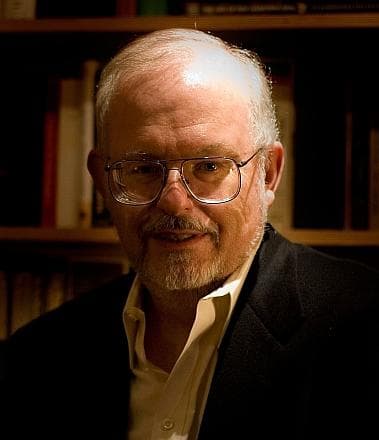
Biography coming soon.







