“The greatest gift of immortality is not endless life, but endless opportunity to learn and to love.”
— Lestat reflecting on his existence as a vampire.

Sign in to track this book
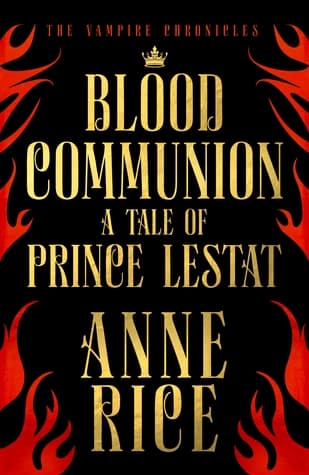
Prince Lestat, now ruler of the vampire world, recounts the epic saga of his ascension, the formation of the Blood Communion, and his desperate struggle against the ancient, destructive force of Rhoshamandes to unite the Children of the Universe.
Prince Lestat de Lioncourt, now established as the ruler of the vampire world, addresses the assembled ancient vampires and younger fledglings at his ancestral castle in France. He reflects on the recent events that led to his ascension, particularly the merging of the spirits of Amel and the Mother, and the establishment of the Blood Communion. He acknowledges the weight of his responsibility, the inherent dangers of their immortal existence, and the constant threat of rogue vampires. Lestat emphasizes his vision for a unified vampire society, one that seeks knowledge, peace, and a deeper understanding of their origins, rather than perpetual conflict and secrecy. He prepares to recount the specific events and trials that solidified his reign, particularly the confrontation with Rhoshamandes.
Lestat shifts his narrative to the immediate threat posed by Rhoshamandes, a primeval vampire known for his immense power and unpredictable, often violent, nature. Rhoshamandes is infamous for the inexplicable slaughter of Maharet, one of the most revered and ancient vampires, whose death sent shockwaves through the entire vampire community. This act of senseless violence, committed without apparent motive, makes Rhoshamandes a pariah and a formidable challenge to Lestat's vision of order. Lestat explains that Rhoshamandes refuses to acknowledge his authority or integrate into the burgeoning Blood Communion, instead choosing a path of isolation and potential destruction. The Prince recognizes that he must confront this ancient force to secure the future of all vampires.
To illustrate Rhoshamandes's volatile nature, Lestat recalls a past encounter in 18th-century St. Petersburg, at the court of Empress Catherine the Great. During this period, Lestat, still a relatively young vampire, was captivated by the human world's grandeur and intellectual ferment. He observed Rhoshamandes, who, even then, exuded an aura of ancient power and disinterest in human affairs. Rhoshamandes moved through society with an almost primal grace, his actions often inscrutable and his presence unsettling. This historical anecdote establishes Rhoshamandes's long-standing existence and his consistent detachment from both human and vampire societal norms, foreshadowing his resistance to Lestat's modern vision for the Children of the Universe.
Lestat, determined to avoid further bloodshed and integrate all ancient vampires into his new order, makes a direct overture to Rhoshamandes. He sends emissaries and attempts to communicate personally, extending an invitation to join the Blood Communion and find a place within the unified vampire family. Lestat appeals to Rhoshamandes's ancient wisdom and potential for positive influence, despite his past transgressions. He argues that isolation and unbridled violence threaten the very existence of their species, especially with the growing awareness of their presence among humans. However, Rhoshamandes remains elusive and unresponsive, his silence a defiant rejection of Lestat's authority and his vision for peace.
Lestat's narrative deepens as he revisits the bewildering murder of Maharet by Rhoshamandes. Maharet, one of the original Great Family vampires, held invaluable knowledge of their history and lineage. Her death was not only a profound loss but also a deeply unsettling act, as Rhoshamandes offered no explanation or remorse. Lestat, alongside other elder vampires like Marius and Armand, tirelessly sought to understand the motive behind this seemingly motiveless crime. Was it a challenge? A descent into madness? Or was there a hidden, darker purpose? The inability to comprehend Rhoshamandes's actions further solidifies his image as an unpredictable and dangerous force, making his integration into the Communion all the more precarious.
In his continuing efforts to understand and confront Rhoshamandes, Lestat's pursuit leads him to the green and mystical landscapes of Louisiana. This region, deeply intertwined with Lestat's own history as a vampire, with its fragrant magnolias and night jasmine, provides a stark contrast to the ancient European settings. Lestat finds himself drawn to the wild, untamed beauty of the bayou, believing that Rhoshamandes might seek refuge or solace in such a place, far from the structured world Lestat is trying to build. This journey is not just physical but also introspective, as Lestat grapples with the inherent wildness within all vampires, a force that Rhoshamandes embodies in its most extreme form.
Lestat, with the aid of his allies, eventually tracks Rhoshamandes to a remote, secluded location deep within the Louisiana wilds. The confrontation is not one of immediate physical violence, but rather a fierce battle of wills and words. Lestat, leveraging his newly acquired authority and his understanding of vampire history, attempts to reason with the ancient, unyielding Rhoshamandes. He demands an explanation for Maharet's death and insists that Rhoshamandes acknowledge the new order. Rhoshamandes, however, remains defiant, his ancient eyes holding a depth of sorrow and resentment that Lestat struggles to penetrate. The tension is palpable, as the fate of the nascent Blood Communion hangs in the balance.
During their intense standoff, Rhoshamandes, after much prodding and a deep, guttural sigh, begins to reveal the true, agonizing reasons behind his actions, particularly the murder of Maharet. His words are not of madness, but of profound, ancient despair and a warped sense of justice. He speaks of a betrayal, a loss so deep and personal that it festered over millennia, culminating in his desperate act against Maharet, whom he perceived as a symbol or a catalyst for his suffering. His revelation paints a picture of a vampire driven by unimaginable grief and a desire for retribution, though his logic remains inscrutable to Lestat and his allies. This insight complicates Lestat's understanding of his adversary.
Lestat, along with his inner circle, struggles to process Rhoshamandes's revelation. The depth of the ancient vampire's pain and the bizarre, almost mythological, nature of his grievance against Maharet challenge Lestat's rational approach to leadership. He realizes that some ancient vampires carry burdens and traumas that transcend modern understanding, making simple integration into the Blood Communion difficult, if not impossible. The incident forces Lestat to confront the inherent darkness and the potential for unimaginable suffering that comes with immortality, highlighting the fragile nature of his grand vision for vampire unity. He must find a way to reconcile the past with the future.
Faced with Rhoshamandes's profound and ancient suffering, Lestat must find a resolution that honors his vision for peace without compromising his authority or risking further violence. He cannot simply execute Rhoshamandes, as such an act would undermine the very principles of the Blood Communion. Instead, Lestat, through careful negotiation and a display of both power and empathy, proposes a unique form of integration or containment. The exact terms are delicate, designed to acknowledge Rhoshamandes's ancient status while ensuring he no longer poses a threat to the wider vampire community. This outcome solidifies Lestat's role as a leader capable of complex diplomacy, not just brute force.
Lestat's successful, albeit difficult, resolution with Rhoshamandes significantly strengthens his position as Prince of the vampires. By confronting and managing such a powerful and dangerous ancient without resorting to outright destruction, Lestat demonstrates his unique blend of charisma, strategic thinking, and underlying power. This event is a crucial test of his leadership, proving to both his allies and potential adversaries that he is capable of navigating the most complex challenges facing the vampire world. The Blood Communion gains further legitimacy, and Lestat's vision for a more unified and peaceful existence for the Children of the Universe begins to take firmer root, though the path ahead remains fraught with peril.
The Protagonist
Lestat transitions from a reluctant leader to a more confident and strategic ruler, learning to balance his ideals with the harsh realities of ancient vampire politics and power.
The Antagonist
Rhoshamandes remains largely static in his ancient grief, but his interactions with Lestat force him to articulate the depths of his suffering, offering a glimpse into the motivations of an ancient, broken being.
The Mentioned
Deceased before the main narrative, her past influence and tragic death serve as a foundational plot point.
The Supporting
Marius continues his role as a wise elder, supporting Lestat's leadership and offering historical context to current events.
The Supporting
Armand maintains his role as a loyal supporter, his emotional depth providing a contrast to the more pragmatic or ancient perspectives.
The Mentioned
Amel's arc is largely completed before the main narrative, having been integrated into the Mother and then Lestat, now serving as the unifying force of the Blood Communion.
The Mentioned
Her physical arc concluded in previous books, but her spiritual essence continues through Lestat, influencing the Blood Communion.
Lestat's ascension to Prince is not a joyous triumph but a heavy responsibility. He grapples with the immense challenge of uniting a disparate, ancient species prone to isolation and violence. His vision for the Blood Communion is constantly tested by rogue elements like Rhoshamandes, forcing him to balance idealism with pragmatism. The theme explores the complexities of governance, the difficulty of forging consensus among beings with millennia of individual history, and the personal cost of striving for peace and order.
“To be Prince is to carry the weight of every blood-bound soul, to be the shepherd of both the righteous and the damned, and to pray for wisdom enough to know the difference.”
Rhoshamandes embodies the profound and often inexplicable suffering that can accumulate over millennia of immortal existence. His actions, particularly Maharet's murder, initially appear senseless, but are later revealed to stem from an ancient, deeply personal grievance. This theme explores how ancient pain can fester, distorting perceptions of justice and leading to acts incomprehensible to those with shorter lifespans. It challenges Lestat and the reader to consider the limits of empathy and understanding when confronted with a suffering so vast and old.
“Some wounds are not meant to heal, Prince. Some betrayals are carved so deep that they become the very marrow of one's being.”
Throughout the narrative, vampires, both ancient and young, grapple with their place in the universe. Lestat's creation of the Blood Communion is a direct attempt to provide a sense of belonging and a collective identity for a species often defined by its isolation and predatory nature. The struggle to integrate Rhoshamandes highlights the inherent difficulty in forging a shared identity when individual histories are so vastly different and often scarred by profound trauma. The theme explores the universal need for connection, even among the immortal, and the ongoing quest to define what it means to be a vampire in a changing world.
“We are a tribe, yes, but a tribe scattered across the ages, each bearing a unique, often solitary, history. To truly belong is the deepest hunger of all.”
Lestat's interactions with Rhoshamandes are a masterclass in diplomatic maneuvering, even when dealing with an ancient, violent force. Instead of resorting to immediate destruction, Lestat attempts to understand, negotiate, and integrate. This theme highlights the idea that true leadership involves more than just brute strength; it requires intelligence, empathy, and the ability to navigate complex political landscapes. The successful, albeit precarious, resolution with Rhoshamandes shows Lestat's evolving understanding of how to wield his power not just through force, but through persuasion and strategic compromise, aiming for lasting peace over temporary victory.
“A true Prince does not merely command; he listens, he understands, and only then does he make his judgment, for the threads of eternity are too delicate to be severed without thought.”
The entire story is framed as Lestat recounting events to his vampire court.
This device immerses the reader directly into Lestat's perspective, allowing for intimate access to his thoughts, feelings, and philosophical musings. By presenting the narrative as an address to the Blood Communion, it imbues the story with a sense of urgency and importance, as Lestat is justifying his actions and solidifying his leadership. It also allows for subjective interpretation of events, colored by Lestat's charisma and biases, while providing a clear voice and tone that is characteristic of the Vampire Chronicles.
Lestat frequently delves into past events to contextualize current conflicts.
Lestat's narrative is punctuated by flashbacks to earlier periods, such as his encounter with Rhoshamandes in 18th-century St. Petersburg. This device serves to build a rich historical tapestry, illustrating the deep roots of current conflicts and the long-standing nature of ancient vampiric personalities. It provides crucial background information on characters like Rhoshamandes and Maharet, showcasing their longevity and the profound impact of their past actions on the present. It also emphasizes the vast scope of vampire history and the weight of tradition that Lestat must contend with.
A shared consciousness and literal bond among vampires, centered on Lestat.
The Blood Communion is not just a political alliance but a metaphysical reality, a shared consciousness and literal blood bond among all vampires, stemming from the merged spirit of Amel and the Mother now residing within Lestat. This device serves as the central pillar of Lestat's new world order, providing a tangible connection that theoretically transcends individual feuds. It represents both a source of unity and a potential vulnerability, as a threat to Lestat could affect all. It also provides Lestat with a unique form of authority, making him the heart of the vampire species.
Rhoshamandes's reasons for Maharet's murder remain mysterious for much of the story.
This device creates significant suspense and drives much of the plot. The initial lack of a clear motive for Maharet's murder by Rhoshamandes positions him as an incomprehensible and terrifying threat. It forces Lestat and the other characters to grapple with the irrational and the unknown, highlighting the limits of their understanding of ancient vampires. When the motive is eventually revealed, it is complex and rooted in ancient, almost mythological suffering, serving to deepen the character of Rhoshamandes and challenge Lestat's assumptions about justice and forgiveness.
“The greatest gift of immortality is not endless life, but endless opportunity to learn and to love.”
— Lestat reflecting on his existence as a vampire.
“There is a communion of blood, a shared history of the night, that binds us more than any ritual.”
— Lestat pondering the connection between vampires.
“To truly live, one must embrace the darkness as well as the light, for both are part of the eternal dance.”
— A philosophical musing on the nature of existence.
“Memory is a vast, echoing chamber, and sometimes the ghosts within are more real than the living.”
— Lestat contemplating his long past and lost loved ones.
“The world is a symphony of suffering and joy, and we, the Children of the Millennia, are its most attuned listeners.”
— A poetic description of the vampires' heightened senses and long perspective.
“Power is a seductive mistress, whispering promises of control, but true strength lies in humility and connection.”
— Lestat's evolving understanding of leadership and influence.
“Every sunrise is a reminder of what we are denied, and every moonrise a celebration of what we have become.”
— A reflection on the vampire's nocturnal existence.
“The greatest battles are not fought with fangs and claws, but within the confines of one's own immortal soul.”
— Lestat's internal struggles and moral dilemmas.
“We are the guardians of history, walking archives of human folly and triumph.”
— Vampires' role as observers and recorders of human civilization.
“To love a mortal is to embrace a fleeting beauty, a delicate flame destined to gutter out in the wind.”
— A vampire's perspective on the brevity of mortal life and love.
“The thirst is an ancient song, always humming beneath the surface, a constant companion in our endless journey.”
— Describing the inherent hunger of a vampire.
“Sometimes the greatest kindness is to simply listen, to bear witness to another's pain without judgment.”
— Lestat interacting with other vampires and mortals.
“The past is never truly gone; it merely sleeps, waiting for the right moment to awaken and reclaim its hold.”
— Reflecting on the enduring influence of historical events and relationships.
“There are secrets in the blood, echoes of those who came before, a legacy passed down through eternity.”
— Exploring the mystical and hereditary aspects of vampirism.
Ready to see how well you understood this book? Take our interactive quiz with 10 questions.

Anne Rice was an American author of gothic fiction, erotic literature, and Christian literature. She was best known for her series of novels The Vampire Chronicles. The first book became the subject of a film adaptation—Interview with the Vampire (1994).







