“I am not a monster. I am a werewolf.”
— Vivian's internal struggle with her identity as a werewolf in a human world.

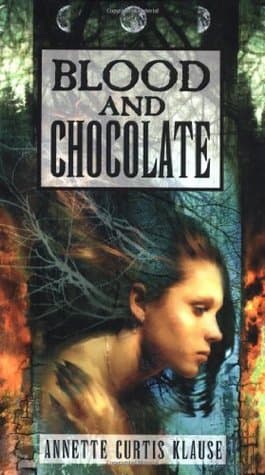
Annette Curtis Klause (1997)
Genre
Fantasy / Young Adult / Romance
Reading Time
240 min
Key Themes
See below
Sign in to track this book
Torn between the primal call of her werewolf pack and the tender pull of a human boy, Vivian Gandillon must navigate a world where the scent of blood and the sweetness of chocolate both define her yearning for belonging.
Vivian Gandillon, a sixteen-year-old werewolf, lives with her mother, older brother Rafe, and younger twin siblings, Esme and Gabriel, in a new suburban Maryland town. Her father, the former pack leader, died a year ago, leaving the pack without a clear alpha and causing tension, especially between Rafe and other male wolves like Ulf. Vivian struggles with her grief and the pack's disarray, wanting normalcy despite her supernatural nature. The pack keeps strict secrecy, living among humans while hiding their identities. Vivian often shifts in the woods, finding solace and freedom as a wolf, but also feeling the weight of her dual existence.
At a local arcade, Vivian meets Aiden, a human boy who is kind, artistic, and gentle. They are drawn to each other, and Vivian finds him fascinating. Aiden is intrigued by Vivian's mysterious nature and her love for the woods. Their growing relationship quickly causes internal conflict for Vivian. Her pack's rules forbid relationships with humans, seeing them as threats. Despite the dangers and the pack's disapproval, Vivian continues to meet Aiden, enjoying his company and the escape he offers from her pack's politics and her grief.
Ulf, a strong and aggressive male wolf in the pack, intends to mate with Vivian. He often tries to assert his dominance and force himself on her. Vivian, still mourning her father and resistant to control, rejects his advances. Her mother, Astrid, pressures Vivian to accept Ulf, believing it would bring stability to the pack and secure their family's position. This pressure, along with Rafe's own attempts to lead and control Vivian, makes Vivian feel trapped and resentful of her pack's expectations and traditions.
As Vivian and Aiden spend more time together, Aiden notices inconsistencies in Vivian's behavior. She often disappears mysteriously, is very agile, and has an unusual connection to the local woods. Aiden, an artist interested in folklore, starts researching local werewolf legends. He does not directly suspect Vivian but becomes curious about strange events in the area and Vivian's evasiveness. Vivian feels torn, wanting to confide in Aiden but fearing his reaction and severe consequences from her pack if she reveals her true nature.
A local human girl is found murdered in the woods, her body dismembered. The pack panics, knowing such a violent act could expose them. Rafe, the acting leader, gathers the pack, stressing the need for discretion and warning against any further contact with humans. Vivian is horrified by the murder, at first suspecting a rogue wolf from her own pack, possibly Ulf, or another unknown entity. The incident worsens the strained relations between the pack and humans, making Vivian's secret relationship with Aiden even more dangerous.
Aiden, following Vivian one night, sees her shift into her wolf form. He is terrified but also fascinated. Later, he confronts her, demanding an explanation. Vivian, realizing she cannot hide anymore, confesses her true nature. Aiden, despite his fear, is captivated by the reality of werewolves and is surprisingly accepting, seeing her dual nature as a magical part of her identity. This revelation deepens their bond but also puts Aiden in danger, as the pack would never tolerate a human knowing their secret, let alone being romantically involved with one of their own.
Another human victim is found, a young boy. The pack is in chaos, fearing a witch hunt. Vivian, with Aiden's help, investigates, suspecting the killer is one of their own. Clues point to her brother, Rafe, who has been increasingly erratic and violent. Vivian confronts Rafe, who, driven by a twisted sense of protecting the pack and asserting his leadership, admits to the murders. He believes that by eliminating humans who stray too close, he can maintain the pack's secrecy and dominance, and he sees Vivian's relationship with Aiden as a betrayal.
Vivian realizes Rafe intends to kill Aiden to 'cleanse' the pack and remove threats to their secrecy. She decides to protect Aiden, even if it means betraying her pack. She helps Aiden escape immediate danger. The pack, led by Rafe and Ulf, hunts them through the woods. Vivian, as a wolf, uses her knowledge of the territory to evade her pursuers, trying to get Aiden to safety. This chase forces Vivian to fully use her wolf instincts while fighting to protect the human she loves, further cementing her divided loyalties.
The pursuit ends in a violent confrontation. Vivian, in wolf form, faces Rafe and Ulf. She fights fiercely, not just to protect Aiden, but to assert her own will and challenge her pack's oppressive traditions. She rejects Ulf's forced advances and Rafe's violent leadership. During the struggle, Vivian is badly injured, but her determination and love for Aiden give her strength. Aiden, though human, tries to help her, proving his loyalty and courage. The pack sees Vivian's strength and defiance, forcing them to reconsider their rigid beliefs.
In a final battle, Vivian, severely wounded, defeats both Rafe and Ulf, becoming the rightful alpha of the pack. She presents a new vision for their future, one that acknowledges the changing world and the possibility of coexistence, rather than strict isolation. Aiden, having witnessed the entire ordeal and Vivian's transformation, stays by her side, proving his love and acceptance. The pack, though at first resistant, begins to accept Vivian's leadership and her bond with Aiden. Vivian, now the alpha, integrates Aiden into her life, creating a path where love crosses the boundaries of blood and species, embracing her dual identity as both human and wolf.
The Protagonist
Vivian evolves from a grieving, conflicted teenager into a powerful, self-assured alpha who embraces her dual nature and challenges pack traditions.
The Supporting
Aiden transforms from an ordinary human boy into a courageous and understanding partner, accepting the supernatural world.
The Antagonist
Rafe descends further into violence and paranoia, ultimately being defeated by Vivian.
The Antagonist
Ulf remains a static, aggressive force, ultimately being overcome by Vivian's strength.
The Supporting
Astrid initially pressures Vivian but eventually comes to accept Vivian's leadership and choices, albeit reluctantly.
The Supporting
They remain children, serving as symbols of the pack's future.
The Supporting
Klaus slowly shifts his allegiance and respect towards Vivian as she demonstrates her leadership qualities.
Vivian struggles with her identity as both human and wolf. She feels disconnected from both worlds, wanting normalcy while embracing the freedom of her wolf form. Her journey involves accepting her true nature, not as a choice between human or beast, but as an integration of both. This theme is central as Vivian learns to be an alpha who can bridge the gap between two worlds, defining her own unique identity. Her choice to love Aiden, a human, is an act of self-definition, rejecting the pack's rigid categories.
“What am I? she thought. Human? Wolf? Neither. Both. I am what I am.”
Vivian often feels like an outsider. She does not fully fit into the human world due to her secret, nor does she feel completely at home in her pack, which often feels old-fashioned and oppressive. The pack itself lives in self-imposed exclusion from human society, leading to paranoia and violence. Vivian's desire for belonging drives much of her conflict, as she seeks a place where she can be fully accepted, a place she eventually creates for herself and Aiden. The pack's 'us vs. them' mentality regarding humans highlights this theme.
“She was a wolf among humans, a human among wolves. Nowhere was she truly at home.”
Vivian is torn between her loyalty to her pack, her family, and their old traditions, and her love for Aiden, a human. The pack demands secrecy and isolation from humans, seeing any interaction as a betrayal. Vivian's love for Aiden forces her to question these loyalties and ultimately choose her own path, prioritizing personal connection over inherited duty. This conflict ends with her fighting her own brother to protect Aiden, showing that her love goes beyond her species and pack law.
“His world was not my world. My world was not his. But I loved him. And that was all that mattered.”
The werewolf pack has old traditions, especially concerning leadership, mating, and their interactions with humans. Rafe and Ulf represent strict adherence to these old ways, which often lead to violence. Vivian, however, represents a new generation challenging these traditions. Her desire for a different future, one that allows for coexistence and individual choice, clashes with the pack's conservative elders. Her victory as alpha means a shift towards progress and adaptation, suggesting that survival requires evolving beyond outdated beliefs.
“The old ways were dying, but the pack clung to them like starving children to a dry teat.”
The novel explores what it means to be a 'beast' and how that contrasts with 'humanity.' For Vivian, her wolf form is not just a curse but a source of strength, freedom, and instinct. However, the pack's actions, especially Rafe's murders, show the monstrous potential within their 'beast' nature, blurring the lines between animal instinct and human depravity. Aiden's acceptance of Vivian's wolf challenges the idea that the 'beast' is evil, suggesting that true monstrosity comes from violence and intolerance, regardless of species.
“She was a beast, yes, but not a monster. The monsters were those who preyed on the innocent, whether human or wolf.”
The physical change from human to wolf, symbolizing internal conflict and identity.
The act of shifting is a primary plot device, both literal and symbolic. Literally, it allows werewolves to hide among humans and gives them enhanced abilities. Symbolically, Vivian's shifts represent her internal struggle with her dual nature; sometimes it's a release, other times a frightening reminder of her otherness. Her ability to shift is central to her survival, her connection to her heritage, and her ultimate assertion of power. Aiden witnessing her shift is the pivotal moment of revelation, forcing Vivian to confront her secret and Aiden to confront his beliefs.
A liminal space representing freedom, danger, and the boundary between worlds.
The woods serve as a crucial setting and symbolic plot device. For Vivian, it's a place of freedom where she can fully embrace her wolf form, a refuge from human scrutiny and pack politics. However, it also becomes a place of danger, where the murders occur and where the final hunt takes place. The woods represent the wild, untamed nature of the werewolves, and the boundary between their hidden world and the human world. It is within the woods that Vivian's most significant transformations and confrontations occur.
The traditional battle for leadership, driving the internal pack conflict.
The alpha challenge, though not explicitly a formal ritual at first, is a driving force behind the pack's internal conflict. With the former alpha's death, the power vacuum creates tension and aggression among the male wolves, particularly Rafe and Ulf. Vivian's eventual confrontation with them, where she physically and psychologically asserts her dominance, serves as the ultimate alpha challenge. This device resolves the pack's leadership crisis and allows Vivian to institute a new, more progressive vision for their future, breaking from the traditional male-dominated hierarchy.
A symbol of human indulgence, sweetness, and Vivian's longing for normalcy.
Chocolate, mentioned in the title, serves as a recurring motif and symbol of Vivian's connection to the human world and her desire for simple, 'normal' pleasures. It represents sweetness, comfort, and the mundane aspects of human life that she sometimes craves. It contrasts sharply with 'blood,' symbolizing the brutal, primal nature of her wolf side and the violence of her pack. The choice between 'blood and chocolate' encapsulates Vivian's central conflict: embracing her wild, dangerous heritage or finding solace and love in the human world.
“I am not a monster. I am a werewolf.”
— Vivian's internal struggle with her identity as a werewolf in a human world.
“The moon calls to me, and I must answer.”
— Vivian describing the irresistible pull of her werewolf nature during the full moon.
“Love is not a choice; it's a force of nature.”
— Vivian reflecting on her feelings for Aiden, a human boy.
“In the pack, there is strength. Alone, there is only hunger.”
— A pack elder explaining the importance of community among werewolves.
“The human world is a cage, and I am the wild thing trapped inside.”
— Vivian feeling constrained by societal expectations as she navigates high school.
“Blood is thicker than water, but loyalty is thicker than blood.”
— A discussion about pack dynamics and the bonds that tie werewolves together.
“To love a human is to walk a knife's edge between two worlds.”
— Vivian contemplating the risks and challenges of her relationship with Aiden.
“The beast within is not a curse; it is who I am.”
— Vivian embracing her werewolf nature after a period of denial.
“In the dark, we are all monsters. It's the light that makes us human.”
— A philosophical moment about the nature of humanity and monstrosity.
“Chocolate is for humans. We crave something... redder.”
— A playful yet dark reference to werewolf cravings, contrasting with the book's title.
“The pack does not forgive betrayal. It forgets it... with teeth.”
— A warning about the consequences of disloyalty within the werewolf community.
“I am not a girl playing at being a wolf. I am a wolf learning to play at being a girl.”
— Vivian's realization about her true nature and the performance of humanity.
“Love can tame the beast, but it cannot kill it.”
— Reflecting on how love influences but does not erase Vivian's werewolf instincts.
“In the end, we are all just animals with stories.”
— A moment of introspection about the shared primal nature of humans and werewolves.
Ready to see how well you understood this book? Take our interactive quiz with 10 questions.

Annette Curtis Klause is an author known for her young adult fiction, particularly her vampire novels. Her breakout success came with "The Silver Kiss" (1990), followed by the popular "Blood and Chocolate" (1997), which was adapted into a film. Klause's work often explores themes of identity, transformation, and the supernatural with a dark, lyrical style.







