“It was a blind spot, a place where all the careful plans, all the training, all the logic, simply ceased to exist.”
— Reflecting on a critical failure in an investigation.

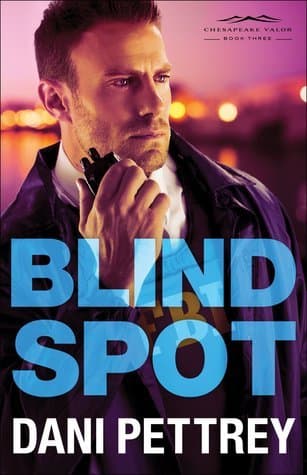
Dani Pettrey (2017)
Genre
Thriller / Mystery / Romance
Reading Time
333 min
Key Themes
See below
Sign in to track this book
An FBI agent and a crisis counselor, drawn to each other, race to find a hidden terror cell in an immigrant community before a catastrophic attack hits American soil.
FBI Agent Declan Grey is in Washington D.C., working a case about possible terrorist activity. He receives a cryptic message from a known terrorist, warning him that "the wrath is coming." At the same time, he is assigned to investigate several disappearances and a possible human trafficking operation in a closed immigrant community in Cleveland, Ohio. The link between the terrorist threat and the local disappearances is unclear, but Declan senses they are connected. His supervisor, SAC Ben Carter, emphasizes the urgency and sensitivity of the case, especially given current politics around immigration.
Tanner Shaw, a former international aid worker with much experience in refugee communities, recently joined the FBI as a crisis counselor. Her first assignment brings her to Cleveland, where she is to support families affected by the disappearances. This puts her directly in Declan Grey's path, creating immediate professional tension mixed with a clear personal spark. Despite their different methods, Tanner's understanding of cultural nuances and her ability to build trust in the immigrant community prove very helpful to Declan's investigation into the disappearances, which he believes are more serious than they seem.
Declan and Tanner start their investigation in Cleveland's close-knit immigrant community. They face significant resistance and suspicion from residents, who are wary of outsiders and law enforcement. Tanner's compassionate approach and her fluency in several languages help her slowly break down barriers, while Declan focuses on gathering information using traditional FBI methods. They learn about the community's strong ties to a local mosque and a charismatic spiritual leader, Imam Hassan. The disappearances seem to involve young men looking for better opportunities, but no one will openly discuss what happened to them.
Following a tip from a frightened community member, Declan and Tanner find a hidden basement under a seemingly abandoned building in the community. Inside, they find evidence of radicalization – extremist literature, propaganda videos, and training materials. This discovery confirms Declan's fears that the disappearances are not just human trafficking but are part of a larger terrorist plot. The missing young men were likely recruited and prepared for something much more dangerous. This realization makes their mission more urgent, as they now believe they are dealing with a domestic terror cell.
The evidence from the basement leads Declan and Tanner to uncover a complex network of people involved in the terror plot. They identify several key players, including a mysterious figure known only as 'The Architect' and a local contact helping with recruitment. The investigation shows that the cell is not just local but has ties to international terrorist groups. The 'wrath' warning from Declan's earlier case now seems directly linked to this Cleveland operation. They realize the cell is planning a major attack, but the target and method are unknown, putting great pressure on the team.
As Tanner looks deeper into the lives of the missing young men, she discovers that one of them, a bright and hopeful teenager named Omar, had confided in her shortly before he disappeared. This personal connection strengthens her resolve and adds emotional depth to the case. The terror cell, aware that the FBI is getting close, starts to act more aggressively. Declan and Tanner face direct threats and close calls, making it clear their lives are in danger. The stakes are high, not only for the potential victims of the attack but for the agents themselves.
Through careful analysis of recovered documents, intercepted communications, and clever detective work, Declan and Tanner, with help from FBI tech specialists, finally solve the puzzle of the upcoming attack. They find out that the target is a major public event in Cleveland, and the method involves a coordinated series of bombings meant to cause many casualties and maximum terror. The 'wrath' is revealed to be a carefully planned act of domestic terrorism. With the attack hours away, the race against time becomes critical, requiring immediate action from the FBI.
In a tense, high-stakes climax, Declan and Tanner lead separate teams to infiltrate the locations where the bombs are set to detonate. Declan confronts 'The Architect,' a shadowy figure who has been manipulating the young recruits. Tanner, meanwhile, works to calm a volatile situation at another site, trying to convince a radicalized young man to abandon his mission. Gunfights, explosions, and intense psychological negotiations happen as the agents risk their lives to prevent the catastrophe. The city waits as the FBI battles against the clock and the terrorists.
The FBI successfully stops the main terrorist attack, limiting casualties, though there are some losses. 'The Architect' is caught, and the immediate terror cell is broken up. Afterward, Declan and Tanner deal with the emotional impact of the events. While the city breathes a collective sigh of relief, the experience leaves deep scars on the community and on the agents. They reflect on why such acts happen and how vulnerable impressionable people are. The case shows the ongoing challenges of counter-terrorism and the complexities of integrating diverse communities.
With the immediate crisis over, Declan and Tanner begin to process the intense experience. Their shared ordeal has created a deeper bond between them, and their underlying romantic tension is now clear. They discuss their professional paths, with Declan considering the broader meaning of his work and Tanner confirming her dedication to helping vulnerable people. While the threat of terrorism is always there, their teamwork and growing connection offer hope for future challenges. The novel ends with them acknowledging the complexities of their world and the possibility of a future together, both professionally and personally.
The Protagonist
Declan learns to trust his instincts more and to allow others, particularly Tanner, to support him, ultimately confronting his past demons and embracing a potential future.
The Protagonist
Tanner integrates her humanitarian perspective into the rigid structure of the FBI, proving the efficacy of her methods and finding a new purpose while navigating her feelings for Declan.
The Supporting
Ben Carter maintains his role as a supportive leader, witnessing the growth of Declan and Tanner as a team.
The Antagonist
The Architect's plot is uncovered and ultimately thwarted by Declan and Tanner, leading to their apprehension.
The Supporting
Imam Hassan moves from cautious skepticism to a hesitant cooperation with the FBI, ultimately helping to protect his community.
The Mentioned
Omar's fate becomes a driving force for Tanner's investigation, representing the human cost of the terror plot.
The novel explores trust and suspicion, especially between law enforcement and isolated communities. Declan's initial approach is met with suspicion from the immigrant community, while Tanner's empathetic methods slowly build trust. The terrorists use existing distrust to recruit vulnerable people, showing how suspicion can be a weapon. The growing trust between Declan and Tanner, despite their different methods, also helps their success. This is clear when community members are at first hesitant to talk to the FBI but open up to Tanner after she shows genuine care.
“"Trust wasn't given; it was earned, especially here, where fear of outsiders ran deep."”
The book looks into different ideas of justice. Declan seeks justice through law and order, focused on catching criminals and preventing harm. Tanner, however, approaches justice from a humanitarian view, trying to understand root causes and protect the vulnerable. The story questions whether justice is only about punishment or if it also involves compassion, understanding, and rehabilitation. These different views often create tension between the protagonists but ultimately lead to a more complete pursuit of justice against the terror cell. For example, Tanner tries to talk down a radicalized youth, seeking a different kind of justice than immediate force.
“"Justice isn't just about catching the bad guys, Declan. It's about protecting the innocent, sometimes even from themselves."”
A major theme is how vulnerable marginalized communities are and how extremist groups exploit these weaknesses. The missing young men are often those looking for better lives, making them easy targets for radicalization by promises of belonging, purpose, or a better future. The novel shows how poverty, cultural displacement, and a feeling of alienation can be used by manipulative forces. The terror cell preys on these weaknesses, turning hope into a weapon. The story of Omar, who was lured by false promises, directly shows this exploitation.
“"They prey on the lost, the hopeful, the ones who just want to belong. It's a twisted kind of recruitment."”
Despite the dark plot, human connection—both romantic and communal—is a strong force. The growing bond between Declan and Tanner, born from shared danger and mutual respect, highlights the importance of personal connection. Also, the strength of the immigrant community, despite its initial distrust, eventually helps the FBI, showing the resilience and power of communal ties. Tanner's ability to connect with community members on a human level is key to gaining their cooperation.
“"In the face of such darkness, it was the small connections, the shared glances, that truly held them together."”
Initial focus on human trafficking diverts attention from the true terror plot.
The initial investigation into the disappearances points towards a human trafficking ring, which serves as a red herring. This misdirection leads Declan and Tanner down a plausible but ultimately incorrect path for a period, increasing the suspense and allowing the true terror cell to operate with less immediate scrutiny. It also highlights the complexities of crime within diverse communities, where multiple illicit activities might coexist, making it harder to pinpoint the most dangerous threat.
Alternating perspectives between Declan and Tanner, and sometimes the antagonist, to build suspense.
The novel employs limited omniscient narration, primarily shifting between Declan Grey and Tanner Shaw's points of view. This allows readers to experience their individual thoughts, fears, and deductions, deepening character development and providing different insights into the investigation. Occasionally, the perspective shifts to the antagonist, offering glimpses into their planning and motives, which heightens tension and provides a broader scope of the unfolding threat, without revealing too much too soon.
The impending terrorist attack creates intense time pressure for the protagonists.
The ticking clock device is central to the thriller aspect of the novel. Once Declan and Tanner realize a major terrorist attack is imminent, they are plunged into a desperate race against time to identify the target, method, and precise timing. This creates relentless urgency, forcing rapid decisions, increasing stakes, and maintaining a high level of suspense throughout the latter half of the book, culminating in the frantic climax to prevent the catastrophe.
Tanner's role as an empathetic 'outsider' helps bridge the gap with the insular community.
This device highlights the contrast between Declan, representing traditional law enforcement and initially seen as an 'outsider' by the immigrant community, and Tanner, who despite being with the FBI, uses her 'insider' knowledge and empathy from her aid work to bridge the gap. Her ability to navigate cultural sensitivities and build trust allows the team to gain access and information that Declan's more direct methods initially fail to achieve. This dynamic is crucial for advancing the plot and understanding the community's complexities.
“It was a blind spot, a place where all the careful plans, all the training, all the logic, simply ceased to exist.”
— Reflecting on a critical failure in an investigation.
“Some truths weren't meant to be unearthed, not if the digging caused more damage than the truth itself.”
— Considering the repercussions of exposing a long-buried secret.
“The past was a relentless hunter, and eventually, it always caught up.”
— A character feeling the weight of their past actions.
“Fear was a powerful motivator, but love, in its purest form, was an even stronger one.”
— Contemplating the driving forces behind difficult decisions.
“Trust was a fragile thing, easily shattered, almost impossible to fully repair.”
— After a betrayal, a character struggles with their faith in others.
“Sometimes the most dangerous enemies were the ones you never saw coming.”
— An unexpected twist reveals a hidden antagonist.
“Hope was a tiny spark in the darkest night, but even a spark could ignite a fire.”
— Finding a glimmer of optimism amidst despair.
“The silence wasn't empty; it was filled with unspoken words, with unacknowledged pain.”
— Observing the tension between characters after a difficult conversation.
“Every choice had a ripple effect, and sometimes, those ripples turned into tidal waves.”
— Reflecting on how small decisions can lead to major outcomes.
“It wasn't about being fearless; it was about acting despite the fear.”
— A character confronting a dangerous situation.
“Forgiveness wasn't about condoning the act; it was about releasing yourself from the prison of resentment.”
— Struggling with the concept of forgiving someone who caused great harm.
“The truth was a weapon, and in the wrong hands, it could be more destructive than any bullet.”
— Considering the power and danger of information.
“Sometimes, the only way to find your way out of the dark was to acknowledge you were lost.”
— A character admitting their vulnerability and seeking help.
Ready to see how well you understood this book? Take our interactive quiz with 10 questions.







