“Before you, I was a map with all the roads going the wrong way.”
— Emma reflects on how meeting her boyfriend, Alex, changed her life perspective.

Sign in to track this book
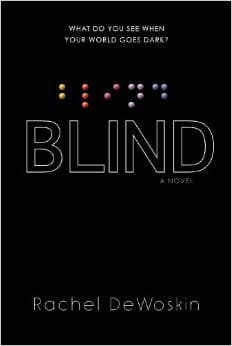
Blinded by an accident, a once-overlooked teen must learn to navigate high school, adapt to new senses, and solve a classmate's suicide, all while dealing with her new visibility and searching for what makes life meaningful.
Fifteen-year-old Emma Sasha Silver, a self-described 'invisible' middle child in a large family, attends a Fourth of July celebration with her best friend, Jamie. They are near a fireworks display when a rogue firework malfunctions, exploding directly in front of Emma. The aftermath is chaos and pain. Emma is rushed to the hospital, where doctors deliver the news: she has been blinded. This event immediately isolates her, putting her into a world of darkness and forcing her to face a new reality. Her previous identity as an overlooked teenager is gone, replaced by the clear visibility of her disability.
After the accident, Emma deals with the shock and grief of her blindness. She spends weeks in the hospital and then at home, having many surgeries and therapy sessions. Her family, especially her parents and seven siblings, struggle to adapt to her new needs, often overdoing it or showing their own sadness. Emma feels a deep loss, not just of her sight but of her independence and social life. She must relearn basic tasks like walking, eating, and even identifying her family members by touch and voice. This process is physically tiring and emotionally draining, leaving her frustrated and alone.
As the new school year begins, Emma, with her orientation and mobility instructor, Ms. M., returns to Northwood High. Her return is met with pity, discomfort, and curiosity from her former classmates. She struggles with the school's layout, the social dynamics, and the constant awareness of her difference. Her friendships, especially with Jamie, feel strained as their shared world has changed. Emma is assigned a student aide, Sam, a quiet boy from her English class, who becomes her guide and an unexpected friend, helping her navigate both the school's physical and social environment.
Just as Emma starts to adjust to high school, a tragic event shakes the student body: Chase, a popular and seemingly stable classmate, is found dead in an apparent suicide. The news shocks Northwood, especially Chase's friends and those who admired him. Emma, despite her own struggles, feels a strange connection to the tragedy. His death, combined with her recent life change, makes her question the hidden realities beneath her peers' lives, causing her to pay more attention to the subtle cues she now depends on.
Emma, using her sharper senses and new perspective, begins to suspect there is more to Chase's death. She notices inconsistencies in people's reactions and conversations. With Sam's help, Emma starts to gather clues, listening to conversations, subtle voice changes, and rumors at school. Their investigation is driven by Emma's growing intuition and her wish to understand the truth, not just about Chase, but about the unspoken pressures and hidden lives of her classmates. Sam becomes her eyes, describing scenes and people, while Emma interprets the emotional situation.
Emma's investigation leads her and Sam to find Chase's secret photography club, which met in an abandoned darkroom at the school. This club was a safe place for Chase and a few other students, where they explored their artistic passions and, more importantly, took pictures of their vulnerabilities and the pressures they faced. Emma realizes that Chase used photography not just as art but to document his inner struggles and the hidden pains of his peers. The darkroom, a place of visual creation, becomes a sad symbol of Chase's unseen pain and the irony of Emma's inability to see.
Through their continued efforts, Emma and Sam uncover the truth: Chase was a victim of constant cyberbullying. A group of students had made a fake social media profile, posting cruel messages, photoshopped images, and rumors about him. This discovery explains the sudden change in Chase's mood and the deep despair that led to his death. Emma feels great anger and injustice, realizing that the 'invisible' online tormentors had caused more harm than any physical injury. This discovery strengthens her resolve to expose the perpetrators and get justice for Chase.
With the evidence they have, Emma and Sam decide to expose the cyberbullies. Emma, despite her fear, confronts the students responsible, using her new voice and the moral clarity she gained from her own suffering. The school administration gets involved, and the perpetrators face discipline. The cyberbullying scandal shocks the school, making students and faculty face the darker side of their social environment. Emma's actions, though emotionally hard, provide some justice for Chase and start a needed conversation about online harassment and its impact.
Throughout her journey, Emma's friendship with Jamie is tested. Jamie struggles to understand Emma's new reality, and Emma sometimes resents Jamie's ability to see. However, as Emma gains confidence and clarity, they start to bridge the gap, learning to communicate and support each other in new ways. Emma also deepens her bond with Sam, who becomes a loyal friend and a key part of her support system. Her family, initially overwhelmed, also begins to find a new routine, offering more understanding and less pity. Emma learns that true friendship goes beyond physical sight.
By the end of the school year, Emma has changed greatly. She has not only adjusted to her blindness but has also found strength and purpose in it. She learns to navigate her world with a cane, relies on her other senses, and develops sharp intuition. She discovers that 'seeing' is not just about physical sight but about understanding, empathy, and insight. The investigation into Chase's death, though painful, gives her a sense of control and a deeper appreciation for life's complexities. Emma begins to accept her new identity, recognizing that her blindness has given her a unique and powerful perspective.
The Protagonist
Emma transforms from a grieving, isolated blind girl into a resilient, insightful young woman who embraces her new way of experiencing the world and finds her voice.
The Supporting
Sam evolves from a quiet, helpful aide to a trusted and indispensable friend, finding his own voice and purpose through his connection with Emma.
The Supporting
Jamie learns to navigate the complexities of her friendship with a blind Emma, evolving towards greater understanding and empathy.
The Supporting
Ms. M. remains a constant, guiding force for Emma, embodying stability and expertise.
The Mentioned
Chase's arc is tragic and retrospective, revealing the hidden depths of his struggle and the devastating impact of cyberbullying.
This theme explores how Emma's physical blindness gives her a deeper understanding of the world and people. Losing her sight first brings darkness and despair, but as she adapts, her other senses sharpen, and her intuition improves. She learns to 'see' people's true intentions, emotions, and hidden struggles, especially when investigating Chase's death, where she relies on voice changes, body language, and unspoken cues. This theme highlights that true perception goes beyond physical vision, including empathy, insight, and understanding.
““Maybe seeing isn’t just with your eyes. Maybe it’s with your mind, with your heart, with your whole self.””
Emma's blindness forces her to completely rethink her identity. Before the accident, she was 'invisible,' a middle child who fit in. Afterward, she becomes highly visible, defined by her disability. This theme tracks her journey from grief and self-pity to acceptance and strength. She must let go of her old self and build a new identity that includes her blindness, not as a flaw, but as a unique way to experience life. Her change is clear in her growing independence, her willingness to fight injustice, and her new confidence in her abilities.
““I was Emma, the blind girl. But I was also Emma, the girl who could hear everything, feel everything, and maybe, finally, see everything that mattered.””
The novel shows the harmful effect of cyberbullying, particularly through Chase's tragic story. This theme reveals how internet anonymity can encourage people to cause severe emotional and psychological harm, with terrible real-world results. The bullies hide behind screens, thinking their actions have no consequences, yet their words and images lead to a popular student's suicide. Emma's investigation brings this hidden cruelty to light, making the school and its students face the reality of online harassment and its ethical implications.
““It was like they were wearing masks, but the masks were made of words, and the words were poison.””
This theme explores how friendships change and how important support systems are for overcoming challenges. Emma's friendship with Jamie is strained by her blindness, showing the difficulties of adapting to a friend's major change. At the same time, Emma develops a deep, supportive friendship with Sam, her student aide, who offers constant companionship and understanding. The novel also shows the complexities of family support, as Emma's parents and siblings deal with their own grief and efforts to help. Ultimately, the story emphasizes that real connection and empathy are essential for healing and growth.
““It wasn’t about seeing anymore. It was about being seen, truly seen, by someone who understood.””
The story is told entirely from Emma's perspective.
This device is crucial for immersing the reader in Emma's experience of blindness. By narrating from her point of view, the author effectively conveys the disorientation, frustration, and eventual heightened sensory awareness that comes with losing sight. It allows the reader to intimately understand her internal struggles, her adaptations, and her unique interpretations of the world, emphasizing the theme of 'seeing beyond sight' and making her emotional journey deeply personal and resonant.
Extensive use of non-visual sensory descriptions.
Given Emma's blindness, the novel meticulously employs sensory details beyond sight. The author vividly describes sounds, smells, textures, and even temperature changes to paint a rich picture of Emma's world. For example, the 'whoosh' of a hallway, the 'cloying sweetness' of a perfume, or the 'smooth coolness' of a banister. This device not only helps the reader understand Emma's experience but also reinforces the theme that perception is multi-faceted, challenging readers to 'see' with their other senses alongside Emma.
A symbolic setting where Chase's secrets are revealed.
The abandoned darkroom in the school serves as a powerful symbol. It is a place dedicated to the visual art of photography, yet it is where Emma, a blind girl, uncovers the unseen truths about Chase's life and death. The darkroom, by its nature, is a place of development and revelation, where hidden images come to light. For Chase, it was a sanctuary to capture his pain; for Emma, it becomes the literal and metaphorical space where the 'dark' truth of cyberbullying is brought into focus, despite her inability to physically see the photos.
A physical object representing both disability and independence.
Emma's white cane is more than just an assistive device; it's a potent symbol of her journey. Initially, it represents her disability, drawing unwanted attention and making her feel vulnerable. However, as she learns to use it effectively, the cane transforms into a tool of independence, allowing her to navigate her environment with increasing confidence. It symbolizes her growing autonomy, her adaptation to her new reality, and her refusal to be confined by her blindness, embodying her courage to literally and figuratively move forward.
“Before you, I was a map with all the roads going the wrong way.”
— Emma reflects on how meeting her boyfriend, Alex, changed her life perspective.
“It was like the world was a giant game of charades, and everyone else knew the secret word.”
— Emma describes her feeling of being an outsider at school, especially before finding her niche.
“Sometimes, the biggest lies are the ones you tell yourself.”
— Emma grapples with self-deception regarding her feelings and motivations.
“Grief is a ghost. It haunts you, but you can’t see it, can’t touch it. Only feel its cold breath.”
— Emma's internal monologue about coping with loss and the lingering presence of grief.
“The thing about secrets is they don't stay secret. They just get louder.”
— Emma considers the inevitable unraveling of hidden truths and their consequences.
“Maybe being blind isn't about not seeing. Maybe it's about seeing differently.”
— A philosophical thought Emma has about perception and understanding beyond the obvious.
“You can't erase history, but you can learn from it.”
— Emma reflects on past mistakes and the possibility of growth and moving forward.
“Sometimes, the bravest thing you can do is ask for help.”
— Emma realizes the strength in vulnerability and seeking support from others.
“The world doesn't stop because you're hurting. It just keeps spinning, and you have to catch up.”
— Emma acknowledges the relentless nature of life even in the midst of personal pain.
“Falling in love is like jumping off a cliff. You don't know if you'll fly or crash until you're already in the air.”
— Emma's metaphorical take on the risks and uncertainties of romantic love.
“It's funny how the things you think define you can be the very things that set you free.”
— Emma considers how overcoming challenges or changing self-perception can lead to liberation.
“Silence can be louder than any scream, if you're listening.”
— Emma perceives unspoken emotions and truths in the quiet moments with others.
“Hope is a fragile thing, but it's also the strongest. It keeps you going when everything else tells you to stop.”
— Emma holds onto hope amidst difficult circumstances and setbacks.
“You can't choose your family, but you can choose who you let into your heart.”
— Emma reflects on the importance of chosen family and meaningful relationships.
“Sometimes, the messiest parts of life are where you find the most beauty.”
— Emma finds unexpected value and lessons in chaotic or challenging situations.
Ready to see how well you understood this book? Take our interactive quiz with 10 questions.
Biography coming soon.