“Jarndyce and Jarndyce drones on. This scarecrow of a suit has, in course of time, become so complicated that no man alive knows what it means.”
— Describing the never-ending Chancery case that is central to the novel.

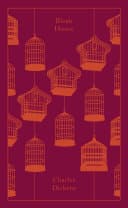
Charles Dickens (2011)
Genre
Historical Fiction / Mystery
Reading Time
2000 min
Key Themes
See below
Sign in to track this book
In Victorian London, the endless Jarndyce and Jarndyce lawsuit slowly consumes fortunes and exposes society's decay, trapping both aristocrats and paupers in its tragic grip.
The story opens in London's oppressive, foggy atmosphere, specifically in the Court of Chancery. This court is where the Jarndyce and Jarndyce lawsuit takes place, a case about a disputed inheritance that has lasted generations, consuming the money and lives of everyone involved. The Lord Chancellor oversees a system marked by delays, confusion, and legal language. We meet the affected parties, including young wards Richard Carstone and Ada Clare, whose future depends on the suit, and their kind guardian, John Jarndyce, who is tired of its destructive power. The sheer uselessness and unfairness of the legal system are immediately shown as main themes.
Esther Summerson, a smart and kind young woman, tells of her early life under the strict care of Miss Barbary, who made her feel unworthy and kept her birth a secret. After Miss Barbary's death, Esther is taken in by Mr. Kenge, a solicitor, and then sent to a girls' school run by Miss Donny. Later, she learns she will be a companion to Ada Clare, another ward in the Jarndyce case, and will live at Bleak House, John Jarndyce's country home. There, she meets Ada and Richard Carstone, also wards, and the three quickly become friends. Esther becomes a stable presence amid their legal troubles.
The story moves to Chesney Wold, the grand country estate of Sir Leicester Dedlock and his younger, beautiful, and mysterious wife, Lady Dedlock. Their lives are tied to their family lawyer, Mr. Tulkinghorn, a secretive and sharp man who knows the secrets of many aristocratic families. Tulkinghorn becomes focused on Lady Dedlock's past, specifically her relationship with Captain Hawdon (later revealed as Captain Nemo). His search leads him to Mr. Snagsby, a law-stationer, and Jo, a poor crossing-sweeper, who briefly knew a man named Nemo. This pursuit hints at a buried secret and a possible scandal Tulkinghorn seems determined to uncover, for unknown reasons.
As the Jarndyce and Jarndyce case continues its slow, destructive path, Richard Carstone, at first hopeful and eager to work, becomes more and more obsessed with it. He tries different jobs, like medicine and the military, but quits each one, believing the lawsuit will soon end and give him an inheritance. John Jarndyce, seeing this pattern, repeatedly warns Richard against the Chancery suit's draining effects, urging him to build a stable life without it. However, Richard, encouraged by lawyers like Mr. Vholes, falls deeper into the legal mess, draining his money and health, and upsetting Ada and Esther.
Esther Summerson, while visiting the poor crossing-sweeper Jo, catches smallpox. The illness disfigures her and deeply impacts her self-image. During her slow recovery, a mysterious veiled woman visits and cares for her. This woman is eventually revealed to be Lady Dedlock, who confesses she is Esther's mother. Lady Dedlock explains that Esther was born from an affair with Captain Hawdon (Nemo), and she believed Esther had died. This reveals the secret around Esther's past and why Lady Dedlock made earlier veiled visits and showed such intense interest in Esther. Mr. Tulkinghorn, however, also knows this secret.
Mr. Tulkinghorn, having uncovered Lady Dedlock's secret and used it to torment her, is found shot dead in his office. The murder shocks the aristocratic circles he served. Inspector Bucket, a clever and careful detective from Scotland Yard, takes the case. Bucket meticulously gathers clues and questions various suspects, including George Rouncewell, a former soldier and shooting gallery owner who had argued with Tulkinghorn, and Lady Dedlock herself, suspected because Tulkinghorn knew her past. Bucket's investigation is a detailed piece of detective work, slowly putting together the events leading to the murder.
Convinced she will be blamed for Tulkinghorn's murder and her secret exposed, Lady Dedlock flees Chesney Wold in the night, leaving a letter for Sir Leicester. Inspector Bucket, understanding her reason, follows her, worried for her safety. Esther Summerson, learning of her mother's desperate flight, insists on joining Bucket. Their search takes them through London's poor streets and eventually to a pauper's graveyard, where Lady Dedlock's former lover, Captain Hawdon (Nemo), is buried. They find Lady Dedlock dead from exposure and exhaustion, having returned to the place where her tragic secret began, dying at the grave of the man she loved.
Inspector Bucket's investigation leads to the arrest of Mademoiselle Hortense, Lady Dedlock's former French maid. Hortense, driven by deep resentment and a desire for revenge against Tulkinghorn for firing her and for his cruel treatment of Lady Dedlock, admits to the murder. Her motive was not only personal spite but also a clever attempt to frame Lady Dedlock and further disgrace her. With the true killer caught, the mystery of Tulkinghorn's death is solved, clearing Lady Dedlock's name after her death and ending that part of the story, showing how destructive secrets and unchecked ambition can be.
Richard Carstone, now very ill and completely absorbed by the Jarndyce and Jarndyce lawsuit, continues to pursue it relentlessly, believing justice is near. He marries Ada Clare, despite John Jarndyce's concerns, and their life becomes more and more about poverty and legal costs. Tragically, the long-awaited judgment in Jarndyce and Jarndyce finally comes, but it brings no relief. All the money has been completely spent on legal costs, leaving nothing for the claimants. Richard, broken in spirit and health, dies soon after, a victim of the very system he had hoped in, proving John Jarndyce's earlier warnings true.
After these difficult events, Esther Summerson, having turned down John Jarndyce's marriage proposal out of loyalty and respect, is surprised when he reveals his true plan: to give her to the man she truly loves, Allan Woodcourt. Allan, a kind and dedicated surgeon, had fallen in love with Esther despite her disfigurement and had returned from his travels to propose to her. They marry, and John Jarndyce gives them a smaller, cozier house, which they name 'Bleak House' in fond memory. Esther finds happiness and purpose in her marriage and as a loving wife and mother (to Ada's child, whom she adopts), finally achieving the domestic happiness she always wanted.
The story resolves the fates of several minor characters. Mr. Guppy continues his legal career, still admiring Esther. Mr. Krook, the eccentric rag-and-bottle dealer, dies from spontaneous combustion, a strange symbol of Chancery's self-consuming nature. Jo, the crossing-sweeper, dies of a fever, a sad reminder of the poor's suffering. George Rouncewell finds peace working for the Dedlocks at Chesney Wold, and Sir Leicester Dedlock, though recovering from a stroke, remains devoted to his wife's memory. The conclusion suggests that while some find peace, the widespread societal problems shown by the Jarndyce case continue in different forms.
The Protagonist
From an insecure, orphaned young woman burdened by a secret past, Esther grows into a confident, beloved wife and mother, finding her true identity and happiness.
The Supporting/Tragic Figure
Initially portrayed as a distant and mysterious aristocrat, Lady Dedlock's arc is a tragic descent as her past catches up to her, leading to her flight and death.
The Antagonist
From an all-powerful, secretive lawyer who believes himself untouchable, Tulkinghorn's arc is cut short by his murder, demonstrating that even the most influential can be vulnerable.
The Supporting/Benevolent Figure
Despite his initial weariness and cynicism regarding the lawsuit, John Jarndyce maintains his integrity and selflessness, ultimately sacrificing his own romantic desires for Esther's happiness.
The Supporting/Tragic Figure
Richard's arc is a downward spiral from an optimistic young man to an embittered, sick, and ultimately dead victim of the legal system.
The Supporting
Ada remains consistently loving and supportive, enduring hardship through her devotion to Richard and ultimately finding a new purpose with her child and Esther.
The Supporting
Introduced as a professional investigator, Bucket's arc is defined by his successful resolution of a complex murder case, showcasing his competence and dedication.
The Mentioned/Tragic Figure
Jo's life is a brief, tragic trajectory from utter destitution to death, serving as a powerful symbol of society's neglect of its most vulnerable.
The Supporting/Symbolic
Krook's arc is static until his symbolic death, which serves as a grotesque commentary on the destructive nature of the Chancery.
The Supporting
Allan's arc is one of consistent virtue and dedication, culminating in his marriage to Esther and the establishment of a happy domestic life.
The never-ending Jarndyce and Jarndyce case is the main symbol for the corrupt Court of Chancery. Dickens uses the foggy opening, the endless legal talk, and the lawsuit's ultimate consumption of the entire inheritance to show how the system exploits its participants, ruining lives and money. Richard Carstone's tragic decline, caused by his obsession with the lawsuit, clearly shows this theme. The system is portrayed as a monster that feeds on human hope and despair, offering only endless delay, not justice.
“This scarecrow of a suit has, in course of time, become so complicated, that no man alive knows what it means.”
Bleak House sharply contrasts the lives of the aristocracy with the extreme poverty of London's slums. Lady Dedlock's boredom and the luxury of Chesney Wold are starkly different from the disease-ridden squalor of Tom-all-Alone's, where Jo the crossing-sweeper lives and dies. Dickens highlights the terrible effects of poverty, lack of education, and societal neglect, showing how the lives of the rich and poor are connected, often by hidden secrets and exploitation. The novel suggests that society's neglect of the poor ultimately harms everyone.
“Dead, your Majesty. Dead, my Lords and Gentlemen. Dead, Right Reverends and Wrong Reverends of every order. Dead, men and women, born with Heavenly compassion in your hearts. And dying thus around us every day.”
The novel is full of secrets, especially Lady Dedlock's hidden past and Esther Summerson's true parents. Mr. Tulkinghorn's relentless search for these secrets drives much of the plot's tension and eventually leads to his murder and Lady Dedlock's tragic death. Dickens shows how hidden truths, even when seemingly buried, can resurface with devastating results, destroying reputations, relationships, and lives. The weight of these secrets puts immense psychological pressure on the characters, showing the moral and social costs of hiding things.
“A great country, a great city, a great family, can have a secret.”
Esther Summerson and John Jarndyce represent compassion, duty, and selflessness, providing a moral contrast to the corruption and indifference around them. Esther consistently puts others' needs and happiness first, even at her own cost, while John Jarndyce tries to protect his wards from the Jarndyce suit's destructive power. Their actions show how individual goodness can create havens of domestic peace and support in a chaotic and often cruel world. Their kindness stands out against the self-interest and moral decay of many other characters.
“I have always striven to be a good girl, and to be industrious, and to do what I was told, and to try to be agreeable to everyone.”
The main feeling of futility is best shown by the Jarndyce and Jarndyce case itself, which achieves nothing but the consumption of wealth and lives. This theme extends to the legal system's bureaucratic slowness, the 'fog' over London, and the 'Dedlock' name, symbolizing a dead end. Characters like Krook and his hoarding of legal documents, and the system's general inability to move forward, emphasize a widespread sense of stagnation. This futility suggests a society unable to make meaningful progress or reform.
“Equity sends to Coventry in the classic fable, and the law sends to Erebus.”
Alternating perspectives between an omniscient third-person narrator and Esther Summerson's first-person account.
Dickens employs a unique dual narration, switching between Esther Summerson's intimate, subjective first-person narrative and a cynical, detached, omniscient third-person voice. Esther's perspective offers emotional depth and focuses on personal relationships and domestic life, while the omniscient narrator provides a broader, panoramic view of society, particularly the legal system and the aristocratic world, often with satirical and critical commentary. This allows for both personal introspection and sweeping social critique, enriching the reader's understanding of the novel's themes and characters from different angles.
The Jarndyce and Jarndyce lawsuit and the Court of Chancery symbolize the pervasive inefficiency and corruption of Victorian society.
The interminable legal case of Jarndyce and Jarndyce and the labyrinthine Court of Chancery are not merely plot elements but serve as a powerful central metaphor for the entire society. They represent the stagnation, waste, and injustice that Dickens saw permeating various institutions, from government to charity. The case consumes wealth, health, and hope, mirroring how societal ills devour individuals. The 'fog' that opens the novel, clinging to the court, further symbolizes the obfuscation and moral murkiness of the system, blinding people to justice and truth.
The grotesque death of Mr. Krook, attributed to spontaneous combustion, serves as a symbolic event.
Mr. Krook's death by spontaneous combustion is a controversial but highly symbolic plot device. While scientifically improbable, Dickens uses it to represent the self-destructive nature of unchecked obsession, moral decay, and the 'rotting' state of the legal system. Krook, who hoards legal documents and drinks excessively, literally consumes himself, much like the Chancery case consumes itself and its participants. It's a shocking, visceral image that underscores the idea that corruption and stagnation can lead to a catastrophic, self-inflicted end, a grotesque judgment on a morally bankrupt system.
The murder of Mr. Tulkinghorn introduces a classic detective mystery subplot.
The novel incorporates a significant detective story element with the murder of Mr. Tulkinghorn and the subsequent investigation by Inspector Bucket. This subplot adds suspense and intrigue, contrasting the methodical, logical approach of Bucket with the general chaos of the Chancery. It allows Dickens to explore themes of crime, justice, and surveillance, and to showcase a character who embodies order and reason amidst the social disorder. The detailed investigation and eventual unmasking of the murderer provide a satisfying, albeit dark, resolution to one of the novel's major mysteries.
“Jarndyce and Jarndyce drones on. This scarecrow of a suit has, in course of time, become so complicated that no man alive knows what it means.”
— Describing the never-ending Chancery case that is central to the novel.
“Fog everywhere. Fog up the river where it flows among green aits and meadows; fog down the river, where it rolls defiled among the tiers of shipping and black barges; fog on the Essex marshes, fog on the Kentish heights.”
— The opening lines of the novel, setting a pervasive, gloomy atmosphere.
“There is a great deal to be done, my dear, a great deal to be learnt, and a great deal to be thought about.”
— Esther Summerson's reflections on life and responsibility.
“It is a world of disappointment, Mr. Jarndyce, and I have had my share.”
— Miss Flite, a perpetual litigant in Jarndyce and Jarndyce, expresses her weary outlook.
“Dead, your Majesty. Dead, my lords and gentlemen. Dead, Right Reverends and Wrong Reverends of every order. Dead, men and women, born with heavenly compassion in your hearts. And dying thus around us every day.”
— The narrator's reflection on the death of Jo, the crossing-sweeper, and society's indifference.
“What is the matter, my child? You are not ill, I hope?”
— Mr. Jarndyce's characteristic concern and kindness towards those around him.
“The one great principle of the English law is, to make business for itself.”
— Mr. Vholes' cynical yet accurate assessment of the legal profession.
“I hope you will forgive me for saying it, but I never did like the name of Dedlock.”
— Esther Summerson's initial, innocent reaction to the name, foreshadowing its later significance.
“It is a melancholy thing, when a man has worked hard all his life, to find himself at last with nothing.”
— The plight of Gridley, a poor brickmaker, highlighting the struggles of the working class.
“My Lady Dedlock has been a good friend to me, and I have been a good friend to my Lady Dedlock.”
— Hortense, Lady Dedlock's maid, expressing a possessive and ultimately dangerous loyalty.
“The law is a great mystery, and it is a great game.”
— Mr. Snagsby's simple yet profound observation about the nature of the legal system.
“Of course not! No one can be better than you, my love, because there is no one like you.”
— Ada Clare's affectionate reassurance to Esther, highlighting their close bond.
“It is a most extraordinary case, a most complicated case, and a most expensive case.”
— Mr. Guppy's description of Jarndyce and Jarndyce, emphasizing its notorious characteristics.
“I have a great deal to do, and I must do it.”
— Inspector Bucket's resolute determination in pursuing his investigations.
“There are people who can never have enough of their own way.”
— A general observation on human nature, often exemplified by characters like Mrs. Jellyby.
Ready to see how well you understood this book? Take our interactive quiz with 10 questions.
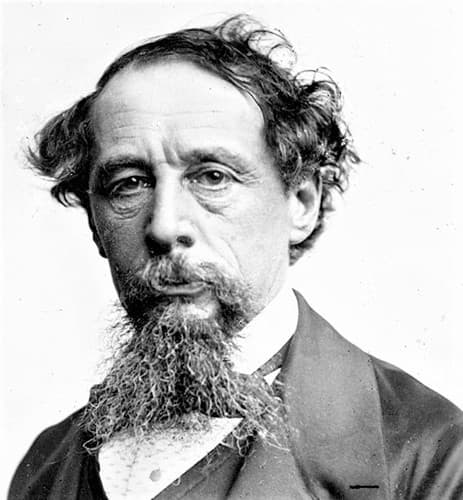
Charles John Huffam Dickens was an English writer and social critic who created some of the world's best-known fictional characters and is regarded by many as the greatest novelist of the Victorian era. His works enjoyed unprecedented popularity during his lifetime and, by the 20th century, critics and scholars had recognised him as a literary genius. His novels and short stories are widely read today.







