“History is not a line. It’s a labyrinth. And you’re not looking for a single thread, you’re looking for the whole damn weave.”
— Professor Dunworthy explaining the complexity of historical research to Michael.

Connie Willis (2010)
Genre
Thriller / Young Adult
Reading Time
15-20 hours
Key Themes
See below
Sign in to track this book
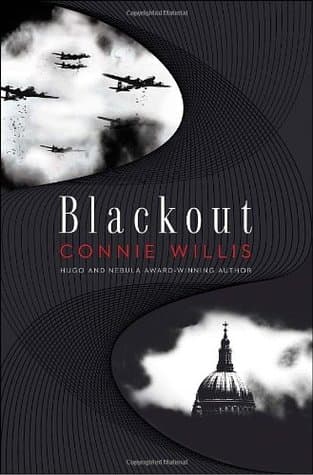
Three young historians studying WWII through time travel become trapped in the war-torn past, facing the terrifying possibility that they are changing the history they swore only to observe.
In 2060 Oxford, time-traveling historians get ready for their World War II assignments. Michael Davies is scheduled for Pearl Harbor. Merope Ward, unhappy with her current assignment with disruptive 1940 evacuees, asks her advisor, Mr. Dunworthy, to go to VE-Day. Polly Churchill prepares to work as a shopgirl during the London Blitz. However, the university's time-travel lab, the 'Net', starts having major problems. Assignments are canceled, dates change, and historians are called back early. This chaos makes researchers anxious, as they rely on the Net's precision to keep the past, or 'Continuum', intact. The glitches raise concerns about the historians' safety and history's stability, hinting at future problems.
Polly Churchill arrives in November 1940 London, assigned to observe the Blitz as a shopgirl. She quickly meets Eileen O'Reilly, another historian posing as a nanny, who was supposed to be in Coventry. Merope Ward, assigned as a governess for the wealthy Latymer family, also arrives, finding her drop point moved and her contact missing. The historians are immediately caught in the reality of air raids, blackouts, and constant German bombs. They discover that their observation points and covers have been changed or compromised by the Net's malfunctions, making their mission to observe history without interfering much harder and more dangerous. The initial chaos confirms their fears about the Net's instability.
Michael Davies, originally assigned to Pearl Harbor, finds his drop point moved to London and his assignment changed without explanation. He quickly realizes that several other historians, including his friend Alf, are missing. Michael's new mission is to observe child evacuations, but he is more worried about finding his missing colleagues and understanding the Net's failures. He meets other disoriented historians whose assignments were changed or cut short. The growing number of missing historians and the Net's inability to retrieve them raise alarms, suggesting the problem is more than a technical glitch, possibly trapping them in the past.
Polly settles into her role as a shopgirl at Harrods department store, watching Londoners' resilience during the Blitz. She befriends Mrs. Ricky, a fellow shop assistant, and tries to keep her cover despite the constant danger. Polly also meets a strange child, a young girl named Alfric, who seems unusually smart for her age and often makes comments that suggest she knows more about events. This meeting, along with the increasing frequency and intensity of air raids, makes Polly uneasy. She begins to suspect her assignment is not just about observing but might involve a more active, and dangerous, role than she expected, possibly linked to the missing historians.
Merope, as governess to the Latymer children, finds her assignment much harder than expected. The children—Beryl, the eldest, Colin, and the younger twins—are unruly and demanding. The Latymer family, though wealthy, faces wartime stress, with Mr. Latymer often away and Mrs. Latymer busy. Merope struggles to keep her cover and make historical observations amidst the household chaos and Blitz dangers. She feels increasingly isolated and frustrated by her inability to contact the Net or her fellow historians, increasing her fear that she and others might be stranded indefinitely in the past, unable to return to 2060.
Michael, using the cover of a journalist named Mike Davis, continues to search for Alf and other missing historians. His investigation takes him to various evacuation points and shelters. He meets other historians like Graham, who is also looking for his partner, and starts to gather information about the Net's failures. Michael finds himself unexpectedly involved in a child evacuation, tasked with taking a group of children, including the mysterious Alfric, to safety in the countryside. This unexpected turn complicates his original mission and forces him to take a more active role in the lives of wartime civilians, further blurring the lines between observer and participant.
The London Blitz reaches its peak, with daily and nightly air raids. Polly sees the destruction firsthand, as her neighborhood and workplace are repeatedly hit. During one brutal raid, the department store where she works is hit, and Polly barely escapes death. This close call deeply affects her, making the theoretical dangers of her historical assignment terrifyingly real. The constant threat of death and injury, along with the Net's silence, forces Polly to confront the fragility of her own life and the lives of those around her, making her question her assignment's true purpose and time travel's ethical implications.
Michael, Polly, and Merope have brief, unsettling encounters, though they do not always recognize each other due to their disguises and the war's chaos. Polly sees a man who looks like Michael, and Merope hears whispers of a 'journalist' asking too many questions. These brief interactions, combined with growing anomalies in the historical record—such as people surviving events they should not have, or unexpected changes in locations—begin to suggest a terrifying possibility: that the historians themselves might be accidentally changing the past, or that someone else is. The idea that their presence might not be harmless starts to dawn on them, leading to deep moral and existential questions.
As days turn into weeks, with no word or retrieval from the Net, the historians begin to grasp the true seriousness of their situation. Through fragmented communications and observations, they realize the Net is not just malfunctioning; it is actively preventing their return. This revelation is a devastating blow, as it means they are stranded, cut off from their own time. The historians, especially Michael, become desperate to understand why they are being held and what larger historical event they are caught in, or perhaps even responsible for, as the Continuum's integrity seems to be falling apart around them.
Despite realizing they are stranded in the past, Michael, Polly, and Merope begin to adapt. They form unexpected bonds with the people they meet, moving beyond their roles as observers. Michael continues to protect Alfric and other evacuees, Polly dedicates herself to helping Blitz victims, and Merope, despite her initial frustrations, starts to care for the Latymer children. A new, shared purpose emerges: to survive and to understand the Net's actions, and whether they can still influence history for the better, even if it means going against their training. The initial fear of being trapped slowly turns into a determination to make a difference in the lives of the people they now live among.
Alfric, the young girl Michael protects, continues to show an unusual awareness of future events and details she should not know. Her cryptic remarks and intelligence lead Michael to suspect she is more than an ordinary child. He begins to believe Alfric might be a key figure in the time-travel crisis, possibly a future historian or someone directly connected to the Net's failures. Her presence and seemingly prophetic insights become a focus of Michael's investigation, hinting that the solution to their problem might lie not just in understanding the past, but in deciphering the complex interplay between past, present, and future, with Alfric at its center.
As the war continues, the lives of Michael, Polly, and Merope become more connected. They meet in unexpected places, share acquaintances, and find themselves in similar situations, often without fully realizing how much their predicaments overlap. Polly's work at the department store, Michael's efforts with evacuees, and Merope's struggles with the Latymer family all intersect in subtle but important ways, creating a complex web of relationships and events. This growing web shows that their individual actions, however small, are having unforeseen effects on each other's lives and on the historical timeline itself, challenging their belief in non-interference.
The historians live under constant pressure to keep their cover, knowing any mistake could expose them and change history. They see increasingly frequent and unsettling historical inconsistencies: people surviving events they should not have, locations appearing or disappearing, and minor details of the past differing from their knowledge. These anomalies create a terrifying paradox, as they are both observers and, unintentionally, participants in the Continuum's unraveling. The threat of exposure, combined with the escalating historical discrepancies, forces them to question time itself and their role in its preservation or destruction, raising the stakes for their survival and the future.
Realizing that retrieval from 2060 is very unlikely, if not impossible, the stranded historians begin to adapt to their new reality. They share their knowledge and resources, exchanging information about the Net's failures and the historical anomalies they have observed. A desperate plan begins to form among them: to survive the war and find a way to communicate with their own time, or at least to understand why they were left behind. This collective effort marks a shift from individual observation to a unified struggle for survival and understanding, as they deal with the implications of being stranded in an increasingly unstable and unpredictable past.
As the historians navigate WWII, they start to connect the Net's malfunctions, the historical anomalies, and their own presence in the past. They realize that their survival and actions, even if well-intentioned, could be making the Continuum unstable. The possibility that their inability to return to 2060 is not just a technical failure but a result of their own interference, or a larger historical event they are meant to prevent or cause, casts a shadow over their future. The book ends with them deeply involved in the war, facing the terrifying prospect that their actions in the past will fundamentally change, or even erase, their own future.
The Protagonist
Polly transforms from a detached observer to an active participant, grappling with the ethical dilemmas of interfering with history while fighting for survival and connection.
The Protagonist
Michael evolves from a focused researcher to a leader and protector, driven by loyalty and a growing sense of responsibility for those around him, challenging his non-interference principles.
The Protagonist
Merope transitions from a frustrated, academic observer to someone who, despite her initial resistance, develops empathy and a protective instinct for the children in her care.
The Supporting
Dunworthy's arc primarily involves grappling with the escalating crisis from the 2060 perspective, trying to understand and mitigate the disaster.
The Supporting
Eileen develops from a pragmatic observer to a steadfast friend, providing emotional anchor and practical support amidst chaos.
The Mentioned
Alf's arc is largely off-screen, as his disappearance drives Michael's narrative.
The Supporting
Alfric's arc is shrouded in mystery, as she serves as a catalyst for Michael's growing understanding of the time-travel conundrum.
The Supporting
Mrs. Ricky remains a steady, comforting presence, embodying the strength of ordinary people during extraordinary times.
The Supporting
Graham's arc mirrors Michael's, focused on survival and the search for answers amidst the time-travel crisis.
This theme explores the central conflict of time travel: the rule of non-interference versus the human desire to act and the unpredictable results of even just observing. Historians are trained to watch, but the Net's failures force them into situations where their actions affect the past. For example, Michael protecting Alfric, Polly's emotional connection to Blitz victims, and Merope's care for the Latymer children all challenge the strict rule of the Continuum. The increasing historical inconsistencies further show how fragile the past is when time travelers are involved.
“"The Continuum must be preserved at all costs. No historian can ever change the past."”
The novel clearly shows the harsh realities of the London Blitz and the resilience of those who lived through it. Beyond the time-travel plot, the story highlights human endurance, community spirit, and the daily struggles for survival. Polly's experiences as a shopgirl and Merope's challenges as a governess immerse them in the grim reality of air raids, rationing, and constant fear, but also the strong determination of ordinary people like Mrs. Ricky to carry on. This theme grounds the fantastical time-travel elements in a deeply human, historical setting.
“"You just carried on. That's what you did. You had to."”
The main mystery centers on the malfunctioning 'Net' and the increasing historical anomalies, raising questions about the nature of time itself. The historians, initially confident in their understanding of a stable, unchanging past, find evidence that history is fluid and can be changed. The possibility that they are not just stranded but are part of a larger paradox, or even the cause of the Net's failures, drives much of the story's tension. Alfric's mysterious knowledge blurs the lines between past, present, and future, suggesting a complex, interconnected timeline where cause and effect are not always clear.
“"History isn't a straight line, is it? It's a tangle, a knot."”
As the historians are cut off from their own time, they must fully adopt their wartime identities, leading to a major change in their sense of self and belonging. Polly, Michael, and Merope must let go of their academic detachment and blend into 1940s society. They form real relationships with people from the past, blurring the lines between their original and adopted identities. The struggle to keep their cover while dealing with their true origins creates internal conflict, and the realization they might be permanently stranded forces them to find a new sense of belonging in a different era, questioning where 'home' truly is.
“"We're not just observers anymore. We're part of it."”
The novel questions the ethical implications of advanced scientific projects, especially time travel. The Oxford time-travel project, driven by academic curiosity, ultimately leads to a catastrophic situation where lives are endangered and history itself is threatened. The Net's failures and the university's apparent inability (or unwillingness) to retrieve its historians highlight the potential arrogance of scientific ambition when not balanced with caution and ethical foresight. The narrative makes readers consider the responsibility that comes with such powerful technology and the unforeseen consequences of interfering with fundamental laws of the universe.
“"We thought we understood the Continuum. We were wrong."”
The primary catalyst for the plot, creating chaos and stranding historians in the past.
The 'Net' refers to the time-travel mechanism and the overarching system managed by Oxford University. Its progressive malfunctions – canceled assignments, shifted drop points, inability to retrieve historians – serve as the central plot device driving the narrative. These glitches are not random; they are revealed to be deliberate and crucial to the unfolding mystery. The Net's failures create the immediate dangers for the protagonists, force them into unexpected roles, and ultimately lead to the realization that they are stranded, setting up the larger conflict of survival and understanding why they've been left behind. It’s the device that turns observation into participation.
Subtle yet significant changes in the past, indicating a disruption of the Continuum.
As the story progresses, the historians begin to notice minor but unsettling deviations from the historical record they meticulously studied. These inconsistencies – such as people surviving events they were supposed to die in, or locations appearing differently than documented – serve as a crucial plot device to build suspense and deepen the mystery. They signal that the 'Continuum' (the integrity of the past) is compromised, and that their presence, or something larger, is altering history. This device reinforces the theme of paradox and the profound implications of time travel, making the historians question their fundamental beliefs about the past.
A foundational rule that characters struggle to uphold, creating internal and external conflict.
The strict rule that historians must observe but never interfere with the past is a core plot device. It establishes the characters' initial motivations and ethical boundaries. However, the chaos of the Net's malfunctions and the dangers of WWII force the protagonists into situations where upholding this code becomes impossible or morally reprehensible. Their struggle to maintain non-interference, often failing, creates significant internal conflict and drives much of their character development. The breaking of this code is a key indicator of their transformation from detached observers to active participants, and a major source of narrative tension regarding the consequences of their actions.
The relentless bombing of London, serving as a constant antagonist and setting for chaos.
The London Blitz is more than just a setting; it functions as a powerful plot device, almost a character in itself. Its constant, terrifying presence provides the immediate, visceral danger that the protagonists face, pushing them to their limits. The air raids, blackouts, and destruction force the historians to adapt quickly, make life-or-death decisions, and forge bonds with the people around them. The Blitz creates a chaotic, unpredictable environment that constantly challenges their historian's detachment and amplifies the stakes of their time-travel predicament, making their survival paramount and their mission to observe nearly impossible.
“History is not a line. It’s a labyrinth. And you’re not looking for a single thread, you’re looking for the whole damn weave.”
— Professor Dunworthy explaining the complexity of historical research to Michael.
“Sometimes you have to break the rules to save the future.”
— Kinch discussing the urgency of their mission and the need for rule-bending.
“The past is a foreign country; they do things differently there. But the future… the future is an alien planet.”
— Polly reflecting on the challenges of adapting to the past and the uncertainty of the future.
“You can’t just observe. You have to participate. That’s the only way to truly understand.”
— Eileen considering the immersive nature of their historical studies.
“Every decision, every small change, creates ripples. And sometimes those ripples become tidal waves.”
— Michael contemplating the butterfly effect and the potential consequences of their actions.
“The greatest danger isn't changing the past, it's not understanding it.”
— Dunworthy emphasizing the importance of accurate historical comprehension.
“Hope is a dangerous thing when you’re dealing with fixed points.”
— Polly's cynical view on the futility of trying to alter predetermined events.
“You think you know what the past was like, but you don't. Not really. Until you live it.”
— Eileen's realization of the gap between academic knowledge and lived experience.
“The truth is a messy thing, and history is the messiest of all.”
— Dunworthy's realistic assessment of the often-contradictory nature of historical records.
“Even in the darkest times, there are always those who try to help, who try to make a difference.”
— Polly observing acts of kindness and resistance during the Blitz.
“Sometimes the most important discoveries are the ones you weren't looking for.”
— Michael stumbling upon unexpected information during his research.
“It's not about being right; it's about staying alive.”
— Kinch's pragmatic advice during a perilous situation.
“The past doesn't just inform the present; it actively shapes it, in ways we can barely comprehend.”
— Eileen reflecting on the profound influence of historical events.
“You can't save everyone. You can only do your part.”
— Polly's somber acceptance of the limitations of their intervention.
Ready to see how well you understood this book? Take our interactive quiz with 10 questions.

Connie Willis is a celebrated American science fiction and fantasy author, renowned for her intricate plots and deeply human characters. Her most acclaimed works include the Hugo and Nebula Award-winning novel 'Doomsday Book' and the critically lauded 'Blackout/All Clear' duology. Willis's writing often explores themes of history, faith, and the resilience of the human spirit, earning her numerous accolades within the genre.







