BookBrief
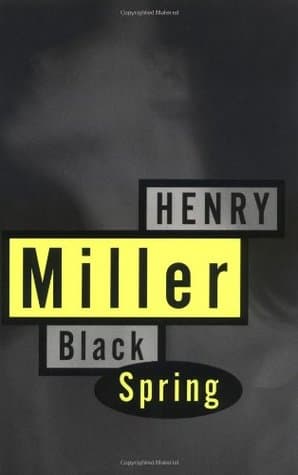
Black Spring cover
Archivist's Choice

Black Spring

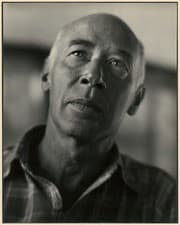
Henry Miller (1954)

Genre

Fantasy / Romance

Reading Time

12 Minutes

Key Themes

See below

Track Your Reading

Sign in to track this book

In a feverish, free-associating whirlwind, Henry Miller revisits his past, from the gritty streets of Brooklyn to the intoxicating chaos of Paris, weaving a vibrant tapestry of life, lust, and literature.

Synopsis

Henry Miller's "Black Spring" is a semi-autobiographical, stream-of-consciousness narrative that defies traditional plot, instead offering a kaleidoscopic journey through the author's memories, observations, and philosophical musings. The book shifts between vivid recollections of his Brooklyn youth, characterized by damp grime and early experiences, and his bohemian life in Paris, filled with sun-drenched cafes, squalid flats, and intellectual exploration. Miller employs a free-associating style, blending high culture references like Virgil and Rabelais with candid discussions of venereal disease and Roquefort cheese, all while exploring the symbiotic relationship between people and the cities they inhabit, particularly New York and Paris, through a lens of subversive self-revelation.
Difficulty
Hard
Pacing
Moderate
Mood
Philosophical, raw, introspective, bohemian, cynical, sensual, nostalgic

Plot Summary

The Fourteenth Ward

The book starts with Miller's memories of his Brooklyn childhood in the Fourteenth Ward. He describes the people, buildings, smells, and general feeling of his early years. This section explores memory through sensory details and the lasting effect this environment had on him. He tells of specific events and observations, like neighborhood characters, games, and a world that was both harsh and beautiful. The Fourteenth Ward is shown as a place where his identity began, a place of both limits and great potential.

A Saturday Afternoon

This chapter details a Saturday afternoon from Miller's youth, building on themes from 'The Fourteenth Ward'. He describes the day's routines and sights, from shops to neighbor interactions. Ordinary events gain deeper meaning, showing Miller's growing awareness of the world. He observes working-class lives, simple joys, and underlying currents of despair and hope. This section captures the essence of a time and place through fragmented memories, highlighting how these early experiences shaped him.

The Brooklyn Bridge

Miller then focuses on the Brooklyn Bridge, using it as a central symbol for his connection to his past and the wider American experience. He thinks about its size, its construction, and its role as a link between worlds. The bridge becomes a symbol of travel, memory, and his origins. He connects it to both his youth's physical setting and his inner life. This chapter is a poetic reflection on the bridge's power to bring up nostalgia, sadness, and a sense of both belonging and separation from his roots, connecting his personal story to a larger one.

Megalopolitan Maniac

In 'Megalopolitan Maniac', Miller criticizes city life, especially the fast pace and isolating nature of modern cities like New York. He portrays the city as a monster that consumes and distorts the human spirit. The chapter shows his disappointment and questions societal values. He describes city dwellers as 'maniacs' driven by superficial desires and caught in a cycle of work and consumption. This section is a philosophical complaint against pressure to conform and the loss of individual identity in the face of urban sprawl and technology.

Into the Night Life

This chapter dives into the night world, contrasting New York's gritty appeal with Paris's bohemian nightlife. Miller describes the bars, brothels, and secret meetings that define these cities after dark. He embraces the sensuality and freedom in these places, seeing them as arenas where social rules are challenged and basic instincts are indulged. The story is full of excitement and danger, highlighting the pursuit of pleasure and authentic experience amid modern life's artificiality. It is a journey into the shadows where inhibitions are shed and identities are fluid.

The World of Sex

Miller examines sex, desire, and complex human relationships in an explicit and raw way. This chapter explores sexual encounters, fantasies, and the psychological sides of intimacy. He challenges common morality and social taboos about sex, presenting it as a basic and often freeing part of human existence. The writing is direct and does not shy away from the physical realities of connection. It celebrates the body and its desires, and reflects on the emotional and spiritual effects of sexual experience.

The Angel Is My Watermark

This chapter becomes more thoughtful and philosophical, focusing on Miller's artistic ideas and creative process. He uses the 'angel' metaphor as a guide or inspiration in his work, representing art's transcendent quality. He discusses the challenges and joys of creating, the need to break free from traditional forms, and the pursuit of an authentic voice. The story explores the artist's role in society, the tension between life and art, and the deep satisfaction of creating something new. It shows the power of imagination and the human need for self-expression.

Walking Up and Down in China

This is one of the more surreal and dreamlike parts of the book, where Miller's story becomes almost hallucinatory. He takes a metaphorical 'walk' through an imagined China, using it as a canvas for his free-associating thoughts. The chapter is less about a physical journey and more about an internal exploration of culture, history, and the human condition. It is a mix of images, ideas, and philosophical thoughts, showing Miller's curiosity and his ability to connect different concepts. The 'China' here is not a real place but a mental landscape, a realm of pure imagination.

The House of the Dead

Miller addresses death, mortality, and life's impermanence in 'The House of the Dead'. He thinks about those who have died, the memories they leave, and the inevitable cycle of life and death. This chapter is filled with sadness and thought, as he grapples with the mysteries of the afterlife and the human desire for meaning in the face of oblivion. He considers how the dead live on through memory and influence, and their impact on the living. It is a reflection on loss, remembrance, and the universal experience of grief.

The Land of the Moon

In 'The Land of the Moon', Miller takes the reader to an ethereal, almost ideal world, a sharp contrast to earlier chapters' realism. This section is a lyrical and imaginative exploration of an idealized world, free from modern society's limits and corruptions. It is a place of beauty, harmony, and creativity, where the human spirit can thrive. The story becomes more fantastical, blurring reality and dreams. It counters his criticisms of urban life, offering a vision of what humanity could achieve if free from self-imposed limitations, a yearning for transcendence and pure existence.

Jabberwhorl Cronstadt

'Jabberwhorl Cronstadt' introduces a character who embodies human nature's grotesque and absurd sides. This section is a satirical and often funny portrayal of a larger-than-life figure, a mix of eccentric people Miller might have met. Cronstadt represents bohemian excess, intellectual pretense, and the bizarre characters in Miller's world. The story is full of witty observations and sharp social commentary, using Cronstadt to explore identity, performance, and the masks people wear. It is a playful yet insightful look at human flaws and everyday life's theatricality.

The Tailor Shop

Miller returns to a more grounded, yet symbolic, setting in 'The Tailor Shop'. This chapter might refer to his early memories or represent a metaphorical space where identities are 'tailored' and remade. The shop's everyday details—fabrics, measurements, and the act of creation—gain deeper meaning. It could symbolize self-creation, fitting one's identity to the world, or an artist's meticulous craft. This section offers a moment of quiet reflection amid the preceding chaos, grounding the story in a tangible, yet evocative, environment that speaks to building self and reality.

Peace!

The book ends with a strong reflection on the elusive nature of peace. After moving through chaotic memories, urban life, and existential worry, Miller considers finding inner calm. This chapter combines his experiences and philosophical ideas, suggesting that true peace is not an absence of conflict but an acceptance of life's complex mess. It calls for surrender to existence's flow, recognizing the beauty in both joy and suffering. The ending offers a sense of resolution, not in a traditional plot way, but spiritually and philosophically, embracing all of being.

Principal Figures

Henry Miller (Narrator)

The Protagonist

Miller's arc is not linear but rather a deepening of self-awareness and philosophical understanding, moving from youthful impressions to mature reflections on life, art, and society. He evolves in his capacity to articulate his unique vision of the world.

Jabberwhorl Cronstadt

The Supporting

Cronstadt does not have a traditional character arc but serves as a static, exaggerated figure through whom Miller explores themes of identity and societal performance.

The Women (various unnamed)

The Supporting

These figures generally do not have individual arcs but collectively contribute to Miller's evolving understanding of relationships and the feminine principle.

The Fourteenth Ward inhabitants

The Supporting

They serve as a static background, providing the formative environment and rich character studies for Miller's early life, without individual arcs.

The Parisian Bohemians

The Supporting

Similar to the Fourteenth Ward inhabitants, they serve as a dynamic backdrop, illustrating the artistic and intellectual environment that shaped Miller's adult life in Paris.

Themes & Insights

The Artist's Struggle and Vocation

Miller consistently explores artistic creation, the challenges artists face, and the need for self-expression. He sees the artist as a truth-teller, a rebel against social norms, and a channel for universal experience. This theme appears in his thoughts on his own writing, his criticisms of traditional art, and his celebration of artistic freedom. He views art not just as a skill but as a spiritual necessity, a way to understand life's chaos and leave a lasting mark, often requiring great personal sacrifice.

My aim in writing has always been to make a world of my own, to make it so real that it would be more real than the world I was living in.

Narrator (Henry Miller)

Memory and the Past

Much of 'Black Spring' focuses on Miller's past, especially his Brooklyn childhood. The book shows how memory is not a linear recounting of events but a fluid, associative, and subjective reconstruction. He explores how the past shapes the present, how early experiences leave lasting marks, and how revisiting these memories can bring both pain and understanding. The theme is woven through vivid sensory details and fragmented recollections, emphasizing personal history's lasting power and its influence on identity.

The past is not dead, it is not even past. It is merely sleeping, waiting to be awakened by a touch, a scent, a sound.

Narrator (Henry Miller)

Urban Alienation and Freedom

Miller shows a complex relationship with the city. On one hand, he criticizes the isolating and dehumanizing aspects of modern urban life, especially in New York, describing its residents as 'maniacs' caught in a relentless cycle. On the other hand, cities like Paris offer him freedom, anonymity, and a cultural environment that helps artistic and personal liberation. This theme explores the tension between the city's oppressive conformity and the opportunities it provides for individual expression, pleasure, and forming unique identities outside social rules.

The city, for all its horrors, is also the place where one can disappear, where one can be utterly oneself, free from the gaze of the known.

Narrator (Henry Miller)

Sexuality and the Body

Sexuality is a central and direct theme in 'Black Spring'. Miller approaches it openly, challenging conventional morality and showing sex as a fundamental, often primal, part of human existence. He explores desire, physical intimacy, and the body's role in shaping identity and experience. The theme appears through explicit descriptions, philosophical thoughts on lust and love, and a general celebration of sensuality as a path to authenticity. He views the body not as something to be ashamed of, but as a source of deep connection and vital energy.

There is no more morality in sex than there is in eating or drinking or breathing.

Narrator (Henry Miller)

The Search for Authenticity

Throughout his writing, Miller seeks authenticity, rejecting social conventions, hypocrisy, and false appearances. This theme drives his criticisms of modern life, his embrace of bohemianism, and his commitment to an honest, unfiltered portrayal of his own experiences and thoughts. He tries to remove layers of artificiality to reveal the raw, essential truth of being. This search is clear in his direct and often shocking writing style, and in his personal philosophy, which prioritizes genuine experience over superficial appearances or socially acceptable behavior.

To be oneself, truly, nakedly, is the greatest challenge and the greatest triumph.

Narrator (Henry Miller)

Plot Devices & Literary Techniques

Stream of Consciousness

A narrative technique that mimics the free flow of human thought.

Miller employs a stream-of-consciousness narrative throughout 'Black Spring', allowing his thoughts, memories, and observations to flow freely without strict adherence to linear plot or conventional structure. This device creates an immersive and intimate reading experience, mirroring the associative nature of the human mind. It blurs the lines between reality and imagination, past and present, enabling Miller to jump between disparate topics, philosophical musings, and vivid sensory details. This technique is crucial for conveying the narrator's inner world and his unique perception of reality, making the book feel intensely personal and uninhibited.

Autobiographical Fiction

A blend of personal experience and fictional embellishment.

While drawing heavily from Henry Miller's own life, 'Black Spring' is best categorized as autobiographical fiction. This device allows Miller to use his personal experiences—his Brooklyn childhood, his time in Paris, his relationships—as a foundation, but to then embellish, exaggerate, and fictionalize elements for greater artistic and thematic impact. It grants him the freedom to explore psychological truths and universal themes through the lens of his own life without being strictly bound by factual accuracy. This blurring of genres creates a unique narrative voice that feels both deeply personal and universally resonant, allowing for subjective truth over objective fact.

Metaphor and Symbolism

The use of objects, places, or ideas to represent deeper meanings.

Miller frequently employs metaphor and symbolism to enrich his narrative and convey complex ideas. For instance, the Brooklyn Bridge transcends its physical form to symbolize his connection to his past and broader American identity. The 'Fourteenth Ward' becomes a symbol of his formative years, a crucible of experience. Even seemingly mundane objects or fleeting encounters are imbued with symbolic weight, representing larger themes of urban alienation, artistic struggle, or the human condition. This device allows Miller to communicate on multiple levels, adding depth and resonance to his often fragmented and associative narrative.

Satire and Grotesque Humor

The use of humor, irony, and exaggeration to critique society.

Miller frequently injects satire and grotesque humor into his writing, particularly when critiquing societal norms, urban life, or specific character types like Jabberwhorl Cronstadt. This device allows him to expose hypocrisy, absurdity, and the darker aspects of human nature with a biting wit. The grotesque elements often involve exaggerated descriptions of physical features or bizarre situations, serving to shock and provoke the reader while simultaneously highlighting the inherent strangeness of existence. This humor is not just for comedic effect but serves as a powerful tool for social commentary and philosophical inquiry.

Critical analysis

Notable Quotes

Quiz

Test Your Knowledge

Ready to see how well you understood this book? Take our interactive quiz with 10 questions.

10
Questions
~5
Minutes
?
Best Score

Key Questions (FAQ)

Black Spring is a continuation of Henry Miller's autobiographical and subversive writing, blending memories of his Brooklyn youth with his experiences in Paris. It's a free-associating journey that explores the connection between people and the cities they inhabit.

About the author

Henry Miller

Henry Valentine Miller was an American novelist. He broke with existing literary forms and developed a new type of semi-autobiographical novel that blended character study, social criticism, philosophical reflection, stream of consciousness, explicit language, sex, surrealist free association, and mysticism. His most characteristic works of this kind are Tropic of Cancer, Black Spring, Tropic of Capricorn, and the trilogy The Rosy Crucifixion, which are based on his experiences in New York and Paris. He also wrote travel memoirs and literary criticism, and painted watercolors.