“There are no innocent men. There are only men who haven't been caught yet.”
— Scot Harvath's cynical view on humanity and justice.

Brad Thor (2012)
Genre
Thriller / Mystery
Reading Time
9-10 hours
Key Themes
See below
Sign in to track this book
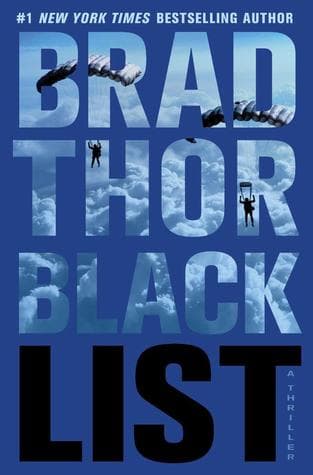
Framed and hunted by his own government, counterterrorism operative Scot Harvath must outrun an elite kill squad and expose a clandestine 'black list' to prevent the most devastating terrorist attack in U.S. history.
The novel opens with Scot Harvath, a former Navy SEAL and current counterterrorism operative, living a quiet life in rural Virginia. His peace ends when he receives a cryptic warning from a former contact, implying he has been placed on a top-secret government kill list. Soon after, a team of highly trained operatives, led by Roland, attempts to assassinate him at his secluded cabin. Harvath uses his tactical skills to escape the ambush, killing several attackers. He realizes he has been framed and is now a fugitive, hunted by his own government, with no idea who put him on the list or why.
On the run, Harvath contacts his friend and former colleague, Nicholas Acton, who works for the Department of Defense. Acton is skeptical but agrees to covertly investigate Harvath's claims. Meanwhile, Roland and his team continue their relentless pursuit, using sophisticated surveillance and tracking methods. Harvath uses his knowledge of clandestine operations to stay one step ahead, but his resources are dwindling. He begins to suspect a high-level conspiracy, as the precision and scope of the hunt suggest significant government backing, making it impossible for him to simply disappear.
Harvath's investigation leads him to an old enemy, Vasily Talbott, a former KGB operative now a powerful figure in the Russian underworld. Talbott, initially hostile, reveals that he too is being targeted by a similar, shadowy group, suggesting a broader, international conspiracy. He provides Harvath with information hinting at a sophisticated, long-term Russian intelligence operation aimed at destabilizing the U.S. government from within. This information changes Harvath's understanding of the situation, shifting his focus from merely clearing his name to uncovering a major national security threat.
As Harvath investigates, he realizes the blacklist is connected to a deep-cover Russian mole operating within the highest levels of the U.S. government. This mole, code-named 'Red October,' has been systematically eliminating individuals who posed a threat to their operation, including Harvath. Nicholas Acton's attempts to help Harvath are continually thwarted, leading Harvath to suspect the mole's influence extends even to Acton's department. The revelation of an internal traitor intensifies Harvath's mission, making him realize the immense danger facing the nation.
Harvath, with information from Talbott and his own deductions, begins to piece together the full scope of the conspiracy. He discovers the blacklist is designed to eliminate key individuals who could expose 'Red October' and his ultimate goal: to facilitate a devastating, coordinated terrorist attack on American soil. The attack aims to cripple U.S. infrastructure and economy, throwing the country into chaos and paving the way for Russian geopolitical dominance. The stakes become incredibly high, as Harvath realizes he is fighting not just for his life, but for the future of the United States.
Through dangerous encounters and intelligence gathering, Harvath learns that President Hayes, while aware of a 'blacklist,' has been manipulated and misinformed by 'Red October' and his network. The President believes the list targets genuine threats to national security, unaware it is being used to eliminate those who could uncover the Russian plot. This realization adds complexity, as Harvath must not only stop the terrorist attack but also expose the mole without further endangering the President or destabilizing the government.
The planned terrorist attack is a multi-pronged assault targeting critical infrastructure in Washington D.C., including the Capitol Building. Harvath, now working with a small, trusted team including Nicholas Acton and some covert operatives, races against time to intercept the terror cells. He engages in high-stakes confrontations across the city, using his combat expertise to neutralize threats and gather crucial intelligence about the attack's final stages. The tension grows as the clock ticks down towards the planned detonation.
Harvath finally uncovers the true identity of 'Red October': Michael Garrett, a highly respected and seemingly loyal senior intelligence official, Director of National Intelligence. Garrett, a deep-cover Russian asset, has meticulously built his network over decades, patiently waiting for the opportune moment to execute his plan. Harvath, with compelling evidence, confronts Garrett, leading to a tense and violent showdown. Garrett, cornered, tries to escape and destroy all evidence of his treachery, but Harvath is determined to bring him to justice.
Harvath successfully thwarts most of the planned terrorist attacks, though some minor incidents still occur, causing limited damage and casualties. Michael Garrett is exposed and apprehended, but the damage to the U.S. intelligence community and public trust is significant. President Hayes is horrified by the betrayal and the extent of the conspiracy. Harvath, though no longer a hunted man, grapples with the implications of such a deep-seated betrayal within his own government. The novel concludes with the immediate crisis averted, but the long-term consequences of 'Red October's' actions linger.
Despite the immediate victory, Harvath understands that the threat of foreign influence and internal betrayal remains. The events have changed his perspective on national security. The exposure of 'Red October' is a major blow to Russia's long-term strategy, but it also reveals the vulnerability of the U.S. system. Harvath, having risked everything and lost much, realizes his work is never truly done. He accepts his role as a protector, ever vigilant against unseen enemies both foreign and domestic, preparing for the next inevitable conflict.
The Protagonist
Harvath begins as a man enjoying a brief respite, is unjustly hunted, and transforms into the nation's last line of defense against a sophisticated conspiracy, reaffirming his dedication to protecting America.
The Supporting
Acton moves from cautious skepticism to unwavering support for Harvath, ultimately becoming an integral part of exposing the conspiracy, demonstrating courage in the face of immense personal risk.
The Antagonist
Roland remains a steadfast, unyielding hunter throughout, never wavering in his mission to eliminate Harvath, serving as a constant, deadly obstacle.
The Supporting
Talbott moves from a position of detached self-interest to a pragmatic alliance with Harvath, driven by shared survival and a desire to dismantle a rival power structure.
The Supporting
President Hayes begins as a leader unknowingly compromised, then faces the shocking revelation of betrayal within his administration, forcing him to confront uncomfortable truths about trust and security.
The Antagonist
Garrett's arc is one of sustained deception, culminating in his exposure and the unraveling of his lifelong mission, revealing the ultimate cost of betrayal.
The novel explores betrayal, especially the nature of internal betrayal. Scot Harvath is betrayed by his own government, hunted by those who should protect him, showing the fragility of trust within powerful institutions. The ultimate betrayal comes from Michael Garrett, a high-ranking official who has secretly worked against his country for decades, demonstrating how trust can be exploited at the highest levels. This theme forces characters, and the reader, to question who can truly be trusted when even respected figures can be compromised, as President Hayes unknowingly learns.
““The greatest threats often come not from outside, but from within, cloaked in the uniform of trust.””
Despite being hunted by his own country, Scot Harvath's actions are driven by patriotism and duty. He fights not just for his life, but for the safety and integrity of the United States against a devastating terrorist plot. This theme is also in Nicholas Acton, who risks his career and life to help Harvath, driven by his duty to protect the nation. The novel contrasts this genuine patriotism with the twisted loyalty of 'Red October,' who serves a foreign power, highlighting different forms of allegiance and duty.
““He was a soldier, a protector, and even when his country turned on him, his loyalty never wavered from what that country stood for.””
The 'blacklist' itself shows the price of secrecy. While meant to protect national security, its hidden nature makes it vulnerable to manipulation and abuse, becoming a tool for a foreign power. The secrecy around 'Red October's' identity allows him to operate undetected for decades, causing immense damage. The novel suggests that while secrecy can be necessary for national security, unchecked or corrupted secrecy can lead to catastrophic consequences, undermining the institutions it aims to protect, as President Hayes learns too late.
““Secrets, once unleashed, rarely serve their masters as intended. They become weapons in the hands of the unseen.””
Harvath's journey is an example of human survival and resilience in the face of overwhelming odds. From the initial ambush at his cabin to the relentless pursuit by highly trained operatives, Harvath consistently shows his ability to adapt, fight, and survive against a seemingly powerful adversary. His physical and mental strength are pushed to their limits, yet he never gives up, driven by his mission to clear his name and save his country. This theme highlights the power of individual determination against systemic threats.
““They could hunt him, they could try to kill him, but they would never break him. Not as long as there was breath in his body.””
A covert government kill list used to eliminate perceived threats.
The blacklist is the central plot device, serving as the catalyst for the entire narrative. It's a highly classified list of individuals deemed threats to national security, authorized for termination without due process. Its existence creates immediate stakes for Harvath, as his name being on it means he is targeted for death. Crucially, the list is not inherently evil, but its secretive nature and the lack of oversight make it a perfect tool for 'Red October' to eliminate those who could expose his conspiracy, turning a supposed safeguard into a weapon against innocent patriots.
A deep-cover Russian operative embedded within the U.S. government.
The character of 'Red October' (Michael Garrett) functions as a classic mole plot device, a long-term, high-level infiltrator who provides the ultimate antagonist and source of the conspiracy. His hidden identity and decades-long infiltration create suspense and paranoia, making it difficult for Harvath to trust anyone. The mole's position allows him to manipulate events, control information, and directly influence government decisions, making him incredibly powerful and dangerous. Unmasking 'Red October' is the primary goal, driving much of the plot's investigative work and confrontations.
The impending terrorist attack that creates urgent time pressure.
The impending terrorist attack serves as a crucial ticking clock device, injecting extreme urgency into Harvath's mission. Once he uncovers the plot, the narrative shifts from merely clearing his name to a race against time to prevent a catastrophic event. This device heightens suspense, forces Harvath to make desperate choices, and ensures that every action has immediate and severe consequences. The specific target (Washington D.C. infrastructure) and the coordinated nature of the attack amplify the stakes, making the final act a high-octane climax driven by the imminent threat.
“There are no innocent men. There are only men who haven't been caught yet.”
— Scot Harvath's cynical view on humanity and justice.
“The greatest trick the devil ever pulled was convincing the world he didn't exist.”
— A classic quote used to emphasize the hidden nature of the threat.
“Sometimes you have to break the rules to do the right thing.”
— Harvath's justification for operating outside legal boundaries.
“The truth is a weapon, and like any weapon, it can be used for good or ill.”
— Reflecting on the power and danger of information.
“In this business, everyone has a price. You just have to find it.”
— A character's observation on the corruptibility of individuals.
“Fear is a powerful motivator. It can make men do things they never thought possible.”
— Exploring the psychological impact of terror.
“The world isn't black and white, Harvath. It's a thousand shades of gray.”
— A superior officer challenging Harvath's rigid moral code.
“Trust is a luxury few can afford in our line of work.”
— A character's jaded perspective on alliances and loyalty.
“You can't fight fire with fire when the fire is already inside your own house.”
— Metaphor for internal threats and betrayal.
“History is written by the victors, but the truth often lies with the vanquished.”
— Contemplating the subjective nature of historical narratives.
“Some secrets are meant to stay buried, no matter the cost.”
— Highlighting the extreme measures taken to protect classified information.
“The deadliest weapon isn't a gun or a bomb, it's an idea.”
— Emphasizing the power of ideology and radical thought.
“Justice isn't always fair, but it demands to be served.”
— Harvath's personal mission to right wrongs, even if unconventionally.
“The silence can be more deafening than any explosion.”
— Describing the tension and dread in moments of quiet anticipation.
“To defeat your enemy, you must first understand him, even if that understanding sickens you.”
— A strategic principle for intelligence gathering and counter-terrorism.
Ready to see how well you understood this book? Take our interactive quiz with 10 questions.
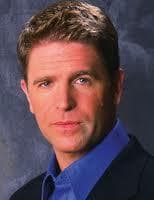
Brad Thor is a #1 New York Times bestselling author known for his thrilling political suspense novels. His flagship series features the counter-terrorism operative Scot Harvath, with notable titles including "Black List" and "The Lions of Lucerne." Thor's works are praised for their fast-paced action and intricate plots, often exploring contemporary geopolitical issues.







