“There are other worlds than these, Jake Chambers.”
— Jack Sawyer's father figure, Speedy Parker, imparts this fundamental truth to Jack at a young age, echoing a phrase from The Dark Tower series.

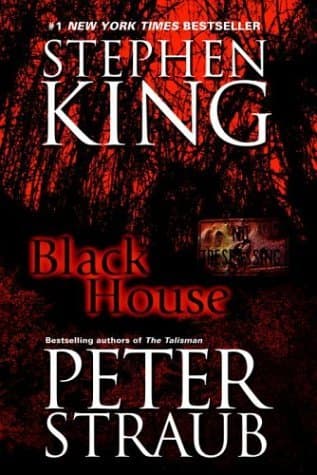
Genre
Thriller / Fantasy / Mystery
Reading Time
15-20 hours
Key Themes
See below
Sign in to track this book
A retired detective, haunted by forgotten memories and strange visions, is pulled back into a terrifying parallel world to confront an ancient evil preying on a quiet Wisconsin town.
In French Landing, Wisconsin, the brutal murder of a young boy, Tyler Marshall, by a serial killer dubbed 'The Fisherman' shatters the town's peace. This crime is quickly followed by others, mirroring the gruesome methods of the historical murderer Albert Fish. Jack Sawyer, a former LAPD homicide detective now living in Tamarack, is reluctantly drawn into the investigation by his friend, local police chief Dale Gilbertson. Jack is haunted by unexplained waking dreams and a growing sense of dread, feeling a pull towards something he cannot name. He tries to assist Dale, but his intuition suggests something far more sinister than a human killer, a feeling reinforced by the strange behavior of local residents and the unsettling atmosphere of the town.
As Jack investigates, he experiences increasingly vivid and disturbing visions, including a mysterious 'Black House' and images of red feathers and robins' eggs. These are fragments of his forgotten past as the 'Talismaker,' a hero who once traveled to a parallel dimension called the Territories. The Black House is a place of evil, a 'low house' in the Territories linked to the murders in French Landing. The Fisherman, it becomes clear, is not acting alone but is a pawn of a greater, interdimensional entity. Jack's attempts to suppress these memories are failing. The urgency of the situation, especially with another child, Amy St. Pierre, disappearing, forces him to confront the impossible.
Strange, glowing orbs of light begin to appear around French Landing, visible to a select few, including Jack and some local 'low men' – individuals sensitive to the bleed-through from the Territories. These orbs are manifestations of the malevolent entity known as the Crimson King, or rather, his agent, Mr. Munshun, who manipulates the Fisherman. Jack's visions intensify, showing him glimpses of the Territories and the true, horrifying nature of the Black House. He starts to connect the murders, the Black House, and his own lost memories, realizing that the fate of both worlds may depend on him remembering his past and embracing his destiny as the Talismaker once more. The disappearances continue, creating widespread panic.
Jack encounters strange characters who are either 'low men' – agents of the Crimson King – or individuals connected to the Territories. These encounters, along with his worsening visions, slowly break down the mental blocks that suppressed his memories. He begins to recall his previous adventures as the Talismaker and the existence of the Territories. This awakening is painful and disorienting, but necessary. He realizes that the Fisherman is a mere puppet, and the true enemy is a powerful entity from the Territories. Local residents, particularly those sensitive to the 'shine,' also start to experience unsettling phenomena, showing the interdimensional bleed-through.
As Jack's memories return, he finds himself aligning with an eclectic group: Henry Leyden, a blind, erudite radio DJ with multiple personalities; Dale Gilbertson, the overwhelmed police chief; and even some 'low men' not entirely aligned with the Crimson King. Henry Leyden, in particular, is invaluable due to his unique ability to perceive things beyond normal human senses, acting as a seer and providing crucial information. Time is running out as the Fisherman's spree escalates, and the Black House's influence grows stronger, threatening to consume French Landing and beyond. They must work together to locate the Black House and confront the entity within.
Through a combination of Jack's returning memories, Henry's insights, and traditional police work, the Fisherman is identified as Carl Bierstone. The police, led by Dale, finally corner and kill Bierstone, believing the nightmare is over. However, Jack knows this is merely a diversion. The true force behind the murders, the entity in the Black House, is still active and growing stronger. Bierstone's death further awakens Jack's powers and memories, pushing him closer to his destiny. It becomes clear that Bierstone was merely a tool, and the real enemy is a much more ancient and powerful evil, operating from the Territories.
In a horrifying turn of events, Henry Leyden is brutally murdered by a 'low man' sent by the Crimson King, specifically Mr. Munshun, to prevent him from aiding Jack. Henry's death is a devastating blow, but it also serves a crucial purpose: it fully awakens Jack's Talismaker abilities and provides him with the final piece of the puzzle. Henry's final act, as perceived by Jack, creates a portal, a 'thinny,' to the Territories. Jack realizes that to truly stop the evil, he must journey back to the parallel world he had forgotten, to the Black House itself, using the new abilities and memories that have been forcefully reawakened within him.
Jack, now fully embracing his identity as the Talismaker, prepares for the perilous journey into the Territories. He is accompanied by Dale Gilbertson and other loyal individuals, including the Reverend and a small group of local townspeople who have also become aware of the supernatural threat. The crossing is disorienting and dangerous, a blend of familiar and utterly alien landscapes. They navigate the strange, corrupted environs of the Territories, battling 'low men' and other creatures of the Crimson King, all while being drawn towards the menacing silhouette of the Black House, which radiates an aura of evil and despair.
Upon entering the Black House, Jack and his companions face the full horror of its interior. The house is a living, breathing entity of pure malevolence, a 'low house' that serves as a conduit for the Crimson King's dark power. They face terrifying illusions, psychological attacks, and physical manifestations of evil. Jack, using his reawakened Talismaker powers, must confront Mr. Munshun, the primary agent of the Crimson King, and the ultimate source of the Fisherman's madness. The battle is not just physical; it's a spiritual and mental struggle against overwhelming darkness, where Jack must rely on his inner strength and the support of his allies to survive.
Within the heart of the Black House, Jack confronts the true extent of the Crimson King's power, manifested through Mr. Munshun and the house itself. The final battle is a desperate struggle for survival and the fate of reality. Jack realizes that to truly defeat the evil, he must make a profound sacrifice, leveraging his unique abilities as the Talismaker. He manages to sever the connection between the Black House and the Crimson King, effectively destroying the conduit of evil in both worlds. The victory comes at a great personal cost, leaving Jack changed forever, but ensuring the safety of French Landing and preventing the Crimson King's influence from spreading further.
The Protagonist
Jack transforms from a man trying to forget his heroic past into the fully reawakened Talismaker, embracing his destiny to save both worlds.
The Supporting
Dale moves from a skeptical, overwhelmed small-town cop to a man who witnesses and accepts the supernatural, fighting alongside Jack.
The Supporting
Henry serves as a mentor figure to Jack, ultimately sacrificing himself to open the path to the Territories and fully awaken Jack's powers.
The Antagonist
Munshun remains a consistent force of evil, his influence growing until his ultimate defeat at Jack's hands.
The Antagonist
Bierstone is a tool for the true antagonists, his arc culminating in his capture and death, which only reveals the deeper threat.
The Antagonist
The Crimson King's influence is the driving force of the narrative, a constant, unseen threat that Jack ultimately manages to repel from French Landing.
The Mentioned
Tyler's death initiates the plot, representing the innocent victims of the Crimson King's influence.
The Supporting
Amy's disappearance and rescue (or lack thereof) mark a critical turning point, intensifying the hunt for the killer and the Black House.
The novel explores evil not just as human depravity, but as a cosmic, interdimensional force. The Fisherman's actions are horrific, but he is merely a puppet of Mr. Munshun and, ultimately, the Crimson King. This theme is present in the Black House itself, which is a living embodiment of malevolence, corrupting everything around it. The book suggests that true evil is ancient, pervasive, and capable of influencing and destroying across realities, challenging the protagonists to confront something beyond human understanding, as seen in Jack's struggle to comprehend the source of the murders.
“Evil is a many-headed beast, and sometimes the heads are in different worlds.”
Jack Sawyer's struggle to reclaim his suppressed memories as the Talismaker is central to the narrative. His forgotten past in the Territories directly impacts his present, as the forces he once fought return. The process of remembering is painful and disorienting, yet essential for him to fulfill his destiny. This theme highlights how one's past experiences, even forgotten ones, shape identity and determine future actions. Jack's internal conflict over accepting who he was and who he must become is a continuous thread, particularly through his waking dreams and the return of 'low men' from his past.
“The past is never dead. It's not even past.”
'Black House' clearly depicts two parallel worlds, our own and the Territories, and the dangerous bleed-through between them. The events in French Landing are a direct consequence of the Black House's influence from the Territories, showing that actions and entities in one reality can have catastrophic effects on another. This theme emphasizes the idea of a larger, interconnected multiverse and the delicate balance that must be maintained. The 'thinnies' and the 'low men' are physical manifestations of this bleed-through, showing how the fabric between worlds can fray and allow malevolent forces to cross over, threatening universal stability.
“There are other worlds than these, and they are closer than you think.”
The novel explores the personal cost of heroism and the necessity of sacrifice in the face of overwhelming evil. Jack Sawyer is called upon to risk his life, sanity, and even his future to protect innocent lives and prevent a cosmic catastrophe. Henry Leyden's death is a poignant example of self-sacrifice, providing Jack with the crucial push he needs to fully embrace his powers. This theme highlights that true heroism often demands more than just bravery; it requires a willingness to give up everything for a greater good, as Jack's journey culminates in a profound personal cost to defeat the Crimson King's influence.
“Sometimes the only way to save the world is to be willing to lose your own.”
A mystical object from the Territories that grants immense power and connects worlds.
While not a physical object in 'Black House' in the same way it was in 'The Talisman,' the concept of the Talisman represents Jack Sawyer's innate power and his unique connection to both worlds. It is his ability to 'flip' between realities and wield supernatural power, a power that must be reawakened. The Talisman, in this context, becomes an internal attribute, a dormant heroic potential that is slowly, painfully, brought back to life, allowing Jack to confront the interdimensional evil that threatens French Landing and the Territories.
A sentient, malevolent structure in the Territories that acts as a conduit for the Crimson King's power.
The Black House is more than just a location; it is a primary antagonist. It is a 'low house,' a physical manifestation of evil that corrupts its surroundings and serves as a direct link for the Crimson King's influence to bleed into the 'real' world. Its presence is the direct cause of the Fisherman murders and the growing dread in French Landing. It draws power from suffering and fear, growing stronger as the evil proliferates, making it a critical focal point for Jack's quest to sever the Crimson King's connection.
Weak spots in the fabric of reality where the barrier between worlds is thin, allowing bleed-through.
Thinnies are dangerous, unstable areas where the veil between our world and the Territories is stretched thin, allowing for strange phenomena, passage between worlds, and the bleed-through of malevolent influences. They are often marked by unnatural silence, shimmering air, or other unsettling effects. In 'Black House,' a thinny is created by Henry Leyden's sacrifice, serving as the literal gateway Jack and his companions must cross to reach the Black House in the Territories, highlighting the inherent danger and instability of the multiverse.
Agents of the Crimson King, existing in various states of awareness and allegiance across both worlds.
The 'low men' are a diverse group of individuals who serve the Crimson King. Some are fully aware and malevolent agents, like Mr. Munshun, while others are less consciously aware, driven by the King's influence through a form of subtle madness or corruption. They can appear in both worlds, acting as spies, enforcers, or manipulators. Their presence underscores the pervasive reach of the Crimson King's power and provides a constant, insidious threat to Jack and his allies, blurring the lines between human evil and supernatural corruption.
“There are other worlds than these, Jake Chambers.”
— Jack Sawyer's father figure, Speedy Parker, imparts this fundamental truth to Jack at a young age, echoing a phrase from The Dark Tower series.
“The world is not a pleasant place to be when your father is in a bad mood.”
— Reflecting on the often-tense atmosphere in the Sawyer household due to his father's drinking and temper.
“Sometimes you have to go back to see where you’re going.”
— Jack considers the necessity of confronting his past and his unique abilities to understand his current path and the challenges ahead.
“The world is full of monsters with friendly faces.”
— Jack's realization about the deceptive nature of evil, as he encounters seemingly normal people who are involved in horrific acts.
“Every time you think you’ve got it all figured out, the universe throws you a curveball.”
— Jack's frustration and weariness as new, unexpected elements and dangers continually arise in his investigation.
“The true horror is not what lurks in the shadows, but what we become when we stare into them too long.”
— Jack's internal struggle with the darkness he's exposed to and the fear of losing himself in the pursuit of justice.
“The past is a living thing. It breathes, it remembers, it waits.”
— Jack's understanding that the events of his past, particularly his experience in the Territories, are not truly over and continue to influence him.
“Sometimes the greatest strength is knowing when to ask for help.”
— Jack, a man who often works alone, acknowledges the importance of relying on his friends and allies in the face of overwhelming odds.
“There's a thin place between worlds, you know. Sometimes it gets a little thin.”
— Speedy Parker's subtle hints to Jack about the permeability of the barrier between the mundane world and the Territories.
“Fear is a powerful weapon, but hope is stronger.”
— Jack's internal mantra as he confronts the terrifying figures of the Black House and the despair they represent.
“The wind whispers secrets, if you know how to listen.”
— A reference to the subtle, almost magical, way Jack sometimes perceives information and guidance.
“Evil doesn't always wear a black hat, son. Sometimes it wears a smile.”
— A warning about the insidious and often charming nature of the antagonists in the story.
“The world is a tapestry, and every life is a thread.”
— A philosophical observation about the interconnectedness of lives and events, particularly in the context of the larger forces at play.
“You can never truly outrun your past, Jack. It always catches up, one way or another.”
— Jack's realization that his previous adventures in the Territories are not isolated incidents but part of an ongoing destiny.
Ready to see how well you understood this book? Take our interactive quiz with 10 questions.

Stephen Edwin King is an American author of horror, supernatural fiction, suspense, crime, science-fiction, and fantasy novels. Described as the "King of Horror", his books have sold more than 350 million copies as of 2006, and many have been adapted into films, television series, miniseries, and comic books. King has published over 65 novels/novellas, including seven under the pen name Richard Bachman, and five non-fiction books. He has also written approximately 200 short stories, most of which have been published in book collections.







