“It was a time of innocence, a time before the Fall.”
— Reflecting on the immediate post-war era in Europe.

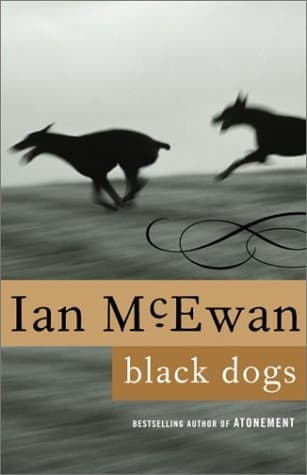
Ian McEwan (1992)
Genre
Literary Fiction / Historical Fiction
Reading Time
150 min
Key Themes
See below
Sign in to track this book
As the Berlin Wall crumbles, a son-in-law unearths the four-decade-old, terrifying encounter that fractured his in-laws' marriage, revealing how a single moment of evil can echo through a lifetime and across a continent.
Jeremy, the narrator, introduces himself as the son-in-law of Bernard and June Tremaine, though their marriage ended long ago. He recounts how he met Bernard, a prominent intellectual and former Labour MP, and June, a committed rationalist and humanist. Jeremy explains his fascination with their failed marriage, which he sees as a microcosm of ideological conflicts. He begins to compile June's memoirs, but first presents Bernard's account of their early relationship. Bernard describes their passionate meeting in 1946, their shared socialist ideals, and their move to France. He portrays June as an intelligent woman, deeply in love with him, even as their differing worldviews subtly began to emerge.
Bernard recounts their honeymoon in the Cévennes region of France in 1946. They are young, idealistic, and deeply in love, exploring the rugged landscape and enjoying their intellectual discussions. One afternoon, while hiking, June decides to explore a different path alone, despite Bernard's slight unease. She stumbles upon an isolated farmhouse inhabited by two enormous, menacing black dogs, which attack her viciously. She manages to escape, badly injured and deeply traumatized. Bernard finds her, and together they flee, but the incident leaves a lasting mark on June, shaking her rationalist worldview to its core and creating a chasm between her and Bernard, who struggles to fully comprehend her terror.
Following the attack, June has a deep spiritual transformation. The encounter with the black dogs shatters her previously unwavering rationalism and humanism. She begins to believe in the existence of evil, a force beyond human explanation or control. This leads her to explore spiritual and even mystical beliefs, seeking solace and understanding in areas she previously dismissed. She becomes increasingly detached from Bernard's purely secular worldview, finding his explanations inadequate to encompass the horror she experienced. This ideological divergence becomes a significant source of tension and misunderstanding in their marriage, pulling them further apart despite their lasting affection.
As Bernard's political career grows, with him becoming a respected Labour MP and intellectual, June feels increasingly isolated. Her spiritual awakening makes her feel out of step with Bernard's pragmatic, rational world of politics and social reform. She withdraws from public life, dedicating herself to her inner journey and her pursuit of understanding the nature of evil. Their intellectual discussions, once a cornerstone of their relationship, now highlight their growing ideological chasm. Bernard, while loving June, struggles to truly empathize with her new perspective, viewing it as a deviation from their shared humanist path, which only makes June's sense of spiritual loneliness worse.
The ideological differences and the lingering trauma from the black dogs incident eventually prove too much for Bernard and June's marriage. They separate and later divorce, though their love for each other never entirely disappears. Bernard continues his political and academic career, remaining a prominent figure in left-wing intellectual circles. June, meanwhile, dedicates herself to a more contemplative life, living simply and continuing her spiritual explorations. Despite their separation, they remain connected through their daughter, Jenny, and through the shared history that Jeremy, their son-in-law, is now trying to reconstruct. Their polite but distant interactions reveal the deep affection still present beneath the ideological divide.
Jeremy, now an adult and married to Jenny, Bernard and June's daughter, undertakes the project of writing June's memoirs. He begins by interviewing Bernard, who provides his perspective on their shared past, particularly the black dogs incident and its aftermath. Jeremy is simultaneously observing the momentous political changes sweeping across Europe in the late 1980s, particularly the imminent fall of the Berlin Wall. He draws parallels between the crumbling of political ideologies and the collapse of Bernard and June's marriage, seeing both as manifestations of deep shifts in human belief systems. The historical backdrop adds a layer of symbolic weight to his personal quest for understanding.
Jeremy travels to France to visit June, who lives a quiet, almost monastic life in the countryside. He hopes to get her side of the story, particularly regarding the black dogs incident, which he knows was central to her transformation. June, now elderly but still sharp, is initially reluctant to revisit the trauma but eventually opens up. She describes the attack with vivid, chilling detail, conveying the sheer terror and the deep sense of encountering pure evil. Her account confirms the incident's central role in shaping her spiritual and philosophical outlook, deepening Jeremy's understanding of the chasm that grew between her and Bernard.
June recounts her terrifying encounter with the black dogs in the Cévennes. She describes straying from Bernard, discovering an isolated, dilapidated farmhouse, and being ambushed by two enormous, feral dogs that seem to embody pure, unreasoning malevolence. The attack is brutal, leaving her physically wounded and psychologically scarred. She emphasizes not just the physical pain but the deep spiritual shock of confronting an undeniable, primal evil. This experience shattered her humanist faith and convinced her that evil was a real, independent force, not merely a social construct or psychological failing, a belief that Bernard, with his rationalist worldview, could never fully accept or comprehend.
Jeremy reflects on the symbolic meaning of the 'black dogs.' He understands them not just as literal animals that attacked June, but as a metaphor for the darker, irrational forces in the world — the 'black dogs' of fascism, totalitarianism, and inexplicable evil that haunted the 20th century. For June, they represented a direct encounter with this primal malevolence, an experience that irrevocably altered her worldview. For Bernard, they remained a tragic, if extreme, incident that could be explained by rational means. Jeremy sees how this fundamental difference in interpreting the 'black dogs' became the insurmountable barrier between them, shaping their individual destinies and the failure of their marriage.
Jeremy returns to England, having gathered both Bernard's and June's accounts. He feels a deeper understanding of their complex love and estrangement. As he processes his research, news breaks of the fall of the Berlin Wall, an event that symbolizes the collapse of an ideological divide that had defined much of the 20th century. Jeremy draws a poignant parallel between this historical moment and the personal ideological chasm that separated Bernard and June. He recognizes that while political walls can fall, the 'black dogs' of inexplicable evil and the deep-seated differences in how humans perceive the world continue to exist, both in society and within the most intimate relationships.
Jeremy concludes that despite his efforts to reconcile Bernard and June's narratives, their truths remain fundamentally separate and irreconcilable. Bernard's rational, humanist perspective could never fully accommodate June's encounter with an inexplicable evil, just as June's spiritual awakening alienated her from Bernard's political pragmatism. Their love was deep, but their differing interpretations of the world, particularly after the black dogs incident, created an unbridgeable gulf. Jeremy understands that some fundamental human experiences, like confronting ultimate evil, resist rational explanation and can permanently alter a person's core beliefs, making true ideological unity, even within a loving marriage, impossible.
Jeremy reflects on the lasting legacy of the past, both personal and historical. The black dogs incident, though decades old, continues to shape June's life and, indirectly, Bernard's. Similarly, the ideological struggles of the 20th century, symbolized by the Berlin Wall, have left a lasting mark on Europe. He recognizes that while he may not have fully reconciled Bernard and June's disparate narratives, he has gained a deep understanding of the forces that shape human lives and relationships: love, trauma, ideology, and the often-unseen presence of malevolence. The story, he realizes, is not just about their past, but about the continuing struggle to comprehend the 'black dogs' in the world.
The Protagonist/Narrator
Jeremy begins as an investigator seeking answers and ends with a deeper, more nuanced understanding of irreconcilable truths and the enduring nature of evil.
The Co-Protagonist/Central Figure
June transforms from a confident rationalist to a deeply spiritual individual, forever changed by a primal encounter with evil, which she tries to integrate into her understanding of the world.
The Co-Protagonist/Central Figure
Bernard remains steadfast in his rationalist beliefs, which ultimately prevents him from fully understanding or reconciling with June's spiritual evolution.
The Supporting
Jenny's arc is largely static, serving more as a connection point and symbol of continuity.
The Antagonist/Symbolic Force
The black dogs' impact is immediate and lasting, acting as a catalyst for June's transformation and the central metaphor of the novel.
The Mentioned
Her brief appearance serves to intensify June's trauma and sense of abandonment.
The novel explores the nature of evil, specifically whether it is an inherent, independent force or merely a human construct. June's terrifying encounter with the black dogs convinces her of evil's primal existence, shattering her rationalist worldview. Bernard, conversely, maintains a secular, humanist perspective, believing evil can be explained by social, psychological, or historical factors. This fundamental divergence in understanding evil becomes the central conflict that fractures their marriage, mirroring broader ideological struggles of the 20th century, such as fascism and communism, which the 'black dogs' metaphorically represent. The book doesn't offer a definitive answer but highlights how different interpretations of evil shape human lives.
“Evil was not a problem of the will, but of being. It was a force. It was a black dog.”
The novel examines how deeply held ideological beliefs can both forge and destroy intimate relationships. Bernard and June are initially united by their shared socialist and humanist ideals, forming a bond based on intellectual compatibility. However, June's post-traumatic spiritual awakening leads her to a worldview fundamentally incompatible with Bernard's steadfast rationalism. Their inability to reconcile these differing ideologies, particularly concerning the nature of evil and the existence of the spiritual, ultimately leads to the collapse of their marriage. The book suggests that while love can be powerful, it may not be enough to bridge deep ideological divides, especially when core beliefs about the world are challenged.
“Their marriage was a perfect illustration of the great ideological fault-lines of the century.”
The black dogs incident is the central traumatic event that irrevocably transforms June Tremaine. Before the attack, she is a confident rationalist; afterward, she becomes a spiritual seeker. The trauma not only leaves her physically scarred but fundamentally alters her perception of reality, forcing her to confront the limits of human reason and the presence of inexplicable forces. The novel explores how such a deep experience can reshape an individual's entire philosophical and spiritual framework, leading to a new identity that may be unrecognizable or irreconcilable to those who knew them before the event. Her transformation highlights the lasting and often isolating power of personal trauma.
“The dogs had torn away her certainty, her belief in the order of things, leaving a raw, fearful space.”
Jeremy's quest to write June's memoirs shows the theme of memory and the subjective nature of narrative. He interviews both Bernard and June, receiving two distinct and often conflicting accounts of their shared past, particularly the central black dogs incident. Each character's memory is filtered through their individual experiences, beliefs, and subsequent transformations. Jeremy's role is to piece together these disparate narratives, showing how personal history is constructed and reconstructed. The novel demonstrates that there isn't one objective truth, but rather multiple, deeply personal truths that may never fully align, making the act of remembering and recounting a complex and often unreliable process.
“There was Bernard's story, and there was June's story, and then there was the story that was neither, but somehow both.”
At its heart, *Black Dogs* is an examination of a deep love that ultimately succumbs to estrangement. Bernard and June share a deep, intellectual, and passionate love, evident in their early years. However, the ideological chasm that opens between them following June's trauma, particularly their differing views on the nature of evil, slowly but irrevocably pulls them apart. Their estrangement is not born of a lack of love, but an inability to reconcile their fundamentally different ways of seeing the world. The novel explores the pain of this separation, where affection endures but shared understanding and intimacy are lost, illustrating how even the strongest bonds can be broken by unbridgeable philosophical divides.
“Their love was like a great bridge, but the foundations on either side had begun to crumble.”
Jeremy acts as a detective, piecing together the past through multiple perspectives.
Jeremy, the son-in-law, functions as a detached yet empathetic investigator, gathering information from Bernard and June to reconstruct their shared history. This device allows for the presentation of differing perspectives on the same events, particularly the black dogs incident, without the author directly endorsing one truth. Jeremy's analytical mind and his personal connection to the subjects make him an ideal lens through which to explore the complexities of memory, trauma, and ideological conflict. His role emphasizes the subjective nature of truth and the difficulty of fully knowing another's experience.
The literal black dogs become a powerful symbol of impending ideological conflict and evil.
The black dogs are introduced as a literal threat that attacks June, but their significance quickly expands to become a powerful symbol. Even before the attack, there's a subtle tension and foreboding. Post-attack, they represent not only the inexplicable evil June encounters but also the 'black dogs' of fascism, totalitarianism, and the darker impulses of humanity that plagued the 20th century. This symbolic foreshadowing allows the personal trauma to resonate with broader historical and philosophical themes, linking the intimate story of a marriage to the larger narrative of European ideological struggles.
The personal story of Bernard and June mirrors the historical context of Europe.
The novel employs parallel narrative structures by intertwining the intimate story of Bernard and June's marriage with the sweeping historical changes in late 1980s Europe, particularly the fall of the Berlin Wall. Jeremy explicitly draws connections between the crumbling of their relationship due to ideological differences and the collapse of political ideologies. This device elevates the personal story to a more universal level, suggesting that the forces that shape individual lives—love, trauma, belief—are often mirrored in the larger historical currents of society. It contextualizes the Tremaines' struggle within a grander historical framework.
While Jeremy is reliable, the accounts he gathers from Bernard and June are inherently subjective.
While Jeremy himself strives for objectivity, the device of the 'unreliable narrator' is implicitly at play through the subjective accounts he gathers from Bernard and June. Each character provides their own version of events, filtered through their personal biases, memories, and subsequent transformations. Bernard minimizes the spiritual impact of the dogs, while June emphasizes it. This highlights that truth is often fragmented and colored by individual experience, forcing the reader, like Jeremy, to synthesize and interpret rather than simply accept a single, definitive narrative. It underscores the theme of memory's fallibility and the subjective nature of personal history.
“It was a time of innocence, a time before the Fall.”
— Reflecting on the immediate post-war era in Europe.
“The worst thing about a lie is that it always has to be fed.”
— Bernard commenting on the nature of deceit.
“History was not a story to be told, but a wound to be healed.”
— Bernard's perspective on the lingering effects of the war.
“Love was not a state of being, but a constant act of becoming.”
— June's evolving understanding of her relationship with Bernard.
“There was a point where rational thought simply evaporated, leaving only instinct.”
— Referring to the moment June encountered the black dogs.
“The past was a foreign country; they did things differently there.”
— A general reflection on the differences between generations and eras.
“Sometimes the greatest acts of courage are those performed in silence.”
— Reflecting on the quiet resilience of certain characters.
“The political was always personal, and the personal, inevitably, political.”
— Bernard's belief in the interconnectedness of individual lives and broader ideologies.
“We carry our histories within us, like an extra organ.”
— Bernard contemplating the indelible mark of past experiences.
“It was the burden of consciousness, to be aware of the beauty and the horror simultaneously.”
— A philosophical observation on human awareness.
“The future was not something that happened to you, but something you made.”
— Bernard's proactive approach to life and his beliefs.
“Grief was a dark room, and memory its only window.”
— Observing the process of mourning and remembrance.
“There were two kinds of people: those who saw the world as it was, and those who saw it as it should be.”
— A distinction made by Bernard about different worldviews.
“The dogs were not merely dogs; they were a manifestation, a symbol.”
— The narrator's interpretation of the black dogs encountered by June.
Ready to see how well you understood this book? Take our interactive quiz with 10 questions.

Ian Russell McEwan is an English novelist and screenwriter. In 2008, The Times featured him on its list of "The 50 greatest British writers since 1945" and The Daily Telegraph ranked him number 19 in its list of the "100 most powerful people in British culture".







