“We call them dumb animals, and so they are, for they cannot tell us how they feel, but they can suffer just as much as we can.”
— Black Beauty reflecting on human perception of animals.

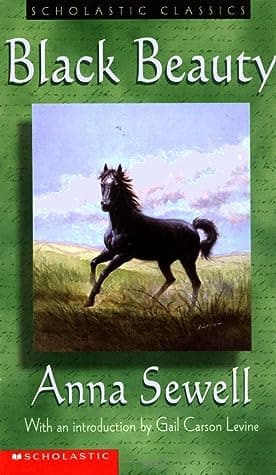
Anna Sewell (1977)
Genre
Children's / Historical Fiction / Young Adult
Reading Time
245 min
Key Themes
See below
Sign in to track this book
From a pampered start to Victorian England's harsh realities, Black Beauty's journey shows humanity's best and worst through every kind touch and cruel whip.
Black Beauty, first named Darkie, is born and raised in a pleasant meadow at Farmer Grey's estate. His mother, Duchess (also called Pet), teaches him about good manners and obedience, stressing the importance of being gentle and never biting or kicking. He spends his early years playing with other young colts and learns to wear a halter and be led. Farmer Grey is a kind master, making sure his horses are well-fed, comfortable, and never overworked. Darkie describes the joy of running freely and the gentle training he receives, which prepares him for his future as a working horse.
When he is four years old, Darkie is sold to Squire Gordon of Birtwick Park. There, he is renamed Black Beauty and meets his new friends: Ginger, a beautiful but spirited mare with a difficult past, and Merrylegs, a cheerful, playful pony. John Manly, the head groom, is a kind and skilled horseman, ensuring Beauty and the others are always well-treated. Beauty learns to wear a saddle and bridle, pulls the master's carriage, and enjoys a life of comfort and respect. He forms a strong friendship with Ginger and Merrylegs, and they often talk about the kindness of their human caregivers, especially John and James Howard, the stable boy.
Black Beauty tells of several events at Birtwick Park that show his owners' care. One night, a strong storm causes a bridge to collapse. Squire Gordon, riding Beauty, just avoids disaster when Beauty senses the danger and refuses to cross the damaged bridge, saving both their lives. Another event is the departure of James Howard, the stable boy, who gets a job as a coachman for a lady. Beauty, Ginger, and Merrylegs are sad he is leaving, but also happy for his career move, showing the close bonds formed with their human caretakers. Joe Green replaces James, at first showing some inexperience but proving to be kind.
After several happy years at Birtwick Park, a great sorrow affects the horses. Mrs. Gordon becomes very ill, and the doctor advises that she and Squire Gordon must move to a warmer climate abroad. This means all the horses, including Black Beauty, Ginger, and Merrylegs, must be sold. Beauty describes the sadness of the parting, especially from John Manly, who had been such a devoted, kind groom. He and Ginger are sold to Earlshall Park, the estate of the Earl of W___. This marks the end of Beauty's good times and the start of a new, uncertain period.
At Earlshall Park, Black Beauty and Ginger are made to wear fashionable but cruel bearing reins, which force their heads into an unnatural position, causing pain and restricting their breathing. Reuben Smith, the head groom, drives recklessly and is often drunk. One night, while driving Lady W___'s carriage, Smith crashes, injuring Beauty and killing himself. After recovering, Beauty is placed with a new groom, French, who is kinder, but the general atmosphere is less caring than Birtwick. Ginger, already sensitive, suffers greatly from the bearing rein and heavy work; her spirit slowly breaks under the strain. She is eventually sold due to her worsening condition.
Beauty is sold to a livery stable owner, then to a London cab driver named Jerry Barker. Jerry is a kind, principled man who treats his horses well, but the work is very hard. Beauty pulls a cab for long hours, often in bad weather, and experiences London's crowded, noisy streets. He sees much cruelty and neglect inflicted on other cab horses, but Jerry makes sure he is fed, rested, and clean. However, Jerry's health eventually fails from his own strenuous work, and he has to give up his cab business, leading to Beauty being sold again.
After Jerry Barker, Black Beauty is sold to a series of increasingly harsh, neglectful owners. He works for a man who hires him out, often to inexperienced or cruel drivers. He is overworked, underfed, and his body starts to break down. His knees are scarred from a fall caused by a careless driver. He is then sold to a baker, who also overworks him, making him pull heavy loads despite his weakening state. Beauty describes the constant pain and exhaustion, the lack of proper rest, and the feeling of hopelessness as he falls deeper into misery and neglect. He meets old friends from Birtwick, like Ginger, who is also in a state of extreme decline, pulling a heavy coal cart.
Beauty's condition becomes so bad that he is put up for sale at a horse fair, looking thin, weak, and old. A kind old farmer named Thoroughgood spots him, recognizing the horse's potential despite his worn look. Farmer Thoroughgood buys Beauty, planning to give him a peaceful retirement. He takes Beauty to his farm and puts him in the care of his grandson, Willie. Willie is a gentle, patient boy who grooms Beauty carefully, feeds him well, and lets him rest and recover. Slowly, Beauty regains his strength and health, experiencing kindness once more.
As Beauty recovers at Farmer Thoroughgood's, he notices that the stable boy, Willie, reminds him of someone. One day, a gentleman visits the farm, and Beauty immediately recognizes his voice and face – it is Joe Green, the stable boy from Birtwick Park, now grown up and working for Farmer Thoroughgood. Joe, too, recognizes Beauty and is happy to find him. He confirms Beauty's identity, telling stories from Birtwick. Beauty is deeply moved to be reunited with a kind face from his past. He is given a permanent home with Farmer Thoroughgood and Joe Green, where he lives out his days in comfort, peace, and the loving care he deserves, never to be sold again.
The Protagonist
Beauty starts as an innocent, well-cared-for colt, endures a long period of hardship and neglect, and ultimately finds a loving, permanent home in his old age.
The Supporting
Ginger begins as a traumatized, rebellious horse, finds temporary peace and trust, but ultimately deteriorates and dies due to continued mistreatment.
The Supporting
Merrylegs remains consistently good-natured and ends up in a pleasant, permanent home.
The Supporting
John remains a consistently kind and exemplary groom, representing the ideal human caregiver.
The Supporting
Squire Gordon remains a benevolent and wise master, representing ideal human ownership.
The Supporting
Jerry consistently embodies kindness and integrity, providing a temporary sanctuary for Beauty amidst urban hardship.
The Supporting
Joe starts as an inexperienced boy, learns the importance of proper care, and ultimately becomes the loving caregiver who provides Beauty's happy ending.
The Supporting
Duchess provides foundational teaching and love, remaining a positive memory for Beauty.
The Mentioned
Reuben's character serves as a cautionary tale about human vice and its consequences for animals.
A main theme of 'Black Beauty' is how human kindness and cruelty affect animals, especially horses. Through Beauty's experiences, the novel shows how proper care, gentle handling, and empathy lead to happy, willing animals, while neglect, overwork, and harsh treatment cause great suffering. Examples include John Manly's good care at Birtwick versus the painful bearing reins at Earlshall, or Jerry Barker's principled cab driving compared to the brutal conditions from other London drivers. The book directly promotes humane animal treatment, stressing their ability to feel pain and loyalty.
“There is no religion without love, and people may talk as much as they like about their religion, but if it does not teach them to be kind to animals, I do not believe it.”
The novel explores how social class and economic conditions affect how horses are treated. Horses owned by rich families (like the Gordons) usually get better care, though even they can suffer from fashion-driven cruelties (like the bearing rein at Earlshall). As Beauty moves down the social ladder, working for cab drivers and cart owners, economic pressures often lead to overwork, poor feeding, and neglect. Owners like Jerry Barker try to balance their financial needs with their desire to treat their horses well, while others cannot afford or choose not to provide enough care, showing how poverty can make animal suffering worse.
“If a man would work his horse, he must feed him.”
By telling the story from Black Beauty's first-person view, Anna Sewell makes readers feel empathy for animals. The reader experiences the world through a horse's senses – the pain of a bearing rein, the fear of a fire, the comfort of a warm stable, the joy of a gallop. This choice highlights that animals have feelings, thoughts, and memories, and that their well-being depends on human actions. It challenges human-centered views and encourages readers to think about their behavior's consequences from an animal's perspective.
“I hope you will grow up gentle and good, and never learn bad ways; work with a good will, pull your best, and be brave and patient.”
The novel follows Black Beauty's entire life, from young colt to weary old horse. This journey shows that change, loss, and the need for resilience in hard times are unavoidable. Beauty experiences periods of great happiness followed by intense suffering, losing friends and masters repeatedly. Despite the physical and emotional toll, he keeps his gentle spirit and willingness to serve. His eventual rescue and peaceful retirement offer a hopeful message about getting through hardship and finding peace and love after a long, difficult life.
“My troubles are over, and I am at home.”
Telling the story from the perspective of a horse.
The entire novel is narrated by Black Beauty himself, allowing readers to experience the world, human actions, and other animals' perspectives directly through his eyes and thoughts. This device fosters deep empathy, as readers understand the physical pain of bearing reins, the fear of abuse, and the joy of kindness from the animal's point of view. It makes the advocacy for animal welfare incredibly personal and immediate, as Beauty can directly comment on the conditions and treatment he and his companions receive, making a powerful case for humane treatment.
A series of distinct incidents and changes in ownership.
The plot unfolds as a series of episodes, each typically marked by a change in Black Beauty's ownership or a significant event. This structure allows Sewell to showcase a wide range of human behaviors towards horses, from the most benevolent to the most cruel, across various social classes and professions (farm horse, carriage horse, cab horse, cart horse). Each episode serves as a vignette illustrating specific aspects of animal welfare, allowing the author to explore different facets of her central theme without being confined to a single setting or set of characters for the entire narrative.
Using the story to teach moral lessons about animal welfare.
Anna Sewell explicitly intended 'Black Beauty' to be a didactic novel, aiming to educate readers, particularly horse owners and drivers, about the proper treatment of horses. The narrative frequently includes direct commentary from Black Beauty or other characters (like his mother, John Manly, or Jerry Barker) on the right and wrong ways to care for animals. Specific instances of cruelty (e.g., bearing reins, 'blinders,' overwork) are meticulously described along with their painful consequences, serving as clear examples of what to avoid. The book's engaging story makes these moral lessons palatable and memorable for readers.
Contrasting characters to highlight themes.
Sewell effectively uses foil characters to emphasize her themes. Ginger, with her initial distrust and eventual broken spirit due to past abuse, serves as a foil to Black Beauty's more consistently gentle and resilient nature, illustrating different responses to mistreatment. Among human characters, the exemplary John Manly and Jerry Barker stand in stark contrast to reckless figures like Reuben Smith or the indifferent cab drivers, highlighting the vast spectrum of human kindness and cruelty. These contrasts underscore the profound impact human choices have on animal lives.
“We call them dumb animals, and so they are, for they cannot tell us how they feel, but they can suffer just as much as we can.”
— Black Beauty reflecting on human perception of animals.
“There is no religion without love, and people may talk as much as they like about their religion, but if it does not teach them to be kind to man and beast, it is all a sham.”
— Jeremiah Barker (Jerry) explaining his views on true religion.
“My life, for the first few years, was a happy one. I was fed at my mother's side and at night I lay down close by her, and in the daytime I gambolled with the other colts and filled my stomach with the sweet grass.”
— Black Beauty describing his idyllic early life on Farmer Grey's land.
“If a horse would speak, he would tell you that the cruellest of all things is the bearing rein.”
— Black Beauty describing the pain and unnaturalness of the bearing rein.
“It is good people who make good places.”
— Black Beauty reflecting on the impact of his owners on his environment.
“My mother always told me that I was to do my best, and I have always tried to do it.”
— Black Beauty recalling his mother's early advice.
“I hope you will grow up gentle and good, and never learn bad tricks.”
— Black Beauty's mother advising him in his youth.
“There are many cruel people in the world, but there are good people too, and one must hope for the best.”
— Black Beauty's reflection on the duality of human nature.
“I would not sell him for any money to a man who would ill-use him.”
— Squire Gordon expressing his care for Black Beauty when considering selling him.
“A good master makes a good servant.”
— Jerry Barker's philosophy on the relationship between owner and animal.
“If they would only think how much the comfort of horses depends on the harness being made to fit them, and to be kept in good order.”
— Black Beauty lamenting poor harness fitting.
“I was now beginning to understand that there were other troubles in the world besides bad masters.”
— Black Beauty's growing awareness of life's hardships.
“My troubles are all over, and I am at home.”
— Black Beauty's final thoughts upon finding his permanent, loving home.
“We are often in the dark, and we cannot tell what is coming.”
— Black Beauty reflecting on the uncertainty of life.
Ready to see how well you understood this book? Take our interactive quiz with 10 questions.
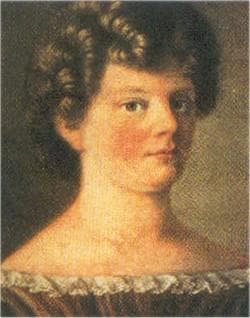
Anna Sewell was an English novelist best known for her single, yet enduring, work, Black Beauty. Published just five months before her death, the novel is a poignant and influential piece of children's literature, told from the perspective of a horse. Sewell's lifelong physical disability profoundly shaped her empathy for animals, which shines through in her classic tale.
Dan Gemeinhart
4.5
Kate O'Hearn
4.4

Jeanne Birdsall
4.4

Jen Wang
4.4
Wendelin Van Draanen
4.3

John Marsden
4.3

Chris Van Allsburg
4.3
Jennifer A. Nielsen
4.2