“When you have nothing, you have nothing to lose.”
— Gaia's realization about her own lack of possessions and freedom.

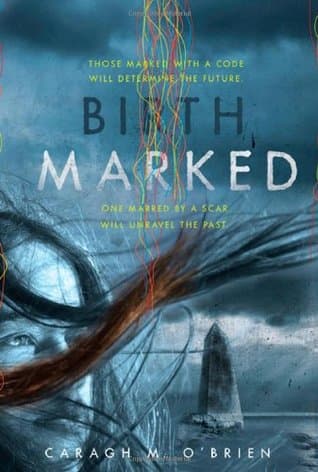
Caragh M. O'Brien (2010)
Genre
Fantasy / Science Fiction / Young Adult / Romance
Reading Time
360 min
Key Themes
See below
Sign in to track this book
In a future desert world, a midwife must enter the privileged Enclave to save her parents, forcing her to face the truth behind the babies she gives away.
Sixteen-year-old Gaia Stone lives in the Outside, a wasteland around the advanced Enclave. As a midwife, she delivers babies and gives one healthy infant per month to the Enclave for 'Advancement.' Gaia believes this is a necessary sacrifice. One night, after delivering a baby she names Agnes, Agnes's mother begs her not to take the child. Gaia reluctantly does her duty. Returning home, she finds Enclave guards arresting her parents, Yarrow and Jon Stone. Her father, a historian, is accused of having forbidden knowledge. Gaia is left alone, shocked by the sudden loss of her family.
After her parents' arrest, Gaia must survive alone in the harsh Outside. She relies on her midwifery skills and help from neighbors, especially the older midwife, Lena. Lena reveals that Gaia’s mother, Yarrow, was once a respected midwife inside the Enclave before choosing to live Outside. This information makes Gaia doubt the Enclave and her parents' loyalty. Gaia also finds her father's hidden books and artifacts, the reason for his arrest. These forbidden texts show her a world beyond the Enclave's controlled story, making her want to know the truth even more.
Enclave guards eventually capture Gaia and bring her inside the wall for questioning. The Matron, who runs the Enclave's birth program, interrogates her politely but firmly. While in the Enclave, Gaia tours some facilities. She is struck by the contrast between the Outside's desolation and the Enclave's clean, controlled environment. She also meets Leon, a young, smart Enclave citizen assigned to watch her. Despite the situation, they feel a connection. Leon seems curious about her life and the Outside, hinting he is unhappy with his own society. He gives her vague advice, suggesting the Enclave is not what it seems.
The Matron offers Gaia a chance to become an 'Advanced' citizen, recognizing her skills. This would mean leaving her past and joining the Enclave's privileged society. However, Gaia's main goal is to find her parents and understand why they were taken. She refuses the Matron's offer, making it clear her loyalty is with her family, not the Enclave. This defiance is a turning point for Gaia, strengthening her resolve to challenge the system she once served. Her refusal surprises the Matron, who sees it as foolish, but it also earns her some respect from Leon, who sees her determination.
Back in the Outside, Gaia seeks out Lena. Lena reveals that Gaia's mother, Yarrow, was not just a midwife but a key person in an underground resistance movement. This group aims to expose the Enclave's lies and challenge its control. Lena explains that Yarrow had been secretly gathering information and planning for a long time. This revelation shatters Gaia's previous understanding of her mother and her parents' apparent acceptance. It also gives her a new purpose: to continue her mother's work and find out what happened to her. Gaia begins to understand that her parents' arrest was part of a larger, more dangerous game.
Driven to rescue her parents and armed with knowledge of the resistance, Gaia plans to re-enter the Enclave. With Lena's help and Leon's subtle guidance, she bypasses security and infiltrates the guarded city. Her mission is dangerous; she is an outsider in a society that values conformity and control. She must navigate the Enclave's social structures and surveillance, knowing one wrong move could lead to capture. Her first goal is to find her parents, but she soon realizes uncovering the truth behind their imprisonment is just as important.
Once inside the Enclave, Gaia uses her midwifery skills and understanding of the system to access restricted areas. She eventually uncovers the truth behind the 'Advancement' program: the babies taken from the Outside are not simply integrated into Enclave families. Instead, they are used for genetic experiments and organ harvesting to sustain the aging Enclave population, especially its elite. This discovery sickens Gaia and confirms her worst fears about the Enclave's disregard for human life. The benevolent facade of 'Advancement' crumbles, revealing a dark, exploitative reality that justifies her mother's rebellion.
Gaia eventually finds her mother, Yarrow, imprisoned in the Enclave. Their reunion is emotional but short. Yarrow, weak but still defiant, reveals more about the Enclave's long-term plan: to create a genetically 'perfect' population free from the perceived flaws of the Outside. She explains that the Enclave is slowly dying, unable to reproduce effectively, and relies on the Outside for its survival. Yarrow also tells Gaia about a hidden communication network within the Enclave, which she helped establish to share information with the resistance. She urges Gaia to find her father and continue their fight, as she has become a symbol of hope for the resistance.
Leon, who has been subtly helping Gaia and giving information, reveals he is also part of the resistance. Yarrow recruited him years ago. His position within the Enclave allows him to gather important intelligence. He explains his initial observation of Gaia was a test, and he has been working to help her from the start. Together, they plan to expose the Enclave's secrets and free Gaia's father. Leon's alliance is a turning point, giving Gaia a valuable resource and a trusted companion within the enemy's stronghold. Their growing bond adds a personal risk to their dangerous mission.
With Leon's help, Gaia finds her father, Jon Stone, who is held in a special prison because of his knowledge. They plan a daring escape. They intend to broadcast the truth about the Enclave's genetic experiments and organ harvesting to both the Inside and Outside populations. The escape is dangerous, with narrow escapes and close calls with Enclave guards. They access the Enclave's communication system. Jon, with his historical knowledge, prepares to deliver a powerful message exposing the Enclave's lies and calling for unified resistance. The mission's success depends on this broadcast.
The broadcast succeeds, sending shockwaves through both the Enclave and the Outside. Many Enclave citizens are horrified by the revelations, while the Outside population finds their suspicions confirmed. Gaia, Leon, and Jon escape the Enclave, but not without losses and close calls. While they have exposed the truth, the Enclave's power structure is not immediately dismantled. The book ends with Gaia, now a leader, working with the energized resistance to plan the next steps. The fight for equality and freedom is not over, but a victory has been won, and Gaia is ready to lead.
The Protagonist
Gaia transforms from a compliant quota-filler into a determined rebel leader, exposing the Enclave's secrets and fighting for a better future.
The Supporting
Leon moves from being a secretive informant to an active participant in the resistance, openly aiding Gaia and confessing his feelings.
The Supporting
Yarrow's past actions and current imprisonment fuel Gaia's quest, revealing her as a foundational figure in the resistance.
The Supporting
Jon's arrest sparks the plot, and his historical knowledge becomes crucial for the resistance's public broadcast.
The Antagonist
The Matron remains a steadfast enforcer of the Enclave's cruel policies, representing the oppressive system Gaia fights against.
The Supporting
Lena acts as a mentor and guide for Gaia, providing crucial support and information about the resistance.
The Mentioned
Agnes's fate highlights the cruelty of the Enclave, solidifying Gaia's resolve to fight the system.
The novel explores the danger of controlled stories and the need to uncover hidden truths. The Enclave keeps its power through lies, like the 'Advancement' program, which hides a horrible reality. Gaia's journey is about revealing these deceptions, from finding her father's forbidden books to uncovering the true purpose of the babies taken from the Outside. The broadcast at the end shows the breaking of these lies and the chance for a new, honest understanding.
““They told us it was a privilege, a chance for a better life. They lied.””
The clear division between the poor Outside and the rich Enclave highlights extreme social inequality. The Enclave uses the Outside population, taking their children as a resource for its own survival. This shows a system built on injustice. Gaia, born in the Outside, experiences this inequality directly, at first accepting it. Her growing awareness of the Enclave's exploitation fuels her rebellion. She fights for a world where no one is less valuable based on their birthplace.
““We were the wild, the untamed, the raw material for their perfect world.””
Family ties and loyalty drive Gaia. Her initial acceptance of the Enclave's system comes from her parents' apparent compliance, but their arrest shatters this and ignites her fierce loyalty to them. Her quest to rescue her parents drives much of the plot, even when she discovers their secret lives as resistance fighters. This theme extends to loyalty to one's community, as Gaia ultimately fights not just for her family, but for the oppressed people of the Outside.
““I wouldn't abandon them. Not for any privilege, not for any promise.””
The novel champions rebellion against oppressive systems. Gaia's change from a compliant midwife to a resistance leader shows the power of individual defiance. The existence of an organized underground movement, led by figures like Yarrow, shows that even seemingly impossible systems can be challenged. Broadcasting the truth becomes a powerful form of resistance, aiming to awaken both the oppressed and those who went along with the system. It highlights that even small acts of defiance can lead to larger movements.
““Sometimes, the only way to save a life is to risk your own.””
A physical and symbolic barrier separating two worlds.
The massive wall surrounding the Enclave serves as both a literal and metaphorical barrier. Physically, it divides the technologically advanced, privileged society of the Enclave from the desolate, impoverished Outside. Symbolically, it represents the social, economic, and informational divide between the two worlds. The wall reinforces the Enclave's control, keeping the Outside population in ignorance and preventing dissent from spreading. Breaching the wall is a significant plot point, symbolizing Gaia's defiance and her journey to uncover the truth.
The Enclave's demand for babies from the Outside.
The quota system is the central mechanism of the Enclave's exploitation. It forces Outside midwives like Gaia to deliver a healthy infant to the Enclave each month, under the guise of 'Advancement.' This device establishes the initial conflict and Gaia's moral dilemma. It also serves as a slow-burn revelation, as the true, horrifying purpose behind the quota (organ harvesting and genetic manipulation) is gradually uncovered, driving Gaia's rebellion and exposing the Enclave's profound inhumanity.
Hidden historical texts that challenge the Enclave's narrative.
Gaia's father, Jon Stone, secretly hoards books and historical artifacts, which are forbidden by the Enclave. This 'forbidden knowledge' serves as a catalyst for Gaia's questioning of the Enclave's official history and its control over information. These texts provide glimpses into a past that contradicts the Enclave's carefully constructed narrative, empowering Gaia with understanding and fueling her desire for truth. The act of reading and preserving these books is an act of intellectual resistance against censorship and manipulation.
A public transmission exposing the Enclave's secrets.
The climax of the novel centers around the resistance's plan to broadcast the truth about the Enclave's practices to both the Inside and Outside populations. This device is crucial for disseminating the shocking revelations and galvanizing widespread opposition. It represents the power of communication and information in challenging oppressive regimes. The broadcast is a symbolic act of tearing down the informational wall, allowing the truth to penetrate the carefully constructed facade of the Enclave and ignite a revolution.
“When you have nothing, you have nothing to lose.”
— Gaia's realization about her own lack of possessions and freedom.
“The world is not always what it seems, and people are not always who they appear to be.”
— A lesson Gaia learns about the true nature of her society and those around her.
“Sometimes the greatest love is the one you have to fight for.”
— Gaia's internal reflection on her relationship with Leon and the obstacles they face.
“Ignorance is not bliss when it keeps you from the truth.”
— Gaia's growing desire for knowledge about the world beyond the Enclave.
“Hope is a dangerous thing, but it's also the only thing that keeps us going.”
— Gaia contemplating the slim chances of success in her rebellion.
“You can't save everyone, but you can save someone.”
— A guiding principle Gaia adopts as she works to help others.
“Fear is a cage, and courage is the key.”
— Gaia overcoming her own fears to take action against the Enclave.
“The future is not written, it's made.”
— Gaia's belief in her ability to change her destiny and the destiny of others.
“Even in the darkest places, there can be light.”
— Gaia finding moments of joy and connection amidst the oppression.
“Sometimes the rules are meant to be broken.”
— Gaia's defiance of the Enclave's strict laws.
“True strength isn't about how much you can lift, but how much you can endure.”
— Gaia reflecting on her own resilience in the face of hardship.
“The greatest prison is a mind that refuses to see beyond its bars.”
— Gaia's understanding of the psychological control exerted by the Enclave.
“A mother's love knows no bounds, even when faced with impossible choices.”
— Gaia's deep bond with her mother and the sacrifices made for her.
“To truly live, you must be willing to risk everything.”
— Gaia's ultimate decision to fight for a better world, regardless of the cost.
Ready to see how well you understood this book? Take our interactive quiz with 10 questions.
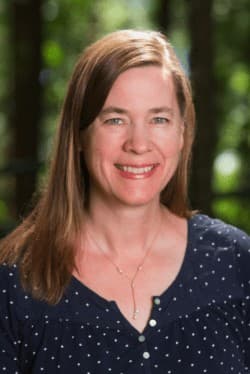
Caragh M. O'Brien is a speculative fiction author known for her young adult novel "Birthmarked." The novel explores themes of societal control and individual freedom, establishing her as a voice in dystopian literature. O'Brien's work often delves into complex ethical questions within imaginative settings.







