“It is a house of the blind, she thinks, and she is the only one who can see.”
— Malorie's early realization about the house of survivors.

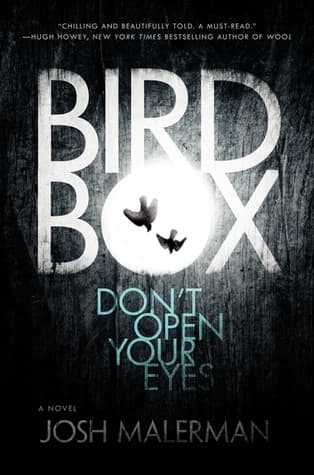
Josh Malerman (2001)
Genre
Thriller / Mystery / Science Fiction
Reading Time
262 min
Key Themes
See below
Sign in to track this book
An unseen force drives people to madness. A mother, blindfolded, must navigate a dangerous river with her two children, using only sound to escape the horror.
The story begins with Malorie, a protective mother, getting her four-year-old children, Boy and Girl, ready for a dangerous river journey. They live in an abandoned house, surrounded by an unseen threat that causes madness and suicide upon sight. Malorie has trained the children to listen and obey, as they must stay blindfolded for the entire trip. Her goal is a rumored safe haven, twenty miles downriver. She packs few supplies, including a bird box with three canaries, which she thinks can sense the entities. Tension is immediate as they start into the unknown, navigating only by sound and Malorie's memory of the river.
Five years earlier, Malorie is pregnant and alone when news reports describe a mysterious epidemic of mass suicides worldwide. People become violent against themselves and others after seeing something indescribable. Her sister, Shannon, visits, bringing more alarming news and growing panic. Soon, Shannon falls victim to the phenomenon, succumbing after looking out a window. Malorie watches her sister's horrific, self-inflicted death. This event forces Malorie to face the world's collapse and her urgent need for safety for herself and her unborn child.
Desperate and alone after Shannon's death, Malorie finds a house with blacked-out windows, guided by an anonymous phone call. Inside, she finds a group of survivors led by Tom, a practical man who has organized their defenses. The group includes Don, an older man; Jules, a former athlete; Felix, a young man; Cheryl, a kind woman; and Olympia, another pregnant woman. They live by strict rules: covered windows, blindfolded outdoor trips, and extreme caution with outside sounds. This house becomes Malorie's temporary refuge, a place to prepare for motherhood during the apocalypse.
Life in the house settles into a tense routine. Tom uses a ham radio, trying to contact other survivors. The group shares stories, debates theories about the entities, and struggles with dwindling resources. Malorie and Olympia bond over their shared pregnancy. Don, however, often expresses a wish to see outside, thinking it might be a trick. The survivors develop methods for foraging, always blindfolded, using sound and touch. The constant outside threat creates paranoia and distrust, yet they try to build some sense of community and hope in their isolated lives.
One day, a stranger named Gary arrives at the house, claiming to be a survivor. He is blindfolded and brought inside. Gary seems harmless at first, but Malorie immediately distrusts him. He carries a briefcase of drawings depicting the entities, which he claims are beautiful and bring enlightenment. He speaks of 'seeing' as a path to truth, openly defying the group's rule of not looking. His presence creates a dangerous division within the group, as he subtly tries to convince others that the entities are not threats but something to welcome, increasing Malorie's suspicions.
Malorie and Olympia go into labor at the same time. During the births, Gary, who has been pretending to sleep, acts. He removes the window coverings, exposing several group members to the entities outside. Jules and Felix go mad and commit suicide. Don, influenced by Gary, also looks and succumbs. In the panic, Olympia, after seeing something, tries to harm her newborn before taking her own life. Malorie, having just given birth to her son, must kill Olympia to protect the babies, strengthening her resolve to protect them at all costs. Cheryl, though traumatized, helps Malorie with the newborns.
After the tragedy, only Malorie, Tom, and Cheryl remain with the two babies — Malorie's son and Olympia's daughter. Cheryl eventually leaves, unable to cope with the trauma, and does not return. Malorie names the children Boy and Girl, refusing individual names to stress their shared struggle and the need for strict adherence to her rules. Tom becomes a father figure, teaching them practical skills while Malorie instills absolute obedience, drilling them on navigating blindfolded and responding to her commands. Their childhood is one of constant watchfulness, where the unseen world is a deadly threat.
Tom continues trying to contact other survivors via ham radio. One day, he contacts Rick, who claims to run a safe, blind community twenty miles downriver. Rick describes a place where people live without fear of the entities, a true sanctuary. This news gives Malorie hope, as she has long dreamed of a better life for her children. Despite the huge risks, Malorie decides this is their chance. She carefully plans their journey, knowing the river itself presents many dangers, let alone the entities along its banks.
The river journey is difficult. Malorie, Boy, and Girl navigate rapids, fallen trees, and the constant threat of the entities. The canaries in the bird box occasionally chirp loudly, signaling nearby horrors, forcing Malorie to row harder or change direction. At one point, they hear voices from the riverbank — people who have been 'turned' and now try to coax others to look. Malorie's determination is tested by fear and exhaustion, but the children's trust and her strong maternal instinct push her forward. The river itself becomes a path to salvation and a source of constant danger.
As they near their destination, they meet a group of 'turned' individuals trying to capsize their boat, urging them to open their eyes. Malorie must make a hard decision to protect her children. She uses her knowledge of the river and boat to evade them, narrowly escaping. One of the 'turned' individuals tries to climb into their boat, and Malorie, in a desperate act of self-preservation, shoves them back into the water. The struggle further confirms Malorie's understanding that survival requires constant vigilance and, at times, harsh action.
Finally, after days of hard travel, Malorie hears the sounds of rapids, showing they are close to the sanctuary. She guides the boat through the rough water, using her children's sharp hearing to find obstacles. They eventually crash onto a bank and are met by Rick, who is blind. He explains that the community is mostly visually impaired, making them immune to the entities' main weapon. The children are given names for the first time: Tom and Olympia. Malorie, for the first time in years, feels a glimmer of true safety and hope, realizing her journey has brought them to a place where they can finally live without constant fear.
Inside the sanctuary, Malorie and the children find a thriving, though sightless, community. Rick introduces them to the other residents, who move with confidence. The children, now named Tom and Olympia, begin to explore their new world, learning to interact with others and experience a childhood free from terror. Malorie, relieved and exhausted, finally takes off her blindfold, though she still struggles with the fear of looking. The book ends with Malorie watching her children play, an image of hope in a changed world, where a new form of life has begun.
The Protagonist
Malorie transforms from a fearful, pregnant woman into an unyielding survivor and a fiercely protective mother, eventually learning to trust others and find a semblance of peace.
The Supporting
Born into a world of darkness and fear, he grows up learning strict obedience, eventually finding a new sense of identity and freedom in the blind community.
The Supporting
Adopted into Malorie's care after her biological mother's death, she learns to survive blind and finds a new beginning with her adopted family.
The Supporting
Tom evolves from a community leader to Malorie's trusted partner and a paternal figure, offering stability and hope until his eventual sacrifice.
The Antagonist
Gary enters the story as a seemingly vulnerable survivor, only to reveal himself as a dangerous zealot who actively facilitates the entities' influence.
The Supporting
Olympia's brief arc highlights vulnerability and tragedy, as she forms a bond with Malorie before succumbing to the entities' influence during childbirth.
The Mentioned
Shannon's arc is short and tragic, serving as Malorie's initial, brutal encounter with the entities' power.
The Supporting
Rick serves as the beacon of hope throughout the story, representing the destination and the possibility of a new, safer life.
The main theme of 'Bird Box' is the intense, often brutal, nature of maternal protection when facing horror. Malorie's entire life focuses on keeping her children, Boy and Girl, safe. This theme shows in her strict discipline, forcing her children to live blindfolded and teaching them absolute obedience, as seen during their dangerous river journey. Her initial refusal to give them individual names highlights her focus on their group survival rather than individual identity. The peak of her protection is her willingness to sacrifice everything, including her own emotional well-being, to get them to safety.
““They are my children. They are my only hope. And they will survive.””
The entities in 'Bird Box' are never seen or fully understood, making the fear of the unknown a constant and terrifying theme. The act of seeing them leads to madness and death, forcing survivors to live blindfolded and use other senses. This lack of clear knowledge increases the terror, as characters must imagine the unspeakable. The entities embody humanity's deepest fears about what lies beyond understanding. The story explores how people cope, or fail to cope, with a threat that cannot be directly faced, as seen in Don's desire to look or Gary's twisted respect for them.
““It is the not knowing that gets to you. The not knowing what it is. The not knowing what it wants.””
This theme explores how losing sight forces characters to develop other senses and a deeper understanding of their world and themselves. Blindfolds, initially a sign of terror and restriction, become a tool for survival and, for the blind community, a way of life. Malorie's children are raised to navigate by sound and touch, developing a sharp awareness of their surroundings. The sanctuary, filled with visually impaired people, shows that true 'sight' in this world is not about literal vision but about adapting, trusting, and recognizing danger without needing to 'see' it. This theme ends with Malorie finally removing her blindfold in the sanctuary, a moment of both vulnerability and deep understanding.
““The river knows. The river has always known.””
This theme deals with the moral compromises and sacrifices needed for survival in an apocalyptic world. Characters must make harsh decisions, often at the cost of their humanity or emotional well-being. Malorie's refusal to name her children, her strict discipline, and her willingness to use violence (as when she kills Olympia) all come from the need to survive. The contrast is clear between the initial group's attempts to maintain normalcy and the harsh reality of the outside world, where any lapse in caution can be fatal. The journey itself tests the limits of what one will do to keep living.
““There is a choice to be made. Between life and living.””
A literal and metaphorical barrier against the unseen entities.
The blindfold is the central and most iconic plot device. Literally, it is a tool for survival, preventing characters from seeing the entities and succumbing to madness. Metaphorically, it represents humanity's inability to comprehend or confront the cosmic horror. It also symbolizes Malorie's emotional walls and her children's sheltered, yet terrifying, existence. The act of wearing it signifies fear, discipline, and the desperate hope for survival, while its removal, particularly at the end, signifies a shift towards trust and a new way of living.
A primitive alarm system to detect the entities' proximity.
The bird box, containing three canaries, functions as a crucial early warning system. The birds' frantic chirping or sudden silence indicates the presence of the entities nearby, giving Malorie a precious few moments to react. This device highlights the characters' reliance on non-visual cues and their desperate attempts to understand and avoid an undetectable threat. It also serves as a poignant symbol of life's fragility in a world where even birds can sense the encroaching darkness.
A linear, perilous path towards a rumored sanctuary.
The river journey is the primary narrative structure of the present-day timeline. It is a classic quest motif, representing a linear progression towards a goal, fraught with obstacles. The river itself becomes a character, both a guide and a source of danger (rapids, fallen trees). It amplifies the tension by forcing Malorie and the children into an exposed and unfamiliar environment, where every sound and touch is critical. The journey symbolizes the arduous path humanity must take to find any semblance of safety and hope.
Interspersed chapters revealing the origins of the apocalypse and Malorie's past.
The narrative uses frequent flashbacks to interweave Malorie's past (the initial outbreak, her time in Tom's house) with her present-day river journey. This device builds suspense, gradually revealing the horrifying origins of the entities and the traumatic events that shaped Malorie's survival instincts. It provides context for her extreme caution and her deep-seated fear, allowing the reader to understand the full scope of the world's unraveling and the sacrifices made to reach the present moment. The flashbacks amplify the stakes of the present journey.
“It is a house of the blind, she thinks, and she is the only one who can see.”
— Malorie's early realization about the house of survivors.
“The problem with living in a world where you always have to keep your eyes closed is that you don't know what's coming.”
— Malorie reflecting on the constant threat and lack of foresight.
“The blindfold is a promise. It's a promise to stay alive.”
— Malorie's internal justification for the necessity of the blindfold.
“The worst part is not knowing what you're not seeing.”
— A character's rumination on the psychological toll of the creatures.
“Hope is a dangerous thing. It can make you do stupid things.”
— Malorie's cynical view on hope in their desperate situation.
“She has to be strong for them. She has to be the one who sees nothing.”
— Malorie's resolve to protect her children.
“The world outside is a canvas of horrors, painted only for those who dare to look.”
— A descriptive thought about the unseen terrors.
“You can’t unsee something. That’s the problem.”
— A character explaining the irreversible effect of seeing the creatures.
“It wasn't a monster. It was an idea. And ideas don't die.”
— A character's philosophical take on the nature of the creatures.
“Silence. That’s the sound of safety now. The sound of not seeing.”
— Malorie's perception of safety after the creatures appear.
“She had given them names, but she hadn’t given them faces.”
— Malorie's emotional distance from her children, born from necessity.
“The river was their only road, and the blindfold was their only map.”
— Malorie's description of their journey down the river.
“The fear wasn't of what they saw, but what they would become if they saw it.”
— A character's insight into the true horror of the creatures.
“And then, she opens her eyes. Just for a second. Just to be sure.”
— Malorie's final moment of vulnerability and courage.
Ready to see how well you understood this book? Take our interactive quiz with 10 questions.

Biography coming soon.







