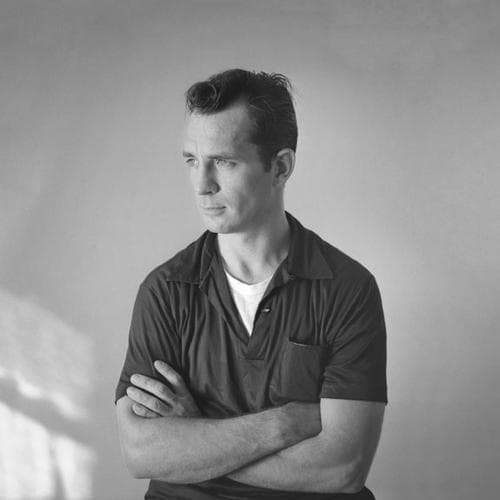
Jean-Louis Lebris de Kérouac, known as Jack Kerouac, was an American novelist and poet who, alongside William S. Burroughs and Allen Ginsberg, was a pioneer of the Beat Generation.


Jack Kerouac (1962)
Genre
Literary Fiction / Thriller / Lifestyle
Reading Time
12 Minutes
Key Themes
See below
Sign in to track this book
Jack Kerouac's novel tells of a writer's mental collapse from alcohol in an isolated cabin, exploring consciousness and the pressure of fame.
Jack Duluoz, a writer much like Jack Kerouac, is successful but struggles with fame, criticism, and increasing alcohol use. He feels overwhelmed by demands on his time, the shallow nature of literary circles, and a deep desire for real experiences and inner calm. Feeling trapped by his life in New York, he decides to go to the West Coast, hoping a change of place and the open road will help him face his problems and find some peace. This first trip is driven by disappointment and a desperate search for meaning beyond the brief joys of being famous.
In San Francisco, Jack meets his Beat Generation friends, including Lorenzo Monsanto (Lawrence Ferlinghetti), Robert Berger (Gary Snyder), and Dave Wain (Michael McClure). He finds a temporary sense of belonging among their bohemian lives and discussions. The atmosphere is initially one of shared understanding and artistic goals, offering a short break from his inner turmoil. They share meals, drinks, and talks about poetry, philosophy, and their past, renewing old friendships and providing a sense of stability Jack needs after his intense New York life. The city itself is a lively setting for these reunions.
Despite the comfort of his friends, Jack still wants complete solitude. A friend offers him a remote cabin in Big Sur, which he sees as a perfect chance to truly escape and face himself. He plans a time of simple living, writing, and spiritual thought, believing Big Sur's wild nature will bring the clarity and peace he seeks. Moving there is a deliberate attempt to shed city distractions and others' expectations, to be in nature, and to find a path to sobriety and mental well-being, away from the temptations and pressures that fuel his worries.
In his first days at the Big Sur cabin, Jack has brief moments of peace and clarity. He writes, watches nature, and tries to live simply, without alcohol. The beauty of the Pacific Ocean and the wilderness brings him a sense of wonder and connection. He feels a temporary lift in his depression and a renewed sense of purpose. However, these moments are mixed with constant worries and a growing unease. The solitude, though welcome at first, also makes his inner struggles worse, making it hard to escape his past and the nagging feeling that his problems are deeper than just external things.
The planned spiritual retreat slowly falls apart as Jack's alcohol dependence returns. The intense solitude, instead of healing him, starts to worsen his mental state. Big Sur's quiet becomes oppressive, increasing his paranoia and worries. He eventually breaks his promise of sobriety, finding temporary, destructive comfort in alcohol. This relapse is a turning point; his initial hope for redemption in nature gives way to the familiar cycle of addiction, pulling him deeper into self-destruction and despair, undoing the purpose of his retreat and hinting at darker events to come.
As Jack drinks more, he falls into a terrible state of delirium tremens. He has vivid, scary hallucinations, seeing monsters in shadows, hearing voices, and feeling an overwhelming sense of being hunted. His paranoia becomes extreme, making him believe he is being pursued or that bad forces are at play. Big Sur's beautiful, calm wilderness turns into a nightmare reflection of his inner chaos. This time is marked by intense physical and mental suffering, as his body and mind rebel against the constant abuse, pushing him to the edge of collapse and blurring the line between reality and his alcohol-induced psychosis.
Unable to bear the torment of his delirium, Jack makes a desperate call to his San Francisco friends. He tells them about his terrifying experiences, his voice full of fear. His friends, especially Billie (Lenore Kandel) and her boyfriend, are worried and realize how serious his condition is. This act of reaching out shows a moment of clarity amid the madness, a basic instinct for survival overriding his desire for solitude. He admits, though not directly, that he cannot overcome this alone and needs help to escape the terrifying grip of his addiction and mental breakdown in the isolated cabin.
Billie and her boyfriend, with other friends, travel to Big Sur to rescue Jack. They find him in a very bad state, physically and mentally ruined by his experience. The drive back to San Francisco is tense and sad, with Jack still dealing with the lingering effects of his delirium and the deep shame of his breakdown. Returning to the city, though a physical escape from the cabin, does not immediately ease his suffering. He is brought back to the familiar, yet complicated, care of his friends, who now see the depth of his struggles and the fragile state of his mind.
Back in San Francisco, Jack tries to recover with the help of his friends. He tries to stop drinking and regain some stability. However, the psychological scars of Big Sur and his addiction make recovery very hard. He experiences periods of intense craving, depression, and self-hatred. His friends try to support him, but they are often helpless against his deep-seated problems. This phase shows how hard it is to break free from addiction, even with outside help, and the lasting impact of his recent terrible experience on his mental state.
Mixed with his struggles, Jack has brief moments of clarity and even creative inspiration. He finds comfort in writing, in the company of a few understanding friends, and in the simple beauty of daily life. However, these moments are always overshadowed by the constant threat of relapse and the deep worries that still bother him. The memory of Big Sur and his terrifying breakdown remains a strong reminder of how vulnerable he is. The story ends with cautious hope, but with the clear understanding that Jack's fight with his problems is ongoing, with no final solution, only the continuous rise and fall of his inner struggle.
The Protagonist
Jack descends from a state of anxious celebrity into the depths of severe alcohol-induced delirium in Big Sur, before being rescued and attempting a fragile recovery, never fully escaping his internal struggles.
The Supporting
Billie initially provides Jack with comfort and affection, then becomes his primary rescuer and caretaker during his breakdown, embodying unwavering support.
The Supporting
Lorenzo serves as a consistent, intellectual friend to Jack in San Francisco, representing a stable anchor in Jack's chaotic life.
The Supporting
Robert embodies a stable, nature-attuned lifestyle, serving as a philosophical counterpoint to Jack's internal turmoil and offering a glimpse of an alternative path.
The Supporting
Dave serves as an enthusiastic, younger peer to Jack, representing the ongoing artistic spirit of the Beat generation and offering friendship.
The Supporting
Dean Moriarty's fleeting appearance shows him as a more subdued version of his former self, highlighting the passage of time and the toll of their shared past.
The Supporting
Romana remains a static character, serving as a beacon of innocence and simple happiness for Jack.
The novel shows the difficult side of literary success. Jack Duluoz, famous, feels trapped by its demands, public expectations, and constant scrutiny that prevents him from living genuinely. He feels used and misunderstood, which leads to deep disappointment with the success he once wanted. This theme shows how outside approval can become an inner prison, making him want to escape and find real experiences that fame seems to deny him.
“I was a man of the street, and now I was a man of the library, and it was getting to me.”
A main theme is how chronic alcoholism hurts Jack's mind and body. The book gives a raw look at delirium tremens, paranoia, and hallucinations, showing the deep psychological and physical damage of addiction. It explores how people seek comfort in alcohol, only for it to worsen worries and lead to a complete mental breakdown. This theme is a clear warning about addiction's destructive power and the mind's fragility under its influence.
“The only relief was to drink, and the only result of drinking was worse and worse terror.”
Jack's trip to Big Sur is driven by a strong desire for spiritual renewal and a belief that nature holds the key to inner peace. He seeks a simple life, hoping to find clarity, sobriety, and a connection to something greater than himself in the wilderness. However, the novel questions if outside environments alone can heal inner wounds. While nature offers beauty and wonder, it also makes his worries worse, suggesting that real comfort must come from within, or at least be met with a stable inner foundation.
“I went to Big Sur to get away from everything, to find God, to find peace, but all I found was myself, and myself was a mess.”
Despite wanting solitude at first, Jack's mental decline in Big Sur is strongly marked by extreme loneliness. The isolation, instead of being helpful, causes his paranoia and hallucinations. His desperate call for help from friends highlights the basic human need for connection and community, even for those who want independence. The novel suggests that while being alone can be good, long and extreme isolation, especially during a crisis, can be very damaging, showing how important human relationships are for staying sane and well.
“The silence became a roar, the emptiness a presence, and I was utterly alone with my madness.”
The novel quietly explores aging and the loss of youthful dreams. Jack Duluoz, a decade after the energy of 'On the Road,' is now a tired, middle-aged man dealing with the results of his wild past. The brief, almost sad appearance of Dean Moriarty, once a symbol of endless energy, further emphasizes this theme. It shows a shift from the carefree joy of their youth to a more serious reality of responsibilities, regrets, and the physical and mental toll of their bohemian lives, hinting at a sense of loss for a past era.
“The road seemed longer now, and the joy of it, a memory.”
An unfiltered window into Jack's deteriorating mind.
The novel is told entirely through Jack Duluoz's first-person perspective, utilizing Kerouac's signature stream-of-consciousness style. This allows for an intimate, raw, and unfiltered portrayal of Jack's internal landscape, particularly as his mental state deteriorates. Readers experience his anxieties, paranoia, and hallucinations directly, blurring the lines between objective reality and subjective experience. The narrative voice shifts from lucid introspection to fragmented, frantic prose during his delirium, effectively immersing the reader in his psychological breakdown and amplifying the sense of immediacy and desperation.
A dual symbol of untamed nature and terrifying isolation.
The geographical location of Big Sur functions as a powerful symbol throughout the novel. Initially, it represents an idealized retreat, a place of pristine nature, spiritual purity, and potential healing—a haven from the corrupting influences of urban life and fame. However, as Jack's mental state unravels, Big Sur transforms into a terrifying, oppressive, and isolated wilderness. The roaring ocean, the dark woods, and the remote cabin become symbols of his internal chaos, amplifying his paranoia and embodying the destructive power of solitude when coupled with addiction. It mirrors his initial hope and subsequent descent into despair.
Jack's internal struggle manifests as an external, persecuting 'other.'
During his delirium tremens, Jack experiences vivid hallucinations of a persecuting 'other' or a 'Thing' in the shadows, which can be interpreted as a doppelgänger motif. This externalization of his inner demons—his guilt, self-loathing, and fear of madness—manifests as a malevolent entity haunting him. The 'Thing' is not just a symptom of his illness but a symbolic representation of the parts of himself he is running from and the destructive forces within his own psyche. This device effectively externalizes his internal conflict, making his psychological torment tangible and terrifying.
The ocean as a metaphor for chaos, eternity, and the subconscious.
The Pacific Ocean is a pervasive and recurring image, carrying multiple symbolic meanings. Initially, it offers a sense of grandeur, peace, and eternal power, reflecting Jack's yearning for spiritual transcendence. Its vastness and rhythmic sound can be both comforting and overwhelming. However, as his mental state deteriorates, the sea's roar becomes a source of anxiety, a chaotic, indifferent force that mirrors his internal turmoil and the relentless nature of his addiction. It represents the subconscious, the untamed, and the cyclical nature of life and suffering, ultimately becoming a powerful, ambiguous presence reflecting his shifting perceptions.
Ready to see how well you understood this book? Take our interactive quiz with 10 questions.
Jean-Louis Lebris de Kérouac, known as Jack Kerouac, was an American novelist and poet who, alongside William S. Burroughs and Allen Ginsberg, was a pioneer of the Beat Generation.







