“I'm not saying I'm smarter than Mrs. Godfrey... but I'm also not *not* saying it.”
— Nate's internal monologue about his least favorite teacher.

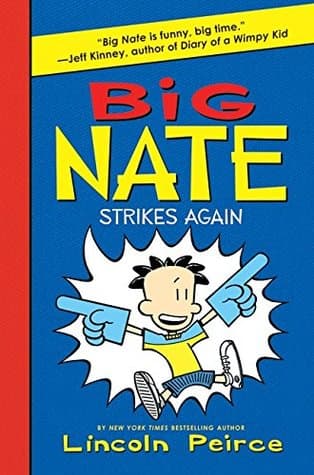
Lincoln Peirce (2010)
Genre
Children's / Young Adult
Reading Time
90 min
Key Themes
See below
Sign in to track this book
Middle school mischief maker Nate faces his ultimate nemesis, the insufferable Gina, as they're forced to collaborate on a dreaded class project and compete for the fleeceball championship, threatening his shot at glory and a detention-free record.
Nate Wright starts sixth grade at P.S. 38 with his usual hope, which quickly disappears due to many bad events. He immediately gets detention for drawing a comic strip in class, which often happens. Mrs. Godfrey, his rival, assigns a year-long American history project. To Nate's horror, she pairs him with Gina Hemphill-Toms, his academic rival and a known 'teacher's pet.' Nate sees this as a cruel act, believing Gina will try to control every part of the project, further making him think the school year will be terrible. His friends, Francis and Teddy, offer little comfort, knowing Nate's history with both Mrs. Godfrey and Gina.
Nate feels better when the annual school-wide fleeceball tournament begins, a sport he is good at and wants to win this year. He imagines himself as the best player, leading his team to victory. However, his excitement drops when Coach John assigns Gina to Nate's team, 'The Purple Nurples,' to make the teams even. Nate is shocked, convinced Gina's lack of athletic skill and annoying personality will ruin his chances of winning the fleeceball trophy. He sees her as a problem and a constant reminder of his project troubles, making his favorite sport suddenly unbearable.
The American history project on 'The Great Compromise' becomes a fight for Nate and Gina. Gina, who is careful and likes facts, wants a traditional, research-heavy approach, while Nate, wanting to be creative, wants to use his comic strip art and more fun elements. Their first meetings are full of arguments over everything from how to research to how to present. Nate's attempts to add humor and his unique view are met with Gina's strong disapproval, leading to frequent stalemates and growing frustration for both partners as they try to find common ground for their assignment.
The Purple Nurples' fleeceball season starts badly, with Nate getting more frustrated because of Gina's perceived lack of skill on the field. He openly criticizes her, thinking she is holding the team back. However, during a important game, Gina unexpectedly shows a surprising hidden talent: her amazing accuracy and power when throwing a fleeceball. This unforeseen skill starts to change the game for the team, earning her some respect from some teammates, though Nate still does not want to acknowledge her help, still focused on his own desire for attention and his dislike for her.
After many arguments and near-failures, Nate and Gina have a breakthrough with their history project. During a tense discussion, Nate draws a comic strip showing 'The Great Compromise' in a funny, easy-to-understand way. Gina, despite her initial doubts, sees the potential in his art to explain complex historical ideas. They decide to create a graphic novel presentation, combining Gina's careful research and factual accuracy with Nate's artistic talent and humor. This unexpected combination allows them to finally work together, respecting each other's strengths and weaknesses.
Thanks largely to Gina's powerful throws and Nate's strategy, The Purple Nurples surprisingly reach the fleeceball championship game against the strong 'Green Machine.' The final match is very close and intense. Nate realizes that for his team to win, he must put aside his personal dislike for Gina and truly work with her on the field. He starts to see her value as a player, realizing her unique skills are essential for their victory. The pressure of the championship makes them focus on their shared goal.
Nate and Gina present their 'Great Compromise' graphic novel project to Mrs. Godfrey and the class. The presentation is a big success, captivating their peers and impressing Mrs. Godfrey, who is surprised by the quality and creativity of their work. The combination of Gina's well-researched facts and Nate's engaging illustrations makes the complex historical event understandable and fun. Mrs. Godfrey, known for being strict, praises their teamwork and new approach, giving them an excellent grade, which is rare for Nate.
In the last moments of the fleeceball championship, with the score tied, Nate is up to bat. He has the chance to be the hero, but he sees a way to win by making a strategic play that needs Gina's powerful throw. Instead of trying to hit a home run himself, Nate bunts the ball, setting up Gina to make a important throw to home plate. This selfless act shows a big change in Nate's character, putting the team's victory over his own glory, and relying on his former rival's strength.
Gina throws perfectly, securing The Purple Nurples' victory in the fleeceball championship. The team celebrates wildly, and Nate, surprisingly, truly congratulates Gina. Despite their ongoing rivalry and personality clashes, the shared experiences of the history project and the fleeceball season have created a respect between them. Nate still finds Gina annoying, and she still finds him frustrating, but they have learned to appreciate each other's strengths and the value of teamwork, ending the book with unexpected collaboration and complicated understanding.
The Protagonist
Nate learns to put aside his personal animosity and ego to collaborate effectively with Gina, recognizing the value of her strengths and the importance of teamwork for shared success.
The Antagonist/Supporting
Gina learns to appreciate creative approaches and the value of collaboration with someone who thinks differently, moving beyond her rigid adherence to rules and facts.
The Supporting
Francis remains a consistent and supportive friend, offering advice and commiseration to Nate throughout his challenges.
The Supporting
Teddy remains a loyal and supportive friend, providing comic relief and camaraderie to Nate.
The Supporting
Mrs. Godfrey maintains her strict but fair persona, ultimately acknowledging Nate and Gina's successful collaboration despite her initial skepticism about Nate.
The Supporting
Coach John consistently encourages sportsmanship and teamwork, overseeing the fleeceball tournament and the unexpected success of Nate's team.
The Mentioned
Artur's role is primarily as a background rival for Nate's affections, not undergoing significant development in this story.
The Mentioned
Jenny remains a background presence, serving as a motivator for some of Nate's aspirations, but her character does not develop in this installment.
The main theme is about how important teamwork is, even among rivals. Nate and Gina, initially against each other, must work together on both a history project and the fleeceball team. Through these experiences, they learn to combine their different strengths – Nate's creativity and Gina's carefulness – to succeed. Nate's final decision to make a selfless play in the fleeceball championship, relying on Gina, shows his growth in understanding that working together can lead to better results than individual glory.
““Okay, Gina,” Nate grumbled. “So you think you’re so smart? What’s your big idea?””
Nate and Gina have strong negative opinions about each other at the start of the book. Nate sees Gina as an annoying 'teacher's pet' and a bad athlete, while Gina sees Nate as irresponsible and not academic. The story shows how being forced to be near each other and having shared goals slowly breaks down these ideas. While they do not become best friends, they develop a respect, recognizing each other's unexpected talents and contributions. This theme shows that even strong rivalries can soften when people are made to see beyond their first opinions.
““I can’t believe it,” Nate muttered. “Of all the people in the world, I get stuck with *her*.””
The book shows how different talents, when combined, lead to more new and successful outcomes. Nate's artistic creativity and humor go well with Gina's factual knowledge and organizational skills in their history project, creating a unique graphic novel presentation. Similarly, Nate's strategic understanding of fleeceball combined with Gina's powerful throwing arm makes their team a championship contender. This theme emphasizes that there is no one 'right' way to be successful and that accepting different views and abilities improves any effort.
““Your drawings actually make history interesting,” Gina admitted, a rare compliment.”
Nate grows a lot personally throughout the story. At first, he wants individual glory and to prove himself, especially in fleeceball, but he learns to put the team's success over his own. His selfless bunt in the championship game, setting up Gina for the winning throw, is a key moment that shows his maturity. This theme highlights the journey from being self-centered to understanding the importance of helping a bigger goal and trusting others, even those he dislikes.
“Nate looked at Gina, then at the bases. He knew what he had to do.”
A narrative device creating conflict and character development through contrasting personalities.
The forced pairing of Nate Wright and Gina Hemphill-Toms for both the history project and the fleeceball team serves as a classic 'odd couple' plot device. Their diametrically opposed personalities – Nate's creative chaos versus Gina's meticulous order – immediately generate conflict, humor, and opportunities for character growth. This device forces them to confront their biases and learn to appreciate each other's strengths, driving much of the book's narrative and thematic development. Without this initial antagonism, the story's core lessons about collaboration would not be as impactful.
Two distinct plots running concurrently, reinforcing shared themes.
The book employs parallel storylines: Nate and Gina's American history project and their participation in the fleeceball tournament. Both plots feature the same central characters (Nate, Gina, and their friends) and serve to reinforce the overarching themes of teamwork, overcoming rivalry, and valuing different strengths. The challenges and successes in one storyline often mirror or influence the other, creating a cohesive narrative where the characters' development is showcased across multiple contexts. This structure allows for a dual exploration of their evolving relationship.
Visual narrative elements providing insight into Nate's thoughts and adding humor.
Throughout the book, comic strip panels drawn by Nate (and sometimes depicting his perspective on events or his project ideas) are interspersed with the prose. This device provides a direct window into Nate's inner world, his artistic talent, and his often-humorous take on his circumstances. It also serves a practical plot function when Nate's comic ideas become the basis for the successful history project, demonstrating the power of visual storytelling and his unique way of processing information. These inserts break up the text and maintain the 'comic-strip novel' feel of the series.
A classic narrative arc where an unlikely contender achieves success.
The fleeceball tournament storyline functions as an underdog story. Nate's team, 'The Purple Nurples,' is initially not expected to win, particularly with Gina, whom Nate considers a liability, on the roster. Their journey to the championship, fueled by unexpected talents (Gina's throwing arm) and newfound teamwork, embodies the classic underdog trope. This device creates suspense and provides a satisfying resolution, emphasizing that with perseverance and collaboration, even the least likely contenders can achieve victory against formidable opponents.
“I'm not saying I'm smarter than Mrs. Godfrey... but I'm also not *not* saying it.”
— Nate's internal monologue about his least favorite teacher.
“Spitsy, you're a good dog. But you're also a terrible speller.”
— Nate talking to his dog, Spitsy, after he 'helps' with homework.
“Sixth grade is like a roller coaster. Sometimes it's fun, sometimes it makes you want to throw up.”
— Nate reflecting on the ups and downs of middle school.
“My life is a cartoon, and I'm the main character. Which means I get to do whatever I want!”
— Nate's confident, if slightly deluded, self-assessment.
“Sometimes you just gotta take a risk. Even if it means getting detention.”
— Nate contemplating a mischievous plan.
“Art class is the only place where drawing a mustache on a historical figure is encouraged.”
— Nate's thoughts during an art lesson.
“If at first you don't succeed, try, try again. Unless it's Mrs. Godfrey's pop quiz. Then just guess C.”
— Nate's pragmatic, if lazy, approach to academics.
“Being a genius is hard work. Especially when you're mostly just a genius at getting into trouble.”
— Nate's internal struggle with his self-proclaimed genius.
“Friends are like pizza. Even when they're cheesy, they're still awesome.”
— Nate's reflection on his friendships.
“The secret to happiness? Avoiding homework and eating lots of Cheez Doodles.”
— Nate's simple philosophy on life.
“I'm not a quitter. I'm just a strategic re-evaluator of my options.”
— Nate making an excuse for giving up on a difficult task.
“Sometimes the best way to solve a problem is to make a bigger, more exciting problem.”
— Nate's often misguided approach to problem-solving.
“My dad says I have a vivid imagination. I say I have a vivid reality where I'm awesome.”
— Nate's interpretation of his father's comment.
“You can't spell 'challenge' without 'change.' And you can't spell 'Nate' without 'awesome.'”
— Nate's confident wordplay.
Ready to see how well you understood this book? Take our interactive quiz with 10 questions.

Biography coming soon.

Dan Gemeinhart
4.5

Kate O'Hearn
4.4

Jeanne Birdsall
4.4

Jen Wang
4.4

Wendelin Van Draanen
4.3

John Marsden
4.3

Chris Van Allsburg
4.3

Jennifer A. Nielsen
4.2