“The world was a conspiracy of noise and shouting, and he was the only one who could not hear.”
— Jerry Renault's internal struggle with the world's demands.

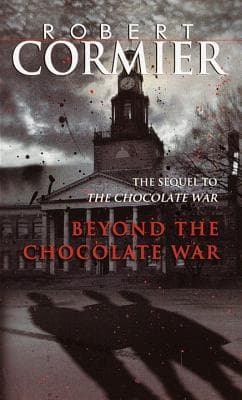
Robert Cormier (1985)
Genre
Children's / Young Adult
Reading Time
288 min
Key Themes
See below
Sign in to track this book
As graduation nears, Archie, the sinister leader of the Vigils, prepares his final terror, unaware his right-hand man Obie and other students have a shocking surprise waiting for him.
The school year at Trinity is ending, but the chocolate sale and Jerry Renault's defiance still affect everyone. Archie Costello, the Vigils' Assigner, prepares his last assignments before graduation. Obie, Archie's long-suffering right-hand man, watches Archie's careful process with mixed feelings of resentment and interest. Obie is tired of Archie's games and his control over Trinity. Archie enjoys his power, but he also feels a growing distance from the Vigils, knowing his rule is almost over. He takes pleasure in creating assignments that will secure his legacy and punish those who have subtly defied him or simply annoyed him.
Obie's inner struggle grows as he continues to serve Archie. He has been Archie's pawn for too long, enduring many humiliations and carrying out assignments he hates. Jerry Renault's stand against the chocolate sale, though ultimately defeated, sparked a rebellion in Obie. He begins to plan his revenge against Archie, a carefully orchestrated scheme to expose Archie's true nature and finally break his hold on Trinity. Obie's plan is not physical; it is psychological warfare, like Archie's own tactics, aiming to strip Archie of his power and reputation before he can leave Trinity unharmed.
As the school year winds down, a few new students arrive at Trinity. These include Benny Carbone, a quiet, artistic boy, and a more outgoing, athletic student. These newcomers quickly become targets for the Vigils' assignments, especially those designed by Archie. Benny Carbone receives a seemingly harmless assignment that slowly becomes a public humiliation, meant to test his resolve and the students' obedience. These early assignments remind everyone of the Vigils' pervasive power, even as Archie's time ends. The incidents also give Obie more proof of Archie's cruelty, solidifying his decision to bring him down.
Goobler, a student who suffered during the previous chocolate sale, carries deep resentment. He was forced to eat too many chocolates, leading to illness and public ridicule. Now, Goobler seeks his own revenge, not directly against Archie, but against Emile Janza, who Goobler believes betrayed him during the chocolate sale and contributed to his torment. Goobler's plan is less complex than Obie's, driven by anger and a desire for immediate payback. His actions show the ripple effect of the Vigils' manipulations and the lasting psychological scars on their victims, demonstrating how the cycle of abuse can continue even without Archie's direct involvement.
The Black Box, the Vigils' ultimate decider of assignments, becomes key to Archie's final acts. It contains white marbles and one black marble; drawing the black marble means Archie must do the assignment himself. Archie, confident in his ability to control fate, uses the Black Box to avoid responsibility and seem fair, even as he designs the assignments. He carefully plans a particularly humiliating and public assignment for Brother Leon, the acting Headmaster, as a final act of defiance and a way to show his power over the school administration. The Black Box legitimizes his actions for the Vigils, even if its real purpose is to protect Archie.
Brother Leon, still dealing with the fallout from the chocolate sale and the public relations disaster, is in a difficult position. Other faculty members question his authority, especially Brother Eugene, who criticizes his methods and the chaos he allowed. Archie, always observant, sees Brother Leon's weakness and an opportunity for a grand finale. He devises an assignment that will publicly humiliate Brother Leon, exposing his weakness and further undermining his shaky authority. This act is not just revenge for the past but Archie's way of showing his ultimate power to disrupt and control even Trinity's highest levels.
Obie's detailed plan to expose Archie finally unfolds. He has been gathering evidence, manipulating situations, and subtly turning other Vigils members against Archie. His main goal is to force Archie to draw the black marble from the Black Box, not for a simple assignment, but for one that will reveal Archie's manipulative nature to the entire school and administration. Obie arranges events so that Archie will be trapped, unable to escape the results of his own system. This is Obie's final stand against the tyranny he has endured, a desperate attempt to regain his own control and dismantle Archie's reign.
The climax arrives when Obie's trap works, forcing Archie into a situation where he cannot avoid drawing the black marble for an assignment that will expose his manipulative genius to the entire school. The reveal of Obie's long-term planning and deep resentment shocks Archie, who had always seen Obie as a loyal, though resentful, subordinate. The carefully built illusion of the Black Box's fairness collapses, and Archie faces the public humiliation he often inflicted on others. This moment forces Archie to confront the true cost of his power and the deep anger he has created in those around him.
With his manipulations exposed and his authority broken, Archie Costello is finally stripped of his power. The image of the perfect Assigner is shattered, and he must leave Trinity in disgrace. While not a complete victory for all his victims, his departure marks the end of his rule. The school, however, must deal with the lasting effects of the Vigils' influence and the void left by Archie's absence. The ending is ambiguous, suggesting that while one tyrant is gone, the underlying systems and human weaknesses that allowed him to thrive may still exist.
Even with Archie gone, the Vigils' scars remain. Students like Goobler still deal with their personal vendettas, and power dynamics within Trinity are uncertain. The novel ends with a sense of unease, suggesting that the culture of conformity and subtle cruelty that defined Trinity might not be entirely gone with Archie's departure. The question of who will fill the void, or if the school will truly change, lingers. The story implies that real change requires more than removing one person; it demands a basic shift in the institution itself and the attitudes of its students.
The Antagonist
Archie begins as the unchallenged manipulator, but his arc culminates in his public exposure and forced departure from Trinity, marking the end of his reign.
The Protagonist
Obie transforms from a passive victim to an active agent of change, orchestrating Archie's downfall.
The Supporting
Brother Leon's authority is further eroded and publicly humiliated, solidifying his weak leadership.
The Supporting
Goobler's arc shows him attempting to reclaim agency through revenge, though his actions are fueled by past trauma.
The Supporting
Janza remains a brutal enforcer, largely unchanged, becoming a target for Goobler's retribution.
The Supporting
Brother Eugene's arc demonstrates the futility of ethical opposition against entrenched power within Trinity.
The Supporting
Benny experiences early humiliation under The Vigils, demonstrating the ongoing cycle of their power.
The Supporting
Carter remains a figurehead, his nominal authority consistently undermined by Archie's true power.
The novel explores how unchecked power corrupts individuals and institutions. Archie Costello, as the Vigils' Assigner, holds absolute psychological power over his peers and even the faculty, using it for personal amusement and control. Brother Leon similarly abuses his administrative power for personal gain and to hide his own mistakes. This theme appears in Archie's assignments, designed for humiliation, and in Brother Leon's focus on the school's image over student well-being. The book suggests that power without accountability leads to tyranny and moral decline.
““The Vigils did not simply exist. They were a power, a force, a secret society that touched everyone at Trinity, even the teachers, even the Headmaster.””
Revenge drives several characters. Obie's carefully planned scheme to expose Archie stems from years of resentment and humiliation. Goobler, traumatized by his past experience, seeks his own payback against Emile Janza. These acts of revenge highlight the cycle of violence and suffering that the Vigils create. While Obie's revenge is calculated and aims to dismantle Archie's system, Goobler's is more emotional and potentially self-destructive. The novel questions whether revenge brings closure or simply continues the cycle of pain.
““He had lived too long in Archie’s shadow, a willing stooge, and now it was time for payment.””
The conflict between conformity and individualism appears repeatedly. Trinity, under the Vigils' influence, demands absolute conformity from its students. Those who defy, like Jerry Renault in the previous book, or new students like Benny Carbone who initially resist, face severe psychological and social punishment. Archie's assignments aim to break individualism and enforce obedience. Obie's eventual rebellion, however, is a powerful act of individualism, a refusal to remain a pawn. The novel explores the immense pressure to conform in a hierarchical system and the courage needed to break free, even at great personal cost.
““Trinity was a world of its own, with its own rules, its own gods, and its own punishments for those who dared to defy them.””
The book explores the nature of evil, showing it not as a monstrous force but as a calculating, detached manipulation by Archie Costello. Archie's evil is intellectual and psychological, taking pleasure in observing and orchestrating others' suffering without direct physical violence. This contrasts with Emile Janza's more obvious, physical bullying. The novel suggests that evil can thrive where authority figures are weak or corrupt, and where bystanders are too afraid or uncaring to intervene. Archie's ability to manipulate without apparent remorse raises questions about the origins and continuation of such malevolence.
““Archie Costello was a genius, a master of manipulation, a boy who understood the dark corners of the human heart.””
Archie carefully creates the illusion that he is always in control, both of the Vigils and of his assignments' outcomes. The Black Box is a prime example, appearing random and fair while Archie subtly manipulates its use. However, the novel ultimately shows this illusion's fragility. Obie's carefully planned revenge shatters Archie's sense of invincibility, exposing his manipulations to the school. This theme highlights that even the most cunning manipulators can be undone by unforeseen factors or their victims' quiet determination, proving that absolute control is ultimately impossible.
““He loved the illusion of control, the way he could pull the strings and watch the puppets dance.””
A symbolic tool used by The Vigils to legitimize assignments and shield Archie.
The Black Box is a small, wooden box containing white marbles and one black marble. It's used to decide whether the Assigner (Archie) must perform an assignment himself. Its function is primarily symbolic: it lends an aura of impartial fate and tradition to The Vigils' often cruel assignments, while also providing Archie with a convenient alibi or a way to deflect responsibility. In reality, Archie often manipulates the circumstances surrounding its use. It becomes a crucial element in Obie's plan to expose Archie, turning Archie's own device against him and forcing him to confront the consequences of his system.
Archie's primary weapon, used to control and torment his victims.
Psychological manipulation is Archie's signature tactic. He rarely resorts to physical violence himself, instead preferring to break down his victims mentally through public humiliation, social ostracization, and carefully crafted assignments that exploit their fears and weaknesses. This device is evident in how he designs tasks for new students like Benny Carbone, and in his overarching control over The Vigils. The novel showcases the insidious power of psychological warfare, demonstrating how it can be far more damaging and pervasive than physical harm, leaving lasting scars on its victims.
Trinity's secret society, an instrument of power and control.
The Vigils are the secret student organization that holds immense, unofficial power at Trinity. They operate outside the official school hierarchy, dictating social norms and enforcing their will through a system of 'assignments' engineered by Archie. This device represents the corrupting influence of an unchecked power structure within an institution. The Vigils create an atmosphere of fear and conformity, where students are constantly aware of their presence and the potential for retribution. The organization serves as the primary antagonist, a collective entity that embodies the oppressive forces at play in Trinity.
Though mostly third-person, the narrative subtly shifts perspectives, influencing reader perception.
While primarily told in a third-person omniscient style, the narrative subtly employs elements of an unreliable perspective, particularly when detailing Archie's internal thoughts or the perceptions of other characters. The reader is often privy to Archie's cynical and detached worldview, which can initially normalize his manipulative actions. Conversely, the narrative also delves into Obie's simmering resentment, painting Archie in a darker light. This device creates tension and forces the reader to critically evaluate the characters' motivations and the morality of their actions, preventing a simplistic good-versus-evil interpretation and reflecting the ambiguous moral landscape of Trinity.
“The world was a conspiracy of noise and shouting, and he was the only one who could not hear.”
— Jerry Renault's internal struggle with the world's demands.
“He knew that there were no easy answers, no magic solutions. There was only the battle, and the hope that he would not be destroyed.”
— Jerry's grim realization about his ongoing fight against the Vigils.
“The truth was, he liked the silence. It was a place where he could think, where he could be himself.”
— Jerry finding solace in quiet moments amidst the chaos.
“Sometimes, the hardest thing to do was to do nothing at all.”
— Jerry's contemplation of inaction versus active resistance.
“He saw the faces, the eyes, the hunger. And he knew that he was one of them, whether he wanted to be or not.”
— Jerry observing the student body and his place within it.
“There was a fine line between courage and foolishness, and he often wondered which side he was on.”
— Jerry's internal debate about his continued defiance.
“The silence was a weapon, too, sometimes, more powerful than any shout.”
— Jerry reflecting on the impact of his own quiet defiance.
“He was learning that the world was not always fair, that good intentions did not always lead to good results.”
— Jerry's growing disillusionment with the world around him.
“The battle was not over. It had only just begun.”
— The concluding thought, emphasizing the ongoing nature of the struggle.
“He felt a coldness settle within him, a realization that some things, once broken, could never be truly mended.”
— Jerry's somber reflection on the damage inflicted by the events.
“The world had a way of twisting things, of making the innocent guilty and the guilty innocent.”
— Jerry's cynical view of how truth and justice are manipulated.
“He was an outsider, always would be, and in that knowledge, there was a strange kind of freedom.”
— Jerry embracing his individuality and alienation.
“The darkness was not just outside; it was inside, too, waiting.”
— Jerry's awareness of the internal struggles and potential for despair.
Ready to see how well you understood this book? Take our interactive quiz with 10 questions.
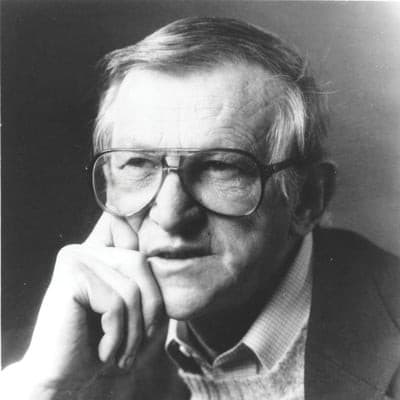
Biography coming soon.

Dan Gemeinhart
4.5
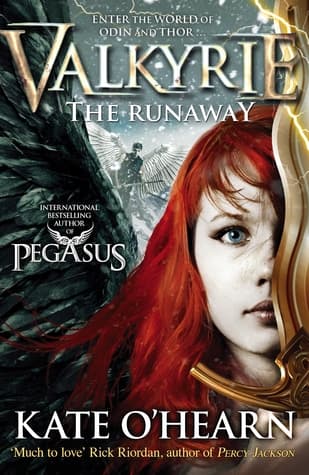
Kate O'Hearn
4.4

Jeanne Birdsall
4.4

Jen Wang
4.4

Wendelin Van Draanen
4.3

John Marsden
4.3

Chris Van Allsburg
4.3
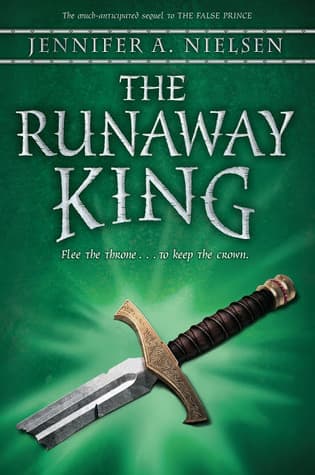
Jennifer A. Nielsen
4.2