“Pity, like morphine, is a good enough medicine at the first, a balm for the wounds of the moment. But it cannot work miracles.”
— The narrator reflects on the nature of pity and its limitations early in the story.


Genre
Literary Fiction / Historical Fiction / Romance
Reading Time
353 min
Key Themes
See below
Sign in to track this book
A young officer's brief moment of pity for a disabled heiress turns into a web of well-meaning lies, tragically linking their lives and showing how complicated human emotions can be.
The story begins with Lieutenant Anton Hofmiller, a young and somewhat naive cavalry officer in the Austro-Hungarian army, telling an unnamed narrator about events in a small Galician town in 1913. Hofmiller, a man with simple tastes, describes his boredom with military life. One evening, he gets an unexpected invitation to a dinner party at the large estate of Lajos Kekesfalva, a rich and powerful Hungarian leader. Wanting a change and pleased by the invitation, Hofmiller attends, not knowing this social event will change his life and lead him to a difficult moral situation and tragedy.
At the Kekesfalva estate, Hofmiller likes the fancy surroundings and lively atmosphere. During the party, feeling a bit bold from wine and wanting to be polite, he asks Edith, his host's daughter, to dance. To his shock and the sudden silence in the room, he finds out Edith is severely disabled and cannot stand or dance. The mistake is terrible; Edith is embarrassed, and Hofmiller feels intense shame and guilt. This moment of social awkwardness and real pity starts a series of events that he cannot control, connecting him to Edith and her family.
Very embarrassed by his mistake, Hofmiller sends a large bouquet of roses to Edith the next day as an apology. This gesture, meant to ease his own conscience, is misunderstood by the Kekesfalva family, especially Edith, as a sign of true affection and deep care. What starts as an apology quickly becomes daily visits and gifts. Hofmiller, weighed down by guilt and a growing sense of pity, cannot get out of the situation. His initial discomfort slowly changes into a mix of obligation, compassion, and a growing feeling of responsibility for Edith's happiness, blurring his true feelings.
During his more frequent visits, Hofmiller meets Dr. Condor, the family doctor, who gives a different view of Edith's condition and the family. Dr. Condor, a practical and understanding man, explains that Edith's paralysis is not curable and is largely psychological, made worse by her father's and governess Ilona's overprotective love. He warns Hofmiller about the dangers of false hope and the destructive nature of pity, seeing the emotional manipulation at play, even if it is often unconscious. Dr. Condor is a voice of reason, an objective observer who sees through the emotional confusion around Hofmiller and the Kekesfalvas, showing how their well-meaning but harmful interactions are dangerous.
As Hofmiller continues his visits, driven by duty and a genuine, though pity-based, wish to lessen Edith's suffering, her affection for him grows a lot. She starts to see him as her only source of joy and hope, believing he holds the key to her recovery and happiness. Hofmiller, increasingly uncomfortable but unable to disappoint her, lets this idea continue. He finds himself in a moral dilemma: telling Edith the truth would break her fragile spirit, but continuing the pretense feels more dishonest and suffocating. His visits become a performance, a careful balance between kindness and deception, further cementing his unwilling role in her life.
Edith, encouraged by Hofmiller's constant attention and what she sees as his strong devotion, eventually tells him she loves him and believes that only marrying him can cure her. Faced with her desperate plea and the emotional pressure from the Kekesfalva family, Hofmiller, out of deep pity and a lack of moral courage to refuse, agrees to marry her. He believes he is giving up his own happiness for hers, driven by a mistaken sense of chivalry and a fear of causing her pain. The engagement, announced publicly, further pulls him into the Kekesfalva world, making escape seem impossible and his future tied to Edith's.
The engagement brings Hofmiller little joy; it only increases his inner conflict and feeling of being trapped. At a regimental ball, he is struck by the difference between his lively military life and the stifling reality of his promise to Edith. He feels like a fraud, living a lie. In a moment of great distress, he tells Ilona, Edith's governess, that his engagement is from pity, not love. Ilona, who secretly loves Hofmiller and understands the Kekesfalva household, reacts with despair and a strange, almost vengeful, understanding. This confession is a turning point, as the truth starts to break down the careful facade.
Unknown to Hofmiller, Edith overhears his confession to Ilona, destroying her carefully built world of hope and love. The realization that his affection is just pity, and that he does not truly love her, pushes her into an even deeper state of despair. Her already fragile mental and emotional state quickly gets worse. The shock of this betrayal, seen as a cruel deception, becomes too much for her. This discovery is the final blow, confirming Dr. Condor's earlier warnings about the dangers of false hope and how shattered illusions can devastate a sensitive, vulnerable person like Edith.
Unable to accept the terrible truth of Hofmiller's pity, and feeling completely abandoned and betrayed, Edith takes her own life by jumping from her window. Her death is the tragic end of the events started by Hofmiller's initial mistake and his later inability to be honest. Her father, Lajos Kekesfalva, is completely devastated. The community, already aware of the engagement, is shocked. Hofmiller is consumed by guilt, understanding the full, terrible results of his well-meaning but ultimately dishonest actions. Edith's death leaves a deep and lasting mark on everyone involved, especially Hofmiller.
Overwhelmed by the tragedy and his guilt, Hofmiller immediately asks for a transfer from his regiment, desperate to leave the place of the disaster and the accusing looks of the town. He is sent to a distant, lonely outpost, a kind of self-imposed exile. He says he spent years fighting in the First World War, trying to lose himself in the violence and anonymity of combat, hoping to erase the memory of Edith and his part in her death. Despite his efforts, the memory of Edith and the pain of his pity-driven actions continue to haunt him decades later, showing the lasting impact the tragedy had on him. The story ends with Hofmiller still dealing with the heavy moral burden of his past.
The Protagonist
Hofmiller transforms from a naive, well-meaning officer into a man burdened by immense guilt and the lifelong psychological scars of his destructive pity.
The Antagonist/Victim
Edith's character arc is one of initial despair, followed by a brief, intense period of false hope, culminating in utter devastation and suicide.
The Supporting
Kekesfalva moves from a hopeful, grateful father to a man utterly destroyed by the loss of his beloved daughter.
The Supporting
Dr. Condor remains a consistent voice of reason and observation, his understanding of the situation proving tragically accurate.
The Supporting
Ilona's character deepens from a loyal governess to a woman grappling with unrequited love and the moral complexities of the situation.
The Mentioned
The narrator remains a static listener, facilitating Hofmiller's recounting of his past.
The Supporting
Countess K. appears briefly to offer a warning, remaining unchanged by the events.
The Mentioned
Captain Marek's role is functional, facilitating Hofmiller's escape without personal development.
The novel's main theme explores how pity, when misdirected and not balanced with honesty, can become destructive. Hofmiller's first act of pity for Edith, born from guilt, turns into a deceptive relationship that leads to her death. The book suggests that pity, while seeming kind, can be a self-serving emotion, more about easing one's own discomfort than truly helping another. Hofmiller's fear of hurting Edith prevents him from telling her the truth, but this 'kindness' ultimately causes much greater suffering. This shows the dangers of emotional dishonesty and how well-meaning but harmful actions can be. Dr. Condor's warnings throughout the novel highlight this theme.
“Pity, when it is not allied to truth, is a dangerous and destructive emotion.”
Hofmiller's actions are largely driven by deep guilt after his social mistake and a lack of moral courage to face an uncomfortable truth. He lets himself be drawn deeper into the Kekesfalva family's world because he cannot bear to cause Edith more pain or face the social consequences of leaving. This moral weakness, his inability to say 'no' or to be honest about not loving her, traps him in a lie. The novel suggests that avoiding immediate discomfort through deceit can lead to much worse outcomes. His lifelong pain after Edith's suicide is a direct result of his failure to act with honesty and courage when it mattered most.
“I was not a villain, I was merely a weakling. And a weakling in a critical situation is sometimes more dangerous than a villain.”
The novel clearly shows how false hope, especially when encouraged by others, can be very damaging. Edith's fragile life is supported by the idea that Hofmiller loves her and that this love will cure her. Hofmiller, by keeping this idea alive out of pity, unknowingly sets her up for an inevitable and terrible fall. Dr. Condor repeatedly warns against giving Edith false hope, understanding that the eventual shattering of such ideas would be far more harmful than a painful truth. The story is a warning about the ethical responsibility involved in dealing with vulnerable people and the destructive power of a reality built on lies.
“It is always better to tell the truth, however painful, than to nourish a false hope.”
Hofmiller's situation is largely shaped by the social expectations and pressures of his time and class. His initial mistake requires an apology, which then turns into a series of social duties. He finds it almost impossible to leave the Kekesfalva family because of the perceived social wrongness of doing so, especially after getting engaged. The novel looks at the conflict between a person's wishes and the strict social rules that dictate behavior, particularly concerning honor, compassion, and commitment. Hofmiller's inability to match his true feelings with his social role shows how stifling these external pressures can be and how they can lead to personal tragedy.
“I was trapped, not by my own will, but by an unwritten law of human decency.”
The entire novel is told as Hofmiller's confession decades after the events, showing the lasting psychological weight of his past actions. His memory is not a passive recall but an active tormentor, forcing him to relive his guilt and regret. The story emphasizes how certain experiences can leave permanent marks on a person's mind, shaping their entire life. Hofmiller's inability to escape the memory of Edith and his role in her death highlights the deep and lasting impact of moral failure. His life after the war, marked by constant inner struggle, shows how the past can never truly be outrun or forgotten, especially when it involves such deep emotional and ethical issues.
“Even after decades, I still carry the burden of that time, like a wound that never truly heals.”
Hofmiller recounts his past to an unnamed narrator decades later.
The novel employs a frame story, where the main narrative is told by Anton Hofmiller to an unnamed listener many years after the tragic events. This retrospective narration allows Hofmiller to reflect on his past with the wisdom, regret, and psychological scars of hindsight. It gives the story a confessional, introspective, and deeply personal tone, emphasizing the enduring impact of his actions. The frame device also highlights the theme of memory and its psychological burden, as Hofmiller grapples with his guilt and attempts to understand the complex motivations behind his fateful decisions. It elevates the plot from a simple tragedy to a profound psychological study.
The reader is aware of Hofmiller's true feelings while Edith remains oblivious.
Dramatic irony is a pervasive device in 'Beware of Pity'. The reader is privy to Hofmiller's internal monologue and his true feelings of pity and entrapment, while Edith, and often her family, interprets his actions as genuine love and devotion. This creates a constant tension and a sense of impending doom, as the reader understands the tragic misunderstanding at the heart of the relationship. The irony intensifies as Hofmiller's 'kindness' and inability to be honest inadvertently lead to Edith's greater suffering and ultimate death, making the unfolding tragedy all the more poignant and inevitable.
Symbolizes Edith's overall emotional and psychological fragility and entrapment.
Edith's crippled leg serves as a powerful symbol throughout the novel. On a literal level, it is the physical manifestation of her suffering and isolation, the catalyst for Hofmiller's initial pity. Symbolically, it represents her overall emotional and psychological fragility, her inability to move freely in the world, and her dependence on others. It also symbolizes the 'crippled' nature of her family's love, which, while well-intentioned, ultimately stifles and harms her. The leg becomes a constant reminder of her vulnerability and the object of Hofmiller's destructive pity, a physical manifestation of the emotional trap they both fall into.
Symbolizes a gilded cage and the suffocating atmosphere of wealth and overprotection.
The Kekesfalva estate, with its opulent surroundings and isolated grandeur, functions as more than just a setting; it is a symbol. It represents a 'gilded cage' for Edith, a place of immense wealth and beauty that simultaneously isolates and stifles her. The lavishness contrasts sharply with Edith's internal suffering, highlighting the inability of material possessions to bring true happiness. The estate also symbolizes the overprotective, almost suffocating, love of Lajos Kekesfalva, which, despite its good intentions, contributes to Edith's emotional fragility and her inability to engage with the outside world. It becomes a closed-off world where emotions fester and illusions are cultivated.
“Pity, like morphine, is a good enough medicine at the first, a balm for the wounds of the moment. But it cannot work miracles.”
— The narrator reflects on the nature of pity and its limitations early in the story.
“There are two kinds of pity. One, the weak and sentimental, which is really no more than the heart's impatience to be rid as quickly as possible of the painful sight of another's misfortune; and the other, the only kind that counts, the unsentimental but creative pity, which knows what it wants and is determined to go through with it, to the utmost limits of its strength and even beyond.”
— The narrator distinguishes between two forms of pity, one selfish and one truly empathetic.
“It is not the man who has too little, but the man who craves more, that is poor.”
— A philosophical observation on the nature of wealth and poverty.
“Only those who are capable of loving strongly can also suffer great sorrow, but this same necessity of loving serves to counteract their grief.”
— A reflection on the relationship between love and sorrow.
“A man who wants to commit suicide is a man who knows what he wants.”
— A grim but insightful comment on the resolve of someone contemplating suicide.
“Nothing makes one so vain as the love of another. To be admired is a kind of additional life.”
— The narrator reflects on the intoxicating power of being loved and admired.
“It is not the great sorrows that break a man, but the little ones.”
— A poignant observation on the cumulative effect of minor hardships.
“What is the use of pity if it does not lead to action?”
— A challenge to the passive form of pity, advocating for active intervention.
“The greatest tragedy of life is not that men perish, but that they cease to love.”
— A profound statement on the enduring value of love over mere existence.
“One can only understand what one has experienced oneself.”
— A statement on the limitations of empathy without personal experience.
“A secret is like a disease: it grows and spreads, and finally destroys its host.”
— The narrator reflects on the destructive nature of keeping secrets.
“How many times does a man have to die before he is truly dead?”
— A metaphorical question about emotional death and the loss of spirit.
“There are moments in life when a man must choose between being a scoundrel and being a hero.”
— A stark commentary on moral choices and their profound implications.
“Pity is dangerous when it is not accompanied by understanding.”
— A warning about the potential harm of misguided or superficial pity.
Ready to see how well you understood this book? Take our interactive quiz with 10 questions.
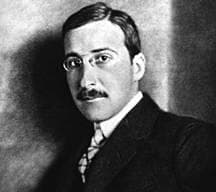
Stefan Zweig was an Austrian writer. At the height of his literary career, in the 1920s and 1930s, he was one of the most widely translated and popular writers in the world.







