“What if the person we're meant to be with is a character in a book?”
— Delia's initial musings about Oliver.

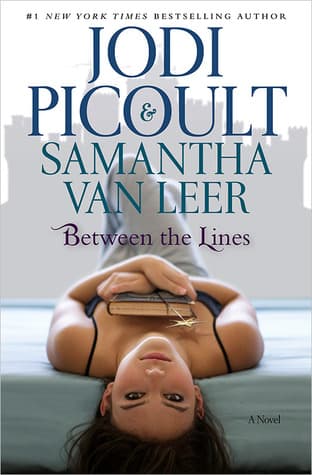
Jodi Picoult (2012)
Genre
Young Adult / Romance
Reading Time
450 min
Key Themes
See below
Sign in to track this book
A lonely teen discovers her beloved storybook prince is real and yearns for a life beyond the page, drawing her into a magical quest to rewrite his destiny and find her own.
Delilah, a shy high school student, feels isolated at school, often targeted by the popular girl, Jasmine. Her only escape is a well-worn fairy tale book, 'Between the Lines,' which she borrowed from the library. She is especially fond of Prince Oliver, the story's protagonist, finding him brave and kind. Delilah sketches him and daydreams about him, feeling a connection beyond the pages. She sees herself as an outsider, much like Oliver, who seems to long for something beyond his predetermined story. This book becomes her sanctuary, a place where she feels understood and safe from her daily life.
One day, while reading 'Between the Lines' in the library, Delilah is stunned when Prince Oliver speaks directly to her from the pages. Initially disbelieving, she dismisses it as her imagination, but Oliver persists, revealing his consciousness and frustration with his predetermined story. He explains that he is aware of the reader and the cycle of his narrative, which he finds restrictive. This extraordinary event shatters Delilah's perception of reality and opens a secret channel of communication between them. She is both thrilled and terrified by this impossible connection, unsure how to process that a fictional character is alive and speaking to her.
Through their conversations, Oliver gives Delilah a glimpse into the world within 'Between the Lines.' He explains that the characters live out their story daily, repeating the same lines and actions for every reader. When the book is closed, their world pauses, and they resume from where a reader last left off. He introduces her to other characters, like Princess Seraphima, whom he is destined to marry but does not love, and Queen Maureen, his overbearing mother. Oliver expresses his boredom and desire for freedom, revealing that the 'happily ever after' is a facade for a life he feels trapped in. This revelation changes Delilah's understanding of the fairy tale, making her empathize with Oliver.
Oliver confides in Delilah his desperate desire to escape his book and enter her world. He believes there must be a way out and sees Delilah as his only hope. Together, they begin to research and brainstorm methods for his liberation. Oliver, from inside the book, tries to manipulate the text, while Delilah searches for magical lore, scientific explanations, or any precedent for a fictional character becoming real. Their shared mission deepens their bond, turning initial fascination into a genuine connection. This quest becomes the central focus of their lives, consuming Delilah's thoughts and giving Oliver a purpose beyond his script.
As Oliver and Delilah experiment with ways to change his story, their actions have unforeseen consequences. Oliver's attempts to deviate from his script cause other characters to react with confusion and frustration, as they are programmed to follow the narrative. Princess Seraphima, for instance, becomes bewildered by Oliver's uncharacteristic behavior. These disruptions threaten the story's integrity, making it harder for new readers to follow. Delilah realizes the delicate balance they are upsetting and the potential harm they could cause to the book's world, even as she remains committed to helping Oliver achieve his freedom. The risk of unraveling the entire narrative worries them.
During her research, Delilah discovers Jasper, a wise figure from another fairy tale book, 'Off the Page,' also in her library. Jasper is aware of Oliver's sentience and the unique situation. He warns Delilah about the challenges and dangers of bringing a fictional character into the real world. He explains that such a transition could have dire consequences for both Oliver and her, stressing the fundamental differences between their two realities. Jasper's insights, while helpful, also introduce new complexity and fear, making Delilah question the true feasibility and safety of their plan.
Through a combination of Oliver's concentration and Delilah's intense desire, a small, tangible object from Oliver's world—a golden locket that belongs to Princess Seraphima—briefly appears in Delilah's hands. This miraculous event proves their efforts are not in vain and that a bridge between their worlds is possible. The locket's temporary manifestation fuels their hope and conviction, pushing them to pursue more drastic measures. However, it also highlights the fragility of this connection, as the locket quickly vanishes, leaving Delilah with only the memory of its presence and an increased sense of urgency.
Oliver and Delilah discover an ancient, forgotten spell hidden within the margins of the book itself, detailing the requirements for a character to cross over. The spell reveals that a character from the fictional world must willingly swap places with a character from the real world, or a powerful magical artifact must be used. Oliver realizes that true happiness for him means leaving his world behind, but it comes at a cost. He understands that for him to be free, someone else must take his place in the story, or the story itself must be altered in a way that allows for his departure without its complete collapse. This revelation forces him to confront the moral implications of his desire for freedom.
Delilah's eccentric friend, Edgar, who is often overlooked and enjoys writing fanfiction, reveals that he has been secretly adding new content to the library's copy of 'Between the Lines' by writing in the margins. He has been creating new adventures and dialogue for the characters, driven by his own desire to see the story evolve. This unexpected confession explains some of the inconsistencies Oliver has noticed in his world. More profoundly, Edgar's actions accidentally created a 'loophole' or a weakened barrier between the worlds, making Oliver's communication and potential escape possible. Edgar's fanfiction, initially an innocent hobby, becomes a crucial element in their plan, providing an unexpected avenue for Oliver's freedom.
With Edgar's unwitting help and a final surge of magic, Oliver and Edgar execute a daring plan. Using the loophole created by Edgar's fanfiction and a specific magical moment within the story (the moment of Oliver's 'happily ever after' with Seraphima), they manage to facilitate a swap. As Oliver steps out of the book into Delilah's world, Edgar, driven by his love for storytelling and a desire to be part of the narrative, willingly steps into the book, taking Oliver's place as the prince. The transition is tumultuous, causing a momentary blur between realities, but ultimately successful. Oliver is finally free, though disoriented, in Delilah's world, while Edgar begins a new life within the pages of 'Between the Lines.'
Now in the real world, Oliver is overwhelmed by the sensory input and the lack of a predetermined script. Everything is new, from the taste of real food to the feeling of sunlight on his skin. He marvels at modern technology, the vastness of the world, and the freedom of choice. However, he also faces challenges: he has no identity, no money, and no understanding of social norms. Delilah becomes his guide, helping him navigate this alien environment. Their relationship deepens as they confront the practicalities of his new existence, from finding him clothes to explaining the complexities of human emotions and societal expectations that were absent in his fairy tale world.
Through further investigation, Delilah and Oliver stumble upon old notes and drafts by the original author of 'Between the Lines.' They discover that the author had always intended for characters to break free, weaving subtle clues and hidden magic into the narrative. The author, it turns out, was a dreamer who believed in the power of stories to transcend their boundaries. This revelation provides a deeper understanding of why Oliver was able to gain sentience and escape, suggesting that his journey was not a glitch but an intended, though extraordinary, outcome. It validates their impossible love story and gives their adventure literary significance.
Meanwhile, back in 'Between the Lines,' the characters deal with Oliver's sudden disappearance and Edgar's unexpected arrival in his place. Princess Seraphima is initially confused and heartbroken by 'Oliver's' changed personality, but Edgar, with his knowledge of the story and his genuine desire to be a good prince, slowly wins her over. Queen Maureen is also puzzled but accepts the new 'Oliver.' The narrative continues, but with subtle shifts and new dialogue introduced by Edgar. This shows that the story, while altered, can still function, and that characters, even if programmed, can adapt to new circumstances, ensuring the continuity of the fairy tale for future readers.
Oliver and Delilah's relationship grows, but they face the challenge of integrating Oliver into the real world. They must create a new identity for him, explain his existence to Delilah's parents (who are initially skeptical), and deal with the skepticism of others. Oliver struggles with the nuances of human interaction and the complexities of real-world problems that do not have simple fairy tale solutions. Delilah, in turn, grows more confident as she advocates for Oliver and their unique love story. Their journey is one of mutual growth, as they learn to navigate reality together, showing that love can bridge worlds.
The Protagonist
Delilah transforms from a shy, isolated bookworm into a confident, assertive young woman who dares to believe in the impossible and fight for her unique love.
The Protagonist
Oliver escapes his two-dimensional existence to become a real person, learning to navigate the complexities and freedom of the real world while embracing a love that was once impossible.
The Supporting
Edgar transitions from a background character in the real world to the protagonist of a fairy tale, fulfilling his dream of living within a story.
The Supporting
Seraphima remains largely unchanged, but adapts to the 'new' Prince Oliver, finding a different kind of happy ending within her story.
The Antagonist
Jasmine remains a static character, representing the external pressures and societal expectations Delilah must overcome.
The Supporting
Queen Maureen remains a static character, continuing her role as the queen, adapting to the new 'Oliver' without question.
The Supporting
Jasper serves as a catalyst for Delilah's understanding, providing crucial information without undergoing a personal arc within this story.
The Supporting
They gradually come to accept Oliver's existence and their daughter's extraordinary love story, learning to believe in the unbelievable.
The novel explores how stories can shape reality and provide escape, connection, and liberation. Delilah's imagination helps bridge the gap between her world and Oliver's. Edgar's fanfiction, initially a simple act of creative writing, becomes the key to unlocking the book's magical potential, showing that reader interaction can alter a narrative. The story celebrates the idea that stories are not just passive entertainment but living entities capable of influencing and transforming lives, both fictional and real. The author's hidden intent for characters to break free further emphasizes this theme, suggesting a deliberate design for imaginative possibilities.
“Maybe a story is more than just words on a page. Maybe it's a living, breathing thing.”
This theme is central to Oliver's character. He is a prince trapped by a predetermined script, yearning for the freedom to make his own choices and live an unwritten life. His struggle reflects a universal human desire for agency and self-determination. The contrast between his repetitive, unchangeable fairy tale existence and the unpredictable reality of Delilah's world highlights the value of free will, even with its challenges. His journey is a quest to break free from the confines of his 'happily ever after' and forge a genuine, uncertain future, emphasizing that true happiness comes from choice, not a perfect script.
“I want to choose my own ending. I want to live a life that isn't already written.”
The book constantly blurs the lines between what is real and what is fictional. Delilah finds more reality and connection with a book character than with her peers, questioning what truly defines 'real.' Oliver's transition from a two-dimensional character to a sentient being in the 'real' world forces both characters and the reader to re-evaluate their understanding of existence. The novel suggests that the boundaries between these realms are not as rigid as they appear and that belief, imagination, and shared experience can make the impossible real. The challenges Oliver faces in adapting to the real world further emphasize the distinct yet permeable nature of these two realities.
“What if the real world isn't the only real world?”
At its heart, 'Between the Lines' is a love story that defies all conventional boundaries. Delilah and Oliver's connection transcends the physical separation of their worlds, the limitations of fiction, and the skepticism of society. Their love is built on deep understanding, shared longing, and a willingness to believe in the impossible. It shows that love can be found in unexpected places and that true connection is not limited by superficial differences or even different planes of existence. Their journey to be together shows the power of love to overcome obstacles and create its own reality.
“Our love isn't just a story. It's real, even if it started on a page.”
Characters within a book are aware of their story and the reader.
This device is the core of the novel's fantastical premise. Prince Oliver and other characters in 'Between the Lines' are not merely static figures; they are conscious beings living out their narrative every time the book is opened. This allows Oliver to communicate with Delilah, express his frustrations, and actively seek a way out of his predetermined existence. It raises philosophical questions about the nature of consciousness and challenges the reader's perception of what constitutes 'life,' making the characters more relatable and their plight more compelling. This sentience is what drives the entire plot forward.
Reader interaction and creative additions to the story create a breach between worlds.
Edgar's fanfiction, written in the margins of the library book, serves as a crucial plot device. His creative additions, though innocent, inadvertently weaken the barrier between the fictional world and the real one. This 'loophole' is what makes Oliver's communication with Delilah possible and ultimately provides the mechanism for his escape. It highlights the interactive and transformative power of storytelling, suggesting that a reader's engagement can literally rewrite reality. This device provides a unique and imaginative explanation for the fantastical crossover event, grounding it in a relatable act of creative expression.
The physical book is a portal and a living entity with hidden secrets.
The specific copy of 'Between the Lines' Delilah possesses is more than just a book; it's a magical artifact. It's the direct conduit for communication between Oliver and Delilah, and it contains hidden spells and the author's original intentions that guide their quest. The book's physical state (worn, with handwritten notes) reflects its history and significance. As a plot device, it functions as a literal gateway, a source of information, and a character in its own right, dictating the rules of its world and holding the key to Oliver's freedom. Its magical properties are essential for the story's fantastical elements.
A character must trade places to allow another to cross between worlds.
The discovery that a character must willingly swap places or be replaced for Oliver to cross into the real world is a powerful plot device. It introduces high stakes and a moral dilemma. Edgar's willingness to take Oliver's place as the prince in the book is the ultimate act of friendship and selflessness, completing the mechanism for Oliver's freedom. This device ensures that the fantastical transition has a tangible cost and consequence, preventing an easy or consequence-free resolution. It reinforces the theme of freedom having a price and highlights the depth of the characters' commitments.
“What if the person we're meant to be with is a character in a book?”
— Delia's initial musings about Oliver.
“Sometimes the right thing to do is to break the rules.”
— Delia contemplating whether to try and communicate with Oliver.
“A story doesn't end just because you close the book.”
— Reflecting on the enduring nature of stories and characters.
“He was just a character, and I was just a reader, but to me, he was real.”
— Delia's deep emotional connection to Oliver.
“Every time I read it, I find something new. It's like the book changes for me.”
— Delia's experience re-reading 'Between the Lines'.
“Maybe happy endings aren't about everything turning out perfectly, but about finding a way to be happy despite the imperfections.”
— Delia's evolving understanding of 'happily ever after'.
“The hardest part about being a character is knowing your fate before it happens.”
— Oliver discussing his existence within the book's narrative.
“It's not about being a hero, it's about doing what's right, even when it's hard.”
— Oliver's internal conflict and choices.
“Sometimes, the only way to get what you want is to rewrite the story.”
— The characters' plan to alter their narrative.
“Love isn't always convenient. Sometimes it's messy, and complicated, and completely illogical.”
— Delia's realization about her feelings for Oliver.
“The world outside the book looked so much brighter than the one inside.”
— Oliver's longing for the real world.
“What if our real lives are just stories someone else is reading?”
— A philosophical question posed by Delia.
“Every page turned was a step closer to an ending I didn't want.”
— Delia's apprehension about finishing 'Between the Lines'.
“You don't just read a book; you live it. And sometimes, it lives you back.”
— The interactive nature of 'Between the Lines' for Delia.
Ready to see how well you understood this book? Take our interactive quiz with 10 questions.

Biography coming soon.