“Have you ever wondered what a human life is worth? That morning, my brother's was worth a pocket watch.”
— Lina reflects on the Soviet soldiers' valuation of her family during their deportation.

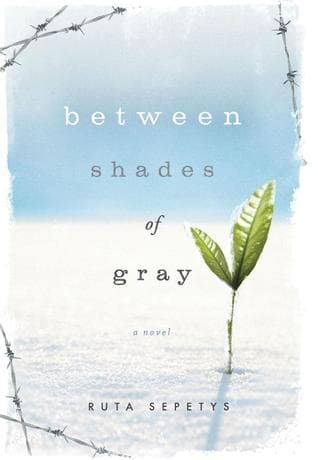
Ruta Sepetys (2011)
Genre
Historical Fiction / Young Adult / Romance
Reading Time
360 min
Key Themes
See below
Sign in to track this book
In 1941, a Lithuanian teenager's artistic spirit becomes her most dangerous weapon as she secretly documents the brutal realities of a Siberian work camp, desperately hoping her drawings will bridge the impossible distance to her imprisoned father.
On June 14, 1941, fifteen-year-old Lina Vilkas is preparing for art school when Soviet NKVD officers burst into her family's home in Kaunas, Lithuania. They accuse her father, Kostas, of being a nationalist and force Lina, her mother Elena, and her ten-year-old brother Jonas to pack minimal belongings within twenty minutes. Lina's father, a university professor, is separated from them immediately, sent to a different prison camp. The family is then herded onto trucks with other Lithuanians, including a demanding old woman called Mrs. Rimas and a young man named Andrius, and transported to crowded, inhumane train cars for an unknown destination. This marks the abrupt end of their normal lives.
The train journey is horrific. Hundreds of people are crammed into cattle cars, without proper food, water, or sanitation. Lina, Elena, and Jonas witness death and suffering daily. Elena, ever resourceful, trades her wedding ring for bread, showing her fierce determination to keep her children alive. Lina begins to secretly draw, using any available scrap of paper, documenting the atrocities and suffering around her, hoping these messages might somehow reach her father. During this time, Lina develops a connection with Andrius, who is with his mother in their car, both navigating the terror and uncertainty of their shared fate.
After weeks on the train, the group arrives at the Altai collective farm in Siberia. They are immediately put to work, forced to dig for beets and perform other labor from dawn till dusk, under the watchful eyes of cruel NKVD officers like Commander Kretzsky. Their rations are meager, and living conditions are squalid. Elena, a former teacher, tries to maintain dignity and hope, teaching the children and sharing what little food they have. Lina continues her secret drawings, sometimes leaving them for others to find, acting as a silent chronicler of their plight.
Elena's strength and selflessness help the group. She barters her remaining possessions, including her elegant dresses and shoes, with the guards for extra food and medicine, especially for Jonas who falls ill. She also advocates for others, even confronting the officers to secure better conditions or prevent injustices. Her actions, though often putting her at great risk, provide temporary relief and hope. Lina witnesses her mother's courage and the depth of her love, which inspires her own resilience and commitment to documenting their story.
Lina's art is her form of resistance. She draws portraits of her fellow prisoners, maps of their journey, and depictions of their suffering, often embedding subtle messages or clues about their location. She leaves these drawings in places where they might be found, hoping they will circulate and eventually reach her father. This secret activity is dangerous, as discovery would mean severe punishment or death. Her art is not just a personal outlet but a desperate attempt to communicate and preserve the truth of their experiences.
Just when they begin to adapt to the harsh conditions of the Altai farm, a new order arrives: the deportees are to be moved again, this time even further north, to the Arctic Circle. The new journey is even more brutal than the first, with many dying from cold, starvation, and disease. Lina, Elena, and Jonas, along with Andrius and Mrs. Rimas, survive the trip, arriving at a remote, desolate camp in Trofimovsk, near the Laptev Sea. The extreme cold and lack of resources make survival an even greater challenge.
In Trofimovsk, the conditions are catastrophic. They are housed in dilapidated shacks, with little to no food, and the temperatures are lethally low. They are forced to fish in the frozen sea, but the catch is insufficient. People die almost daily from scurvy, starvation, and exposure. Jonas becomes gravely ill with scurvy, and Elena desperately tries to find ways to get him citrus, even offering herself to Commander Kretzsky in exchange for medical supplies, a sacrifice Lina overhears and is devastated by. Elena's efforts are ultimately unsuccessful.
Elena's health gets worse quickly due to starvation and the brutal conditions. Despite her own weakening state, she continues to protect Lina and Jonas, sharing her last bits of food and offering words of encouragement. She also secretly helps a sick child by giving him her own meager rations. She finally succumbs to her illness, dying in Lina's arms in the frozen shack. Her death is a great loss for Lina and Jonas, but her legacy of love, courage, and self-sacrifice continues to inspire Lina to fight for survival and to tell their story.
After Elena's death, Lina and Jonas are left to fend for themselves. The remaining prisoners, including Andrius (who was left behind at the Altai farm and later sent to a different camp, but Lina receives a message from him), form a stronger bond, helping each other survive. Lina remembers her mother's final wish: to live and to tell their story. She continues to draw, now with an even greater sense of purpose, to honor her mother and all those who died. Jonas, though still frail, begins to regain some strength, and they find comfort in their shared grief and determination.
Years pass in the Arctic camp, with more deaths and continued hardship. Eventually, in 1953, after Stalin's death, the remaining survivors of the Trofimovsk camp are finally released from forced labor, though their return to Lithuania is complicated and not immediate. Lina and Jonas, now older and forever changed by their ordeal, are among the few who survive. Lina has kept all her drawings, a record of their suffering and resilience. The book ends with Lina, years later, burying her drawings with her mother's remains, ensuring their story will not be forgotten. She reflects on the enduring power of hope and the human spirit.
The Protagonist
From a sheltered artist, Lina transforms into a determined chronicler of injustice, finding her voice and purpose through her art and enduring immense loss.
The Supporting
Elena embodies unwavering maternal love and sacrifice, maintaining her humanity and dignity until her final breath.
The Supporting
Jonas experiences a traumatic loss of innocence, enduring profound physical and emotional suffering, but ultimately survives thanks to his family's love.
The Supporting
Andrius matures from a cynical survivor to a compassionate and supportive friend, finding love and hope with Lina despite their tragic circumstances.
The Supporting
Kostas's story is primarily experienced through his family's yearning for him, representing the profound loss and separation caused by the deportations.
The Supporting
Mrs. Rimas endures the suffering with a mix of despair and resilience, becoming an unlikely companion on the journey.
The Antagonist
Commander Kretzsky slowly reveals a hidden humanity and internal conflict, hinting at the moral compromises required under the Soviet regime.
The Supporting
Janina represents the profound loss of childhood innocence and the psychological toll of trauma.
The Supporting
Dr. Samodurov embodies medical ethics and compassion, struggling to provide care under impossible conditions.
Identity is central, as Lina is stripped of her comfortable life and forced to redefine herself not just as an artist, but as a survivor and chronicler. Her art is her identity and her form of resistance. The extreme conditions force her to confront her inner strength and values, shaping her from a naive girl into a resilient young woman with a strong sense of purpose. This is clear in her commitment to documenting their experiences, ensuring that their lost identities and stories are not forgotten.
“I looked up at my mother. Her eyes were filled with a hope I didn't feel. I was fifteen. I was a painter. I was a Lithuanian. I was a prisoner.”
Art is a strong motif throughout the novel. It is Lina's primary means of coping, resistance, and communication. Her drawings are not merely sketches but secret messages, historical records, and a way to preserve the humanity of the victims. They represent the human need to create, to bear witness, and to ensure that stories of injustice are told and remembered. Drawing, even under threat of death, shows how art gives voice to the voiceless and preserves truth.
“I drew pictures of the train, the officers, the people, the hunger. I drew pictures of the lies, the fear, the desperation. I drew pictures of the truth.”
Despite suffering, starvation, and loss, the characters, particularly Lina and Elena, show great resilience. They find ways to survive, to help each other, and to maintain their dignity and hope. Elena's selflessness and Lina's determination to live and tell their story show the strong nature of the human spirit. Even in the bleakest circumstances, small acts of kindness, love, and defiance emerge, showing humanity's ability to endure and resist oppression.
“Have courage, my dear. We're going to survive this. We're going to survive this, and we're going to tell the world what happened.”
The deep love within the Vilkas family and the bonds formed among the deportees are important for survival. Elena's fierce maternal love drives her every action and sacrifice. Lina's love for her brother, Jonas, compels her to protect him. The connections forged with others, like Andrius, provide emotional sustenance and a reason to live. These relationships show how love, even in the face of extreme adversity, can provide strength, comfort, and a lifeline, proving that human connection is essential for enduring trauma.
“The Kolyma. It was a place where people went to die. But my mother had taught me that there was always hope, even in the darkest of places.”
The novel shows the dehumanizing effects and systematic cruelty of the Soviet regime under Stalin. It exposes the arbitrary arrests, forced deportations, slave labor, and widespread starvation used as tools of political oppression. The NKVD officers embody this brutality, enforcing policies that strip people of their rights, dignity, and lives. The narrative is a powerful historical account of the genocide and ethnic cleansing committed against the Baltic peoples, showing the devastating human cost of totalitarian power.
“They took us because they wanted our land, our resources, our freedom. They wanted to erase us.”
Narrative told through the eyes of the young protagonist, Lina.
The story is primarily told from Lina's perspective, immersing the reader directly into her thoughts, fears, and observations. This first-person narration allows for an intimate understanding of the emotional and psychological impact of the deportation on a young girl. It emphasizes her personal journey of survival and her development as an artist and chronicler, making her struggles and small triumphs deeply personal and resonant. Her unique perspective, filtered through an artist's eye, shapes how the brutal landscape and human suffering are depicted.
Lina's drawings serve as a means of communication, resistance, and historical record.
Lina's art is not just a hobby but a crucial plot device. Her drawings act as clandestine messages, a form of defiance against a regime that seeks to erase identity and history. They are a means of documenting the atrocities, providing visual evidence of the suffering and the locations of the camps. Symbolically, her art represents the enduring power of creativity and truth in the face of oppression, and her commitment to it drives her actions and provides a tangible link to her past and her father.
Interspersed memories of Lina's life before the deportation.
Throughout the narrative, Lina experiences vivid flashbacks to her life before the deportation – memories of her comfortable home, her loving family, and her artistic aspirations. These serve as a stark contrast to her current horrific reality, highlighting the immense loss and the trauma she has endured. The flashbacks not only provide context for Lina's character and her former life but also underscore the profound disruption and pain caused by the Soviet invasion, emphasizing what was stolen from her and her people.
A recurring symbol of shared humanity and hope.
Elena's embroidered handkerchief, initially a symbol of her refined life, becomes a powerful symbol of humanity and resilience. She uses it to clean and comfort her children, and later, it is passed among the prisoners, becoming a shared item of comfort and a reminder of their common plight and dignity. It represents the small acts of kindness and the enduring spirit that persist even in the most dehumanizing conditions, a tangible link to their past and a quiet act of resistance against the filth and despair of the camps.
A means of tracking time and maintaining hope amidst endless despair.
The creation of a makeshift calendar by the prisoners, marking off each day, serves as a crucial plot device and a symbol of their enduring hope. In a reality where days bleed into weeks and months with no end in sight, the calendar provides a sense of structure, marking the passage of time and reminding them that the ordeal is not eternal. It is an act of defiance against the regime's attempt to strip them of their past and future, providing a collective focal point for their shared desire for freedom.
“Have you ever wondered what a human life is worth? That morning, my brother's was worth a pocket watch.”
— Lina reflects on the Soviet soldiers' valuation of her family during their deportation.
“They took me in my nightgown. Thinking back, the words 'they took me' sound like something a mother would say about a child. They took me.”
— Lina describes the moment of her arrest by the NKVD.
“We'd been trying to touch the sky from the bottom of the ocean.”
— Lina uses this metaphor to describe the futility of their situation in the labor camps.
“I will never forget that smell. It smelled like death.”
— Lina recalls the stench of the crowded cattle car during deportation.
“Sometimes there is such beauty in awkwardness.”
— Lina thinks about her growing feelings for Andrius.
“If you are reading this, you are the resistance.”
— Lina writes in her hidden journal, hoping her story will survive.
“We were like matchsticks in a gale.”
— Lina describes the fragility of the deportees in the face of Soviet oppression.
“I want to be brave. I want to love. I want to matter.”
— Lina's internal thoughts about her desires amidst the horrors.
“The NKVD took everything from us, but they could not take our stories.”
— Lina emphasizes the power of memory and narrative.
“We were stripped of our names, our homes, our dignity. But they could not strip us of our humanity.”
— Lina reflects on the deportees' retention of their human spirit.
“In the end, it was the small acts of kindness that kept us alive.”
— Lina observes how minor gestures sustained them in the camps.
“Love is a bullet. It can kill you or save you.”
— Lina contemplates the dual nature of love in their dire circumstances.
“We were not shades of gray. We were vibrant colors, muted by force.”
— Lina asserts the individuality and vitality of the deportees.
“The stars were the only thing they couldn't take from us.”
— Lina finds solace in the night sky during imprisonment.
Ready to see how well you understood this book? Take our interactive quiz with 10 questions.

Biography coming soon.







