“Life is a game, and the only sure way to win is to cheat. Or have a lot of money. Or a lot of friends. Or a lot of enemies.”
— Monza contemplating her past and future.

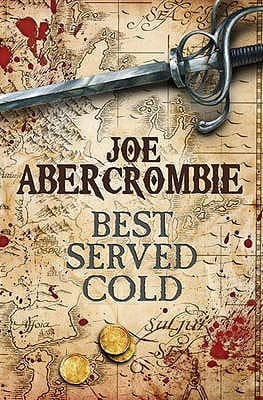
Joe Abercrombie (2009)
Genre
Fantasy
Reading Time
1000 min
Key Themes
See below
Sign in to track this book
A betrayed mercenary, left for dead and broken, claws her way back from the brink with a motley crew of killers and misfits to systematically hunt down the seven men who wronged her, all while Styria bleeds under the shadow of war and treacherous power plays.
Monza Murcatto, the famous 'Snake of Talins' and her brother, Benna, celebrated commanders in Grand Duke Orso's army, are called to Talins. They expect to be honored for their recent victories, but instead walk into a trap. Orso, fearing their growing popularity and ambition, orders their execution. Benna is brutally murdered before Monza's eyes, and she is thrown from a high balcony, falling down a mountainside. She survives the fall, though severely injured and broken. Her last sight before losing consciousness is Orso's face, a moment that starts a thirst for revenge against him and his seven closest associates.
After months of painful recovery in a remote monastery, Monza, now scarred and limping, returns to the world with one purpose: revenge. She seeks out Morveer, a legendary and notoriously unreliable poisoner, currently imprisoned for his crimes. Monza offers him freedom and money for his unique skills in assassinating her targets. Morveer, seeing an opportunity for wealth and mischief, agrees, but with his own conditions and a desire for recognition. This unlikely alliance marks the start of Monza's bloody campaign, beginning with the first name on her list: General Vissbruck.
Monza and Morveer, with their new Northman companion, Shivers, track General Vissbruck to a heavily guarded military camp. Morveer plans a complex poisoning, using his knowledge of human nature and toxicology. Monza, despite her physical limitations, helps create a diversion and ensures Vissbruck eats the poisoned food. The general dies a painful death, and Monza feels grim satisfaction as the first name is crossed off her list. This initial success strengthens her resolve and shows Morveer's deadly skill, while Shivers struggles with their mission's morality.
Continuing her quest, Monza seeks out Friendly, a notorious and mentally unstable mass-murderer currently serving a life sentence. Friendly is obsessed with numbers, especially the number three, and carefully records every kill he makes. Monza, recognizing his skills—his ruthlessness, precision, and complete lack of remorse—offers him a place in her crew. Friendly, intrigued by the prospect of adding more 'numbers' to his tally and the promise of freedom, readily accepts. His addition brings a chilling efficiency to Monza's operations, making the team more formidable and unpredictable.
Javari 'Shivers' is sent by Logen Ninefingers to Styria, tasked with 'doing the right thing,' a vague instruction that leaves him adrift. He first meets Monza while trying to find work and is quickly drawn into her orbit. Though he struggles with the morality of Monza's bloody revenge, he feels a sense of loyalty and a growing fascination with her strength. Shivers adds a moral compass, though a struggling one, to Monza's otherwise ruthless crew, providing a contrast to Morveer's cynicism and Friendly's detachment. He becomes her bodyguard and a reluctant participant in the assassinations.
General Ganmark, another target on Monza's list, is known for his fighting skill and arrogance. Monza arranges a public confrontation, challenging him to a duel. Despite her lingering injuries, Monza's years of training and fierce determination show through. The duel is brutal, pushing her to her limits, but she defeats Ganmark, proving that the 'Snake of Talins' is far from broken. This victory is not only a step closer to her revenge but also a powerful statement to her enemies and a boost to her own shattered confidence.
As Monza's revenge campaign intensifies, it attracts the attention of the powerful and cunning Arch Lector Sult. Sult, wanting to destabilize Styria and further his own political ambitions, sees Monza as a useful, if unpredictable, tool. He subtly manipulates events, giving her information and resources, while ensuring his own interests are served. Monza, wary but pragmatic, understands she can use Sult as much as he can use her, leading to a dangerous dance of temporary alliances and hidden agendas that adds another layer of complexity to her mission.
Duke Fresco, a wealthy and influential figure on Monza's list, proves to be a more elusive target. The hunt leads Monza and her companions to the bustling city of Sipani, a hub of commerce and intrigue. The pursuit is challenging, including navigating Fresco's extensive network of guards and informants. Morveer's cunning plans and Friendly's brutal efficiency are tested. The confrontation with Fresco is tense and violent, ending in his death, further solidifying Monza's reputation and bringing her closer to the heart of Orso's power.
Duke Rogont, a financial mastermind and Orso's chief financier, is the next target. Unlike the others, Rogont is not a fighter but a schemer, making him a different kind of challenge for Monza. She and her crew must outwit his security and get into his well-guarded estate. The confrontation with Rogont is less about physical violence and more about psychological warfare and strategic maneuvering. Monza corners him, forcing him to confront his involvement in her betrayal, before exacting her brutal revenge. This victory unravels a significant part of Orso's support structure.
Monza's personal vendetta gradually blends with Styria's larger political landscape. Through unexpected events and manipulations by Arch Lector Sult, Monza finds herself leading a mercenary army during the siege of Visserine. This conflict forces her to shift from a covert assassin to a military commander again, testing her leadership skills and her ability to inspire loyalty. The siege is brutal and costly, with Monza showing her tactical brilliance even as she struggles with the moral implications of leading men to their deaths for a cause that is not entirely her own.
After systematically eliminating his allies and weakening his position, Monza finally corners Grand Duke Orso. The confrontation is highly anticipated and deeply personal. Orso, desperate and isolated, tries to justify his actions, but Monza ignores his pleas. The battle is a culmination of her journey, a raw display of her enduring pain and fury. She defeats him, not quickly, but in a way that allows her to savor her vengeance, leaving him broken and humiliated, much as he had left her. The act is cathartic, yet leaves a lingering emptiness.
With Orso defeated and her revenge complete, Monza is at a crossroads. The satisfaction she expected is fleeting, replaced by a deep emptiness and the realization that her quest has consumed her entirely. Her allies, Morveer, Friendly, and Shivers, disperse, each going their own way, forever changed by their involvement. Monza is left with her scars, both physical and emotional, and the task of figuring out who she is without the purpose of vengeance. The story ends with her contemplating an uncertain future, highlighting the often-hollow nature of revenge.
The Protagonist
Monza transforms from a celebrated general to a broken, vengeful assassin, ultimately finding her revenge to be a hollow victory that leaves her searching for a new purpose.
The Supporting
Morveer maintains his self-serving and treacherous nature throughout, finding an outlet for his 'art' in Monza's revenge, and ultimately seeking new opportunities for mischief.
The Supporting
Shivers begins as an idealistic Northman seeking to 'do the right thing' but is gradually hardened and disillusioned by the brutality of Monza's revenge, leading him to question his own nature.
The Supporting
Friendly remains largely unchanged, finding new opportunities to indulge his numerical obsessions and violence, showcasing a consistent and unwavering psychopathy.
The Antagonist
Orso begins as a powerful and manipulative ruler, whose paranoia leads to his downfall as Monza systematically dismantles his power and takes her revenge.
The Supporting
Sult continues his trajectory as a political manipulator, successfully using Monza's vengeance to further his own power and the Church's influence in Styria.
The Mentioned
Benna's arc is cut tragically short, serving as the primary motivation for Monza's journey of vengeance.
The Antagonist
Vissbruck's arc is short, serving as the first domino to fall in Monza's intricate plan for vengeance.
The Antagonist
Fresco's arc depicts the unraveling of Orso's support system through Monza's targeted assassinations.
The Antagonist
Rogont's arc shows how Monza systematically dismantles Orso's power, targeting not just his military might but also his financial bedrock.
The novel explores how revenge, while a powerful motivator, ultimately leaves its pursuer hollow and unfulfilled. Monza's quest for vengeance changes her from a respected general into a ruthless assassin, forcing her to commit horrific acts and sacrificing her humanity. Despite achieving her goal, the anticipated satisfaction never arrives, replaced by a deep emptiness and the realization that the cost of her revenge was too high, leaving her with no clear purpose. The ending shows that revenge consumes rather than liberates, as seen in Monza's final thoughts after killing Orso.
“Revenge… it's a dish best served cold, they say. But I always found it tasted better piping hot, with a good deal of blood and screaming. Now… now it just tastes of ash.”
Abercrombie consistently challenges the idea of clear-cut heroes and villains, showing that nearly every character operates in a moral grey area. Even Monza, the protagonist, commits acts of extreme brutality, and her allies are a collection of psychopaths, cowards, and morally conflicted individuals. Characters like Shivers struggle with 'doing the right thing' but are inevitably drawn into violence. The book suggests that in Styria's brutal world, 'good' and 'evil' are subjective, and survival often requires morally compromising choices. Arch Lector Sult's manipulation further blurs these lines, showing that even those claiming moral authority are corrupt.
“There are no heroes, only men who do heroic things. And villains who do villainous things. And sometimes, the same men do both.”
Ambition is a central motivator for many characters, but the novel shows its immense and often destructive cost. Grand Duke Orso's ambition to maintain absolute power leads him to betray and attempt to murder Monza and Benna, ultimately triggering his own downfall. Monza's own ambition, first for military glory and then for brutal revenge, costs her her humanity and leaves her scarred and isolated. The constant struggle for power among Styria's various factions results in widespread conflict, death, and suffering, illustrating that unchecked ambition inevitably leads to ruin, not just for individuals but for entire nations.
“Ambition is a great master, but it makes for a cruel one.”
The narrative is steeped in betrayal and shifting alliances, highlighting how loyalty is rare and often fleeting. Monza's entire journey begins with a deep act of betrayal by Grand Duke Orso, a man she served faithfully. Throughout her quest, she constantly navigates treacherous relationships, particularly with Morveer, whose loyalty is always conditional and self-serving. Even Shivers, who tries to be loyal, finds it tested by the brutal realities he faces. The novel suggests that in a world driven by power and self-interest, trust is a dangerous luxury, and alliances are temporary, easily broken when circumstances change.
“Trust is a luxury I can no longer afford. Loyalty is a word whispered by fools.”
Monza's meticulously kept list of seven men responsible for her betrayal.
The revenge list serves as the primary narrative driver, providing a clear, episodic structure to Monza's journey. Each name on the list represents a specific target and a mini-quest for Monza and her crew. It gives her a concrete purpose and allows the reader to track her progress. This device also allows for the introduction of various characters and their unique challenges, as each target requires a different approach. Symbolically, the list represents Monza's burning obsession and the systematic dismantling of Orso's power base, one name at a time.
Morveer's internal monologues and dialogue often distort the truth or present a self-serving version of events.
While not a single unreliable narrator for the entire book, Morveer's perspective often functions as such. His grandiose self-assessments, his constant embellishment of his own genius, and his tendency to downplay his failures or blame others create a comedic yet unsettling element. His internal thoughts, revealed through his dialogue and actions, often contradict the reality of the situation, highlighting his profound narcissism and making him a character whose words must always be taken with a grain of salt. This device adds a layer of dark humor and complexity to the narrative.
Shivers' vague instruction from Logen Ninefingers, serving as his internal moral compass.
Shivers' instruction to 'do the right thing' acts as a recurring motif and a constant internal conflict for him. It's a vague, almost meaningless directive in the brutal world of Styria, forcing Shivers to grapple with increasingly difficult moral choices. This device highlights the ambiguity of morality in the narrative and how 'right' can be subjective and elusive. It also serves to contrast Shivers' initial idealism with the grim realities of Monza's revenge, showing his gradual disillusionment and hardening as he struggles to interpret and adhere to this simple, yet profoundly challenging, instruction.
Friendly's peculiar and pervasive obsession with the number three.
Friendly's obsession with the number three is a unique character quirk that functions as a dark comedic device and a window into his disturbed mind. He meticulously counts everything in threes, from his kills to his steps, providing a chilling sense of order to his psychopathy. This obsession adds an element of predictability to his otherwise unpredictable violence. It also serves to highlight the diverse and unusual personalities within Monza's crew, contrasting with the more conventional motivations of other characters, and adding a layer of unsettling eccentricity to the narrative.
“Life is a game, and the only sure way to win is to cheat. Or have a lot of money. Or a lot of friends. Or a lot of enemies.”
— Monza contemplating her past and future.
“Revenge is a dish best served cold, but it’s a dish you have to eat alone. And it can take a long time to chew.”
— Monza reflecting on the nature of her quest.
“The world is full of people who will try to make you feel small. It's up to you to decide if you want to let them.”
— A general observation on human interaction.
“There are no good men. Only men who haven't been tempted enough, or men who are too weak to do what they want.”
— Shivers' cynical view of humanity.
“You can never truly escape your past. It's always there, a shadow at your heels, waiting for its chance to trip you up.”
— Monza struggling with the memories of her betrayal.
“Sometimes the only way to get what you want is to take it. And sometimes the only way to keep what you have is to kill for it.”
— A brutal truth about the world Monza inhabits.
“Hope is a dangerous thing. It can make you do stupid things. It can make you believe in things that aren't true.”
— Friendly warning Monza about the dangers of false hope.
“The greater the risk, the greater the reward. And the greater the chance you'll end up with your guts spilled on the floor.”
— A mercenary's philosophy on dangerous ventures.
“A man who trusts no one is a man who can be trusted by no one.”
— A reflection on the nature of trust.
“Every man has his price. It's just a matter of finding out what it is.”
— Morveer's cynical view of human motivation.
“The past is a story we tell ourselves. The future is a story we hope to tell.”
— Monza considering the fluidity of identity and destiny.
“You can forgive, but you can never forget. And sometimes, forgetting is the only true forgiveness.”
— Monza grappling with the possibility of moving on.
“What good is revenge if you can't enjoy it?”
— Shivers questioning Monza's grim pursuit.
“Power is like a fire. It can keep you warm, or it can burn you to ashes.”
— A metaphor for the double-edged nature of power.
Ready to see how well you understood this book? Take our interactive quiz with 10 questions.

Biography coming soon.







