“The thing about being popular is that you can lose it in a second.”
— Claire is reflecting on the fleeting nature of popularity at Octavian Country Day.

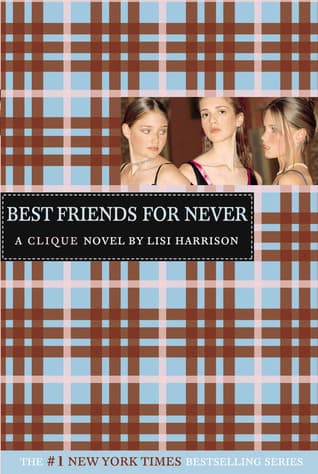
Lisi Harrison (2004)
Genre
Children's / Young Adult / Romance
Reading Time
150 min
Key Themes
See below
Sign in to track this book
Surrounded by designer clothes and text messages, Massie's plan for the best middle school Halloween party turns into a chaotic fight for boy attention and social power, showing that even close friendships can break when a cute guy is involved.
Massie Block, the queen bee of Octavian Country Day (OCD) middle school, is seen as a hero by her Clique for deciding to host the first boy/girl Halloween party for 8th graders. She has already hired Landon Dorsey, a popular party planner, to make sure the event is amazing. But Massie's carefully made guest list is ruined when her parents, Mr. and Mrs. Block, insist she invite the entire class, including the students she usually avoids. This means Massie has to include Claire Lyons, a new girl from Florida whom Massie has tried hard to exclude, and other unwanted classmates, much to Massie's frustration and the Clique's annoyance.
Claire Lyons, still an outsider in Massie's group, tries to understand OCD's complicated social scene. She secretly likes Chris Abeley, a popular boy in their grade, and often watches him, hoping he likes her back. The idea of a co-ed Halloween party makes her both nervous and excited. While her friend Layne dislikes the idea of boys being there, Claire secretly wonders if having a boyfriend, especially Chris, could finally bring her the happiness and acceptance she wants, making her feel less invisible among her classmates.
Within the Clique, tension grows as Dylan Marvil, Kristen Gregory, and Alicia Rivera compete for Derek Herrington's attention, a popular boy. Dylan thinks she has a special claim on Derek, having danced with him all night at a recent OCD event. But Kristen disagrees, leading to a small fight. Alicia, always planning, watches quietly, ready to make her own move. Despite their initial argument, Dylan eventually dismisses Derek, saying he is a bad dancer and that there will be many other boys at the party, showing the Clique's changing nature and their competitive search for male attention.
Massie is determined to make her Halloween party the most talked-about event of the year. She has planned every detail with Landon Dorsey, from decorations to food, ensuring it shows her good taste and social standing. However, her parents' insistence on inviting the entire class, including the 'nerds' and 'freaks,' constantly threatens her vision. Massie tries to find ways to separate the 'undesirables' from the 'A-listers,' showing her strong desire for social control and exclusivity, which clashes with her parents' more inclusive, but inconvenient, rule.
As the Halloween party gets closer, Claire faces a new problem: finding the perfect costume. She feels a lot of pressure to choose something that will make her stand out in a good way, or at least not make Massie make fun of her. Her small budget and lack of fashion sense make this hard. She tries on different outfits, feeling more and more unsure about how she looks and if she can fit in or impress anyone, especially Chris Abeley. This struggle shows her ongoing self-doubt and her wish for acceptance in OCD's superficial world.
Unlike Claire's struggles, Massie and the Clique approach their Halloween costumes carefully. They hold secret meetings, discussing themes and individual outfits to make sure they look united, stylish, and get attention. Their goal is not just to look good, but to strengthen their status as the most popular girls at the party. They carefully coordinate their looks for maximum impact and to subtly outshine any competition, showing their vanity and their strategic approach to social power, even in something as simple as a costume party.
The highly anticipated Halloween party finally happens at Massie's large home. Despite Massie's efforts to control the guest list, many different students fill the house. Massie and the Clique stay in their exclusive group, trying to ignore the 'undesirables.' But the large number of guests makes complete separation impossible. Claire, in a simple costume, tries to move through the crowded rooms, feeling both overwhelmed and hopeful. The party quickly becomes a mix of awkward meetings, flirtatious looks, and the constant tension between OCD's social levels.
Among the music and costumed crowds, Claire has a brief but important moment with Chris Abeley. They talk briefly, dance, or share a laugh that makes Claire's heart race. This interaction, however small, feels huge to Claire, giving her a bit of hope that her crush might like her back and that she might not be as invisible as she often feels. This moment offers a short break from the social pressures and worries that usually bother her, giving her a taste of the acceptance and connection she wants.
Massie, frustrated by the lack of exclusivity and the presence of her unwanted classmates, tries to regain control of her party. She might play a trick or plan something to embarrass the 'outsiders,' or perhaps a planned 'accident' to clear the dance floor. However, her actions backfire, leading to unexpected chaos or a near-disaster that threatens to ruin the event. This incident shows Massie's manipulative tendencies and her inability to cope when things do not go exactly as planned, revealing how fragile her carefully built social world is.
As the Halloween party ends, the immediate aftermath shows a mix of success, disappointment, and unanswered questions. Massie, despite the near-disaster, still manages to save some of her reputation, though her control over the social order might be slightly shaken. Claire thinks about her interaction with Chris, feeling both hope and uncertainty about their future. The Clique members discuss the party, their rivalries still present. The event, while a temporary show, ultimately shifts the social dynamics within OCD, setting up future conflicts and alliances.
The Protagonist/Antagonist
Massie's arc often involves her schemes backfiring, forcing her to confront the limitations of her control, though she rarely learns a lasting lesson.
The Protagonist
Claire slowly gains confidence and finds her voice, often challenging Massie's authority in subtle ways.
The Supporting
Alicia consistently attempts to undermine Massie's authority, often failing but always learning new tactics.
The Supporting
Dylan's arc generally involves her grappling with her insecurities and seeking external validation.
The Supporting
Kristen often finds herself torn between her personal values and the demands of the Clique.
The Supporting
Chris remains largely a romantic interest, his interactions with Claire slowly building a connection.
The Supporting
Landon's arc is limited to his role as party planner, showcasing his professional competence.
The Mentioned
Derek's role is primarily to instigate conflict and demonstrate the Clique's competitive dynamics.
The Supporting
Layne's arc generally involves her supporting Claire and offering her honest opinions.
The novel clearly shows the strict social order of middle school, with Massie Block at the top. The Clique's constant efforts to keep their elite status by excluding others like Claire, and Massie's frustration when her parents make her invite the whole class to her party, highlight how cruel and superficial these social structures are. This theme appears in Massie's careful guest list planning, her attempts to separate partygoers, and Claire's constant feeling of being an outsider, showing the pain and worry caused by social exclusion. The whole plot focuses on who is 'in' and who is 'out.'
“Massie's already hired Landon Dorsey, the hottest party planner in the 9-1-4 area code, but her parents insist she has to invite the entire class. Unfortunately that means everyone.”
Claire Lyons represents the common theme of wanting acceptance and belonging. As the new girl, she constantly deals with feeling invisible and insecure, wanting real connection and a place in the school's social fabric. Her secret crush on Chris Abeley and her hope that a boyfriend might bring her happiness show her desire for approval. Even within the Clique, members like Dylan and Kristen are driven by a need for outside approval and the fear of losing favor, showing that the desire for acceptance is not just for outsiders, but appears differently depending on one's social standing.
“Claire wonders if maybe a boyfriend will make her happy.”
The characters, especially Massie and The Clique, care a lot about how they look, fashion, and keeping a perfect image. Their careful planning of Halloween costumes, not just for fun but for social effect, shows this theme. The competition over who gets to invite Derek Herrington, or Dylan's dismissal of him as a 'terrible dancer,' shows how even potential romantic interests are judged by surface-level things. This focus on outside appearance over real substance drives much of the characters' behavior and interactions, creating a world where image is most important.
“The Clique are fighting over who gets to invite Derek Herrington. Dylan thought it was obvious that she was the one that danced all night with Derek at the OCD benefit last month...”
Massie Block's character is defined by her manipulative actions and her strong desire to control her social environment. From managing her party's guest list to subtly arranging social situations, she always tries to maintain her power. The rivalries within The Clique, such as the fight over Derek Herrington, further show these power dynamics, where members compete for position and influence. This theme reveals the complex and often harsh ways adolescents navigate their social world, using schemes and influence to get what they want.
“Massie's already hired Landon Dorsey, the hottest party planner in the 9-1-4 area code, but her parents insist she has to invite the entire class.”
A central event that acts as a social battleground.
The Halloween party serves as the primary setting and catalyst for much of the novel's conflict and character development. It is envisioned by Massie as a grand display of her social prowess and exclusivity, but it becomes a crucible where her control is challenged by parental interference and the forced inclusion of 'undesirable' classmates. For Claire, it represents a chance for acceptance and a potential romantic connection. The party amplifies the existing social hierarchies and rivalries, forcing characters to interact in ways they might otherwise avoid, and ultimately driving the plot forward through its anticipation and execution.
Allows insight into characters' private thoughts and motivations.
The narrative frequently delves into the internal monologues of the main characters, particularly Massie and Claire. This device allows readers to understand their true feelings, insecurities, and motivations, which often contrast sharply with their outward behavior. For example, while Massie projects confidence, her internal thoughts reveal her anxieties about maintaining her status. Similarly, Claire's internal musings expose her longing for acceptance beneath her quiet exterior. These shifts in perspective provide depth to the characters and highlight the disparity between public image and private reality.
A tool for communication, gossip, and expressing private thoughts.
Instant messaging (IMs) and implied social media interactions are used by characters like Layne and Claire to communicate privately, share gossip, and express their true feelings away from the watchful eyes of The Clique. Layne's IM to Claire, stating that boys at the party is 'DESPR8,' exemplifies how this device allows for unfiltered opinions and reactions. It also serves as a modern backdrop for adolescent communication, reflecting how information and social commentary spread rapidly within their peer group, often fueling the very social dynamics the story explores.
A unified force that embodies social power and groupthink.
While composed of individual characters, The Clique (Massie, Alicia, Dylan, Kristen) often functions as a singular, powerful entity. They move, strategize, and judge as a unit, reinforcing each other's opinions and upholding their collective social status. This device highlights the pressure of groupthink and the amplified power that comes from a united front in a social hierarchy. Their internal squabbles, like the fight over Derek Herrington, show cracks in their unity but ultimately reinforce their competitive nature within their own ranks, even as they present a formidable barrier to outsiders.
“The thing about being popular is that you can lose it in a second.”
— Claire is reflecting on the fleeting nature of popularity at Octavian Country Day.
“Sometimes you have to be mean to be kind.”
— Massie justifying her actions, particularly towards someone she deems an outsider.
“Being a LBR was like being invisible, only worse. At least invisible people didn't have to worry about getting hit by dodgeballs.”
— Claire comparing her 'Loser-Bye-Request' status to literal invisibility.
“Massie Block's world was a perfectly manicured rose garden, and Claire was a weed trying to sprout in the middle of it.”
— Claire's internal monologue about trying to fit into Massie's elite group.
“It's not about what you wear, it's about who you are. (But it helps if what you wear is awesome.)”
— Massie's unspoken philosophy on fashion and identity.
“Friendship isn't about being perfect, it's about being there.”
— Claire's growing understanding of what true friendship means.
“The only thing worse than not being invited was being invited and knowing you weren't wanted.”
— Claire's feelings about being included in The Pretty Committee's activities out of obligation.
“Sometimes the best revenge is living well, and looking fabulous while doing it.”
— Massie's internal thought process when dealing with perceived slights.
“You can't choose your family, but you can choose your friends. And sometimes, your friends are more important.”
— Claire reflecting on her complicated family situation and the friends she's making.
“Being a leader meant making tough decisions, even if they made you unpopular for a little while.”
— Alicia's thoughts on her role within The Pretty Committee.
“The truth was like a really cute outfit: it looked good on everyone, but some people were too scared to try it on.”
— Claire's observation about honesty and pretense.
“It was impossible to be truly happy when you were constantly trying to be someone you weren't.”
— Claire's realization about the pressure to conform.
“Boys were like accessories. Fun to have, but not essential for a complete look.”
— Massie's perspective on boys and their place in her world.
“Everyone had secrets. Some were just better at keeping them than others.”
— Claire's understanding of the hidden lives of her new classmates.
Ready to see how well you understood this book? Take our interactive quiz with 10 questions.

Biography coming soon.

Dan Gemeinhart
4.5

Kate O'Hearn
4.4

Jeanne Birdsall
4.4

Jen Wang
4.4
Wendelin Van Draanen
4.3

John Marsden
4.3

Chris Van Allsburg
4.3
Jennifer A. Nielsen
4.2