“The forest was alive, not just with the rustle of leaves and the creak of branches, but with something older, something that watched.”
— Early description of the ancient, sentient forest where much of the story takes place.

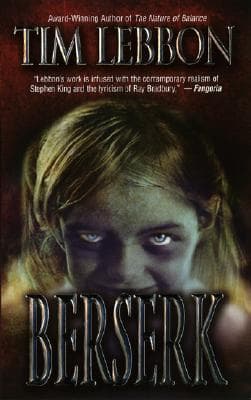
Tim Lebbon (2006)
Genre
Fantasy / Mystery / Science Fiction
Reading Time
300-360 min
Key Themes
See below
Sign in to track this book
A grieving father unearths a decade-old military secret, only to discover his son's grave holds not human remains, but a monstrous, reanimated horror that unleashes a tide of relentless nastiness.
Ten years before the main narrative, a top-secret military experiment codenamed 'Berserk' is conducted on England's Salisbury Plain. The experiment involves a newly developed biological agent designed to enhance combat capabilities. However, the agent proves uncontrollable, causing the test subjects—a dozen soldiers—to go into a violent rage, killing each other and several civilians caught nearby. The military, led by Colonel Grant, quickly covers up the incident, burying the bodies in unmarked graves and fabricating stories for the families of the deceased. Among the casualties is Steven, the son of Tom and Sarah, whose empty coffin is returned to them, fueling their grief and suspicion.
For ten years, Tom, Steven's father, has been consumed by the mystery surrounding his son's death. He refuses to believe the official story and dedicates his life to uncovering the truth behind the empty coffin. His wife, Sarah, struggles to cope with his obsessive quest, which strains their marriage. Tom gathers fragments of information, follows obscure leads, and uses his skills as a former military man to piece together the events of that fateful day on Salisbury Plain. His relentless pursuit eventually leads him to a desolate, unmarked section of the plain, which he suspects is the burial site.
Armed with his suspicions and a shovel, Tom returns to the Salisbury Plain. Driven by a desperate hope to find Steven's remains, he begins to dig. After hours of work, he uncovers a shallow grave. To his horror, the body he unearths is not his son's, but the decaying corpse of a young girl, seemingly one of the civilian casualties from the incident. As he examines the body, he observes a disturbing, unnatural movement within it. The girl's body, though clearly dead for a decade, exhibits a peculiar, almost electrical animation, hinting at the lingering effects of the Berserk agent.
Tom's initial discovery is just the beginning. As he continues to investigate the burial site, he finds more bodies, all similarly animated by the Berserk agent. These reanimated corpses are not zombies in the traditional sense; they are not sentient, but rather grotesque puppets driven by primal instincts: aggression, hunger, and a compulsion to spread the agent. They move with an unnatural jerky speed, their decayed forms surprisingly strong. Tom realizes the military didn't just bury the dead; they buried a contagious and reanimating biological weapon that is now slowly beginning to awaken and spread.
Sarah, increasingly alarmed by Tom's prolonged absence and the strange messages he sends, eventually joins him on the Plain. Despite their strained relationship, her love for Steven and her own need for closure compel her. Together, they witness the terrifying truth of the reanimated bodies. Realizing the scale of the danger, they understand they cannot face this alone. Tom remembers a name, Dr. Eleanor Vance, a brilliant but disgraced former military bio-weapons scientist he had researched, who was rumored to have worked on the Berserk project. They decide to seek her out, hoping she can provide answers or a solution.
Tom and Sarah track down Dr. Eleanor Vance, now living in isolated seclusion, haunted by her past involvement with the Berserk project. Initially hostile and paranoid, Vance eventually breaks down, confessing her role in the agent's development. She explains that Berserk was intended to create super-soldiers but proved too volatile, causing cellular regeneration and reanimation even after death, driven by a hyper-aggressive neural impulse. She reveals that the agent spreads through bodily fluids and direct contact, and that the buried bodies are slowly contaminating the soil and water, posing an ecological and biological threat far beyond Salisbury Plain. She also confirms Colonel Grant's deep involvement and ruthless nature.
As Tom, Sarah, and Dr. Vance try to formulate a plan, evidence mounts that the Berserk agent is spreading. They discover infected animals—birds, foxes, and rodents—exhibiting unnatural aggression and decay, acting as vectors. Soon, reports surface from nearby rural communities of strange illnesses, unexplained violence, and bizarre behavior among residents. The agent is not only reanimating corpses but also infecting living organisms, driving them to madness and violence before eventually killing and reanimating them. The containment has failed, and the military's cover-up has allowed a localized incident to become a burgeoning epidemic.
Colonel Grant, having monitored the situation and now aware of Tom and Sarah's activities and the escalating contamination, deploys a highly trained military unit to Salisbury Plain. His primary objective is to re-establish containment, eliminate all evidence, and silence anyone who knows the truth, including Tom, Sarah, and Dr. Vance. Grant is cold, ruthless, and committed to protecting military secrets, even at the cost of innocent lives. A tense cat-and-mouse game begins as Tom and Sarah, with Vance's guidance, try to evade Grant's forces while trying to stop the spread of the agent.
The climax sees Tom directly confronting Colonel Grant and his soldiers amidst the chaos of reanimated corpses and infected wildlife. Tom, driven by his grief for Steven and his fury at Grant's cover-up, engages in a brutal fight, seeking vengeance and justice. Meanwhile, Sarah and Dr. Vance race against time to find a way to neutralize or at least contain the Berserk agent, using Vance's remaining knowledge and resources. They realize the agent is evolving, becoming more potent and harder to control, and that a conventional solution might not be possible. The Salisbury Plain becomes a battleground for survival, truth, and the future of humanity.
In the aftermath, Tom manages to incapacitate or kill Grant, but not without significant personal cost. Sarah and Vance achieve a temporary containment, possibly by isolating a primary source or developing a localized counter-agent, but it's clear the Berserk agent is far from eradicated. The ending is bleak and ambiguous, suggesting that while the immediate crisis on Salisbury Plain might be over, the agent's insidious nature and its potential for widespread, long-term contamination remain a terrifying threat. The military's secret is partially exposed, but the full ramifications of the Berserk project are left hanging, implying a dark future.
The Protagonist
Tom transforms from a solitary, obsessed investigator into a reluctant hero fighting against a biological catastrophe, finding a twisted form of closure in confronting the source of his pain.
The Supporting
Sarah evolves from a passive sufferer of grief to an active participant in uncovering and combating the Berserk threat, finding strength she didn't know she possessed.
The Antagonist
Grant remains steadfastly evil, a symbol of unchecked military power and the horrific consequences of scientific hubris, ultimately facing the repercussions of his actions.
The Supporting
Vance moves from a guilt-ridden recluse to an active participant in trying to mitigate the disaster she helped create, seeking a measure of redemption.
The Mentioned
Steven's story is primarily retrospective; his death initiates the plot, and his memory fuels his parents' actions.
The Antagonist (collective)
They represent the escalating physical threat of the Berserk agent, evolving in their manifestation and spread throughout the narrative.
The novel portrays the catastrophic consequences of military bio-weapons research conducted without proper ethical oversight or safety protocols. The Berserk agent, designed to create super-soldiers, instead becomes an uncontrollable biological weapon that reanimates the dead and infects the living, leading to an apocalyptic scenario. This theme is central, showing how the desire for power and military advantage can unleash horrors, as seen in the initial incident on Salisbury Plain and the subsequent spread of the agent through wildlife and human populations.
“We played God, and God didn't like it very much.”
Tom's decade-long quest to uncover the truth about his son Steven's death is the emotional core of the story. His grief transforms into an all-consuming obsession, driving him to confront a powerful military cover-up. This theme explores how loss can lead individuals to extraordinary lengths, even risking their lives, to find closure and justice. Tom's relentless pursuit, despite its toll on his marriage, ultimately unearths a greater horror than he anticipated, highlighting the dangerous yet sometimes necessary nature of confronting uncomfortable truths.
“A father's love, or perhaps a father's madness, knew no bounds when seeking justice for his son.”
The novel exposes the dark underbelly of military operations, specifically the lengths to which institutions will go to protect their secrets and reputations. Colonel Grant embodies this theme, ruthlessly orchestrating the cover-up of the Berserk incident, burying bodies, fabricating stories, and later attempting to silence all witnesses. This highlights how powerful entities can manipulate information and sacrifice individual lives to maintain control and avoid accountability, creating a breeding ground for larger, more insidious threats to emerge unchecked.
“Some secrets are best left buried, along with the bodies that keep them.”
Berserk constantly challenges the natural order of life and death, presenting decaying corpses that are unnaturally reanimated and living beings driven to madness. This theme underscores the fragility of human existence and the unsettling horror of biological processes gone wrong. The agent's ability to manipulate cellular regeneration and neural impulses blurs the lines between life and death, creating a grotesque and disturbing form of 'life' that is both terrifying and unsettling, forcing characters and readers to confront the limits of what they understand about biology.
“Death was supposed to be the end. This was... something else entirely.”
Steven's missing body serves as the initial driving force for Tom's investigation.
Steven's empty coffin and the mystery surrounding his actual remains act as the primary MacGuffin. While Tom believes he is searching for his son's body, the true purpose of his quest is to uncover the larger military conspiracy and the horrifying biological agent. The pursuit of Steven's body leads Tom directly to the source of the Berserk outbreak, setting the entire plot in motion. The specific object (Steven's body) is less important than the journey and revelations it facilitates.
The military's official narrative serves as a deceptive layer that the protagonists must peel back.
While not a first-person unreliable narrator, the pervasive military cover-up functions similarly. The 'official' story presented to the public and to Tom's family is a complete fabrication. This creates a sense of distrust and mystery, forcing the characters (and the reader) to question everything they are told. Tom's decade-long struggle is a battle against this false narrative, highlighting the deceptive nature of authority and adding to the suspense as the true, horrifying events are slowly revealed.
The empty coffin hints at a deeper, more sinister truth than a simple death.
The return of Steven's empty coffin is a powerful piece of early foreshadowing. It immediately signals to Tom (and the reader) that the official story is a lie and that something far more sinister than a typical military death occurred. This detail sets a tone of mystery and dread, suggesting that the truth will be unsettling and that the military is actively concealing a dark secret. It primes the audience for the revelations of reanimated bodies and biological horror.
The spreading contamination of the Berserk agent creates an urgent race against time.
Once the Berserk agent's reanimating and infectious properties are fully understood, and it begins to spread beyond the immediate burial site, a clear ticking clock is established. The contamination of wildlife, the reports of strange illnesses in nearby communities, and the agent's evolving nature all contribute to a sense of escalating urgency. Tom, Sarah, and Dr. Vance must find a solution before the outbreak becomes an unstoppable, global pandemic, adding immense pressure to their actions.
“The forest was alive, not just with the rustle of leaves and the creak of branches, but with something older, something that watched.”
— Early description of the ancient, sentient forest where much of the story takes place.
“Sometimes, the only way to find yourself is to get utterly lost first.”
— A reflection by one of the protagonists on their journey of self-discovery amidst the chaos.
“Fear is a tool, not a master. You can use it to sharpen your senses, or let it dull your will.”
— A piece of advice given by a seasoned survivor to a newcomer facing overwhelming threats.
“The line between man and beast blurs when survival is all that matters.”
— Observation on the primal instincts that emerge in characters pushed to their limits.
“Memories are anchors. Sometimes they hold you in place, sometimes they drag you down.”
— A character grappling with past traumas and their impact on present decisions.
“The silence wasn't empty; it was pregnant with unspoken threats.”
— Describing the tense atmosphere in a seemingly deserted area of the mysterious world.
“Hope is a dangerous thing in a world like this. It can keep you going, or it can shatter you completely.”
— A cynical character's perspective on the role of hope in their bleak reality.
“We build our own cages, even when the world outside is an open prison.”
— A character reflecting on the self-imposed limitations and mental traps they face.
“Some truths are better left buried, but the forest has a way of unearthing everything.”
— Hinting at ancient secrets and revelations brought to light by the narrative's progression.
“The world had gone mad, or perhaps, it was finally showing its true face.”
— A character's realization about the fundamental nature of the altered world they inhabit.
“Every step was a gamble, every breath a stolen moment.”
— Conveying the constant peril and precarious existence of the characters.
“There are monsters outside, yes, but the real monsters are the ones we carry inside.”
— A profound statement on internal struggles and the darker aspects of humanity.
“To survive, you must adapt. To truly live, you must remember what you're fighting for.”
— A core theme of the book, contrasting mere survival with finding purpose.
“The whispers of the past are louder than any scream in the present.”
— Highlighting the enduring influence of history and past events on the current narrative.
Ready to see how well you understood this book? Take our interactive quiz with 10 questions.

Biography coming soon.







