“The only way to solve the problem of death is to die.”
— Early philosophical reflection by Krug.

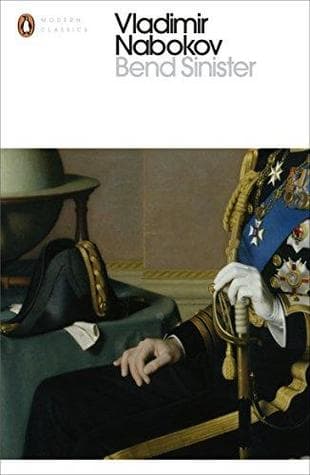
Vladimir Nabokov (1947)
Genre
Literary Fiction
Reading Time
360 min
Key Themes
See below
Sign in to track this book
In a world suffocated by the tyrannical 'Average Man' party, a grieving philosopher becomes the last bastion of individualism against his toad-like school enemy, only to discover the chilling power of a state machine far greater than its grotesque orchestrator.
The novel opens with Adam Krug, a celebrated philosopher and recent widower, reflecting on the death of his beloved wife, Olga. He is consumed by his grief, which forms a personal barrier against the increasingly oppressive political climate of Padukgrad, the capital of his unnamed country. The Ekwilist Party, led by Krug's former schoolmate and bully, Paduk, has recently seized power, promoting a doctrine of 'Average Man' equality that stifles individuality and intellectual freedom. Krug, initially dismissive of the regime's crude ideology and bureaucratic blunders, believes his international renown and personal detachment will shield him from its machinations. He finds solace in his young son, David, and his memories of Olga, attempting to maintain a semblance of normal life despite the encroaching totalitarianism.
Adam Krug receives an official summons to meet Paduk, the 'Toad,' now the absolute ruler. Despite the ominous implications, Krug attends, observing the absurdities and inefficiencies of the Ekwilist bureaucracy. During their meeting, Paduk, attempting to exploit their shared past, tries to persuade Krug to publicly endorse the Ekwilist regime. Paduk believes that Krug's intellectual prestige would legitimize his government in the eyes of the populace and the international community. Krug, however, steadfastly refuses, viewing the regime as a monstrous perversion of human values. His refusal marks him as a direct threat to Paduk's authority, setting the stage for a personal confrontation between the philosopher and the dictator.
Following Krug's refusal, the Ekwilist regime intensifies its pressure. His friends and acquaintances, like the actor Ember and the scholar Dr. Azureus, are subtly manipulated or intimidated to urge Krug to comply. Ember, a former colleague, visits Krug and attempts to persuade him through a mix of flattery and veiled threats, hinting at the potential repercussions for Krug and his family should he continue to resist. Krug notices increased surveillance of his home and movements, and his daily life becomes permeated with the regime's presence. He maintains his defiant stance, but the relentless psychological warfare begins to take its toll, isolating him further within the oppressive state.
The regime's tactics escalate from subtle pressure to overt intimidation. Several of Krug's close friends, including Ember and Dr. Azureus, are arrested on fabricated charges. These arrests are clearly a message to Krug, demonstrating the regime's willingness to target those close to him to force his submission. Krug experiences a growing sense of helplessness and anger as his social circle is systematically dismantled. He understands that his refusal to collaborate has made him a symbol of resistance, and the regime is determined to crush that symbol, regardless of the cost to innocent lives. This period marks a turning point, as Krug realizes the full extent of the danger he and his son face.
As the regime's grip tightens, Adam Krug's primary concern shifts entirely to the safety of his young son, David. He tries to shield David from the grim reality, but the child is increasingly aware of the tension and fear surrounding them. Krug considers various desperate measures to protect David, including attempting to send him out of the country, but the borders are now tightly controlled. The thought of David falling into the hands of the Ekwilist state, with its re-education programs and emphasis on conformity, is unbearable for Krug. David becomes the most potent leverage the regime holds over Krug, and the philosopher's emotional vulnerability is acutely exploited.
The ultimate blow is struck: David is kidnapped by the Ekwilist authorities. This act shatters Krug's world, leaving him in a state of profound despair and rage. The kidnapping is a calculated move by Paduk's regime, designed to break Krug's will completely. Krug desperately tries to locate his son, appealing to various officials, but he is met with bureaucratic stonewalling and evasiveness. The absence of David, the last tangible link to his beloved Olga and his past life, leaves Krug utterly isolated and vulnerable to the regime's demands. His intellectual defiance now seems futile against such a barbaric act.
Paduk, through his intermediaries, presents Krug with an ultimatum: publicly endorse the Ekwilist Party and its ideology, and David will be returned unharmed. The regime makes it clear that this is Krug's last chance to save his son. Torn between his philosophical integrity and his paternal love, Krug agonizes over the decision. He understands that capitulating would be a betrayal of everything he stands for, but the thought of David suffering, or worse, is unbearable. The moral dilemma is excruciating, highlighting the regime's complete disregard for human dignity and its masterful manipulation of personal affection.
After agonizing deliberation, Adam Krug, his spirit broken by grief and the fear for his son, finally agrees to Paduk's terms. He prepares to make the public statement endorsing the Ekwilist regime, a decision that feels like a profound betrayal of himself and his late wife's memory. The act shows the power of the regime's cruelty and its ability to reduce even the most defiant individual to submission through the exploitation of their deepest affections. Krug's capitulation is not a conversion, but a desperate sacrifice, undertaken solely for the hope of reuniting with David.
In a climactic and devastating turn, Krug learns the horrifying truth about David. Due to a bureaucratic blunder and the regime's inherent incompetence, David was not merely held hostage. Instead, in a grotesque error, he was accidentally swapped with another child and brutally murdered by a group of psychopaths in a state asylum, intended to be a 're-education' facility. The regime, unable to admit its mistake, had continued the charade of holding David, hoping Krug's eventual capitulation would allow them to cover up their error. This revelation utterly shatters Krug, exposing the true, senseless barbarity behind the Ekwilist facade.
Upon learning of David's horrific fate, Adam Krug's mind snaps. Overwhelmed by grief, rage, and the sheer absurdity of the tragedy, he confronts Paduk. In a final, desperate act of defiance against the regime that destroyed his life, Krug lunges at the dictator. He is immediately shot and killed by Paduk's guards. His death, while tragic, is a defiant refusal to be broken entirely by the Ekwilist state. The narrative then shifts to the omniscient narrator, who reveals himself to be the author, breaking the fourth wall to acknowledge the fictional nature of the story and providing a meta-commentary on the power of creation and the solace of art.
The Protagonist
Krug transitions from intellectual defiance to personal tragedy, ultimately sacrificing his integrity for his son before being broken by the regime's cruelty and finding a final, mad defiance in death.
The Antagonist
Paduk remains static in his tyrannical ambition and personal vindictiveness, using state power to settle old scores and consolidate control.
The Supporting
David remains an innocent, his arc defined by being a symbolic victim of the regime's barbarity.
The Mentioned/Symbolic
As a deceased character, Olga's arc is static, serving as a powerful memory and motivation for Krug.
The Supporting
Ember attempts to navigate the regime by cooperating, but ultimately becomes a victim himself, demonstrating the regime's indiscriminate cruelty.
The Supporting
Azureus, like Ember, is a static character whose arrest serves as a plot device to illustrate the regime's escalating tactics.
The Meta-character
The Narrator's arc is to progressively reveal his presence and power, culminating in a direct intervention that both ends and contextualizes Krug's suffering.
The Supporting/Antagonistic
These officials remain static, serving as the instruments of the regime's oppression and bureaucratic blunders.
The novel explores the dangers of totalitarianism, particularly when it masquerades as a benevolent pursuit of 'equality' and 'happiness for all.' The Ekwilist Party's ideology of the 'Average Man' systematically crushes individuality, intellectual freedom, and artistic expression. This theme is exemplified by Paduk's relentless persecution of Adam Krug, a man of exceptional intellect and unique character, simply because he refuses to conform. The regime's bureaucratic ineptitude and cruel indifference to human life, as seen in David's tragic death, demonstrate the devastating consequences of such a philosophy.
“The State, you see, is a big family, and the leader is the father. And a father always knows what is best for his children.”
Adam Krug's profound grief for his deceased wife, Olga, and his vivid memories of her serve as a powerful internal sanctuary against the oppressive state. His inner world, filled with personal history, love, and intellectual freedom, is initially untouchable by the regime. This theme highlights how personal memory and emotional depth can be a form of resistance against a system that seeks to homogenize thought and feeling. Olga's idealized memory represents the beauty and complexity that the 'Average Man' party wishes to erase, and Krug's devotion to it fortifies his initial defiance.
“He lived in his memories, in the luminous, intricate world of Olga, and the grubby reality of Padukgrad seemed remote, unreal.”
Despite Krug's intellectual prowess and moral strength, the novel illustrates the ultimate vulnerability of the individual against a ruthless, all-encompassing totalitarian state. While Krug resists intellectually, the regime finds his breaking point through his love for his son, David. The kidnapping and subsequent tragic death of David demonstrate that even the most formidable mind can be shattered when personal affections are exploited. This theme emphasizes the crushing power of the state to reach into the most private corners of a person's life and inflict irreparable damage.
“There are things which no amount of intellectual resilience can withstand, things that tear at the very fabric of one's being.”
Nabokov frequently breaks the fourth wall, particularly through the figure of the Narrator, to explore the meta-fictional nature of the story. This theme questions the reality of the narrative itself, suggesting that the characters and their suffering are creations within the author's mind. The Narrator's intrusions, especially at the end, offer a form of 'escape' for Krug, transforming his tragic end into a deliberate authorial act. This meta-commentary suggests that art, while capable of depicting immense suffering, also possesses the power to control, manipulate, and even transcend that suffering, offering a different kind of freedom.
“I can do what I like with my creatures. I can allow them to live or force them to die. I am their maker, their god.”
Beyond its cruelty, the Ekwilist regime is frequently depicted as deeply absurd and inefficient. From the comical bureaucracy to the nonsensical propaganda, the 'Average Man' party operates with a veneer of order that barely conceals its underlying incompetence. The tragic mix-up involving David, resulting in his accidental death, is the ultimate manifestation of this theme, revealing that the regime's power is often rooted in blundering and arbitrary violence rather than calculated evil. This absurdity underscores the ultimate senselessness and waste of life inherent in such systems, even when they profess noble goals.
“It was a system built on imbecility and fear, a monstrous joke with lethal consequences.”
The author (Narrator) directly addresses the reader and reveals the constructed nature of the story.
This device is central to the novel, particularly in its later stages. The Narrator, eventually identified as the author, directly intervenes in the narrative, commenting on the characters' fates and the artificiality of the world he has created. This serves to remind the reader that the events, however grim, are ultimately a work of fiction. It offers a kind of philosophical solace, suggesting that the author has ultimate control over the suffering he depicts, and can even 'rescue' his characters from their plight, as he attempts to do with Krug at the very end.
The accidental swap of David with another child, leading to his death, plays on themes of mistaken identity and the loss of individuality.
The tragic plot point where David is mistakenly swapped with another child and subsequently murdered is a grotesque manifestation of the doppelgänger motif. It highlights the regime's dehumanizing effect, where individuals become interchangeable. The 'Average Man' ideology inherently seeks to erase unique identities, and this mix-up literalizes that goal in the most devastating way. It also emphasizes the regime's incompetence and the arbitrary nature of its cruelty, where a simple bureaucratic error can lead to profound tragedy, further underscoring the loss of individual worth.
A narrator with full knowledge of events and characters, who eventually reveals himself as the author.
Initially, the novel employs a traditional omniscient narrator, providing insight into Krug's thoughts and the wider political landscape. However, this device evolves into the metafictional Narrator, who reveals his own agency and control over the story. This shift transforms the traditional omniscient narrator into an active participant, blurring the lines between creator and creation. It allows Nabokov to comment on the act of writing, the nature of reality, and the arbitrary power of the author, ultimately providing a layer of philosophical depth to the political allegory.
Paduk's nickname symbolizes his repulsive nature and the regime's ugliness.
Paduk's childhood nickname, 'The Toad,' carries significant symbolic weight throughout the novel. A toad is often associated with ugliness, sliminess, and a squat, unappealing presence. This imagery immediately characterizes Paduk as personally repulsive and morally corrupt. Furthermore, it extends to the regime he leads, implying that the Ekwilist Party, despite its grand pronouncements of equality, is inherently ugly, vulgar, and oppressive, a grotesque manifestation of power. The nickname serves as a constant reminder of the petty, vindictive nature at the heart of the totalitarian state.
“The only way to solve the problem of death is to die.”
— Early philosophical reflection by Krug.
“Reality is a highly subjective affair.”
— Krug's musings on perception.
“The soul is a kind of small, round, hard, black, rubber ball that bounces around inside us.”
— A character's whimsical definition of the soul.
“He knew that the past was not a place to live in, but a place to draw strength from.”
— Krug reflecting on his memories.
“The world was a conspiracy of mirrors.”
— Krug's feeling of being observed and reflected.
“To be happy, one must forget oneself.”
— A piece of advice given to Krug.
“The future is a phantom that vanishes as we approach it.”
— Krug's thoughts on the elusive nature of the future.
“Every man is an island, and every island is a prison.”
— A character's cynical view of human isolation.
“The only true wisdom consists in knowing that you know nothing.”
— A classical philosophical reference by Krug.
“Language is a labyrinth of errors.”
— Krug's frustration with the limitations of expression.
“Grief is a great molder of character.”
— Krug's reflection on the impact of loss.
“One cannot step twice into the same river, nor can one touch a mortal thing twice in the same state.”
— Krug's contemplation of change and impermanence.
“The mind is a magnificent playground, but it can also be a terrifying prison.”
— Krug's introspection on the power of the mind.
Ready to see how well you understood this book? Take our interactive quiz with 10 questions.
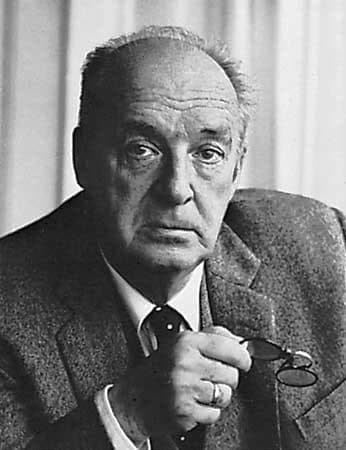
Vladimir Vladimirovich Nabokov, also known by the pen name Vladimir Sirin, was an expatriate Russian and Russian-American novelist, poet, translator, and entomologist. Born in Imperial Russia in 1899, Nabokov wrote his first nine novels in Russian (1926–1938) while living in Berlin, where he met his wife. He achieved international acclaim and prominence after moving to the United States, where he began writing in English. Nabokov became an American citizen in 1945 and lived mostly on the East Coast before returning to Europe in 1961, where he settled in Montreux, Switzerland.







