“Freeing yourself was one thing, claiming ownership of that freed self was another.”
— Sethe reflecting on the challenges of true freedom after escaping slavery.


Toni Morrison (1987)
Genre
Literary Fiction / Historical Fiction
Reading Time
600 min
Key Themes
See below
Sign in to track this book
In post-Civil War Ohio, an escaped mother faces the terrifying return of her murdered child, now a mysterious young woman demanding a reckoning for a past too horrific to forget.
In 1873, Sethe and her daughter, Denver, live at 124 Bluestone Road in Cincinnati, Ohio. The house is haunted by the malevolent spirit of Sethe's deceased infant daughter, Beloved, which has driven away Sethe's two sons, Howard and Buglar, and contributed to the death of her mother-in-law, Baby Suggs. Denver, isolated by the haunting, finds comfort in the ghost's presence. One day, Paul D, a former slave from Sweet Home, the Kentucky plantation where Sethe was enslaved, arrives at 124. His presence momentarily cleanses the house of the ghost's more violent manifestations, causing the spirit to appear as a young woman.
Paul D and Sethe slowly begin to discuss their traumatic pasts at Sweet Home. Paul D reveals the inhumane conditions he endured, including being collared and forced into a chain gang in Alfred, Georgia. He recounts how Schoolteacher's nephews stole Sethe's milk, leading to her brutal whipping by Schoolteacher himself. Sethe shares the story of how she escaped Sweet Home while pregnant with Denver, after her husband, Halle, became unresponsive witnessing her abuse. Their shared experiences bring them closer, but the weight of their memories, particularly Sethe's infanticide, remains a heavy, unspoken burden between them.
After Paul D's arrival, a mysterious young woman appears at 124, disoriented and suffering from amnesia. She introduces herself as Beloved. Sethe is immediately drawn to her, feeling an inexplicable familiarity. Denver, eager for companionship, is overjoyed by Beloved's presence. Paul D, however, is deeply uneasy, sensing something unsettling and unnatural about her. Beloved's strange mannerisms, her insatiable hunger, and her deep, unwavering focus on Sethe begin to disrupt the fragile peace Paul D had brought to the house, suggesting a more sinister presence.
Through fragmented flashbacks and Sethe's own painful recollections, the full horror of her past becomes clear. Eighteen years prior, after escaping Sweet Home, Sethe was tracked by Schoolteacher and his men to Baby Suggs' house in Ohio. Fearing her children would be returned to slavery, Sethe tried to kill all of them, succeeding in murdering her infant daughter with a saw. This act, born of desperate love and the trauma of slavery, is the central event of her life and the source of the haunting at 124. The town ostracized her for it, and the memory continues to trouble her and Denver.
Beloved's presence in 124 becomes increasingly dominant and controlling. She demands Sethe's constant attention and affection, monopolizing her time and resources. Sethe, consumed by guilt and a desperate need for redemption, indulges Beloved, believing her to be the reincarnation of her lost child. Beloved's influence alienates Paul D, who grows increasingly uncomfortable with her unsettling nature and Sethe's obsession. He eventually leaves 124 after Beloved seduces him, leaving Sethe and Denver isolated with the demanding spirit.
As Beloved's hold on Sethe intensifies, Sethe physically and emotionally wastes away, dedicating all her energy to appeasing Beloved. Denver, initially happy with Beloved's companionship, begins to recognize the destructive nature of the relationship. Realizing that Beloved is literally consuming Sethe, Denver breaks free from her isolation. Driven by a desperate need to save her mother, she leaves 124 and seeks help from the black community in Cincinnati, who had previously ostracized Sethe for her past actions, but now begin to offer support.
Concerned by Denver's plea and the sight of Sethe's deterioration, a group of thirty black women from the community, led by Ella, gather at 124 Bluestone Road. They perform an exorcism-like ritual, singing and praying to drive away the malevolent spirit. As they approach the house, Sethe, mistaking Mr. Bodwin (the white man who previously helped her) for Schoolteacher, attacks him with an ice pick. In the ensuing chaos, Beloved is seen by the women, and under the force of their collective will and spiritual energy, she vanishes from 124.
Following Beloved's disappearance, Sethe falls into a deep depression, physically and emotionally spent. Denver, having found her independence and a sense of belonging within the community, cares for her mother. Eventually, Paul D returns to 124. He finds Sethe despondent, lying in bed, having given up. He gently tries to comfort her, reminding her of her worth and resilience, and that she is her 'best thing.' His return signifies a possibility of healing and rebuilding for Sethe, offering a future rooted in love and shared humanity, rather than the haunting past.
The community, having collectively driven Beloved away, tries to forget her, believing that 'some things are just too terrible to remember.' However, the memory of Beloved, and the trauma she represents, continues to subtly affect those who encountered her. Paul D and Sethe are left to grapple with the deep scars left by slavery and the haunting presence of Beloved. The narrative suggests that while the physical manifestation of Beloved is gone, the deep wounds of the past, especially the psychological impact of slavery, are not easily erased and continue to shape their lives and memories.
With Paul D's unwavering support and Denver's newfound strength, Sethe slowly begins the hard process of healing. The novel ends with a sense of cautious hope. While the past can never be fully forgotten, Sethe is no longer consumed by it. She has faced her deepest trauma, and through the love and solidarity of others, she can begin to reclaim her life and her identity, moving forward with the possibility of a future free from the immediate, suffocating grip of Beloved's ghost. The lingering presence of 'Beloved' as a concept, however, highlights the lasting legacy of slavery.
The Protagonist
Sethe begins as a woman consumed by her past and guilt, but through the return of Paul D, the arrival of Beloved, and Denver's intervention, she confronts her trauma and slowly begins to heal, finding strength in community and love.
The Antagonist/Symbolic Figure
Beloved arrives as a lost, mysterious figure, gradually revealing her true nature as a vengeful spirit that drains Sethe's life force, before being driven away by the community's collective power.
The Supporting Character/Catalyst for Change
Denver transforms from a lonely, isolated girl dependent on the ghost of her sister to a courageous young woman who steps into the community to save her mother, finding her own independence and voice.
The Supporting Character/Love Interest
Paul D attempts to build a new life with Sethe, confronting his own demons and Sethe's unspeakable past. Though he initially leaves, he returns, demonstrating his enduring love and commitment to helping Sethe heal.
The Supporting Character/Spiritual Guide
Baby Suggs moves from a state of liberation and spiritual leadership to one of profound despair and withdrawal after witnessing the trauma inflicted upon her family and community.
The Antagonist
Schoolteacher's actions initiate Sethe's deepest trauma, leading to her escape and the infanticide, thus serving as the primary instigator of the novel's central conflict.
The Supporting Character
Ella moves from holding judgment against Sethe to extending compassion and organizing the community to save Sethe from Beloved's destructive grip.
The Supporting Character
Stamp Paid provides intermittent support and wisdom to Sethe and Paul D, observing their struggles and ultimately playing a role in connecting Paul D back to Sethe.
The novel shows how the trauma of slavery profoundly shapes and haunts the lives of its characters, making the past an inescapable presence. Sethe is literally haunted by Beloved, who embodies her guilt and the unspeakable act of infanticide. Her memories are 'too thick to get through,' preventing her from moving forward. Paul D carries his 'tin tobacco box' heart, a metaphor for his repressed emotions and memories of the bit and chain gang. The past is not just remembered; it actively intrudes upon and dictates the present, as seen when Beloved physically appears and consumes Sethe, showing how unresolved trauma can destroy an individual. The community's attempt to 'forget' Beloved at the end highlights the difficulty and the necessity of confronting, rather than burying, historical pain.
“'No, Thank you. I don't want to know or remember,' Sethe said. 'I have my children. I have my house. I have my life. I have my husband. I have my freedom.'”
Morrison details the psychological and physical brutalities of slavery, showing how it stripped individuals of their humanity and identity. The Sweet Home plantation, despite its name, was a place of deep degradation, where slaves like Sethe, Paul D, and Halle were treated as property, their bodies and minds subjected to unspeakable cruelty. Schoolteacher's 'scientific' study of slaves as animals, the theft of Sethe's milk, and Paul D's experience with the bit and chain gang are clear examples of this dehumanization. The novel argues that slavery not only inflicted physical pain but also distorted the very concept of self, leaving deep, lasting wounds that persisted long after emancipation. The characters' struggle to reclaim their humanity and define themselves outside of their enslaved past is central to their journey.
“'They were so small, those two boys. And I was so big. He said, 'I'll put a bit in your mouth, boy. You like that?'”
Sethe's love for her children is fierce and all-consuming, driving her to commit the ultimate act of desperation: infanticide. This act, while horrifying, is presented as a distorted manifestation of a mother's desire to protect her children from a fate worse than death – slavery. The novel explores the ethical paradox of Sethe's choice, asking whether a mother's love can be so absolute that it justifies murder. Beloved's return forces Sethe to confront the consequences of this love, as Beloved demands an equally absolute, and ultimately destructive, love in return. The theme also highlights the deep grief and guilt that mothers, especially enslaved mothers, carried, constantly facing the threat of losing their children or seeing them brutalized.
“'She worked hard to remember as close to nothing as she could. To remember just the necessary things. To make sure she didn't forget what she had to do. But it was hard to forget the rest.'”
Initially, Sethe and Denver are isolated by their past and the community's judgment. Baby Suggs' sermons in the Clearing highlight the initial strength of communal love and self-acceptance among the freed slaves. However, after Sethe's act, the community withdraws, leaving Sethe and Denver vulnerable to Beloved's consuming presence. It is only when Denver breaks her isolation and the women of the community, led by Ella, come together to confront Beloved that Sethe can begin to heal. This collective action, through song and prayer, shows that individual trauma, especially one rooted in systemic oppression, requires communal solidarity and forgiveness for true healing to begin. The novel suggests that the scars of slavery can only be truly addressed when people come together to acknowledge and process their shared history.
“'The women were singing. And when Sethe heard them, she began to feel the first stirrings of an emotion she had not felt in years. Hope.'”
The novel explores what freedom truly means for those who have lived their entire lives in bondage. For Sethe, freedom from physical chains doesn't immediately mean freedom from psychological torment. The memories of Sweet Home and her act of infanticide are constant chains. Paul D, a wanderer, finds that even without a master, the scars of the bit and chain gang remain, influencing his ability to form lasting connections. Baby Suggs, after gaining her freedom, initially finds joy in preaching but ultimately succumbs to despair, realizing that freedom doesn't erase the past. The characters struggle to rebuild their identities and find a sense of self outside the definition of 'slave,' a process complicated by lingering trauma and a society still grappling with the legacy of slavery. True freedom, the novel suggests, is not merely the absence of chains but the reclamation of one's mind, body, and spirit.
“'Freeing yourself was one thing; claiming ownership of that freed self was another.'”
The blending of supernatural elements with everyday reality.
Magical realism is a central device in 'Beloved,' most notably through the character of Beloved herself. Her initial manifestation as a poltergeist and later as a flesh-and-blood woman who is clearly supernatural blurs the line between the tangible and the spiritual. This allows Morrison to represent the intangible, pervasive trauma of slavery in a concrete, visceral way. The haunting of 124, the appearance of Beloved, and the collective exorcism by the community are all elements that exist outside strict realism, enabling the narrative to explore profound psychological and historical truths that might be difficult to convey through purely realistic means. It gives voice and form to the unspeakable horrors and lingering effects of the past.
The story unfolds through fragmented memories and shifts in time.
Morrison employs a non-linear narrative structure, constantly shifting between the present (1873) and various points in the characters' pasts, particularly their time at Sweet Home. This fragmented structure mirrors the fragmented and traumatized psyches of the characters, whose memories are not linear or easily compartmentalized. Flashbacks, often triggered by sensory details or conversations, slowly reveal the full horror of Sethe's infanticide and the brutalities of slavery. This device keeps the reader in a state of suspense and gradually builds a complete picture of the characters' pasts, emphasizing how the past is not simply gone but continually intrudes upon and shapes the present.
Objects, places, and characters represent deeper meanings.
Symbolism is rich in 'Beloved.' The house at 124 Bluestone Road symbolizes the physical and psychological space where the past haunts the present. The 'tin tobacco box' in Paul D's chest symbolizes his repressed emotions and trauma. The red light that follows Beloved symbolizes blood, violence, and the unspeakable. Sethe's 'tree' of scars on her back symbolizes the lasting physical and emotional marks of slavery. Beloved herself is a powerful symbol, representing not only Sethe's murdered child but also the collective forgotten and unmourned victims of slavery, embodying the national trauma. These symbols deepen the narrative, allowing Morrison to explore complex themes and emotions on multiple levels.
Characters' internal thoughts and feelings are presented directly.
Morrison frequently utilizes stream of consciousness, particularly in the later sections when Sethe, Beloved, and Denver's thoughts intertwine. This technique allows the reader direct access to the characters' raw, unfiltered internal worlds, revealing their deepest fears, desires, and traumas. The overlapping and sometimes indistinguishable internal monologues, especially between Sethe and Beloved, create a sense of psychological intimacy and confusion, reflecting the characters' profound connection and the blurring of individual identities under the weight of shared experience and trauma. It emphasizes the subjective nature of memory and pain, and how deeply intertwined the characters' emotional landscapes are.
“Freeing yourself was one thing, claiming ownership of that freed self was another.”
— Sethe reflecting on the challenges of true freedom after escaping slavery.
“Sweet, crazy conversations full of things she could not remember, and some she could not forget, lavished on her. Words that made her cry. Scent that made her giddy. Features she could not but admire.”
— Sethe recalling her early, blissful memories of Halle.
“She was a friend of her mind. She was her own best thing.”
— Denver reflecting on the importance of self-reliance and internal strength.
“Love is or it ain't. Thin love ain't love at all.”
— Paul D's internal thoughts on the nature of true love, contrasting it with superficial affection.
“Some things go. Some things stay. I myself have to go.”
— Baby Suggs's final, weary acceptance of life's impermanence and her own mortality.
“The past was like a black-and-white film, but the present was in living color.”
— Sethe experiencing the vivid and overwhelming return of Beloved, contrasting it with her suppressed memories.
“Anything dead coming back to life hurts.”
— Sethe's realization about the pain inherent in confronting and reviving suppressed trauma.
“It was not a story to pass on.”
— The repeated phrase at the end of the novel, signifying the community's attempt to forget the painful past.
“To get to a place where you could love anything you chose--not to need permission for desire--well now, that was freedom.”
— Paul D's understanding of true emotional and psychological freedom.
“She had to be alive, and Paul D was the only one who could help her be it.”
— Sethe's desperate need for Paul D's presence to help her reclaim her life from the haunting past.
“124 was spiteful. Full of a baby's venom.”
— The opening lines describing the haunted house, setting the tone for the supernatural elements.
“We got more yesterday than anybody. We need some kind of tomorrow.”
— Paul D expressing the need to move forward from the overwhelming weight of the past.
“Her price was greater than her value.”
— Sethe's internal reflection on how slavery dehumanized individuals by assigning a monetary value.
“The only thing they got to look forward to is the next whipping.”
— Sethe's stark observation about the brutal realities and lack of hope for enslaved people.
Ready to see how well you understood this book? Take our interactive quiz with 10 questions.
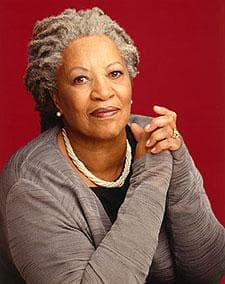
Chloe Anthony Wofford Morrison, known as Toni Morrison, was an American novelist. Her first novel, The Bluest Eye, was published in 1970. The critically acclaimed Song of Solomon (1977) brought her national attention and won the National Book Critics Circle Award. In 1988, Morrison won the Pulitzer Prize for Beloved (1987); she was awarded the Nobel Prize in Literature in 1993.







