BookBrief
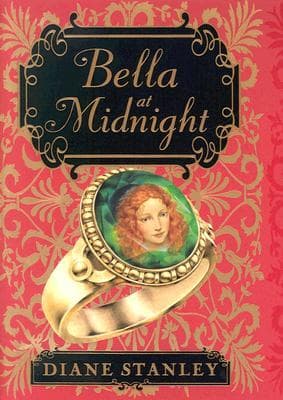
Bella at Midnight cover
Archivist's Choice

Bella at Midnight

Diane Stanley (2006)

Genre

Fantasy / Children's / Historical Fiction / Young Adult / Romance

Reading Time

12 Minutes

Key Themes

See below

Track Your Reading

Sign in to track this book

A blacksmith's daughter, betrayed by a prince and reclaimed by a knight, discovers her true lineage and embarks on a perilous journey disguised with enchanted gifts to save a kingdom and forge her own destiny.

Synopsis

Bella, a kind-hearted peasant girl in a war-torn kingdom, finds her life upended when she discovers she is the abandoned daughter of a knight. Torn from her loving foster family and sent to live with her estranged, deranged father and his resentful new wife, Bella is thrust into a world of court intrigue and danger. Betrayed by her childhood friend, Prince Julian, and caught in a terrible plot, Bella must rely on her godmother's enchanted gifts and her own courage. Disguised and embarking on a perilous journey, she navigates a path that will not only determine her own fate but also that of the entire kingdom, ultimately leading her to a destiny far grander than her humble beginnings.
Difficulty
Easy
Pacing
Moderate
Mood
Enchanting, Adventurous, Hopeful, Romantic

Plot Summary

A Peasant Girl's Simple Life

Bella, a kind and resourceful girl, lives happily in the village of Castle Down with her loving foster parents, the blacksmith and his wife. She shares a close, innocent friendship with Prince Julian, the young heir to the kingdom, often meeting him in secret by the river. Their bond is pure and uncomplicated, despite the vast social difference between them. Bella spends her days helping her foster mother, learning about herbs, and enjoying simple rural life. She is content as a peasant girl, cherishing her family and her friendship with Julian, believing her world to be stable and predictable, even as the kingdom is at war.

Julian's Betrayal and a Harsh Revelation

Prince Julian, pressured by his father, King Odo, to learn swordsmanship, is caught by his tutor, Sir Robert, during one of his secret meetings with Bella. Julian, in a moment of panic, denies knowing Bella, claiming she is merely a village girl who bothers him. This public humiliation deeply wounds Bella. Shortly after, a knight named Sir Roger de Hautville arrives in Castle Down, revealing that Bella is his daughter, Isabel, whom he abandoned as an infant. He demands her return, tearing her away from her beloved foster family and the only life she has ever known, plunging her into an unfamiliar and unwelcoming world.

Life at Hautville Castle

Bella, now known as Isabel, is taken to Hautville Castle, a desolate and unwelcoming place. Her father, Sir Roger, is a shell of a man, haunted by past traumas and seemingly indifferent to her. Her stepmother, Lady Maud, is openly hostile and resentful, viewing Bella as an unwanted burden and a threat to her own children's inheritance. Bella is treated like a servant, forced to perform menial tasks and endure Lady Maud's constant cruelty. She longs for her foster family and the simple kindness of her former life, finding no comfort or love in her new, harsh environment. The castle itself feels oppressive, reflecting the fractured relationships within its walls.

The Godmother's Intervention

During her miserable time at Hautville, Bella is visited by her mysterious godmother, who appears as an old woman. The godmother gives Bella three magical gifts: a ring that grants the wearer invisibility, a cloak that disguises her as a boy, and a pair of shoes that never wear out and move with great speed. More importantly, the godmother warns Bella of a sinister plot unfolding within the castle: Sir Roger, manipulated by Lady Maud and the treacherous Sir Robert, plans to poison King Odo and Prince Julian. Bella is tasked with preventing this regicide, understanding that the fate of the kingdom rests on her shoulders.

Escape and a Perilous Journey

Armed with her godmother's gifts and a desperate sense of urgency, Bella decides she must escape Hautville and warn King Odo. Using the magical cloak, she transforms into a boy named 'Robin' and slips away from the castle under cover of darkness. Her journey is fraught with danger, as the war-torn kingdom is a perilous place for a lone traveler. She relies on her wits, the speed of her enchanted shoes, and the occasional use of her invisibility ring to evade bandits, soldiers, and the harsh elements. Her determination is fueled by the knowledge of the impending danger to the King and Julian, and her own desire for justice.

Encounter with the Old Woman

During her journey, 'Robin' encounters an old woman living alone in a secluded cottage. This woman, who seems to possess an uncanny wisdom, offers Bella shelter and food. Through their conversation, the old woman subtly reveals details about Sir Roger de Hautville's past, hinting at the deep sorrow and trauma that made him abandon his infant daughter and fall under Lady Maud's influence. She explains that Sir Roger was once a good man, broken by the loss of his first wife and the ravages of war. This encounter gives Bella a more nuanced understanding of her father, tempering her anger with a touch of pity and empathy.

Reaching the Royal Castle

Bella, as 'Robin,' finally reaches the royal castle, only to find it heavily guarded and access difficult. Her boy's disguise helps her blend in, but her peasant appearance makes it nearly impossible to gain an audience with the King or even Prince Julian. She observes castle life, overhearing snippets of conversation that confirm the political instability and the King's declining health. She struggles to find a way to deliver her urgent warning without revealing her true identity, fearing that her past as a 'peasant girl' or her current disguise would make her message dismissed as nonsense.

A Chance Encounter with Julian

Through a stroke of luck, 'Robin' manages to encounter Prince Julian in the castle grounds. Julian, still grappling with his earlier betrayal of Bella, is initially dismissive of the ragged boy. However, Bella's persistence and the urgency in her voice compel him to listen. She reveals the poisoning plot, detailing the roles of Sir Roger, Lady Maud, and Sir Robert. Julian is shocked and horrified by the news, especially the involvement of his own tutor. He begins to piece together the implications, realizing the gravity of the threat and the danger his father is in. This interaction marks a turning point in Julian's character.

Unmasking the Conspirators

Julian, convinced by 'Robin's' earnestness, informs his most trusted advisors and, eventually, his father, King Odo, about the plot. With Bella's detailed information, the conspirators are confronted. Sir Robert's treachery is exposed, and Lady Maud's involvement in manipulating Sir Roger is brought to light. Sir Roger, broken and remorseful, confesses his part in the scheme, revealing his deep regret and the coercion he faced. The poison intended for the King is discovered, confirming the severity of the plot. Justice is swift, with Sir Robert and Lady Maud facing severe consequences for their treasonous actions.

Bella's True Identity Revealed

After the conspirators are dealt with, 'Robin' is brought before King Odo and Prince Julian. Seeing that the danger has passed, Bella sheds her boy's disguise, revealing herself as Isabel, the girl Julian had betrayed. Julian is overwhelmed with shock, relief, and remorse. He apologizes profusely for his earlier actions, expressing his deep regret and admiration for her bravery. Sir Roger, witnessing his daughter's heroism, is finally able to acknowledge her and express his love and remorse, beginning a path to reconciliation. The King, grateful for her intervention, recognizes her courage and nobility.

A New Beginning for Bella

With the kingdom safe, Bella is honored for her courage and quick thinking. King Odo, recognizing her noble spirit and intelligence, offers her a place at court. She begins to rebuild her relationship with her father, Sir Roger, who, free from Lady Maud's influence, starts to heal and become a better man. Julian, having learned a valuable lesson about loyalty and judgment, proves to be a true friend, and their bond, now more mature and understanding, deepens. Bella, no longer a peasant or just a knight's abandoned daughter, embraces her destiny, finding her own unique and respected place within the kingdom, looking towards a future filled with possibility.

Principal Figures

Bella (Isabel)

The Protagonist

Bella transforms from a naive peasant girl into a courageous heroine, embracing her true identity and shaping her own destiny through her actions and moral strength.

Prince Julian

The Supporting

Julian evolves from a somewhat thoughtless boy to a more mature and responsible prince, learning the importance of loyalty, courage, and true friendship.

Sir Roger de Hautville

The Supporting

Sir Roger moves from a broken, manipulated figure to a remorseful and loving father, finding a path to healing and reconciliation with Bella.

Lady Maud

The Antagonist

Lady Maud remains a static antagonist, her evil intentions and manipulative nature leading to her downfall.

Sir Robert

The Antagonist

Sir Robert remains a static antagonist, his deceit and ambition leading to his exposure and punishment.

The Godmother

The Supporting

The Godmother remains a consistent, wise, and magical force, guiding Bella without directly interfering in her choices.

King Odo

The Supporting

King Odo's arc involves being saved from a deadly plot and recognizing the true nobility and courage in Bella.

Bella's Foster Parents

The Supporting

Their role is primarily to establish Bella's loving origins and the stark contrast with her later experiences, remaining consistent in their loving nature.

Themes & Insights

Identity and Belonging

The novel explores Bella's struggle with her identity. Initially, she is a content peasant girl, but the revelation of her noble birth shatters her sense of self. She is torn between her love for her foster family and her duty to her biological father, and later, the kingdom. Her journey in disguise as 'Robin' further complicates her understanding of who she is. Ultimately, Bella forges her own identity, not defined by birthright or social class, but by her actions, courage, and moral character. She finds belonging through her bravery and integrity.

She was Bella, the blacksmith's daughter, and she was Isabel, Sir Roger's child. But more than that, she was herself, and that was something no one could take away.

Narrator

Betrayal and Redemption

Betrayal is a central theme, first experienced by Bella through Prince Julian's denial of their friendship, which deeply wounds her. Later, she faces the betrayal of her biological father, Sir Roger, who abandoned her and is later implicated in a plot against the King. However, the novel also highlights redemption. Julian, consumed by guilt, actively works to right his wrong and proves his loyalty. Sir Roger, freed from manipulation, seeks reconciliation with Bella. The narrative suggests that even betrayals can be overcome through remorse, courage, and a commitment to justice, leading to forgiveness and stronger bonds.

The memory of Julian's words, 'I don't know her,' still stung, a sharp reminder of how easily trust could be broken.

Narrator

Courage in Adversity

Bella's journey is one of extraordinary courage. From enduring the cruelties of her stepmother to embarking on a perilous journey alone through a war-torn land, she consistently faces daunting challenges. Her decision to warn the King, despite the immense personal risk and the fear of not being believed, is unwavering bravery. This theme emphasizes that courage is not the absence of fear, but the ability to act despite it, driven by a strong moral compass and a desire to protect others. Her actions prove that true heroism can come from unexpected places.

Fear was a cold knot in her stomach, but the thought of the King, of Julian, of the kingdom in peril, spurred her onward.

Narrator

The Nature of Good and Evil

The novel presents a clear distinction between good and evil, but also explores complexities within. Lady Maud and Sir Robert represent pure evil, driven by greed and malice. However, Sir Roger's character explores the gray areas, portraying how grief, weakness, and manipulation can lead a good person astray. Bella's inherent goodness and compassion stand in contrast to the darkness around her. The story suggests that while evil can be powerful, good, fueled by love, courage, and truth, ultimately prevails and has the power to redeem and heal.

Some evil was a poison, clear and deadly, but other evil, she realized, was a slow decay, eating away at a good man's soul.

Narrator

Social Class and Destiny

Initially, Bella's life is defined by her peasant status, while Julian's is defined by his royalty. The book challenges the rigid boundaries of social class, demonstrating that true nobility is not solely determined by birthright but by character and actions. Bella, a 'peasant girl,' proves herself more noble and courageous than many born into privilege. Her journey highlights that destiny is not predetermined by one's social standing but can be forged through individual choices, bravery, and a commitment to justice, ultimately elevating her beyond her humble origins.

It was not the blood in her veins that made her a knight's daughter, but the courage in her heart that made her a hero.

Narrator

Plot Devices & Literary Techniques

The Enchanted Gifts

Magical items that aid Bella's quest.

The three enchanted gifts – the ring of invisibility, the cloak of disguise (as a boy), and the swift, never-wearing-out shoes – are classic fairy-tale elements. They serve as crucial tools that enable Bella to escape Hautville, travel safely through dangerous lands, and ultimately approach the royal castle without revealing her true identity. These gifts not only propel the plot forward by making Bella's impossible journey feasible but also symbolize the magical aid often granted to deserving heroes in times of need, emphasizing the fantastical elements of the story.

Disguise (Robin)

Bella's transformation into a boy to navigate danger.

Bella's disguise as 'Robin,' a young boy, is a vital plot device. It allows her to travel unrecognized and interact with people, including Prince Julian, in ways that would be impossible as a lone girl. This disguise creates dramatic irony, as characters interact with 'Robin' unaware of his true identity and the gravity of his mission. It also provides Bella with a unique perspective on the world, experiencing it from a different gender and social standing, further developing her character and resourcefulness. The shedding of the disguise at the climax is a powerful moment of revelation and triumph.

The Poisoning Plot

The central conflict driving Bella's heroic journey.

The plot to poison King Odo and Prince Julian is the primary source of conflict and urgency in the narrative. It provides Bella with a clear, high-stakes objective and motivates her perilous journey. This device not only creates suspense but also allows for the revelation of the antagonists' true nature and the eventual unraveling of their schemes. The successful prevention of the poisoning serves as the climax of the story, demonstrating Bella's heroism and leading to the resolution of various character arcs and the restoration of order to the kingdom.

Critical analysis

Notable Quotes

Quiz

Test Your Knowledge

Ready to see how well you understood this book? Take our interactive quiz with 10 questions.

10
Questions
~5
Minutes
?
Best Score

Key Questions (FAQ)

Bella at Midnight is a blend of fantasy, historical fiction, and young adult romance. It features elements of fairy tales and coming-of-age stories within a medieval-inspired setting.

About the author

Diane Stanley

Diane Stanley is an award-winning author of children's books, including the Newbery Honor recipient "Bella at Midnight." Her works often feature strong female protagonists and historical settings, drawing readers into imaginative and engaging narratives. Stanley's prolific career spans numerous acclaimed titles, solidifying her reputation as a significant voice in children's literature.






