“America is a religion, not a country.”
— Jende ponders the allure and myth of America, reflecting on the expectations versus the reality of immigrant life.

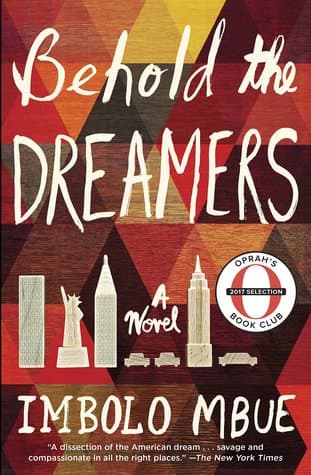
Imbolo Mbue (2016)
Genre
Literary Fiction
Reading Time
8 hours 50 min
Key Themes
See below
Sign in to track this book
A Cameroonian immigrant family's American dream collides with the opulent, crumbling world of their Lehman Brothers executive employers as the 2008 financial crisis erupts, forcing them to confront the true cost of their aspirations.
Jende Jonga, his wife Neni, and their young son, Liomi, live in a cramped apartment in Harlem. Jende, having overstayed his visa, wants to secure a green card and provide for his family, fulfilling the dreams he brought from Cameroon. He works a series of unreliable, low-paying jobs, constantly fearing deportation and the insecurity of their existence. Neni, meanwhile, is determined to pursue her education, enrolling in community college classes, despite the financial strain it places on the family. Their initial optimism about America is slowly being eroded by the daily grind and the constant threat of poverty and legal insecurity, making a stable future seem increasingly distant.
Through luck and the help of a fellow Cameroonian, Jende gets an interview for a chauffeur position with Clark Edwards, a senior executive at Lehman Brothers. Despite his lack of experience driving luxury vehicles, Jende's earnestness and desperation impress Clark. He is hired, a seemingly miraculous opportunity that promises financial stability and a pathway to a better life for his family. Clark's wife, Cindy, also takes an interest in Neni, offering her a temporary summer job at their Hamptons estate. The Jongas view these jobs as their golden ticket, a chance to finally gain a foothold in the American Dream, believing their struggles are finally coming to an end.
Jende starts his role as Clark Edwards' chauffeur, driving him to meetings, social events, and ferrying his children, Vince and Remy. He sees firsthand the immense wealth and privilege of the Edwards family, a stark contrast to his own modest life. Neni, during her temporary stint in the Hamptons, observes Cindy's seemingly carefree existence, her opulent home, and her social circles. Both Jongas are initially awestruck by this new world, trying to navigate its unwritten rules and expectations. They strive to be discreet and loyal, understanding that their future depends on pleasing the Edwardses, even as they begin to notice subtle tensions within the family.
As Jende spends more time with Clark, he inadvertently overhears phone calls and conversations that hint at troubles in Clark and Cindy's marriage. He observes Clark's late nights and subtle evasiveness. Meanwhile, Neni, during her time at the Hamptons and later, picks up on Cindy's unhappiness, her reliance on alcohol, and her strained relationship with her husband. The perfect wealthy family begins to crack for the Jongas, revealing underlying anxieties, infidelity, and loneliness despite their material abundance. They find themselves in uncomfortable positions, privy to secrets they never asked to know.
As the summer progresses into fall 2007, news reports of the impending financial crisis become more frequent. Jende notices a change in Clark's demeanor – he becomes more stressed, withdrawn, and works even longer hours. The Edwards' household, once a picture of unwavering prosperity, shows signs of strain. Cindy's anxieties heighten, and her drinking increases. The global economic downturn, initially an abstract concept to the Jongas, starts to manifest directly in their employers' lives, and by extension, in their own precarious situation. Jende worries about the security of his job, knowing that any instability for the Edwardses could directly impact his family's livelihood.
September 2008 arrives, and Lehman Brothers collapses, filing for bankruptcy. This catastrophic event sends immediate and devastating shockwaves through the financial world and directly impacts the Edwards family. Clark loses his job, and his career is in ruins. The once-invincible facade of their wealth and stability crumbles entirely. Jende witnesses Clark's despair and the profound shift in the household's atmosphere. For the Jongas, this news is terrifying; Jende's carefully secured job is now gone, threatening to unravel all their progress and plunge them back into the desperate uncertainty they had hoped to escape. Their American Dream now feels more fragile than ever.
With Clark Edwards jobless and the family's assets frozen, Jende's employment as a chauffeur is immediately jeopardized. Despite the dire circumstances, Jende, desperate to keep his family afloat, attempts to continue working, even offering to drive for Cindy or run errands. He clings to the hope that some form of employment can be salvaged from the wreckage. However, the Edwardses are in no position to retain him, and the reality of their financial downfall becomes clear. Jende's efforts are futile, and he is ultimately let go, leaving him and Neni scrambling to find new ways to survive and pay their rent.
The loss of Jende's job and the increasing financial pressure take a severe toll on his and Neni's marriage. Arguments become frequent, fueled by stress and unmet expectations. Neni, disillusioned by Jende's inability to secure stable work and feeling the weight of their precarious existence, becomes increasingly frustrated. During a particularly heated argument, a devastating secret from Neni's past in Cameroon is revealed: she was raped by a relative before coming to America. This revelation, kept hidden for years, adds another layer of pain and complexity to their already strained relationship, threatening to tear them apart entirely.
Cindy Edwards, already grappling with her husband's job loss and the public humiliation of the Lehman Brothers collapse, is confronted with her own personal demons. Her alcohol abuse escalates, and she struggles to cope with the reality of her diminished status. The financial crisis also brings Clark's infidelity into the open, confirming Cindy's long-held suspicions and adding to her despair. The polished image of the Edwards' marriage shatters completely, forcing Cindy to confront her own choices, her unhappiness, and the superficiality of the life she had built. She experiences a profound loss of identity and purpose.
Facing eviction, mounting debt, and Jende's expired visa, the Jongas reach a breaking point. They have exhausted all options for legal work and fear deportation. The American Dream they chased now feels like a cruel illusion. After much painful deliberation, they realize they have only one viable path forward: Neni and Liomi, who have legal status, will remain in the U.S. while Jende returns to Cameroon. This separation, a heartbreaking sacrifice, is intended to allow Neni to continue her studies and provide a stable future for Liomi, even if it means tearing their family apart for an indefinite period. It is a decision born of love, desperation, and the harsh realities of their immigrant experience.
Jende makes the painful journey back to Cameroon, leaving Neni and Liomi behind in New York. He struggles to readjust to life in his home country, grappling with the failure of his American aspirations and the immense distance from his family. Meanwhile, Neni, now a single mother, continues to work and study, determined to fulfill the dream she and Jende once shared for Liomi. She faces immense challenges, but her resolve is strengthened by the sacrifice Jende made. The novel ends with the Jongas physically separated but united in their enduring hope for Liomi's future, highlighting the personal costs of chasing the American Dream.
The Protagonist
Jende begins with optimistic hope for the American Dream, but is ultimately forced to confront its harsh realities and make a profound personal sacrifice for his family's future.
The Protagonist
Neni evolves from an optimistic student to a resilient single mother, forced to make impossible choices while confronting past trauma and carrying the weight of her family's future.
The Supporting
Clark falls from a position of immense power and wealth to professional and personal ruin, revealing the hollowness beneath his successful facade.
The Supporting
Cindy's facade of a perfect life crumbles with her husband's downfall, forcing her to confront her unhappiness, her reliance on alcohol, and the true state of her marriage.
The Supporting
Liomi remains a symbol of hope and the future, his innocence contrasting with the harsh realities his parents face.
The Supporting
Fatou remains a consistent source of friendship and practical advice for Neni, embodying the strength of immigrant networks.
The Mentioned
Not applicable; he remains a background character.
The Mentioned
Not applicable; she remains a background character.
The novel examines the myth of the American Dream through the experiences of Jende and Neni. They arrive in the U.S. with immense hope, believing that hard work guarantees success and prosperity. However, they encounter systemic barriers like immigration status, economic instability, and racial inequality. Jende's job loss and eventual deportation, despite his loyalty and diligence, show how the dream remains unattainable for many, especially immigrants. The 'dream' is a privilege, not a given, often dependent on factors beyond individual effort, leading to disillusionment and heartbreaking sacrifices, as seen when Jende is forced to leave his family.
“America was not a place for the faint of heart, or for people who had not come with a backup plan.”
The contrast between the lives of the Jongas (working-class immigrants) and the Edwardses (wealthy one-percenters) highlights class disparities. The novel details the opulent lifestyle of the Edwardses – their lavish homes, expensive cars, and carefree spending – contrasted against the Jongas' cramped apartment, constant financial anxiety, and fear of deportation. Jende and Neni's observation of the Edwards' world reveals that wealth does not equate to happiness or moral integrity, as the Edwardses battle infidelity, alcoholism, and a superficial existence. The economic collapse further exposes the vulnerability of even the powerful, but the Jongas' precarity is far more existential.
“He knew that the Edwardses' financial problems, though catastrophic to them, could not be compared to his own. Their fall from grace would mean a change in lifestyle, not a struggle for survival.”
The struggles of Jende and Neni show the realities of the immigrant experience. They face assimilation challenges, language barriers, cultural differences, and the constant threat of deportation due to Jende's visa status. Their efforts to build a new life are continually undermined by their 'outsider' status. The novel explores the emotional toll of leaving one's homeland, the longing for family, and the difficulty of finding a true sense of belonging in a new country that often feels unwelcoming. Jende's eventual forced return to Cameroon underscores the profound sacrifices and the often-unfulfilled promises of immigration.
“He had told himself that he was going to America for a better life. But what good was a better life if he had to live it alone?”
The novel explores the complexities and strains within both the Jonga and Edwards marriages. Jende and Neni's marriage is tested by financial hardship, unmet expectations, and the revelation of past trauma. Their love and shared dreams are strong, but the pressures of immigrant life push them to their breaking point, culminating in Jende's decision to return to Cameroon for his family's future. Conversely, Clark and Cindy's marriage, despite its material comfort, is hollow, plagued by infidelity, emotional distance, and a lack of genuine connection. Both marriages ultimately involve significant sacrifices, albeit of vastly different natures.
“Marriage was a gamble, like life itself. And sometimes, you lost everything, even if you thought you had played all your cards right.”
The Edwards family initially embodies American success – wealth, power, and a seemingly perfect life. However, as Jende and Neni gain closer access, they see the cracks beneath this polished facade. Clark's infidelity, Cindy's alcoholism and unhappiness, and their children's detachment reveal that material success does not guarantee personal fulfillment or happiness. The collapse of Lehman Brothers further exposes the fragility and superficiality of their constructed reality. The novel suggests that what appears to be success from the outside can often mask personal and ethical failures, making the 'dream' itself an illusion.
“The rich were just like everyone else, only with more money to hide their troubles.”
Alternating focus between two families of different social classes.
The novel employs a dual perspective, primarily focusing on the Jonga family (immigrants struggling for financial stability) and the Edwards family (wealthy Wall Street elite). This device allows for a direct comparison of their experiences, values, and the impact of the American Dream and the 2008 financial crisis on vastly different social strata. By showing both sides, the narrative highlights the profound class inequality and the interconnectedness of their lives, despite their social distance. It offers a nuanced critique of American society and its promises.
The reader and characters are aware of impending doom.
Dramatic irony is prevalent, particularly concerning the impending 2008 financial crisis. The reader, knowing the historical outcome, observes the Edwards family's oblivious opulence and Clark's unwavering confidence in Lehman Brothers, while also witnessing Jende's desperate reliance on his job. This creates a sense of foreboding and tension, as the audience anticipates the inevitable collapse that will dramatically upend both families' lives. It underscores the fragility of the Edwards' wealth and the devastating impact it will have on the Jongas' already precarious existence.
The luxury car represents status, access, and the illusion of the American Dream.
Clark Edwards' luxury car, which Jende chauffeurs, serves as a powerful symbol. Initially, it represents Jende's access to a better life, a tangible sign of his 'success' and proximity to the American Dream. It is a portal into the world of the wealthy. However, it also symbolizes the vast divide between the two families; Jende is in the car, but never truly 'of' the world it represents. After the financial collapse, the car becomes a symbol of lost status and the fragility of wealth, as its maintenance becomes a burden for the Edwardses, and Jende loses his connection to it entirely.
The central concept itself is presented as an illusion for many.
The entire narrative functions as an extended plot device to deconstruct the notion of the American Dream. What initially appears to be a pathway to success for the Jongas through hard work and loyalty ultimately reveals itself as a mirage, especially for those without the privilege of citizenship or inherited wealth. The story systematically dismantles the idea that America is a meritocracy, showing how systemic barriers, economic downturns, and personal secrets can shatter even the most earnest aspirations. The ending, with Jende's deportation, serves as the ultimate indictment of this elusive dream.
“America is a religion, not a country.”
— Jende ponders the allure and myth of America, reflecting on the expectations versus the reality of immigrant life.
“The American Dream was a currency, and they were trying to earn it, even if it meant sacrificing their own bodies.”
— Reflecting on the physical toll and sacrifices immigrants make in pursuit of a better life in America.
“When you are poor, you are always trying to catch up, but the world keeps moving faster.”
— Jende's internal monologue about the relentless struggle against poverty and the feeling of being left behind.
“There was no such thing as a small dream, not when you had nothing.”
— Neni's perspective on the importance of her aspirations, however modest they might seem to others.
“The rich were rich because they were good at being rich, and the poor were poor because they were bad at being poor.”
— An observation on the simplistic, often cruel, societal views on wealth and poverty, particularly from the perspective of the wealthy.
“The pain of not knowing was worse than the pain of knowing.”
— Neni's emotional state while dealing with uncertainties in her life and marriage, preferring difficult truths over lingering doubt.
“Sometimes, the biggest dreams were the ones that got crushed the hardest.”
— A reflection on the disappointment and heartbreak that can accompany ambitious dreams, especially when faced with harsh realities.
“Love was not a thing you found; it was a thing you built.”
— Neni's evolving understanding of marriage and relationships, seeing love as an active process rather than a passive discovery.
“Money was not happiness, but it bought comfort, and comfort was a good substitute for happiness.”
— A pragmatic view on the role of money in life, acknowledging its limitations but also its practical benefits.
“The trick to surviving in America was to never stop working, never stop hoping, and never stop pretending.”
— Jende's internal strategy for coping with the challenges of immigrant life, highlighting resilience and a degree of self-deception.
“Every day was a battle, and sometimes, even winning a battle felt like losing the war.”
— Jende's weariness and disillusionment despite small victories, realizing the larger struggle remains.
“To be an immigrant was to live in a constant state of negotiation, with yourself, with others, with the country you called home.”
— A broader reflection on the complex identity and continuous adjustments required of immigrants.
“They had come to America for a dream, but what they found was a mirror.”
— The realization that America, rather than being a pure land of opportunity, reflected back their own hopes, fears, and struggles.
“There was a kind of freedom in having nothing left to lose.”
— Neni's feeling of liberation and empowerment when she reaches a point of desperation, realizing she has little left to protect.
Ready to see how well you understood this book? Take our interactive quiz with 10 questions.

Biography coming soon.







