“The heart never forgets where we belong.”
— Rill Foss reflecting on her stolen childhood and family bonds.

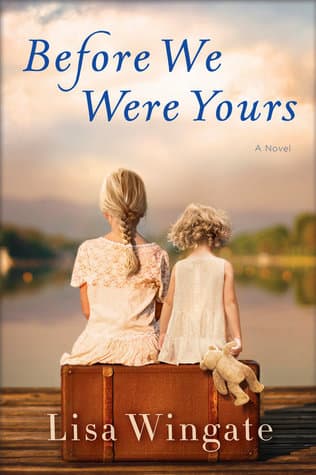
Lisa Wingate (2017)
Genre
Historical Fiction
Reading Time
6-7 hours
Key Themes
See below
Sign in to track this book
Five siblings living on a shantyboat lose their home and family in an adoption scandal, forcing one sister to fight for her family's survival. A modern-day prosecutor uncovers the truth linking their past to her own privileged present.
In 1939, twelve-year-old Rill Foss lives on a shantyboat, 'The Queen Mary,' on the Mississippi River with her four younger siblings: Camellia, Lark, Fern, and Gabion. Their parents, Briny and Queenie, provide a loving but unusual life. One stormy night, Queenie goes into labor early with twins, and Briny takes her to a hospital, leaving Rill in charge with instructions to stay put. The children are excited but soon grow worried as the storm continues and their parents do not return. Rill tries to keep order and reassure her siblings, unaware of what will happen to their family.
While Briny and Queenie are away, strangers, including a sheriff and a woman from the Tennessee Children's Home Society, forcibly remove Rill and her siblings from their shantyboat. Despite Rill's pleas and attempts to protect her family, the children are taken and driven to the Memphis branch of the Tennessee Children's Home Society, run by Georgia Tann. They are told their parents will pick them up soon, but Rill feels something is wrong. The children are separated, given new names, and face harsh conditions and cruel treatment, starting their nightmare.
At the Tennessee Children's Home Society, Rill, renamed May, experiences abuse from the staff, especially Miss Addie. She tries to protect her younger siblings, Camellia (now Judy), Lark (now Polly), Fern (now Sally), and Gabion (now Adam), but they are often separated. Gabion is adopted out quickly, which devastates Rill. Lark, already weak, gets sick and dies, a loss that affects Rill deeply. Camellia is later adopted, leaving Rill and Fern. Rill learns that Georgia Tann is kidnapping and selling children from poor families to wealthy ones, making up their histories.
Rill, desperate to find her parents and rescue Fern, escapes the orphanage. She goes back to the river, hoping to find their shantyboat or a trace of her family. However, she finds 'The Queen Mary' abandoned and falling apart, a symbol of her lost home. Overwhelmed and without help, Rill is caught and returned to the Tennessee Children's Home Society. Her failed escape makes the staff's cruelty worse, further reducing her hope of reuniting with her original family.
After more time at the orphanage, Rill and Fern are separated again. Rill is adopted by a loving couple, the Seviers, who rename her Elizabeth. They do not know her true history or how she was adopted. Elizabeth finds a stable home, but she carries the trauma of her past and the guilt of not being able to protect her siblings. She never forgets her original family, especially Fern, and the memory of her shantyboat life remains a painful secret she cannot share with her adoptive parents, fearing it would hurt them or bring up old pain.
In present-day Aiken, South Carolina, Avery Stafford is a federal prosecutor from a political family, engaged to a handsome man, and preparing for a wedding. Her life seems perfect. However, her father, Senator Wells Stafford, has a health problem, bringing Avery home. While cleaning out her grandmother Judy's house, Avery finds an old photo of five children on a shantyboat, a small wooden horse, and a bracelet with the name 'Rill.' These items raise questions about her family's past, especially her grandmother Judy, who had dementia.
Avery feels drawn to the photo and items and starts investigating their origins, despite her mother's subtle disapproval, who wants to keep the family's image clean. Her research leads her to the history of the Tennessee Children's Home Society and Georgia Tann, who kidnapped and sold children. Avery learns that her grandmother Judy was adopted through this organization. This suggests that her grandmother's past, and her own family's foundation, might be based on a sad lie.
Avery's investigation grows, taking her to archives, old newspaper articles, and eventually to an elderly woman named May Crandall, who lives in a nursing home and says she is Rill Foss. May initially does not want to share her painful memories, but Avery's persistence and the discovery of shared items, like the wooden horse, start to break down her resistance. Through May's fragmented but clear memories, Avery puts together the story of the Foss children: their abduction, their suffering at the orphanage, and the forced separation of siblings, including her own grandmother, Camellia (Judy).
As Avery learns more from May, she realizes that her grandmother Judy was Camellia Foss, the sister Rill tried to protect. This is shocking for Avery, as it means her family history is connected to Georgia Tann's crimes. She also finds that her great-grandparents, the Staffords, likely knew the truth about Judy's adoption, choosing to keep it secret to protect their social standing. This knowledge makes Avery rethink her identity and her family's morals, especially as her parents try to stop her from pursuing the truth.
Avery, now committed to helping May, arranges a reunion between May and her long-lost sister, Fern, who had also been adopted and renamed. The emotional reunion is a moment of healing for the surviving Foss sisters. Avery also learns of other Foss siblings who may be alive, offering new hope. This journey affects Avery deeply, making her rethink her career, her relationship, and her understanding of family. She finds a new purpose in helping the victims of the Tennessee Children's Home Society, finding meaning by bringing truth and justice to light.
The Protagonist
From a protective child to a traumatized survivor, she eventually finds a voice for her past and experiences a poignant reunion, achieving a measure of healing.
The Protagonist
Initially focused on career and societal expectations, she transforms into an empathetic truth-seeker, willing to dismantle her own family's narrative for justice and healing.
The Supporting
From a stolen child to a woman who lived a privileged life but carried unspoken trauma, her past is finally brought to light through her granddaughter's efforts.
The Supporting
From a traumatized child to a woman living a separate life, she ultimately experiences a miraculous reunion with her long-lost sister, Rill.
The Antagonist
She remains a static character, a figure of pure evil who is never brought to justice within the narrative's timeframe, her crimes only uncovered decades later.
The Supporting
His arc is tragic; he loses his family and spends his life searching, never reunited with his children, dying of a broken heart.
The Supporting
Her arc is one of tragic loss and sacrifice; her illness and death inadvertently lead to the abduction of her children.
The Supporting
Her arc is tragically cut short by illness and the harsh conditions of the orphanage, representing the most vulnerable victims.
The Supporting
His arc is one of early separation and loss, representing the children who lost all memory of their original families.
The Supporting
He begins as a supportive partner but struggles to accept the uncomfortable truths of Avery's family history, ultimately leading to a shift in their relationship.
Despite forced separations, abuse, and decades of silence, the novel shows the strong connections between family members. Rill's love and protective feelings for her siblings drive her throughout her ordeal. In the present, Avery's search is driven by a desire to understand and honor her grandmother's past, leading to the reunion of the surviving Foss sisters. The shantyboat family, though separated, keeps a connection that lasts through time and trauma.
“A family is a boat, and you're all in it, so you might as well row in the same direction.”
Both Rill and Avery deal with their identities, shaped by their pasts. Rill, without her name and family, tries to connect her traumatic childhood with her adopted life, always thinking about who she 'was.' Avery, first defined by her family's legacy, discovers her identity is based on a stolen past. Her journey makes her face the truths of her family history and redefine who she is, separate from her family's story. The novel explores how the past, remembered or hidden, affects how one sees oneself.
“Sometimes, the things that are most important are the ones we can't see, the ones that are hidden deep inside.”
The novel shows the reality of the Tennessee Children's Home Society, showing how poverty and social weakness made families like the Fosses easy targets. Georgia Tann's operation targeted the poor and uneducated, taking their children for money. The story reminds us of historical wrongs and the system failures that allowed such events to happen, showing the effects on victims who lost their rights and families.
“Some people think children are like little trees, you can just dig 'em up and replant 'em anywhere. But it ain't true. We got roots, deep ones.”
Memory is important, both as a source of pain and a way to heal. Rill's traumatic memories of the orphanage are hidden for decades but eventually come out, guiding Avery's investigation. Judy/Camellia's fragmented memories also help. The novel shows how trauma can shape a life, leading to silence and secrets, but also how facing and sharing those memories, even decades later, can lead to healing and closure, not just for the survivors but also for their descendants.
“The past is a stubborn thing, and it doesn't always stay where we bury it.”
Alternating chapters between 1939 and the present day to gradually reveal the truth.
The novel employs a dual timeline structure, alternating between Rill Foss's experiences in 1939 and Avery Stafford's investigation in the present day. This device builds suspense, allowing the reader to piece together the harrowing history of the Foss children alongside Avery. The juxtaposition of the past's raw trauma and the present's quest for truth creates a compelling narrative flow, revealing the profound, long-lasting impact of the Tennessee Children's Home Society scandal across generations.
A tangible link between the past and present, symbolizing lost childhood and enduring love.
The small, hand-carved wooden horse is a significant symbolic object. It represents the innocent childhood of the Foss children, a tangible piece of their shantyboat life. Its discovery by Avery in her grandmother's attic, alongside the photo and bracelet, acts as a crucial catalyst for her investigation. For Rill, it's a powerful memento of her lost brother, Gabion, and a physical embodiment of the family she fought to protect. The horse connects the two timelines, representing the enduring love and memory that defies time and separation.
A symbol of freedom, family, and the innocence lost.
The Foss family's shantyboat, 'The Queen Mary,' is more than just a home; it's a powerful symbol. It represents their unique, free-spirited lifestyle, their close-knit family unit, and their connection to the Mississippi River. Its eventual abandonment and decay symbolize the destruction of their family and the loss of their innocence. For Rill, the memory of the shantyboat remains a nostalgic, yet painful, touchstone of a life that was brutally stolen, contrasting sharply with the sterile, cruel environment of the orphanage.
Physical clues that trigger the investigation and bridge the generational gap.
The discovery of old photographs, particularly the one of the Foss children on the shantyboat, and the bracelet inscribed with 'Rill,' are crucial plot devices. These artifacts serve as tangible evidence of a hidden past, sparking Avery's curiosity and driving her to uncover the truth. They act as breadcrumbs leading her through her family's history and the larger scandal of the Tennessee Children's Home Society, allowing her to connect with the past in a deeply personal way and to give voice to the unspoken stories of the victims.
“The heart never forgets where we belong.”
— Rill Foss reflecting on her stolen childhood and family bonds.
“Sometimes you've got to let go of the past to hold on to the future.”
— Avery Stafford learning about her family's hidden history.
“We are who we are because they were who they were.”
— Avery realizing how her ancestors' experiences shaped her.
“A family is a patchwork of hearts, stitched together by love.”
— Reflecting on both biological and chosen family ties.
“The river gives, and the river takes away.”
— Rill describing life on the Mississippi River before the kidnapping.
“Truth has a way of floating to the surface, no matter how deep you bury it.”
— Avery uncovering the secrets of the Tennessee Children's Home Society.
“Home isn't a place on a map. It's a place in your heart.”
— Rill longing for her family while in the orphanage.
“We carry our stories with us, even when we don't know what they are.”
— Avery sensing the weight of unspoken family history.
“Sometimes the bravest thing you can do is remember.”
— Facing painful memories of the adoption scandal.
“Love is the only thing that outlives us.”
— Reflecting on the enduring impact of familial love.
“A name is just a word until you fill it with your story.”
— Characters grappling with lost identities and reclaimed ones.
“The strongest chains are the ones we can't see.”
— Describing the psychological bonds of trauma and secrecy.
“Every child deserves a story that begins with love.”
— Critiquing the unethical adoption practices depicted.
“You can't un-live what you've lived. You can only learn to carry it.”
— Characters dealing with the aftermath of trauma.
Ready to see how well you understood this book? Take our interactive quiz with 10 questions.

Biography coming soon.