“My dearest Cassandra, I have not yet fixed the day of my wedding. Indeed, I have not yet accepted an offer.”
— Jane writes to her sister Cassandra, hinting at her reluctance regarding Mr. Wisley's proposal.

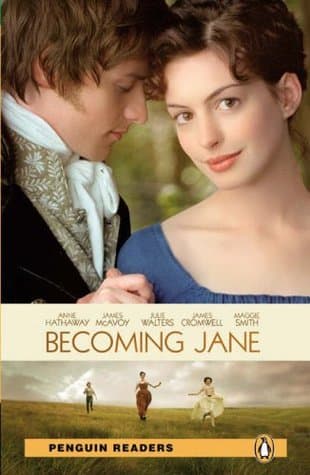
Kevin Hood (2008)
Genre
Historical Fiction / Romance
Reading Time
Given 'None pages', this is unquantifiable. Assuming a typical novel length, it would be several hours.
Key Themes
See below
Sign in to track this book
A young Jane Austen finds her voice and inspiration for her novels through a passionate, yet forbidden, romance with law student Tom Lefroy.
In 1795 Hampshire, 20-year-old Jane Austen dreams of a life beyond the limited options for women, specifically marriage for money. Her father, Reverend George Austen, supports her writing, but her mother, Cassandra Austen, reminds her of their financial situation. Jane often challenges social norms, showing wit and an independent spirit. She rejects the wealthy but dull Mr. Wisley, whose aunt, Lady Gresham, is a powerful figure. Jane's older sister, Cassandra, is engaged to Robert Fowle, but his financial struggles make it urgent for Jane to find a suitable match, increasing the pressure to marry for practical reasons rather than love.
Tom Lefroy, a charming and arrogant law student from Ireland, arrives and disrupts the quiet Austen household. He is visiting his uncle, Judge Langlois, and quickly shows himself to be witty but insolent. Jane and Tom's first meeting involves a sharp exchange of words and mutual dislike, as Tom criticizes Jane's reading and her perceived provincialism. Their initial animosity comes from their equally strong personalities and independent minds. Despite the friction, there is an undeniable intellectual challenge between them, hinting at a deeper connection. Tom's presence brings a new dynamic to Jane's life.
Despite their initial dislike, Jane and Tom are drawn to each other through their shared love for literature and their unconventional views. During social gatherings and private conversations, they have spirited debates, exchanging witty comments and showing their intellectual depth. Tom introduces Jane to new authors and ideas, expanding her worldview, while Jane's sharp observations and imagination captivate him. They share an intimate dance at a ball, and their unspoken connection grows stronger. This shared passion and intellectual bond slowly turn their initial dislike into affection, worrying their families who see their connection as impractical.
Jane and Tom's romance grows, marked by secret meetings, stolen glances, and heartfelt conversations. They share their deepest hopes and fears, realizing they are kindred spirits. However, their love faces strong disapproval from their families. Tom's uncle, Judge Langlois, reminds him of his financial dependence and the need to marry into wealth for his career. Lady Gresham, seeing Mr. Wisley's continued interest in Jane, actively discourages any connection between Jane and Tom. The financial difference between them and the social pressure to marry for status create obstacles, making their love seem impossible in the rigid social structure.
Tom, going against his uncle's wishes, declares his love for Jane and proposes marriage. Overjoyed but aware of the impracticality, Jane initially accepts. However, the realities quickly become clear. Tom's family, upon learning of the engagement, threatens to disinherit him, which would leave both Jane and Tom in dire financial straits, jeopardizing his legal career and her family's already precarious position. Tom's relatives, especially his powerful uncle, make it clear that a marriage without financial backing is unthinkable. Faced with ruining Tom's future and burdening her own family, Jane makes the painful decision to refuse Tom, believing it is the only way to protect him and her loved ones.
After their separation, Tom returns, desperate to convince Jane to elope with him to Gretna Green, where they can marry without family consent. Jane, torn between her love for Tom and her sense of duty, almost agrees. However, a devastating truth comes out: Tom's family would be completely ruined if he married Jane without their approval, specifically his younger brother's future. This revelation, especially the knowledge that his family depends on him, forces Jane to face the full weight of their decision. Realizing the immense sacrifice Tom would make and the widespread hardship it would cause, Jane makes the heartbreaking choice to reject his offer of elopement, prioritizing his family's welfare over their own happiness.
Following her painful separation from Tom, Jane feels the weight of her sacrifice. She briefly considers accepting Mr. Wisley's proposal, recognizing the financial security it would offer her family, even if it meant a life without love. This period is marked by sadness and resignation. Her family, particularly her mother, continues to push her towards a sensible match. Jane attends social events with a heavy heart, observing the rituals that once seemed trivial but now represent her only viable path forward. The experience of losing Tom deeply affects her, shaping her understanding of love, duty, and the limits placed on women.
After her heartbreak, Jane finds solace and purpose in her writing. She begins to channel her experiences, observations, and the emotional turmoil of her relationship with Tom into her stories. The characters she creates, their dilemmas, and the social commentaries in her narratives are deeply influenced by her own life. Her family, especially her father and sister Cassandra, continue to support her writing. This period marks a turning point, as Jane dedicates herself to her craft, turning personal pain into universal themes that would captivate readers for centuries. Her pen becomes her voice, her escape, and her legacy.
Years pass, and Jane Austen has become a celebrated author, though anonymously, with her novels gaining recognition. She attends a public reading of 'Pride and Prejudice,' her most famous work, and watches the audience's reactions. During this event, she sees Tom Lefroy again. He is now a successful lawyer, married with children, and his eldest daughter resembles Jane. Their exchange is brief but poignant, a silent acknowledgment of their shared past and the paths they chose. Tom's daughter approaches Jane, expressing admiration for the novel, a moment that brings a bittersweet sense of closure and validation to Jane's journey. She has found fulfillment not in marriage, but in her art.
The film ends by showing Jane Austen's lasting legacy as one of English literature's greatest writers. Her experiences, particularly her love for Tom Lefroy and the social constraints that prevented their union, shaped her novels. The themes of love, duty, social class, and the search for meaningful connection, which are central to her works, are rooted in her personal journey. Jane's decision to pursue writing, rather than settle for a loveless marriage, is presented as a courageous act that allowed her to create timeless stories. Her life, though marked by personal sacrifice, became the source from which her enduring literary masterpieces emerged.
The Protagonist
Jane transforms from a hopeful romantic into a dedicated artist who channels her personal heartbreak and societal observations into her enduring literary masterpieces.
The Love Interest
Tom struggles between personal desire and family duty, ultimately choosing the latter, which leads to a life of success but also a poignant sense of lost love.
The Supporting
Remains a steadfast source of encouragement for Jane, providing a stable foundation for her aspirations.
The Supporting
Remains consistent in her pragmatic views, serving as a foil to Jane's romantic ideals.
The Supporting
Provides consistent emotional support to Jane, reflecting the challenges faced by women in their era through her own experiences.
The Supporting
Remains a constant, albeit unexciting, option for Jane, representing the societal expectation of marriage for security.
The Antagonist
Remains a formidable obstacle, embodying the restrictive societal norms that Jane must navigate.
The Supporting
Serves as the embodiment of societal expectations and family duty, directly influencing Tom's choices and thus Jane's fate.
This is the central conflict of the story. Jane and Tom's passionate love is constantly challenged by their financial situations and the rigid social structures of 18th-century England. People, especially women, are expected to marry for security and status rather than affection. Jane's internal struggle and ultimate decision to sacrifice her love for Tom to protect his family's future, and her own, shows this theme. The film highlights how personal happiness is often secondary to social and family obligations, leading to personal sacrifice, as seen when Jane refuses Tom's elopement to protect his brother's prospects.
“''Affection is desirable. Money is absolutely indispensable.''”
The film shows the limited options and pressures faced by women in Jane Austen's era. Marriage is presented not as a choice of love, but as an economic necessity and the main way to secure one's future and social standing. Jane's independent spirit and intellectual aspirations often clash with these expectations. Her mother's constant reminders of their financial insecurity and the need for Jane to marry well emphasize this theme. Ultimately, Jane's decision to pursue writing as a career, despite social norms, represents a quiet rebellion against these constraints, forging an unconventional path for herself.
“''A woman with a talent for writing is a dangerous thing.''”
Literature is both an escape and a source of connection and inspiration for Jane. Her love for reading and her gift for writing are central to her identity and her relationship with Tom. Their shared passion for books and intellectual debate initially brings them together, providing a sanctuary from the mundane and restrictive world around them. Jane channels her personal experiences, heartbreaks, and observations into her novels, turning her life into art. Her writing becomes her voice and her legacy, showing how imagination can transcend personal limits and leave a lasting mark.
“''I am not good for anything unless I am in a fever of composition.''”
The realities of social class and financial insecurity are a major part of the plot. The Austen family's modest income and the expectation that Jane must marry a wealthy man, like Mr. Wisley, drive many conflicts. Tom Lefroy, despite his intelligence and charm, depends on his uncle's patronage, making a marriage without financial advantage unthinkable. The threat of disinheritance for Tom and the financial ruin it would bring to his family show how deeply wealth and social standing are connected to personal choices and happiness. This theme emphasizes the impact of economic circumstances on love and life decisions in this period.
“''To marry without affection is a sin against the heart. To marry without means is a sin against the future.''”
A passionate romance hindered by external societal and financial barriers.
The central plot device is the forbidden love between Jane Austen and Tom Lefroy. Their mutual attraction and intellectual connection are strong, but their differing social statuses and lack of financial means make their union almost impossible in 18th-century society. This device creates inherent conflict and tension, driving the narrative as the characters struggle against powerful external forces and their own internal desires. The 'forbidden' aspect heightens the emotional stakes and ultimately leads to their tragic separation, which then fuels Jane's literary output.
Witty and insightful conversations used to critique societal norms.
The film frequently uses sharp, witty dialogue, often between Jane and Tom, to provide social commentary. Their exchanges are not just romantic banter but also intelligent critiques of the restrictive customs, expectations, and hypocrisies of their society regarding marriage, women's roles, and class distinctions. This device allows the filmmakers to convey the period's social dynamics and Jane's unique perspective without heavy exposition, making the observations feel organic to the characters and their interactions, much like Austen's own novels.
Moments of emotional intensity conveyed through implied communication or withheld expressions.
While not a literal unsent letter in every instance, this device manifests in moments where characters, particularly Jane and Tom, convey deep emotions or make significant decisions without explicit verbalization. The most prominent example is Jane's decision to reject Tom's elopement after learning of his family's dependence on him; her heartbreak is palpable through her silent resolve. This device emphasizes the unspoken sacrifices and profound emotional depths that define their relationship and the constraints of their world, often leaving the audience to infer the full weight of their feelings and choices.
Drawing explicit and implicit connections to Jane Austen's future novels.
The film intentionally draws parallels between Jane's real-life experiences and the themes, characters, and plot points that would later appear in her novels. For instance, the character of Mr. Wisley is an obvious precursor to Mr. Collins, while the initial animosity and witty banter between Jane and Tom echo Elizabeth Bennet and Mr. Darcy. This device enriches the story by showing the direct inspiration behind Austen's literary genius, allowing the audience to see the 'making of' her famous works within her own life story. It creates a meta-narrative layer, connecting the biographical with the fictional.
“My dearest Cassandra, I have not yet fixed the day of my wedding. Indeed, I have not yet accepted an offer.”
— Jane writes to her sister Cassandra, hinting at her reluctance regarding Mr. Wisley's proposal.
“If you want to be a writer, you have to be a reader first.”
— Mrs. Austen offers advice to a young Jane about her literary aspirations.
“Your characters must be alive, Jane. They must have passions, good and bad.”
— Mr. Austen critiques Jane's early writing, encouraging her to add depth to her characters.
“To be mistress of Pemberley might be a very pleasant thing.”
— Jane muses about the appeal of wealth and status, echoing a famous line from 'Pride and Prejudice'.
“Affection is desirable. Money is absolutely indispensable.”
— Lady Gresham advises Jane on the pragmatic realities of marriage in their society.
“A woman's only job is to marry well.”
— Lady Gresham expresses a common societal view to Jane, which Jane often challenges.
“I am afraid I cannot be the kind of wife who will just sit and be silent.”
— Jane expresses her independent spirit and intellectual needs, particularly in the context of marriage.
“Sense and sensibility, they are two sides of the same coin.”
— Jane discusses the balance between reason and emotion, foreshadowing her future novel.
“You must allow me to tell you how ardently I admire and love you.”
— Tom Lefroy's passionate declaration to Jane, mirroring Darcy's famous line.
“My heart is engaged. I cannot marry another.”
— Jane's firm refusal of Mr. Wisley's proposal, despite the financial benefits.
“We must all make sacrifices, Jane. That is what love is.”
— Cassandra advises Jane on the difficult choices often required by love and family.
“To not marry for love, Jane, is to sacrifice everything.”
— Tom Lefroy argues against a marriage of convenience, emphasizing the importance of genuine affection.
“A lady's imagination is very rapid; it jumps from admiration to love, from love to matrimony, in a moment.”
— Jane's playful observation about female romantic inclinations, a line from 'Pride and Prejudice'.
“I wish for nothing but to be worthy of you.”
— Tom Lefroy expresses his deep respect and affection for Jane.
Ready to see how well you understood this book? Take our interactive quiz with 10 questions.







