“There are no monsters, and if there are, they are us.”
— Early realization about the island's dangers.

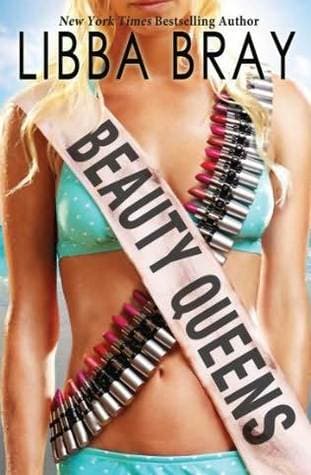
Libba Bray (2011)
Genre
Young Adult
Reading Time
528 min
Key Themes
See below
Sign in to track this book
Fifty pampered beauty queens, fresh from a plane crash, must trade their tiaras for survival skills and confront a jungle island, sexy pirates, and the true meaning of sisterhood, all while battling a severe lack of eyeliner.
The novel opens with the fifty Miss Teen Dream contestants, representing every U.S. state, on a flight to the finals in the fictional nation of Caribbea. Among them are diverse personalities like Tiara, the ambitious Miss Texas; Nicole, the cynical Miss New Hampshire; Petra, the fundamentalist Miss Delaware; and Adina, the tech-savvy Miss Arizona. As they bicker and prepare for the pageant, their plane experiences catastrophic engine failure and crashes into the ocean near an uncharted island. Miraculously, all fifty girls survive the crash and manage to swim to the shore, though they are disoriented, injured, and without their beauty supplies.
Upon realizing their predicament, the girls initially struggle with basic survival. Their ingrained pageant training leads them to prioritize appearance over practicality. They attempt to maintain their hair and makeup with limited resources, with some girls even trying to stage a mini-pageant on the beach. Nicole, however, quickly emerges as a voice of reason, pointing out the dire need for food, water, and shelter. Tiara attempts to assert leadership based on her pageant experience, but her efforts are often counterproductive. They discover the plane's black box, but it is damaged and useless for communication.
As days turn into weeks, the girls begin to form alliances and rivalries. Tiara, Petra, and the more 'traditional' queens struggle to adapt, while girls like Nicole, Adina, and the quiet Miss Michigan, Mary Lou, prove more resourceful. They establish a makeshift camp and begin to explore the island. During their explorations, they discover peculiar, high-tech surveillance cameras hidden in the jungle, along with discarded military-grade equipment. This discovery shatters their belief that they are truly alone, introducing new fear and suspicion to their struggle for survival.
Through further investigation, Adina's tech skills prove valuable. She manages to hack into some of the abandoned equipment, revealing that the island is not deserted but is, in fact, an elaborate set for a twisted reality television show called 'Teen Dream Extreme.' The plane crash was orchestrated by the show's corporate sponsor, the nefarious 'Corporation,' led by the manipulative Ladybird Hope. Their goal is to exploit the girls' struggle for survival for entertainment and to promote the Corporation's beauty products, which are secretly laced with addictive chemicals.
Just as the girls begin to grasp the extent of the deception, a new group arrives on the island: a band of young men, survivors of a similar plane crash, who were contestants in a parallel reality show called 'Teen Macho Extreme.' These boys, initially perceived as 'pirates' due to their rugged appearance, are just as confused and manipulated as the girls. Their arrival creates immediate tension, as both groups are wary of each other, and the boys are initially more focused on traditional masculinity and asserting dominance.
The interaction between the girls and boys highlights ingrained gender stereotypes. The boys, led by the arrogant Sir Reginald, expect the girls to be helpless, while the girls, despite their own internal divisions, are wary of the boys' machismo. However, as they face common threats from the island and the unseen Corporation, some individuals from both groups begin to forge unlikely friendships and alliances. Nicole and Tiara, despite their rivalry, find common ground in leadership, while Adina and a tech-savvy boy, Jefferson, collaborate on deciphering the Corporation's plans.
Empowered by their growing understanding of the Corporation's malicious intent, the girls and a few of the more enlightened boys decide to fight back. They realize that their survival is not just about physical endurance but about reclaiming their agency. They begin to intentionally subvert the Corporation's narrative, refusing to perform for the cameras as expected. They plan to use the remaining surveillance equipment to broadcast their true story to the outside world, exposing Ladybird Hope and the Corporation's unethical practices.
In a dramatic climax, the combined group of contestants stages a final, defiant broadcast. They hijack the Corporation's live feed, using their unique talents—from pageant speeches to technical prowess—to reveal the truth about the staged crash, the manipulative reality show, and the addictive products. Ladybird Hope, furious, attempts to shut them down, but the broadcast reaches a global audience. The confrontation culminates in a physical struggle as corporate operatives attempt to silence them, but the contestants, now united, fight for their freedom.
The broadcast is successful, leading to a massive public outcry and media attention. Authorities are alerted, and a rescue mission is launched. The surviving contestants are brought back to civilization, where they are hailed as heroes. Ladybird Hope and the Corporation face severe legal and public repercussions, with their empire crumbling under the weight of their exposed deceit. The girls, forever changed by their ordeal, must now navigate a world that sees them not just as beauty queens, but as symbols of resilience and rebellion.
In the aftermath, each girl embarks on a new path, shedding the artificiality of the pageant world. Tiara, having learned true leadership, dedicates herself to social justice. Nicole pursues a career in journalism, using her sharp wit to expose injustice. Adina leverages her tech skills for ethical hacking. Even Petra begins to question her rigid beliefs, embracing a more compassionate worldview. The experience transforms them, allowing them to define beauty and success on their own terms, fostering genuine friendships that transcend their former rivalries and the superficiality of the pageant world.
The Protagonist
Nicole transforms from a cynical outsider into a courageous leader who uses her intelligence and voice to fight injustice.
The Protagonist
Tiara moves from superficial ambition to embodying true leadership and using her influence for good.
The Supporting
Adina gains confidence in her unique abilities and uses them to expose a corporate conspiracy.
The Supporting
Petra's rigid faith is challenged and broadened, leading to greater empathy and self-acceptance.
The Antagonist
Ladybird Hope's empire crumbles as her unethical practices are exposed by the very girls she sought to exploit.
The Supporting
Mary Lou overcomes her insecurities and eating disorder to find her inner strength and self-worth.
The Supporting
Shazzy learns to apply her unconventional knowledge more effectively and becomes a valuable contributor to the group's survival.
The Supporting
Jefferson overcomes initial gender stereotypes to become a valuable ally and partner to the girls.
The novel relentlessly critiques societal beauty standards, particularly those imposed on young women. By stranding the beauty queens on a deserted island without their makeup, hair products, and elaborate costumes, the story forces them to confront their natural selves. The initial panic over chipped nail polish and un-exfoliated skin gives way to a realization that true beauty lies in resilience, resourcefulness, and character. The girls learn that their worth is not tied to their physical appearance or the approval of judges, but to their actions and inner strength, directly contrasting with the superficiality promoted by the Corporation.
“What happens when you strip away the spray tans and the perfect hair and the carefully constructed personas? You get real girls, fighting for their lives.”
At its core, 'Beauty Queens' is a feminist narrative that explores the power of sisterhood and challenges patriarchal expectations. Initially, the girls are pitted against each other by the pageant system, embodying internalized misogyny. However, the shared trauma of the island forces them to overcome their rivalries and form a supportive community. They learn to value each other's diverse strengths, from Nicole's leadership to Adina's tech skills, and realize that collective action is more effective than individual competition. The arrival of the 'pirate' boys further highlights gender dynamics, ultimately showing the girls' ability to lead and adapt independently.
“They had been trained to compete, to outshine each other. But here, on this island, competition meant death. Sisterhood meant life.”
A central theme is the influence of media manipulation and unchecked corporate greed. The entire premise of the island ordeal is revealed to be a staged reality show orchestrated by the ruthless Corporation for entertainment and profit. Ladybird Hope represents the exploitative nature of capitalism, willing to endanger and traumatize young women for ratings and to push addictive products. The novel satirizes the sensationalism of reality television and warns against the dangers of corporations that prioritize profit over human well-being, highlighting how media can distort reality and control narratives for nefarious purposes.
“We are not just selling makeup, girls. We are selling a dream. And dreams, my dears, are very, very profitable.”
The island is a crucible for the contestants' identities. Stripped of their familiar environments, social roles, and the expectations of the pageant world, each girl is forced to confront who they truly are. Many discover hidden strengths, talents, and aspects of their personality that were suppressed by the pressure to conform to a specific 'beauty queen' image. From Mary Lou overcoming her eating disorder to Tiara learning genuine leadership, the journey is one of self-discovery, leading them to redefine their values and priorities beyond the superficial. They learn to embrace their authentic selves, flaws and all.
“The island didn't just strip them of their clothes and makeup; it stripped them of their assumptions about themselves.”
The novel uses biting satire to comment on various aspects of American culture, particularly the beauty industry, reality television, consumerism, and gender roles. Through exaggerated characters and absurd situations, Bray critiques the superficiality and sometimes harmful messages perpetuated by these industries. The book uses humor to highlight the ridiculousness of prioritizing perfect hair over fresh water, or the inherent sexism in a 'macho' reality show. The mock corporate memos and footnotes further amplify this satirical tone, providing a meta-commentary on the narrative itself and the societal forces it critiques.
“And remember, girls, true beauty comes from within. But a good foundation helps.”
Humorous exaggeration and self-referential elements to critique society.
The novel uses a pervasive satirical tone, often employing hyperbole and irony to critique beauty pageants, reality television, and consumer culture. This is enhanced by meta-commentary, such as fictional corporate memos, footnotes, and interjections from the 'producers' of the reality show. These elements not only provide comic relief but also serve to directly engage the reader in the critique, highlighting the absurdity of the situations and the manipulative forces at play within the narrative and in real-world media.
An isolated, hostile environment that strips characters of their comfort and forces transformation.
The island functions as a classic literary device, reminiscent of 'Lord of the Flies,' but with a feminist twist. It is an isolated, hostile environment that strips the beauty queens of their external trappings and forces them to confront their true selves and survival instincts. The island acts as a crucible, testing their resilience, forging new alliances, and ultimately catalyzing their personal growth and collective rebellion against the forces that stranded them there. It's a symbolic space for deconstruction and reconstruction of identity.
Technological clues that reveal the true nature of their predicament.
The discovery of the damaged plane's black box and later the hidden surveillance cameras and abandoned corporate equipment serves as a crucial plot device. These technological artifacts are the breadcrumbs that lead Adina and the other girls to uncover the truth about the staged crash and the 'Teen Dream Extreme' reality show. They shift the narrative from a simple survival story to a corporate conspiracy thriller, providing the concrete evidence needed for the girls to understand their manipulation and formulate a plan for resistance.
A parallel group used to highlight and challenge gender stereotypes.
The arrival of the 'pirate' boys, contestants from a parallel reality show, serves as a plot device to introduce a new dynamic and further explore gender stereotypes. Their initial interactions highlight the ingrained biases and expectations both groups hold about masculinity and femininity. Eventually, their presence allows for alliances to form, demonstrating that cooperation and mutual respect can overcome societal divisions, and providing a larger, combined force for the final confrontation with the Corporation.
“There are no monsters, and if there are, they are us.”
— Early realization about the island's dangers.
“Being pretty is a job. It's a full-time, unpaid internship.”
— Nicole's internal monologue about beauty standards.
“The island was a mirror, reflecting back not what they wanted to see, but what they were.”
— Narration describing the psychological impact of the island.
“Maybe the real beauty pageant was the friends we made along the way.”
— A satirical take on the 'journey not the destination' trope.
“You can't be a princess if you're covered in grime and not waiting for a prince.”
— Belinda's initial struggle with maintaining her image.
“Survival is not pretty. It's messy and it's ugly and it's not going to get you a crown.”
— Adina's pragmatic view on their situation.
“The jungle doesn't care if you have good hair.”
— A humorous but pointed observation about vanity in a crisis.
“What if being strong meant being something other than what everyone expected?”
— Petra's internal questioning of traditional strength.
“They had been trained to be beautiful, not useful.”
— A critical commentary on their pageant upbringing.
“Sometimes, the best way to find yourself is to get utterly, completely lost.”
— A broader philosophical statement on self-discovery.
“The world was full of expectations, and the island was slowly stripping them away.”
— The girls' gradual shedding of societal pressures.
“A tiara is just a fancy hat if you don't have a head to wear it on.”
— A dark but humorous thought about the importance of survival over status.
“Maybe being a queen wasn't about a crown, but about how you ruled your own life.”
— A redefinition of what it means to be a 'queen'.
“They were all just girls, trying to figure out how to be people in a world that wanted them to be something else.”
— A poignant summary of the girls' collective struggle.
Ready to see how well you understood this book? Take our interactive quiz with 10 questions.

Biography coming soon.