“When you're a writer, you spend your life in a state of ethical suspension.”
— Henry, a writer, reflecting on the moral implications of his craft.

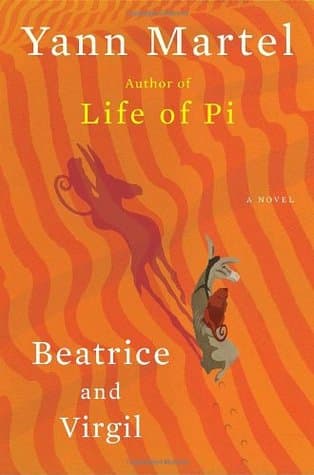
Yann Martel (2010)
Genre
Literary Fiction
Reading Time
240 min
Key Themes
See below
Sign in to track this book
A taxidermist gives a writer a strange manuscript about a donkey and a monkey, sending him on a quest to uncover hidden meanings of the Holocaust.
Henry, a well-known author, faces a deep creative block. He spent five years writing his latest manuscript, an allegorical work about the Holocaust. His publishers reject it, calling it too abstract, disturbing, and unsellable. This rejection, along with his wife Sarah's quiet disapproval, sends Henry into despair. He feels like a failure and cannot express the suffering he tried to convey. He stops writing and takes a mundane job.
One day, a strange package arrives for Henry. Inside, he finds a partially finished, handwritten play featuring two animal characters, Beatrice (a donkey) and Virgil (a monkey), along with a taxidermied howler monkey. The sender is an elderly taxidermist who claims to be a fan of Henry's work and asks for help refining the play. Intrigued by the unusual gift and the play's unsettling content, which mirrors themes he struggled with, Henry leaves his creative slump. He feels a connection to the offering, sensing a deeper meaning.
Henry goes to the address and finds a rundown taxidermy shop, its windows filled with lifelike animal displays. He meets the taxidermist, a seemingly gentle but increasingly unsettling old man. The taxidermist, who remains unnamed, explains the play is his life's work and he needs Henry's literary help to publish it. He shares more about Beatrice and Virgil, saying they are characters in a play about animal suffering. However, the allegorical weight of their story hints at something far more sinister than animal cruelty. Henry feels growing discomfort but feels compelled to continue.
As Henry reads more of the play, he understands its true, horrifying nature. Beatrice, the donkey, and Virgil, the monkey, are not just animals but represent victims and perpetrators of an unimaginable atrocity. The play, set in a desolate place, shows their endless journey, their talks about the 'Horror,' and their meetings with other animals symbolizing different roles in a genocidal event. The taxidermist's explanations clarify that the play is a thinly veiled allegory for the Holocaust. It uses animals to create distance while also making the suffering universal and raw. Henry is both horrified and deeply moved by its power.
Through fragmented talks and subtle clues, Henry starts to piece together the taxidermist's past. The old man speaks of a 'Horror' he witnessed and took part in, a time when 'things were done to animals' on a large scale. He tells stories that, while seemingly about animals, clearly parallel the experiences of victims and perpetrators during the Holocaust. Henry realizes the taxidermist is not just an artist dealing with historical trauma but a survivor, and possibly a former perpetrator or someone deeply involved in the events. The taxidermist's detached yet obsessive recounting chills Henry.
As Henry spends more time in the taxidermy shop, he notices increasingly disturbing details. He finds a small, tarnished ring with a foreign inscription, old photographs, and other misplaced artifacts. The shop itself, with its carefully preserved animal forms, begins to feel like a museum of suffering. These objects, combined with the taxidermist's vague answers and the play's escalating horror, confirm Henry's growing suspicion: the taxidermist is not just a witness but has a direct, personal connection to the historical atrocities the play describes. The shop becomes a chilling collection of memory and guilt.
The taxidermist is particularly focused on the play's incomplete ending. He struggles with how to conclude Beatrice and Virgil's story, how to find meaning or resolution in such immense suffering. This struggle mirrors his own inability to come to terms with his past. He offers various tragic and ambiguous endings, each revealing his deep guilt and his philosophical struggle with evil and redemption. Henry understands that the taxidermist uses the play not just to tell a story, but to process his unconfessed history, seeking some form of absolution or understanding through art.
Driven by horror and a desperate need for understanding, Henry finally confronts the taxidermist. He connects the clues — the ring, the stories, the play itself — and challenges the old man about his involvement in the Holocaust. The taxidermist, though never explicitly admitting to specific crimes, acknowledges his presence and participation in the 'Horror.' His responses are indirect, full of euphemisms and allegories, but his guilt is clear. Henry realizes the taxidermist was not just a witness but part of the destruction, using the play as a confession and a way to process his complicity.
Despite the horrifying revelations, Henry feels a strange duty to help the taxidermist finish his life's work. He helps craft an ending for the play, one that acknowledges immense suffering but perhaps offers a hint of resilience or the lasting power of memory. The collaboration becomes a shared act of bearing witness, a way to confront the unspeakable through art. The ending they create is not one of easy redemption but a recognition of history's indelible scars and the ongoing need to remember and articulate trauma, however difficult.
Soon after the play is finished, Henry returns to the taxidermy shop to find it empty. The taxidermist has vanished without a trace, leaving only the completed manuscript of 'Beatrice and Virgil.' Henry is left with the weight of the story, the knowledge of the taxidermist's past, and the profound impact the experience has had on him. He realizes his own initial struggle to write about the Holocaust stemmed from a similar desire to convey the incomprehensible, and that the taxidermist, in his own way, found a path through art, however dark.
The encounter with the taxidermist and the play 'Beatrice and Virgil' changes Henry deeply. He is no longer blocked; his understanding of suffering, memory, and storytelling has grown immensely. He feels a renewed purpose in his writing, knowing that art can hold even the most unbearable truths. While the experience leaves him scarred, it also gives him a new perspective on his own creative struggles and the artist's duty to bear witness. He is left to consider good and evil, and humanity's lasting capacity for both.
The Protagonist
Henry transforms from a blocked, disillusioned writer to one with a renewed, profound sense of purpose, having confronted the depths of human evil and the power of artistic expression.
The Antagonist/Catalyst
The taxidermist remains largely unchanged in his core guilt but finds a form of artistic release and perhaps a partial reckoning through the completion of his play, before disappearing.
The Symbolic Victim (within the play)
Beatrice's arc within the play is one of relentless suffering and a journey towards an ambiguous, often tragic, end, symbolizing the fate of many victims.
The Symbolic Perpetrator/Bystander (within the play)
Virgil's arc within the play is one of survival and adaptation, often at the expense of moral purity, reflecting the complex roles of those involved in or witnessing atrocities.
The Supporting
Sarah's arc is largely static, serving as a stable emotional anchor for Henry throughout his crisis and transformation.
The Mentioned
Their role is to initiate the conflict; they do not have a personal arc.
The novel directly addresses the challenge of representing the Holocaust in art, especially through allegory. Henry's first manuscript is rejected for being too abstract, yet he later finds deep truth in the taxidermist's animal allegory. The animal characters Beatrice and Virgil both universalize suffering and create a necessary distance, allowing the reader to engage with the unspeakable. The taxidermist's struggle to finish his play mirrors humanity's ongoing struggle to understand and remember the atrocity, showing the limits of language and the power of symbolic representation. The book questions if such a historical event can ever be 'understood' or simply witnessed.
“It is difficult to represent the Holocaust. It is difficult to get the tone right, to be respectful, to be truthful, to make it art.”
The taxidermist uses his play, 'Beatrice and Virgil,' as a profound and indirect confession of his own involvement in the Holocaust. By creating an allegory with animals, he creates a psychological distance that allows him to express his trauma and guilt without directly admitting to specific human actions. Henry, in turn, becomes an unwitting helper, aiding the taxidermist in finding a form of closure through artistic collaboration. The novel suggests that art can be a powerful, if sometimes unsettling, way to process unspeakable truths, bear witness, and even seek absolution or understanding for past horrors.
“The taxidermist had found a way to tell his story, his horror, through animals. It was a language both universal and deeply personal.”
Both Henry and the taxidermist deal with the heavy burden of memory and guilt, though from different viewpoints. Henry feels humanity's collective guilt for allowing such atrocities and his personal guilt for failing to represent it in his art. The taxidermist, however, carries the direct, personal guilt of a participant or involved witness. His life is defined by the 'Horror,' and his shop, filled with taxidermied animals, becomes a physical representation of his internal museum of suffering. The novel explores how individuals live with and try to process unimaginable past events, and how memory, personal or collective, shapes identity and purpose.
“Memory is a fearsome thing. It is a beast that devours all.”
The novel explores the complexities of good and evil, especially in extreme human behavior. The allegorical animals, Beatrice and Virgil, represent the range of victimhood and complicity, blurring the lines between innocence and responsibility. The taxidermist himself shows how an individual can take part in monstrous acts yet appear outwardly ordinary, even gentle. The book avoids simple portrayals, instead exploring the psychological ways evil can appear and continue, and the difficulty of making clear moral judgments when facing overwhelming historical trauma. It questions what remains of morality when humanity descends into barbarism.
“Are we not all, in some way, animals? Capable of both great kindness and unimaginable cruelty?”
The use of animal characters to represent human experiences and historical events.
The central plot device is the allegorical play 'Beatrice and Virgil,' which uses a donkey and a monkey to represent victims and perpetrators/bystanders of the Holocaust. This allows the author, and by extension Henry and the taxidermist, to approach an unspeakable historical event from a necessary distance, making its horrors more digestible and universal. The animals' suffering mirrors human suffering, while the taxidermist's detached, almost clinical descriptions of their plight reflect the dehumanization inherent in genocide. The allegory also highlights the difficulty of direct representation and the power of symbolic language to convey profound truths.
The protagonist's mysterious and enigmatic collaborator, whose lack of a name enhances his symbolic weight.
The taxidermist remains unnamed throughout the novel, which serves several key functions. It universalizes his character, making him a stand-in for anyone who witnessed or participated in the Holocaust, rather than a specific individual. It also adds to his enigmatic and unsettling nature, preventing Henry (and the reader) from fully categorizing or understanding him, mirroring the incomprehensibility of the events he represents. His namelessness also strips him of personal identity, making him a vessel for the collective guilt and memory of the atrocity, and a symbol of the 'everyman' who might become complicit in evil.
A physical setting that functions as a metaphor for preserved memory and past horrors.
The taxidermy shop is more than just a location; it is a powerful metaphor. Filled with meticulously preserved, lifeless animals, it symbolizes the way memory preserves past horrors, rendering them static but still potent. The grotesque beauty of the taxidermied creatures reflects the disturbing nature of the Holocaust itself – an event that defies comprehension yet remains chillingly real. The shop becomes a museum of suffering, a physical manifestation of the taxidermist's burdened psyche, and a place where the past is literally 'stuffed' and displayed, demanding to be acknowledged and remembered, even if it is dead and unmoving.
A novel about writing a novel, reflecting on the creative process and the ethics of storytelling.
The novel employs metafiction by making Henry, a writer, the protagonist grappling with his own manuscript. This allows the story to explore the challenges of artistic creation, particularly when dealing with sensitive and traumatic subject matter like the Holocaust. Henry's initial struggle and the rejection of his work highlight the ethical and aesthetic dilemmas inherent in representing such events. The process of Henry collaborating with the taxidermist on 'Beatrice and Virgil' becomes a commentary on storytelling itself, questioning who has the right to tell certain stories, how they should be told, and what responsibility the artist bears to history and truth.
“When you're a writer, you spend your life in a state of ethical suspension.”
— Henry, a writer, reflecting on the moral implications of his craft.
“The stories we tell ourselves, they're the only things that make any sense of the world.”
— Henry contemplating the power of narrative in understanding life.
“Imagination is a muscle. The more you use it, the stronger it gets.”
— Henry explaining the importance of creative thought.
“Words are not enough. You have to feel the words, live them.”
— A character discussing the depth required for true understanding or expression.
“Suffering is not a contest. It just is.”
— A poignant observation on the nature of pain and its universality.
“We are all just trying to make sense of the senseless.”
— Henry's internal monologue about the human struggle to find meaning in chaos.
“Every story is a ghost story, in a way. The past haunting the present.”
— Henry reflecting on how past events and experiences shape current narratives.
“Sometimes the greatest truths are found in the greatest fictions.”
— A comment on the ability of imaginative works to convey profound insights.
“The weight of what is unspoken can be heavier than any spoken word.”
— Highlighting the impact of silence and hidden thoughts.
“To truly see, you must first close your eyes to what you expect to see.”
— A philosophical statement about perception and preconceived notions.
“Art is a way of holding on to what we can't keep.”
— Henry's perspective on the role of art in preserving moments or feelings.
“The world is full of stories waiting to be told, and stories waiting to be heard.”
— Emphasizing the abundance of narratives and the human need for them.
“Hope is a tricky thing. It can keep you going, or it can break you.”
— A reflection on the dual nature of hope.
“We invent stories to make life bearable, to give it shape.”
— Henry's understanding of why humans create narratives.
“Sometimes, the only way to understand is to create.”
— Suggesting that the act of creation can be a path to comprehension.
Ready to see how well you understood this book? Take our interactive quiz with 10 questions.
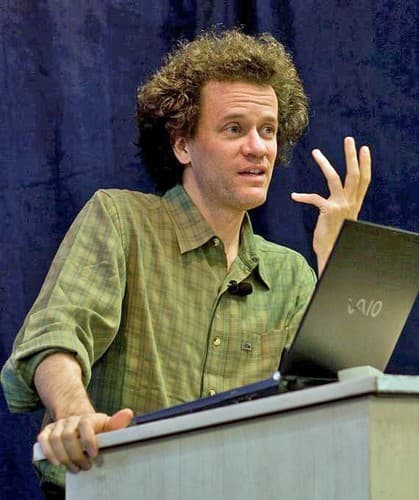
Yann Martel, is a Canadian author who wrote the Man Booker Prize–winning novel Life of Pi, an international bestseller published in more than 50 territories. It has sold more than 12 million copies worldwide and spent more than a year on the bestseller lists of the New York Times and The Globe and Mail, among many other best-selling lists. Life of Pi was adapted for a movie directed by Ang Lee, garnering four Oscars including Best Director and winning the Golden Globe Award for Best Original Score.







