“Be careful what you wish for, for you may get it.”
— A recurring theme and warning throughout the book, often linked to the consequences of pursuing desires.

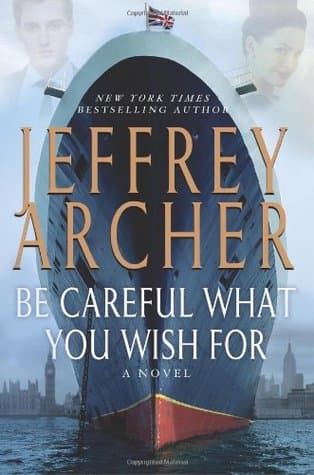
Jeffrey Archer (2014)
Genre
Fantasy / Romance
Reading Time
360 min
Key Themes
See below
Sign in to track this book
Amid ambition, betrayal, and sudden turns, the Clifton and Barrington families navigate the turbulent 1960s, battling for corporate control, a ruined engagement, and a mysterious new arrival.
The novel opens with Harry Clifton and his wife Emma rushing to St. Thomas' Hospital after their son, Sebastian, is in a horrific car accident. They learn two young men were in the car, and one has died. The difficult task is identifying the victim: Sebastian or his best friend, Bruno Martinez. Initially, the police identify Bruno as the deceased, based on his wallet found on the body. This brings great relief to the Cliftons, though they grieve for Bruno. However, a later investigation reveals a critical error in identification, leaving the families uncertain about their sons' fates and the true victim.
After Ross Buchanan's forced resignation as chairman of Barrington Shipping, Emma Clifton, a skilled board member, aims for the position. Her ambition is challenged by Don Pedro Martinez, Bruno's father, who wants to install his own candidate, Major Alex Fisher, as a puppet chairman. Martinez's true goal is to dismantle the Barrington family firm, especially as they begin an ambitious project to build a new luxury liner, the MV Buckingham. The board becomes a battleground for corporate control, with Emma fighting to protect her family's legacy.
In London, Harry and Emma's adopted daughter, Jessica Clifton, thrives after winning a scholarship to the Slade Academy of Art. There, she meets and falls in love with a fellow student, Clive Bingham. Their artistic connection quickly turns romantic, ending with Clive proposing marriage to Jessica. Both families are happy with the news, expecting a joyful union. The engagement seems to promise a good future for Jessica, offering stability and happiness away from the corporate struggles affecting her parents.
The happiness around Jessica and Clive's engagement is suddenly broken by Lady Virginia Fenwick's malicious interference. A long-time enemy of the Clifton and Barrington families, Lady Virginia visits Priscilla Bingham, Clive's mother, pretending to be an old friend. During her visit, she subtly spreads doubts and rumors about Jessica's true parentage and background. Her goal is to make Priscilla oppose the marriage, destroying Jessica's happiness and getting revenge on the Cliftons.
A new and mysterious figure, Cedric Hardcastle, a straightforward Yorkshireman, unexpectedly joins the board of Barrington Shipping. His sudden arrival causes significant disruption and suspicion among the current board members, who knew nothing of him. Hardcastle's presence changes the power struggle for the chairmanship. His first, and most important, decision will be to cast the deciding vote between Emma Clifton and Major Alex Fisher, a choice that will have big, unforeseen effects on the company's future and the families involved.
The crucial moment arrives at the Barrington Shipping board meeting where the new chairman is to be elected. The vote is close between Emma Clifton and Major Alex Fisher, with Cedric Hardcastle holding the swing vote. Hardcastle, after observing the various players, ultimately votes for Emma Clifton. This decision is a major victory for Emma and a significant defeat for Don Pedro Martinez and Major Fisher, ensuring the company's direction stays with the Barrington legacy and preventing Martinez from immediately taking control and dismantling it.
As the story continues, the lingering mystery of the car accident is finally solved. More forensic evidence, including dental records and personal items found on the body, confirms that Bruno Martinez died in the crash, not Sebastian Clifton. This revelation brings great relief to Harry and Emma, but also a renewed and deeper grief for Bruno, and immense guilt for their initial relief. The truth allows Sebastian to begin his long physical and emotional recovery, but the emotional scars of the event remain for both families.
Despite Lady Virginia Fenwick's malicious attempts to ruin her wedding, Jessica Clifton, supported by Clive and her family, remains firm. The truth about her adoption and her strong love for Clive proves stronger than the false scandals. Priscilla Bingham, initially influenced by Virginia, eventually sees through the manipulation. Lady Virginia's actions lead to her further isolation and public disgrace, as her vengeful nature alienates even her few remaining allies. Jessica's strength ensures her path to happiness remains intact, making her character stronger.
Enraged by Emma Clifton's victory in the chairmanship vote, Don Pedro Martinez refuses to accept defeat. His desire for revenge grows, and he begins to plan new, more subtle ways to undermine the Barrington Shipping Company and the Clifton family. He uses his wealth and connections to start a series of aggressive and unfair business moves, aiming to financially cripple the company and personally target key members of the Clifton and Barrington families. Martinez's actions ensure that the corporate battle is far from over, becoming a personal vendetta.
Under Emma Clifton's leadership, the development of the MV Buckingham, the new luxury liner, moves forward. However, the project faces many challenges, both internal and external. Don Pedro Martinez's ongoing sabotage efforts create financial and logistical difficulties, while the complexities of shipbuilding and design require constant attention. At the same time, the Clifton and Barrington families must deal with the emotional aftermath of the car accident, Jessica's earlier scandal, and the constant threat of Martinez's retaliation, forcing them to unite and protect their interests on multiple fronts as they move into the 1960s.
The Protagonist
Harry grapples with the potential loss of his son, finding resilience in his family bonds and offering steadfast support to Emma amidst corporate battles.
The Protagonist
Emma fights for and ultimately achieves the chairmanship of Barrington Shipping, proving her leadership and protecting her family's legacy.
The Supporting
Sebastian survives a near-fatal accident, recovering physically and emotionally while grappling with the loss of his best friend.
The Supporting
Jessica finds love and stands strong against attempts to sabotage her happiness, embracing her identity and future.
The Antagonist
Don Pedro Martinez's relentless pursuit of revenge against the Clifton and Barrington families leads to repeated corporate and personal clashes.
The Antagonist
Lady Virginia continues her pattern of malicious interference, ultimately facing further social isolation and the failure of her schemes.
The Supporting
Cedric Hardcastle's critical decision to support Emma Clifton for chairman shifts the balance of power within Barrington Shipping.
The Supporting
Clive remains a loyal and supportive partner to Jessica, proving his love in the face of adversity and marrying her.
The Mentioned
Bruno's accidental death serves as a catalyst for the central conflicts and emotional turmoil in the story.
Revenge is a main theme, primarily shown through Don Pedro Martinez's relentless effort to destroy the Barrington and Clifton families after his son Bruno's death. His actions, from corporate sabotage to personal attacks, drive much of the plot. In contrast, the Cliftons, despite suffering greatly, often try to move forward and protect their own, showing a path towards resilience rather than reciprocal vengeance. The identification of Bruno as the true victim, rather than Sebastian, changes the moral situation, allowing for potential, though difficult, forgiveness later in the series.
““Be careful what you wish for, because you might just get it.””
The novel explores how ambition and power corrupt and motivate people in the corporate world and in their personal lives. Emma Clifton's ambition to lead Barrington Shipping is a key force, showing her intelligence and determination to preserve her family's legacy. This contrasts sharply with Don Pedro Martinez's ruthless ambition to gain power over the company, not for its success, but for its destruction. The struggle for the chairmanship of Barrington Shipping exemplifies this theme, highlighting different ethical approaches to achieving and using power.
““Power is not a means, it is an end. One does not establish a dictatorship to safeguard a revolution; one makes the revolution in order to establish the dictatorship.””
At its heart, the novel shows the lasting strength and loyalty of the Clifton and Barrington families. Faced with personal tragedy, corporate attacks, and malicious social sabotage, family members consistently support each other. Harry and Emma's strong love and support for Sebastian and Jessica, and Emma's fight to protect the Barrington legacy, illustrate deep family bonds. Their ability to survive repeated problems and emerge stronger highlights their collective resilience against outside threats, reinforcing the idea that family is a strong defense against danger.
““Family is not an important thing. It's everything.””
The story often involves the revelation of truths and the results of deception. The initial wrong identification of the car accident victim creates great uncertainty and shows how easily truth can be hidden. Lady Virginia Fenwick's entire method is based on deception and spreading false rumors to cause harm. The eventual uncovering of the truth, whether about the accident or Jessica's parentage, has significant effects, showing that while deception can cause immediate damage, truth ultimately wins, often with painful but necessary clarity.
““A lie can travel halfway around the world while the truth is still putting on its shoes.””
The initial confusion over the car accident victim's identity drives early plot and conflict.
The mistaken identity of the car crash victim—initially thought to be Sebastian Clifton but later revealed to be Bruno Martinez—serves as a powerful plot device. This initial confusion creates immense suspense and emotional turmoil for the Clifton family, while simultaneously fueling Don Pedro Martinez's vengeful actions against them. The delayed revelation of the true victim prolongs the tension and ensures that the consequences of this error reverberate throughout the early chapters, directly influencing character motivations and the unfolding corporate battle.
The luxury liner project serves as a central object of conflict and ambition.
The MV Buckingham, the luxury liner that Barrington Shipping plans to build, functions as a MacGuffin. While its specific details are less important, its existence and the ambition to build it become a focal point for the corporate struggle between Emma Clifton and Don Pedro Martinez. The project represents the future of Barrington Shipping and acts as a tangible goal for Emma to protect and a target for Martinez to destroy, giving concrete stakes to their power struggle and driving many of the business-related plot points.
Cedric Hardcastle's decisive vote determines the leadership of Barrington Shipping.
Cedric Hardcastle's swing vote for the chairmanship of Barrington Shipping is a classic plot device used to create immediate suspense and a turning point in the corporate narrative. His unexpected arrival and the mystery surrounding his allegiances heighten the tension leading up to the vote. His ultimate decision to support Emma Clifton directly alters the power dynamics, ensuring her leadership and thwarting Don Pedro Martinez's immediate plans, thus propelling the story in a new direction and setting up future conflicts.
Lady Virginia's consistent interference fuels personal drama and conflict.
Lady Virginia Fenwick serves as a recurring malicious meddler, whose primary function is to stir up trouble and inflict personal suffering on the protagonists. Her deliberate attempt to sabotage Jessica and Clive's wedding by spreading damaging rumors is a prime example. This device ensures ongoing personal drama and emotional stakes, contrasting with the corporate battles. Her actions highlight themes of envy and social manipulation, providing a consistent source of antagonism that tests the characters' resilience and family bonds.
“Be careful what you wish for, for you may get it.”
— A recurring theme and warning throughout the book, often linked to the consequences of pursuing desires.
“Life is a game of chess. You have to think several moves ahead.”
— Lord Harvey's philosophy on strategic planning, particularly in business and social maneuvering.
“True love, like a rare jewel, is hard to find and even harder to keep.”
— A reflection on the rarity and fragility of genuine romantic connection amidst the characters' complex lives.
“Money doesn't buy happiness, but it certainly makes misery more comfortable.”
— Lord Harvey's cynical yet pragmatic view on the role of wealth.
“Revenge, like a double-edged sword, often wounds the wielder as much as the intended victim.”
— A cautionary thought on the destructive nature of seeking vengeance, as seen through various character arcs.
“The past is a foreign country; they do things differently there.”
— A character reflecting on how past decisions and societal norms differ from the present, influencing current events.
“A man's word should be his bond, but sometimes, a bond can be broken for the greater good.”
— Discussing the ethics of promises and when they might be justifiably disregarded, often in political or business contexts.
“Ambition is a powerful mistress, demanding much and offering little in return but the thrill of the chase.”
— A character's observation on the consuming nature of ambition and its often unfulfilling rewards.
“Even the strongest walls can crumble from within if the foundations are weak.”
— A metaphor used to describe the internal weaknesses that can lead to the downfall of seemingly powerful entities or people.
“Fate often plays its hand in the most unexpected ways, twisting paths you thought were straight.”
— Characters often muse on the unpredictable nature of destiny and how it alters their carefully laid plans.
“There are some wounds that time can never heal, only scar over.”
— A reflection on deep emotional pain and loss that leaves lasting marks despite the passage of time.
“Power corrupts, and absolute power corrupts absolutely. It's an old adage, but no less true.”
— Discussed in relation to the political machinations and ethical compromises made by powerful figures.
“To truly know a person, observe how they treat those who can do nothing for them.”
— A measure of true character, particularly when observing the wealthy and influential.
“Sometimes, the greatest victories are won not on the battlefield, but in the quiet chambers of the mind.”
— Highlighting the importance of psychological warfare, negotiation, and strategic thinking over direct confrontation.
Ready to see how well you understood this book? Take our interactive quiz with 10 questions.

Jeffrey Howard Archer, Baron Archer of Weston-super-Mare is an English novelist, life peer, convicted criminal, and former politician. Before becoming an author, Archer was a Member of Parliament (1969–1974), but did not seek re-election after a financial scandal that left him almost bankrupt.







