Biography coming soon.

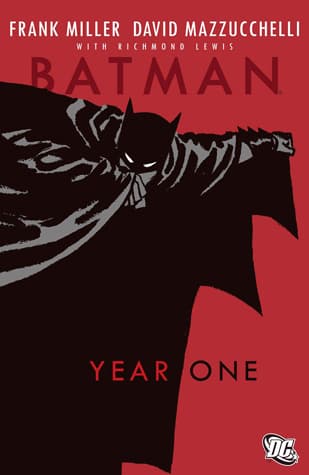
Frank Miller (1988)
Genre
Fantasy
Reading Time
12 Minutes
Key Themes
See below
Sign in to track this book
In a Gotham City drowning in corruption, a haunted Bruce Wayne and a principled Jim Gordon form a fragile alliance to become the city's only hope against the darkness.
Bruce Wayne returns to Gotham City after 12 years of training abroad. On the same train, Lieutenant James Gordon arrives, transferring to the corrupt Gotham Police Department. Both men immediately see the city's decay. Bruce tries to stop a mugging but is shot, realizing his current approach is not working. Gordon sees deep corruption within the police, especially from Detective Flass, who assaults him for not conforming. Gordon's pregnant wife, Barbara, worries about the city's dangers. Bruce begins to plan a more effective strategy, understanding he needs to become something more than just a man.
Bruce Wayne makes his first attempt at vigilantism in a makeshift costume, targeting street thugs. He saves a young prostitute, Holly, but is badly injured. He barely makes it back to Wayne Manor, bleeding and collapsing in his study. Lying on the floor, thinking about his failure and the need for a symbol to frighten criminals, a bat crashes through the window, landing near him. This provides the inspiration Bruce needs, solidifying his new identity: Batman. He realizes he must become a creature of the night, a terrifying legend.
Batman appears, targeting organized crime and corrupt officials. His initial actions are brutal and effective, frightening criminals and police alike. He interrupts a dinner party of Gotham's elite, including Mayor Hill and Commissioner Loeb, sending a clear message. Lieutenant Gordon, despite facing pressure from his corrupt colleagues, takes an immediate interest in the mysterious vigilante. He starts his own investigation into Batman's identity and methods, recognizing that Batman's actions are making a difference in the city's crime, even as police are ordered to catch him, dead or alive.
Commissioner Loeb mobilizes the police to capture Batman, seeing him as a threat to his authority and the corrupt system. Batman, though hunted, continues his campaign, stopping drug operations and making a public statement against the city's powerful figures. Gordon, increasingly fed up with the corruption, feels isolated. He begins an affair with his colleague, Detective Sarah Essen, for comfort. His moral compass remains steady, even as his corrupt peers target him for his integrity. He also faces a personal crisis as his wife, Barbara, expresses her fears.
Batman escalates his war, targeting Carmine 'The Roman' Falcone, a powerful crime boss. He infiltrates Falcone's penthouse, leaving him tied to his bedsheets, sending a humiliating message. Meanwhile, Gordon's investigation into Batman and police corruption deepens. He confronts Commissioner Loeb, accusing him of complicity in the city's crime. This confrontation further isolates Gordon but strengthens his reputation among the few honest officers. Gordon's actions show his commitment to justice, even at risk to his career and life.
Batman rescues a cat from a tree, showing a less violent side. This is contrasted by a dramatic event: Commissioner Loeb's men corner Batman in an abandoned building. A police helicopter crashes, leaving a hostage dangling. Despite being surrounded and under fire, Batman saves the hostage, showing his core principle of protecting the innocent. He successfully rescues the man, making the public's view of him as a simple criminal more complicated.
The police close in on Batman in an abandoned building. They use tear gas and overwhelming force, but Batman escapes. As the situation intensifies, Batman, badly injured, makes a daring escape by using a sonic device to summon a swarm of bats from the building's rafters. The bats disorient the police, allowing Batman to disappear. This escape solidifies his mythic status and shows his ingenuity, turning a desperate situation into a victory. Gordon, witnessing this, considers the nature of this enigmatic vigilante.
Detective Flass, seeking revenge for Commissioner Loeb, targets Gordon's family. While Barbara and their son, James Jr., are driving, Flass and his associates corner them, threatening their lives. Gordon, alerted, races to their aid. This incident pushes Gordon to his breaking point, cementing his resolve to fight corruption directly. It highlights the personal cost of his integrity and how far corrupt elements will go to silence dissent. Batman, watching, is also affected by this act against an innocent family.
As Flass and his men threaten Gordon's family, Batman intervenes. He brutally dispatches Flass and his cronies, saving Barbara and James Jr. Gordon, arriving on the scene, witnesses Batman's powerful action. This event marks a turning point in their relationship. An unspoken understanding forms between them. Gordon, though still upholding the law, now sees Batman as a necessary force for justice. Batman, in turn, sees Gordon as the only incorruptible element within the GCPD, setting the stage for their future collaboration.
Following the attack on his family, Gordon takes action, leading to the arrest and conviction of Detective Flass. Pressure on Commissioner Loeb intensifies, leading to his resignation and the start of a purge within the corrupt GCPD. Batman continues his campaign against Carmine Falcone, dismantling his operations and eroding his power. The combined efforts of the lieutenant and the dark knight begin to chip away at the corruption and crime that has plagued Gotham for years. The city, though still dangerous, shows signs of hope for change.
After Loeb's downfall, Gordon, now a captain, works closely with the new District Attorney, Harvey Dent. Gordon receives a cryptic phone call from an unknown individual, hinting at a new, more dangerous criminal emerging in Gotham. The caller mentions a 'freak' who uses gas and targets people. This brief scene teases future threats, hinting at the Joker and other Batman villains, signifying that Gotham's darkness is far from purged, and new evils are always on the horizon for Batman and Gordon.
The Protagonist
Transforms from a disillusioned heir into the fully realized, fear-inducing symbol of Batman, finding his purpose and method for combating Gotham's entrenched corruption.
The Protagonist/Supporting
Begins as an idealistic outsider, endures personal and professional attacks, and evolves into a respected captain who understands the necessity of an extra-legal force like Batman.
The Supporting
Transforms from a struggling prostitute/dominatrix into the costumed cat burglar, Catwoman, finding empowerment and a new direction inspired by Batman's presence.
The Supporting
Remains a constant, supportive figure, adapting to Bruce's new identity and providing essential aid and counsel.
The Antagonist
Serves as the embodiment of Gotham's corrupt police force, eventually falling from power due to the combined efforts of Batman and Gordon.
The Antagonist
Begins as the untouchable crime lord of Gotham, only to see his empire systematically dismantled by Batman's relentless campaign.
The Antagonist
Serves as a primary example of police corruption, escalating his antagonism towards Gordon until his eventual arrest and downfall.
The Supporting
Remains a supportive figure for Gordon, experiencing the direct threat of Gotham's corruption and being saved by Batman, solidifying the vigilante's role in their lives.
The Supporting
Introduced as a new, upright District Attorney, signifying hope for legal reform and setting the stage for future narratives.
Gotham City is a central character, shown as a metropolis consumed by corruption, from its highest officials to street thugs and the police. This widespread decay makes traditional law enforcement useless, requiring a vigilante like Batman. The city's grim atmosphere reflects its moral rot, making the fight for justice seem almost impossible, but also showing the great need for it. The story constantly reinforces that Gotham is a sick city needing a cure.
“Gotham is a sick city. Sick at its heart. It needs a cure. I will be the cure.”
The story explores the relationship between law enforcement and vigilante justice. Lieutenant Gordon represents justice within the law, upholding it despite overwhelming corruption. Batman operates outside the law, believing traditional methods are not enough for Gotham's evil. The story questions if true justice is possible through legal means when the system itself is broken, suggesting that sometimes, a more brutal, extra-legal force is needed. Their eventual, uneasy alliance shows a practical compromise between these two approaches.
“I've tried to be a good cop. I've tried to be a good husband. But the city... it's too much. Too much.”
A core theme is the transformation of a man into a symbol. Bruce Wayne realizes that being a skilled fighter is not enough; he needs to become something more, something to frighten criminals. The bat, initially a random occurrence, becomes a potent, terrifying symbol of his war on crime. This transformation shows that symbols can be more powerful and lasting than individuals, inspiring fear and hope. Batman is not just a man, but an idea, a force that transcends the individual, making him a lasting legend.
“I shall become a bat! I shall become a creature of the night! They will fear me!”
The story examines the moral complexities faced by its characters. Gordon, a good man, makes compromises, such as his affair with Sarah Essen, and reluctantly accepts Batman's extra-legal methods to achieve justice. Batman operates in a morally ambiguous zone, using intimidation and violence, though he does not kill. Even Selina Kyle, as Catwoman, embodies this ambiguity, acting as a criminal but with complex motives. This theme suggests that in a city as corrupt as Gotham, pure morality is often impossible, and difficult choices must be made to create change.
“Maybe I can't be a good cop. Maybe I can't be a good husband. But I can be a good man. I can try.”
The story shows the personal and physical cost of Bruce Wayne's choice to become Batman. He endures brutal injuries, constant danger, and a life of isolation. The story emphasizes the physical toll, with Bruce often battered and bleeding. Beyond the physical, there is a psychological cost, as he dedicates his entire being to his mission, sacrificing personal relationships and a normal life. Similarly, Gordon's integrity costs him professionally and endangers his family. This theme shows that fighting for justice, especially outside the system, demands significant sacrifice.
“Every bone in my body screams. Every muscle aches. But the mission... the mission is everything.”
Provides deep insight into character motivations and perspectives.
Both Bruce Wayne/Batman and James Gordon frequently narrate their experiences through internal monologues. This device allows readers direct access to their thoughts, fears, motivations, and moral struggles. It provides a nuanced understanding of their individual perspectives on Gotham's corruption and their respective roles in combating it. The contrasting voices highlight their different approaches to justice while revealing their shared dedication. This technique also builds tension and suspense, drawing the reader intimately into their psychological states.
Transforms a creature into a powerful, fear-inducing icon.
The bat serves as a profound symbol throughout the story. Initially, it's a mundane creature that accidentally crashes through Bruce Wayne's window, but this event triggers Bruce's epiphany, leading him to adopt the bat as his personal emblem. The bat then transforms into a symbol of fear for criminals, a creature of the night that preys on their superstitions. It represents the primal, the dark, and the unknown, perfectly encapsulating Batman's methodology of striking terror into the hearts of Gotham's underworld. It's a symbol born from a moment of failure and transformed into an icon of power.
Highlights contrasting approaches to fighting corruption.
The narrative cleverly juxtaposes the journeys of Bruce Wayne/Batman and James Gordon. Bruce operates in the shadows, outside the law, using fear and brute force. Gordon, conversely, works within the corrupt legal system, striving to uphold the law and inspire change from within. Their parallel narratives highlight the dual nature of the fight for Gotham's soul. This device allows the story to explore different facets of justice and heroism, ultimately demonstrating that both approaches, though distinct, are necessary for the city's salvation, leading to their eventual, reluctant partnership.
Gotham's pervasive decay acts as a formidable antagonist.
Gotham City itself is presented as a living, breathing entity, deeply corrupt and decaying. It's not just a backdrop but an active antagonist, constantly challenging the protagonists. The widespread crime, the compromised institutions, and the general moral rot of the city create the very conditions that necessitate Batman's existence and test Gordon's resolve. This device establishes a powerful sense of place and amplifies the stakes, making the fight for justice feel like a battle against the very soul of the city, rather than just against individual villains.
Ready to see how well you understood this book? Take our interactive quiz with 10 questions.
Biography coming soon.







