“I was a boy of no more than fifteen years of age when the circumstances occurred which had so prodigious an influence on my career.”
— Barry's opening reflection on his early life and how a particular event shaped him.

William Makepeace Thackeray (1844)
Genre
Historical Fiction
Reading Time
6-8 hours
Key Themes
See below
Sign in to track this book
Barry Lyndon, a morally ambiguous character, rises through charm and deceit in 18th-century Europe, only to face an equally dramatic downfall.
Redmond Barry, a spirited and somewhat reckless young Irishman from a respectable but poor gentry family, is in love with his beautiful cousin, Nora Brady. Nora, however, is a flirt who prefers Captain John Quin, a wealthy English officer. In a jealous rage, Redmond challenges Captain Quin to a duel. He believes he has killed Quin and is forced to flee, but the duel was rigged by his family to prevent him from marrying Nora. Unaware of this, Redmond begins a life of adventure, leaving his mother and home.
After fleeing Ireland, Redmond is robbed of his money. Desperate, he enlists in the Prussian army under Frederick the Great, fighting in the Seven Years' War. He experiences the brutal realities of combat and moral degradation. He has a brief affair with Lischen, a German vivandière, who helps him desert the army. They plan to escape together, but Lischen betrays him, taking his money and leaving him alone. Redmond is recaptured but escapes the Prussian camp again, this time disguised as a civilian courier.
After his second escape from the Prussian army, Redmond takes on the identity of a dead Prussian officer, the Chevalier de Balibari, whose uniform and papers he acquires. Using this new persona, he travels through Europe to Berlin. There, the British Secret Service recruits him as a spy, posing as a Prussian officer to infiltrate French circles. He proves skilled at deception and manipulation, using his charm and wit to gather information. This period marks a shift in his character, as he fully embraces a life of artifice and opportunism, driven by a desire for wealth and social advancement.
As the Chevalier de Balibari, Redmond travels to various European courts and resorts, creating an image of a dashing, mysterious nobleman. He soon meets the Chevalier de Magny, a professional card sharper. Magny, recognizing Barry's quick wit, takes him under his wing, teaching him how to cheat at cards and dice. Together, they become a successful team, preying on wealthy, unsuspecting aristocrats across Europe. Barry becomes skilled at deception, developing a keen eye for human weakness and a ruthless way of exploiting it for money.
While traveling, Barry encounters the wealthy Countess of Lyndon, an English widow of great beauty and fortune. Lady Lyndon is fragile, recently widowed, and has a young, sickly son, Lord Bullingdon. Barry, always an opportunist, immediately decides to marry her, not for love, but for her wealth and social standing. He uses all his charm and manipulative tactics to win her affection, despite her family's disapproval and her emotional vulnerability. He sees her as his path to the aristocratic life he wants.
Through relentless pursuit, Barry convinces Lady Lyndon to marry him, much to the dismay of her family, especially her late husband's brother, the Hon. Mr. Wenham. The marriage is a triumph for Barry, giving him immense wealth and a courtesy title. He quickly spends Lady Lyndon's fortune on lavish living, gambling, and trying to buy political influence. Despite his spending and often callous treatment of his wife, they have a son, Bryan. Barry dotes on Bryan, seeing him as the heir to his new status and the symbol of his aspirations for a legitimate place in society, while neglecting Lord Bullingdon.
From the start, Barry shows open contempt for Lady Lyndon's son from her previous marriage, Lord Bullingdon. He resents Bullingdon as an obstacle to his own son Bryan's inheritance and treats him with disdain, often abusing him physically and verbally. He actively tries to undermine Bullingdon's education and social standing, attempting to drive him away. Bullingdon, a sensitive and principled young man, grows to despise Barry. Their relationship is a constant source of tension in the household, contributing to Lady Lyndon's declining health and increasing misery. Barry's actions here highlight his self-serving nature and lack of empathy.
Now calling himself 'Barry Lyndon,' Redmond becomes obsessed with acquiring a legitimate title and a seat in Parliament. He spends huge sums of Lady Lyndon's money trying to bribe politicians and influence powerful figures to grant him an Irish peerage. He hosts lavish parties, lends money to influential but unreliable individuals, and engages in various schemes, all to elevate his social standing beyond that of a mere adventurer. Despite his efforts and financial sacrifices, his attempts are consistently rejected due to his dubious past, his reputation as a rogue, and the snobbery of the English aristocracy. He remains an outsider, a newcomer, despite his wealth.
Barry's one true affection is for his son, Bryan. He spoils the boy terribly. Tragically, Bryan dies in a riding accident, a devastating blow that shatters Barry's spirit. The death of his son robs Barry of his main motivation and his only source of pride. He falls into a deep depression, and his cruelty and recklessness intensify. This loss marks the irreversible turning point in his fortunes. Without Bryan, his hopes for a dynastic legacy are crushed, and his already strained relationship with Lady Lyndon worsens, as she blames him for Bryan's spoiled upbringing and subsequent death.
After years of Barry's abuse, Lord Bullingdon, now a young man, returns from abroad, determined to reclaim his place and avenge his mother. He challenges Barry to a duel, a direct confrontation that Barry, despite his past bravado, is reluctant to accept. The duel takes place, and Bullingdon wounds Barry in the leg. This injury, though not fatal, is important, marking the beginning of Barry's physical and social incapacitation. It also empowers Bullingdon, who now has the moral and physical advantage, marking a decisive shift in power within the Lyndon household.
Following the duel and Bryan's death, Lady Lyndon's family, led by the Hon. Mr. Wenham and Lord Bullingdon, increases their efforts to remove Barry from her life and protect her remaining fortune. They initiate numerous lawsuits, challenging Barry's control over her estates and accusing him of mismanagement and cruelty. Barry, already weakened by his injury and the loss of Bryan, becomes increasingly isolated. His former associates desert him, and his legal battles drain his remaining resources. His attempts to fight back are useless, as his reputation precedes him, and the law is now against him.
Overwhelmed by legal defeats and growing debts, Barry Lyndon is arrested and imprisoned in the Fleet Prison. Stripped of his wealth, status, and freedom, he spends the rest of his life in squalor and despair. He occasionally receives small payments from Lady Lyndon, sent through her lawyers, which serve as a bitter reminder of his former life and her passive charity. Barry Lyndon dies after nineteen years in prison, a broken, forgotten man, his grand ambitions reduced to nothing. His story concludes with a clear moral: a life built on deceit and greed ultimately leads to ruin.
The Protagonist
Barry rises from poverty through cunning and opportunism, achieving immense wealth and a title, but his inherent flaws and cruelty lead to his complete ruin and imprisonment.
The Supporting
Lady Lyndon descends from a wealthy, respected widow into a state of chronic illness and despair due to Barry's abuse, eventually finding a measure of peace after his downfall.
The Antagonist (to Barry)
Bullingdon grows from a helpless victim of Barry's abuse into a formidable adversary who ultimately secures Barry's defeat and imprisonment.
The Supporting
Bryan is born and lives as the pampered object of Barry's affection, only to die tragically, triggering Barry's downfall.
The Supporting
Nora acts as a catalyst for Barry's initial departure from home, setting him on his life of adventure.
The Mentioned
Quin's role is primarily as a catalyst for Barry's initial journey and subsequent transformation into an adventurer.
The Supporting
Magny serves as a mentor figure, introducing Barry to the sophisticated world of professional gambling and cementing his skills in deception.
The Supporting
Wenham consistently opposes Barry, ultimately leading the legal charge that brings about Barry's downfall.
The novel explores the rigid class structures of 18th-century Europe and Barry's relentless, yet futile, attempts to rise above his birth. Barry, despite gaining immense wealth and a title through marriage, is never truly accepted by the aristocracy. His vulgarity, lack of genuine breeding, and dubious past always reveal his origins. Thackeray shows that while money can buy comfort and even temporary status, it cannot buy genuine respect or a legitimate place in the established social order. Barry's repeated failures to secure a peerage, despite lavish spending, show the impenetrable barriers of inherited class, highlighting the superficiality of his 'gentlemanly' facade. He is always an outsider, a newcomer.
“I was Redmond Barry of Ballybarry, and I was going to push my fortune in the world, and make a name for myself, which I knew I could do.”
Barry Lyndon's life is a cautionary tale about unchecked ambition and the destructive power of greed. His initial desire to 'make a name' for himself quickly becomes a relentless pursuit of wealth and status at any cost. This greed corrupts his character, leading him to abandon morality, engage in deceit, exploit the vulnerable (Lady Lyndon), and abuse those who stand in his way (Lord Bullingdon). The novel shows how such ambition, without ethical considerations, ultimately leads to personal ruin and isolation. Barry's obsession with material gain blinds him to genuine human connection and happiness, leaving him with nothing but bitterness in the end.
“What does a man live for but to get money and to spend it?”
Deception is central to Barry's character and his rise in society. He constantly reinvents himself, adopts false identities, and manipulates others to achieve his goals. From the rigged duel to his cardsharping, his life is a performance of calculated lies. However, the novel also examines Barry's self-deception. He genuinely believes himself to be a 'gentleman' and a victim of circumstance, consistently rationalizing his immoral actions and blaming others for his misfortunes. His unreliable narration highlights this, as he tries to present himself in a favorable light despite overwhelming evidence of his villainy. This self-deception prevents him from learning from his mistakes and ultimately contributes to his downfall.
“I never did a wrong thing in my life, that I did not pay for it handsomely.”
The entire novel is narrated in the first person by Barry Lyndon himself, writing from debtor's prison. This narrative choice is a powerful device, highlighting the subjectivity of truth and the human tendency towards self-justification. Barry consistently presents himself as a wronged hero, a victim of fate and the malice of others, while minimizing or justifying his own cruelties and deceptions. Thackeray uses this unreliability to expose Barry's true character to the reader, forcing us to read between the lines and question his version of events. This technique creates a rich irony, as Barry's attempts to portray himself favorably only further reveal his moral bankruptcy.
“It is true, I was a little wild; but what young man is not?”
While Barry struggles to enter the aristocracy, the novel critiques the institution itself. Thackeray portrays many of the 'old families' as decadent, morally weak, and susceptible to opportunists like Barry. Lady Lyndon is an example: wealthy but emotionally fragile and unable to manage her own affairs. The idle rich often fall prey to gamblers and schemers, highlighting their own vulnerabilities and the superficiality of their privileged existence. The novel suggests that the aristocracy, while clinging to its inherited status, is internally decaying, making it open to exploitation by ambitious, if unprincipled, outsiders.
“The great world, you see, is composed of a vast number of small ones, in each of which a man may, if he chooses, play a great or a small part.”
Barry Lyndon narrates his own story, consistently presenting a biased and self-serving account.
The entire novel is told from Barry Lyndon's first-person perspective, written as a memoir from his prison cell. This device is crucial, as Barry consistently attempts to justify his actions, portray himself as a victim, and inflate his own importance, despite clear evidence to the contrary. The reader is tasked with discerning the truth behind his embellished and often self-deceptive narrative. This technique creates dramatic irony, as Barry's attempts to appear noble only expose his true, flawed character, making the reader critically engage with his version of events and highlight the theme of self-deception.
A recurring motif representing honor, conflict, and a catalyst for Barry's changing fortunes.
The duel serves as a significant plot device throughout the novel. The initial, rigged duel with Captain Quin forces Barry to flee Ireland and begin his adventures. Later, the duel with Lord Bullingdon marks a turning point, symbolizing Barry's declining power and Bullingdon's ascendancy. These confrontations represent not only physical contests but also clashes of honor, social status, and moral principles. While Barry often uses the threat of dueling to assert his 'gentlemanly' status, the final duel ultimately leads to his injury and contributes directly to his downfall, showing the ultimate futility of his aggressive posturing.
Used to provide exposition, confirm events, and reveal character motivations, often contrasting with Barry's narrative.
Thackeray frequently intersperses Barry's first-person narrative with excerpts from letters, legal documents, and genealogical records. These documents serve to corroborate or contradict Barry's version of events, providing an external, more objective perspective. For example, the letters from Lady Lyndon's family reveal their genuine concern and Barry's true character as seen by others. This device underscores the unreliable narrator theme, allowing the reader to compare Barry's subjective account with more factual evidence, thereby deepening the reader's understanding of the plot and the characters' true motivations.
A backdrop for Barry's adventures, showcasing various societal strata and opportunities for advancement.
The novel's extensive European setting, encompassing battlefields, princely courts, and gambling houses across Germany, France, and England, serves as a crucial plot device. It provides Barry with a diverse range of environments and characters through which he can hone his skills in deception, adapt his persona, and pursue his ambitions. The 'Grand Tour' provides a stage for his reinventions, allowing him to shed his Irish identity and assume the guise of a 'Chevalier.' This shifting landscape highlights the fluid nature of identity and morality in a world where appearances often trump substance, and where an opportunist can thrive by exploiting different social codes.
“I was a boy of no more than fifteen years of age when the circumstances occurred which had so prodigious an influence on my career.”
— Barry's opening reflection on his early life and how a particular event shaped him.
“This of course was very wicked of me; but I was a child, and did not know any better, and I have no doubt that I should have gone on in the same wicked way, had not Providence interfered.”
— Barry reflecting on his early mischievous behavior and attributing a turning point to divine intervention.
“I have often thought since, what a lucky thing it was for me that I was born a gentleman, and in a country where the laws are so mild.”
— Barry musing on the advantages of his birth and nationality, despite his often questionable actions.
“A man who has but a shilling in his pocket, and a good coat on his back, is a gentleman for all that.”
— Barry's cynical view on the superficiality of gentility, equating it more with appearance than character.
“I had a natural genius for play, and in a very short time I mastered all the secrets of the game.”
— Barry describing his inherent talent for gambling and card sharping.
“There are some men who are born to command, and others to obey. I was of the former sort.”
— Barry's self-assured declaration of his natural leadership and ambition.
“Every man has his peculiarities, and mine was a passionate love for money.”
— Barry admitting to his primary motivation and driving force throughout his life.
“It is not the business of a gentleman to be a philosopher.”
— Barry dismissing intellectual pursuits as beneath his station or practical concerns.
“I never was a man to grudge a good action, if it cost me nothing.”
— Barry's self-serving definition of generosity and kindness.
“I saw that the world was a great oyster, which I was to open with my sword.”
— Barry's metaphor for his ambitious and aggressive approach to conquering society and fortune.
“Ah, what a different man I should have been, had I been born in a different sphere!”
— Barry lamenting what he perceives as the limitations placed upon him by his birth, despite his rise.
“I had been a man of pleasure, and had lived a life of pleasure, and I had no right to complain.”
— Barry reflecting on his past life of indulgence and accepting the consequences, albeit with a touch of self-pity.
“The greatest pleasure I ever had was to be revenged on an enemy.”
— Barry revealing a core aspect of his character: his vengeful nature.
“It is an error to suppose that any system of education can make a gentleman.”
— Barry's belief that true gentility is inherent or acquired through experience, not formal learning.
“And so my life ended, as it had begun, in a prison.”
— Barry's final, poignant reflection on the cyclical nature of his life, ending where it effectively started.
Ready to see how well you understood this book? Take our interactive quiz with 10 questions.
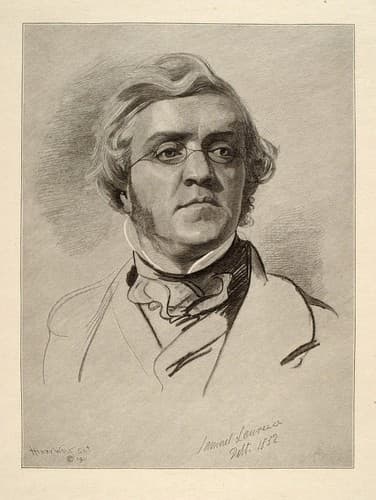
William Makepeace Thackeray was a British novelist, author and illustrator. He is known for his satirical works, particularly his 1848 novel Vanity Fair, a panoramic portrait of British society, and the 1844 novel The Luck of Barry Lyndon, which was adapted for a 1975 film by Stanley Kubrick.







