“No man ever threw away life so recklessly but that he was sorry at the last, for having been so prodigal.”
— Reflecting on the value of life, even when seemingly wasted.

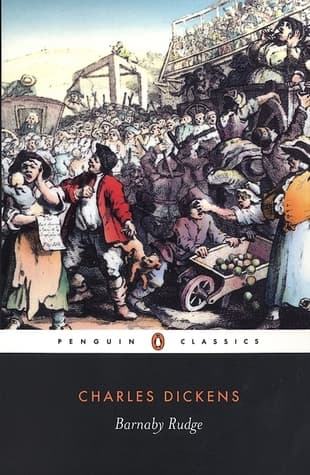
Charles Dickens (1840)
Genre
Historical Fiction
Reading Time
15-20 hours
Key Themes
See below
Sign in to track this book
During London's terrifying 1780 anti-Catholic riots, a simple man, his prophetic raven, and a forbidden love story become entangled in a chilling look at mob madness and fragile innocence.
The story begins at the Maypole Inn, owned by John Willet, whose son Joe wants independence. Gabriel Varden, a locksmith, and his apprentice, Sim Tappertit, are regulars. The scene is soon overshadowed by a murder twenty-two years earlier, involving the local estate's steward, Reuben Haredale. His brother, Geoffrey Haredale, now stern and bitter, still seeks the killer. On the murder's anniversary, a stranger named Barnaby Rudge, a simple young man, and his mother, Mary Rudge, visit the inn with Barnaby's raven, Grip. Later, a mysterious individual named Solomon Daisy says he saw someone like the murdered steward on the crime night, renewing interest.
The story moves to the Varden household in Clerkenwell. Gabriel Varden is a kind, honest locksmith, but his wife, Martha, is domineering, and his daughter, Dolly, is beautiful but somewhat vain. Sim Tappertit, Gabriel's apprentice, is a hot-headed, ambitious young man who sees himself as a leader of a secret group called the 'Prentice Knights. He is infatuated with Dolly Varden, who often teases him despite his feelings. Sim's rebellious spirit and dissatisfaction with his social standing are clear, hinting at his role in the political unrest that will soon engulf London, driven by his wish for recognition.
Frustrated by his father's constant belittling and his unrequited love for Dolly Varden, Joe Willet leaves the Maypole Inn to enlist in the army. This departure marks his shift from a subservient son to an independent man. Meanwhile, Emma Haredale, Geoffrey Haredale's niece and the murdered Reuben Haredale's daughter, returns to her uncle's care at The Warren. She is compassionate and refined, loyal to her uncle. Her arrival sets up complex relationships and conflicts, especially with Edward Chester, whose father, Sir John Chester, is a long-time enemy of Geoffrey Haredale.
Sir John Chester, a charming but cold and manipulative aristocrat, tries to control his son, Edward Chester, for his own social and financial gain. Edward, however, truly loves Emma Haredale, a love forbidden due to the deep animosity between their families. Sir John actively plots to separate them, seeing Emma as unsuitable and preferring Edward to marry a wealthy heiress. Edward's defiance of his father and his steady affection for Emma become a central romantic conflict, showing themes of class, family duty, and personal desire against a background of growing social unrest.
Hugh, a wild, unkempt, and seemingly savage man, works as a servant at The Warren, Geoffrey Haredale's estate. His origins are mysterious, and he deeply resents society. He is often with a sinister, enigmatic character known only as 'Gashford,' who is Lord George Gordon's secretary. Hugh's presence at The Warren is unsettling, and he is later revealed to be connected to a dark secret about the estate and the Haredale family. His untamed nature makes him a dangerous figure, easily swayed by the chaos and violence promised by the growing Protestant Association.
Lord George Gordon, an eccentric and fanatical nobleman, leads the Protestant Association. He is driven by an obsessive anti-Catholic zeal, believing the Catholic Relief Act of 1778, which granted some concessions to Catholics, weakens the Protestant establishment. Gordon incites public fervor through inflammatory speeches and pamphlets, manipulating people's fears and prejudices. His secretary, Gashford, a cunning and manipulative individual, helps organize the movement, using Gordon's fanaticism for his own ends. The Gordon Riots begin, fueled by religious intolerance and political opportunism.
As Lord George Gordon's influence grows, London becomes ready for unrest. The 'Prentice Knights, led by Sim Tappertit, become a ready force for disorder, eager to assert themselves. Barnaby Rudge, with his simple mind, is easily drawn into the excitement, seeing the demonstrations as a grand adventure, unaware of their destructive potential. Mary Rudge, his mother, tries to protect him, sensing the danger. Geoffrey Haredale, a staunch Catholic, becomes a target of the rising anti-Catholic feeling, further increasing tension between him and Sir John Chester, who subtly encourages the unrest for his own cynical amusement.
The Gordon Riots erupt in London with terrifying force. Thousands of enraged Protestants, incited by Lord George Gordon and his lieutenants, including Hugh and Sim Tappertit, march on Parliament and then unleash destruction across the city. Catholic chapels, homes, and businesses are targeted, looted, and burned. Newgate Prison is stormed, and its prisoners, including Barnaby Rudge, unjustly imprisoned, are freed. The mob, characterized by mindless brutality, becomes a force of nature, sweeping away all order and reason. Authorities are overwhelmed, and London descends into anarchy, with fire and violence everywhere.
The riots bring immense suffering to the main characters. The Maypole Inn is attacked and looted, forcing John Willet and his family to flee. The Warren, Geoffrey Haredale's estate, is burned, and Emma Haredale and Dolly Varden are abducted by rioters, including Hugh and Sim Tappertit. Gabriel Varden, the locksmith, bravely tries to rescue them, showing his quiet courage amid the terror. Joe Willet, now a soldier, returns to find his home destroyed and his loved ones in danger, showing the personal cost of the widespread civil unrest. Mary Rudge is heartbroken and terrified for Barnaby, who is caught in the mob's destructive fervor.
Amid the chaos of the riots, the long-standing mystery of Reuben Haredale's murder is finally solved. It is revealed that Barnaby Rudge's father, also named Barnaby Rudge, was the murderer. He had killed Reuben Haredale for money and then, believing he had also killed Solomon Daisy, fled, leaving his wife and son to think him dead. He returns to London during the riots, living under a false identity. Hugh is also revealed as the illegitimate son of Barnaby Rudge Sr. and a local woman, making him Barnaby Rudge Jr.'s half-brother. This revelation links the past crime directly to the present devastation, emphasizing the novel's themes of inherited guilt and past consequences.
Joe Willet, now a seasoned soldier, helps rescue Emma Haredale and Dolly Varden from the rioters. He confronts Sim Tappertit and Hugh, showing his new maturity and bravery. The military eventually restores order to London, and the law fully punishes the rioters. Many are arrested, tried, and condemned. Lord George Gordon is imprisoned, and his followers, including Sim Tappertit and Hugh, face the death penalty for their crimes. The story shifts from mob anarchy to the swift, often brutal, process of justice.
Barnaby Rudge Sr. is captured and condemned for his past crimes, finally bringing justice for Reuben Haredale's murder. Sim Tappertit and Hugh are executed for their roles in the riots, paying the ultimate price. Sir John Chester, despite his manipulative nature, avoids direct punishment for subtly instigating the riots, but his plans ultimately fail. Geoffrey Haredale, having lost everything, seeks revenge on Sir John, leading to a fatal duel where both men die. Edward Chester and Emma Haredale are finally free to marry, and Joe Willet and Dolly Varden also find happiness together after much hardship. Barnaby Rudge, spared execution due to his simple-mindedness, lives a quiet life with his mother, forever marked by the events.
The Protagonist
Barnaby starts as a naive, sheltered individual, is swept into the destructive riots, and ultimately finds a quiet, protected existence, forever marked by his experiences.
The Supporting
Haredale begins as a man consumed by the past and vengeance, endures the destruction of his home and the loss of his niece, and ultimately succumbs to his fatal feud with Sir John Chester.
The Antagonist
Sir John consistently manipulates and schemes, successfully avoiding direct consequences for much of the story, but ultimately meets his end in a duel fueled by his own machinations.
The Protagonist
Edward rebels against his father's control, proves his loyalty and courage, and eventually achieves happiness with Emma after overcoming numerous obstacles.
The Protagonist
Emma endures separation, abduction, and the destruction of her home, ultimately finding peace and marriage with Edward.
The Supporting
Gabriel remains a steadfast, honest man throughout the turmoil, demonstrating quiet courage and ultimately finding a degree of domestic peace.
The Supporting
Dolly evolves from a vain and flirtatious girl to a more mature and appreciative woman, eventually marrying Joe Willet.
The Supporting
Joe transforms from a meek and undervalued son into a brave and independent soldier, eventually winning Dolly's heart.
The Antagonist
Sim progresses from a pretentious apprentice to a violent riot leader, ultimately suffering a brutal end as a consequence of his actions.
The Antagonist
Hugh descends further into violence and chaos as a leader in the riots, eventually meeting a grim end for his crimes.
The Antagonist
Lord Gordon orchestrates the riots through his fanatical zeal, leading to widespread destruction, and ultimately faces imprisonment for his role.
This is the central theme, clearly shown through the Gordon Riots. Dickens demonstrates how collective emotion, fueled by fanaticism (Lord George Gordon's anti-Catholicism) and unchecked passion (Sim Tappertit's desire for power, Hugh's savage resentment), can lead to irrationality, brutality, and widespread destruction. The mob loses individual conscience, becoming a monstrous entity that burns, loots, and murders without remorse, as seen in the burning of Newgate Prison and The Warren. The novel warns against the dangers of letting go of individual reason for the overwhelming, often destructive, force of the crowd.
“From every corner of the vast metropolis, rose the cry of 'No Popery,' and the crowd swelled and grew, and were a-moving, like a great sea.”
The novel explores various forms of justice: the delayed justice for Reuben Haredale's murder, the swift and often harsh punishment against the rioters, and Geoffrey Haredale's personal vengeance. The resolution of the Haredale murder mystery, with Barnaby Rudge Sr. finally facing justice, shows that crimes, no matter how old, will eventually come to light. Conversely, the executions of Sim Tappertit and Hugh are a stark reminder of the consequences of lawlessness. The fatal duel between Haredale and Sir John Chester highlights the destructive nature of personal revenge, suggesting that while justice may be served, it often comes at a terrible cost.
“There are some things that are never forgotten, and some crimes that are never forgiven.”
The desire for power and social standing drives many characters to corruption and cruelty. Sir John Chester manipulates everyone, including his own son, for social advancement and financial gain. Sim Tappertit's ambition to be a leader, however misguided, draws him into the destructive 'Prentice Knights and the riots. Lord George Gordon's power over the masses, fueled by his fanaticism, leads to widespread death and destruction. Dickens shows how even seemingly noble causes, when pursued with unchecked ambition and disregard for human life, can become deeply corrupting.
“He played with men as with toys, and found his greatest pleasure in their most serious troubles.”
Barnaby Rudge, with his simple mind and childlike innocence, embodies this theme. He is vulnerable to manipulation and easily swept into the riots, seeing them as a grand adventure rather than a destructive force. His mother, Mary Rudge, constantly tries to protect his innocence from the harsh realities of the world and his father's dark past. Emma Haredale and Dolly Varden also represent innocence, as they are abducted and endangered by the mob, becoming victims of the era's cruelty. The theme shows how the most vulnerable are often the first casualties of social and political upheaval.
“Poor Barnaby! He was a child in sense, though a man in years.”
This theme is clear in the relationships between fathers and sons, particularly Sir John and Edward Chester, and John and Joe Willet. Edward struggles to balance his love for Emma with his father's manipulative demands for a financially beneficial marriage. Joe Willet wants independence and respect, which his domineering father, John, denies him, leading Joe to leave home. The novel explores the tension between parents' expectations for their children and the children's own desires for love, freedom, and self-determination, often concluding that true happiness requires breaking free from oppressive family ties.
“Every man has his own way to make, and his own bread to earn.”
A long-unsolved crime that drives the plot and connects key characters.
This twenty-two-year-old murder is introduced early in the novel and serves as a central mystery. It fuels Geoffrey Haredale's bitterness and sets up the conflict with Sir John Chester. The eventual revelation of Barnaby Rudge Sr. as the killer, and Hugh's connection as his son, intricately links the past to the present, revealing the deep-seated origins of some characters' fates and motivations. It provides a strong narrative backbone, weaving together individual destinies with broader historical events, and ultimately bringing a sense of closure to the complex web of relationships.
Barnaby Rudge's pet raven, a symbol of innocence and an uncanny observer.
Grip is more than just a pet; he acts as a symbolic character, often echoing the unfolding events with his intelligent mimicry and ominous pronouncements. His presence emphasizes Barnaby's childlike innocence and his detachment from the harsh realities of the world. Grip's ability to imitate human speech and his seemingly knowing glances add an element of the uncanny and prophetic, sometimes foreshadowing events or highlighting the absurdity of human behavior. He serves as a loyal, if unusual, companion to Barnaby, representing a pure, wild spirit amidst the chaos.
A secret society of apprentices, manipulated into becoming a force for disorder.
Led by Sim Tappertit, this secret society initially serves as an outlet for the apprentices' frustrations and romanticized notions of rebellion. It provides a ready-made structure and a pool of willing participants for the Gordon Riots. The Knights embody the restless, easily swayed youth of London, whose misguided idealism and desire for power make them susceptible to demagoguery. Their transformation from a relatively harmless club into a violent mob highlights how easily social unrest can be ignited and exploited by those with nefarious intentions, providing a microcosm of the larger mob mentality.
Used to convey hidden information and advance the plot's mysteries.
Various letters and secret communications play a crucial role in advancing the plot, particularly in the unraveling of the Haredale murder mystery and in Sir John Chester's manipulations. These include the mysterious letter left at the Maypole Inn on the anniversary of the murder, and the coded messages exchanged between the conspirators of the Gordon Riots. They serve to reveal hidden truths, expose deceptions, and drive the narrative forward, often creating suspense and intrigue by selectively disclosing information to the characters and the reader.
“No man ever threw away life so recklessly but that he was sorry at the last, for having been so prodigal.”
— Reflecting on the value of life, even when seemingly wasted.
“The world is a comedy to those who think, a tragedy to those who feel.”
— A philosophical observation on human perspective.
“A man may be a miser in his ideas as well as in his money.”
— Discussing intellectual narrow-mindedness.
“There are some men who can be happy in any place; some who can be happy in no place.”
— Contemplating the subjective nature of happiness.
“It is a pleasant thing to reflect upon, and to be grateful for, at the close of an idle day, that we have been able to make some one happy by means of a very slight exertion.”
— On the simple joy of bringing happiness to others.
“The people who had been most riotous in the attack were the loudest in their lamentations when the danger was over.”
— Observing the hypocrisy of a mob after a riot.
“Such is the way of the world. The innocent suffer with the guilty.”
— A somber reflection on injustice and collective suffering.
“He who has no wish to be any other than he is, is always content.”
— Joe Willet's simple philosophy of contentment.
“There are chords in the human heart—strange, varying strings—which are only to be found by a master's hand.”
— Reflecting on the complexity of human emotions and their manipulation.
“Violence and wrong are in their nature short-lived.”
— A hopeful thought amidst the chaos of the riots.
“It is a most difficult thing to break a habit.”
— Discussing the ingrained nature of human behaviors.
“The very air was thick with smoke and dust, and the very ground was hot beneath their feet.”
— Describing the oppressive atmosphere during the Gordon Riots.
“Suspicion, like a leprosy, contaminates whatever it touches.”
— On the destructive power of suspicion.
“How many a man has thrown away his life for a woman, and how many a woman has given her life for a man!”
— Reflecting on the sacrifices made in love.
Ready to see how well you understood this book? Take our interactive quiz with 10 questions.
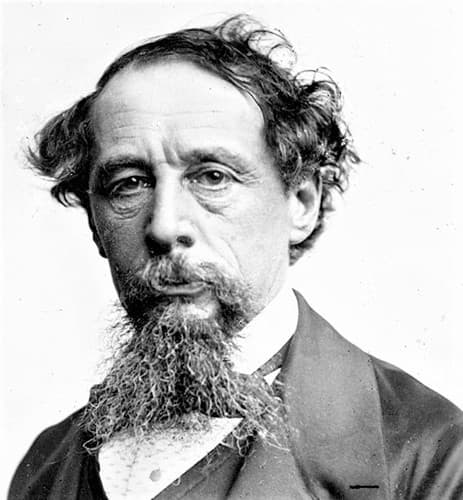
Charles John Huffam Dickens was an English writer and social critic who created some of the world's best-known fictional characters and is regarded by many as the greatest novelist of the Victorian era. His works enjoyed unprecedented popularity during his lifetime and, by the 20th century, critics and scholars had recognised him as a literary genius. His novels and short stories are widely read today.







