“There are some people who can’t be saved, no matter how much you try.”
— René and his father discuss the impossibility of changing some individuals.


Annie Proulx (2016)
Genre
Literary Fiction / Historical Fiction
Reading Time
15-20 hours
Key Themes
See below
Sign in to track this book
Two families' paths diverge from 17th-century New France, one building a timber empire, the other struggling to survive, as their intertwined stories reveal humanity's destructive relationship with the forest across three centuries and continents.
In 1693, two poor Frenchmen, René Sel and Charles Duquet, arrive in New France, specifically Mi'kma'ki (present-day Nova Scotia). They are 'engagés,' bound to Monsieur Goon, a seigneur, for three years of labor in exchange for land. Their job is to clear the vast, old forest, a hard and dangerous task that immediately shows the harshness of the colonial frontier. René, a quiet and strong man, finds the forest a powerful and difficult opponent, while the clever and less honest Duquet sees chances for profit. They enter a world where European settlers and Indigenous Mi'kmaq people live together uneasily, and the land itself demands great sacrifice.
After the brutal work of clearing land for Monsieur Goon, René Sel is forced to marry Mari, a Mi'kmaq woman. This practical arrangement secures land and labor for the seigneur. This forced marriage begins René's life caught between two worlds. He struggles with farming and the constant threat of the wilderness, while Mari's people face growing pressure from European expansion. Their children, including Kuntaw, grow up navigating a complex identity, often excluded by both French and Mi'kmaq. René's life is one of constant hard work, poverty, loss, and the ever-present power of the forest he is meant to destroy.
Unlike René, Charles Duquet quickly realizes that being an indentured woodcutter is not for him. Resourceful and opportunistic, he runs away from Monsieur Goon's service, escaping the hard labor and the seigneurial system. Duquet then uses his cleverness and natural business talent to enter the profitable fur trade. He handles the complex relationships with Indigenous trappers and European merchants, gaining wealth and influence. He establishes himself as a sharp, often ruthless, entrepreneur, starting the powerful Duke timber dynasty. His ambition and willingness to exploit resources set a pattern for his descendants, contrasting sharply with the struggles of the Sel family.
Through generations, the Sel descendants stay deeply involved with the logging industry, often working as laborers for the growing timber companies, many owned by the powerful Duke family. They move across North America, following the timber frontiers, from Quebec to the American Midwest and beyond. People like Kuntaw Sel and her descendants face ongoing poverty, dangerous working conditions, and the continuous fight for cultural identity, caught between their Mi'kmaq heritage and the dominant European settler culture. Their lives are marked by a strong connection to the forest, both as a way to live and a symbol of their heritage, even as they help destroy it. This cycle of labor and displacement defines their existence.
From Charles Duquet's first businesses, the Duke family builds a vast and ruthless timber empire. Over centuries, they expand their operations from North America to Europe, Asia, and New Zealand, driven by an endless demand for wood and a firm commitment to profit. Descendants like Kunz, Lavinia, and William Duke show a relentless pursuit of wealth, using new technologies and exploiting large areas of untouched forest. Their business practices are often predatory, ignoring environmental consequences and the rights of Indigenous peoples. The Dukes represent the unstoppable advance of industrial capitalism, changing landscapes and gathering immense power, their legacy built on cutting down ancient trees.
The story consistently shows the devastating environmental results of centuries of logging. As the Duke family and other timber companies expand, vast old forests are destroyed, leading to soil erosion, species extinction, and changed climates. The book shows clear-cutting, forest fires, and the transformation of pristine wilderness into barren lands. This ecological destruction is tied to social upheaval, as Indigenous communities are displaced, their traditional ways of life destroyed, and their spiritual connection to the land broken. The consequences of this constant exploitation become increasingly severe, hinting at a future of ecological collapse and resource scarcity, a clear warning woven throughout the generations of the Sel and Duke families.
The story of the timber industry, and by extension the Duke family, goes far beyond the initial Canadian frontier. Proulx carefully traces the global reach of logging, showing operations in the American South, the Pacific Northwest, Northern Europe, Russia, China, and New Zealand. Each new location reveals similar patterns of resource use, technological advances in felling and transport, and the constant drive to meet a global demand for wood. Characters like Lavinia Duke travel widely, overseeing these multinational ventures, showing how the desire for timber changed local industries into a vast, interconnected global economy, leaving environmental damage across continents.
Throughout the centuries, Indigenous characters, especially those descended from Mari and René Sel, such as Kuntaw and her various descendants, show both resistance and strength in the face of colonial expansion and environmental destruction. They fight land dispossession, cultural assimilation, and the devastating impact of logging on their traditional hunting grounds and sacred sites. While many are forced into wage labor within the timber industry, others actively work to preserve their heritage, knowledge, and connection to the land. Their struggles highlight the great human cost of resource exploitation and the lasting spirit of Indigenous peoples trying to survive and reclaim their identity amidst overwhelming forces.
As the story moves into the 20th and 21st centuries, the descendants of both Sel and Duke face the full impact of their ancestors' actions. People like Axel Sel, a dedicated dendrologist, and Sapatisia Sel, an environmental activist, deal with the profound ecological crisis caused by centuries of deforestation. They see the irreversible damage to ecosystems, the rise of climate change, and the shrinking of old forests. The Duke family, though still powerful, also begins to feel the pressures of diminishing resources and increased environmental scrutiny. The story ends with a clear understanding of the potential for ecological collapse, forcing the characters to confront their families' legacies and the planet's future.
Despite their different paths—the Sel line often laborers and culturally displaced, the Duke line powerful industrialists—the two families' fates remain closely linked. Sel descendants often work for Duke businesses, their lives shaped by the very industry the Dukes control. The land they both live on, and exploit, connects them fundamentally. Their shared history, starting from the same part of New France, shows the complex interaction of class, power, and environmental impact. The story repeatedly compares and contrasts their experiences, showing how their individual and collective choices contribute to the larger historical and ecological story of North America and beyond.
The Protagonist (ancestor)
René's arc is one of survival and reluctant adaptation to a new, brutal world, his identity slowly melding with the land he both fears and relies upon.
The Protagonist (ancestor)
Duquet's arc is one of rapid ascent from poverty to immense wealth and power through cunning and exploitation, laying the foundation for a destructive legacy.
The Supporting
Mari's arc is one of survival and quiet resistance, striving to maintain her cultural identity and protect her children in a rapidly changing world.
The Supporting
Kuntaw's arc is defined by her struggle to forge an identity within two conflicting cultures, often enduring hardship and loss while striving for belonging.
The Supporting
Kunz's arc is one of relentless expansion and consolidation of power, solidifying the Duke family's dominance in the timber industry.
The Supporting
Lavinia's arc shows her breaking gender barriers in business while continuing the Duke legacy of global resource exploitation and power accumulation.
The Supporting
Axel's arc is one of seeking knowledge and understanding of the natural world, striving to heal the land his ancestors destroyed.
The Supporting
Sapatisia's arc is defined by her activism, fighting to reverse the environmental destruction caused by generations of her family and others.
The Supporting
William's arc shows him grappling with the environmental impact of his family's legacy and the shifting demands for corporate responsibility.
The most common theme is the constant, centuries-long destruction of old forests and the resulting ecological collapse. Proulx carefully details deforestation, from early axe-felling to industrial clear-cutting, and its devastating effects: soil erosion, species extinction, and changed climates. The book shows how a seemingly endless resource is steadily used up, leading to a fragile modern world. This is clear in every generation, from René Sel's first fights against the overwhelming forest to Axel Sel's dendrological studies revealing centuries of damage, and Sapatisia Sel's activism against ongoing destruction.
“The forest was not a collection of trees but a single, vast organism, and they were killing it.”
The novel deeply explores how European colonialism affected the Indigenous peoples of North America and later, other parts of the world. The arrival of settlers like René Sel and Charles Duquet immediately starts a process of land dispossession, cultural suppression, and violence against the Mi'kmaq and other native groups. Characters like Mari and Kuntaw Sel represent the struggle to keep identity and heritage when faced with overwhelming outside forces. The story highlights how the search for resources—furs, then timber—drove this colonial expansion, often with devastating and irreversible effects for Indigenous communities and their traditional ways of life.
“Their trees, their land, their animals, all became the property of others, taken by paper and iron.”
Barkskins traces the legacies of exploitation (the Duke family) and hardship (the Sel family) over more than three centuries. The choices of the ancestors, René Sel and Charles Duquet, deeply shape their descendants' lives. The Dukes inherit wealth, power, and a strong drive for profit, continuing the cycle of resource extraction globally. The Sels, often laborers for the Dukes, inherit a complex mixed heritage, poverty, and a deep, often painful, connection to the land. The novel shows how historical actions echo through generations, shaping identity, social class, and humanity's relationship with the natural world.
“The past was not past; it was a thicket they were forever hacking their way through.”
A main theme is human greed and the dangerous idea that natural resources are endless. From the early fur trade to the global timber industry, characters like Charles Duquet and his Duke descendants are driven by an endless desire for wealth and expansion, believing the forests will never run out. This mindset fuels centuries of unsustainable practices, leading to the current ecological crisis. The novel is a warning, showing how the short-sighted pursuit of profit, without considering long-term effects, always leads to depletion and destruction, forcing modern characters to face the reality of limited resources.
“They had believed the trees were infinite, a never-ending green sea. They had been wrong.”
The theme of identity is particularly strong within the Sel family line, whose mixed Mi'kmaq and French heritage often leaves them caught between two worlds. Characters like Kuntaw Sel struggle with where they belong, neither fully accepted by settler society nor able to fully reclaim their Indigenous roots after generations of assimilation. This struggle for identity is made worse by constant displacement as they follow the logging frontiers. The novel explores how cultural heritage, language, and connection to place are shaped and challenged by colonialism, migration, and the constant march of progress, leaving many descendants searching for a sense of self and belonging.
“Her blood was two rivers, but they flowed into no recognizable sea.”
Spans over 300 years, tracing the descendants of two families.
The novel employs a generational saga structure, following the Sel and Duke families from the late 17th century to the present day. This allows Proulx to illustrate the long-term, cumulative impact of human actions—particularly deforestation—on the environment and on successive generations. By showing how the initial choices of René Sel and Charles Duquet ripple through centuries, the device emphasizes the enduring legacy of colonialism, exploitation, and the profound changes to the North American landscape and beyond. It highlights the slow, inexorable march towards ecological crisis.
Contrasting the Sel and Duke family lines.
Proulx uses the dual protagonist lines of the Sel and Duke families to present contrasting perspectives on the same historical events and environmental themes. The Sel line, often poor, dispossessed, and of mixed heritage, represents the human cost of resource exploitation and the struggle for survival and identity. The Duke line, wealthy and powerful, embodies the forces of capitalism and relentless exploitation. This juxtaposition allows for a nuanced exploration of cause and effect, demonstrating how different social strata experience and contribute to the same historical trajectory of deforestation and colonial expansion.
Early scenes hint at future ecological devastation.
From the very beginning, the narrative employs environmental foreshadowing. The sheer scale and ancient power of the forest that René Sel confronts in New France immediately establishes it as a formidable entity, hinting at the immense loss that will occur. Descriptions of early, small-scale logging operations and the seemingly endless supply of trees subtly foreshadow the devastating clear-cutting and ecological collapse that will define later centuries. This device builds a sense of dread and inevitability, making the eventual environmental crisis feel like a tragic, but predictable, outcome of humanity's initial interactions with the wilderness.
Extensive use of historical facts, technologies, and cultural practices.
Proulx's meticulous historical research is a key plot device, grounding the sprawling narrative in authentic detail. The novel is rich with descriptions of 17th-century colonial life, indigenous cultures, evolving logging technologies (from axes to steam engines to modern machinery), maritime travel, and the specific flora and fauna of various regions. This extensive detail creates a vivid, immersive world, making the historical progression and the environmental degradation feel tangible and real. It lends credibility to the narrative's central argument about the long-term impact of human actions on the planet.
The forest as a living entity, resource, and spiritual home.
The trees and the forest serve as powerful symbols throughout the novel. Initially, the forest is a symbol of untamed wilderness, a formidable enemy to the European settlers, and a sacred, living entity to the indigenous peoples. Over time, it transforms into a symbol of infinite resource to be exploited, then a dwindling commodity, and finally, a fragile ecosystem on the brink of collapse. This evolving symbolism reflects humanity's changing relationship with nature, from fearful respect to rapacious consumption and, eventually, a desperate attempt at preservation, embodying the novel's core environmental message.
“There are some people who can’t be saved, no matter how much you try.”
— René and his father discuss the impossibility of changing some individuals.
“The trees were silent, and their silence was a kind of roar.”
— Describing the overwhelming presence and quiet power of the untouched forest.
“Everything changed. The land, the trees, the people, the very air itself.”
— Reflecting on the profound impact of European settlement on the North American continent.
“A man’s life is a brief candle, quickly consumed.”
— A character's somber reflection on mortality and the fleeting nature of existence.
“The forest swallowed them whole, leaving not a trace.”
— Describing the disappearance of early settlers into the vast, unforgiving wilderness.
“He carried the scent of pine and sawdust with him, a constant reminder of his trade.”
— Pertaining to a character deeply connected to logging and the forest.
“The past was a weight, pressing down on the present, shaping the future.”
— A rumination on the inescapable influence of history and ancestral actions.
“They were all barkskins, in one way or another, marked by the trees.”
— Connecting the generations of loggers and their descendants to the very essence of their work and environment.
“There was no end to the forest, only a continuous beginning.”
— An early perspective on the seemingly boundless nature of the primeval woods.
“Money changed everything, even the way people looked at trees.”
— Highlighting the shift from viewing trees as living beings to commodities.
“The wind carried stories, old and new, through the branches.”
— A poetic description of the enduring presence of history and memory within the landscape.
“He understood the language of the forest, a language of growth and decay, of struggle and surrender.”
— A character's deep, almost spiritual understanding of the natural world.
“The axe was not just a tool; it was an extension of the man, a part of his will.”
— Emphasizing the intense physical and personal connection between loggers and their instruments.
“Progress, they called it, but it felt like a kind of diminishment.”
— A critical view of industrial expansion and its environmental cost.
Ready to see how well you understood this book? Take our interactive quiz with 10 questions.
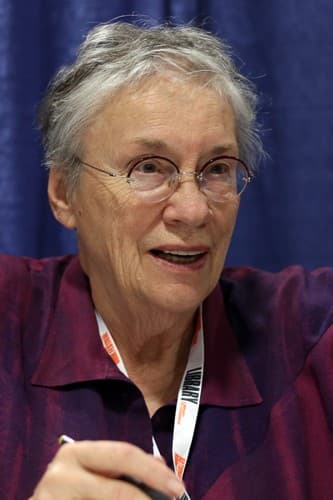
Edna Ann Proulx is an American novelist, short story writer, and journalist. She has written most frequently as Annie Proulx but has also used the names E. Annie Proulx and E.A. Proulx.







