“The world is not so much in want of new teachers, as of those who will make effectual use of the teachers which they have.”
— A reflection on the state of religion and education.


Anthony Trollope (2019)
Genre
Historical Fiction
Reading Time
10-12 hours
Key Themes
See below
Sign in to track this book
In the quaint cathedral city of Barchester, the unexpected arrival of an evangelical bishop and his domineering wife ignites a witty battle for power and position among the clergy, entangled with the romantic misadventures of its spirited inhabitants.
The novel begins with the death of Bishop Grantly, who was well-liked by his clergy and the town of Barchester. His son, Archdeacon Grantly, a traditional figure in the diocese, is expected to take over. However, due to political actions in London, the Prime Minister appoints Dr. Proudie, a low-church Evangelical, as the new Bishop. This surprises Barchester, as Dr. Proudie and his strong wife, Mrs. Proudie, are very different from the old ways. Mrs. Proudie immediately takes control, showing a change in power within the cathedral.
Bishop Proudie arrives in Barchester with his strong wife, Mrs. Proudie, and his ambitious new chaplain, Mr. Obadiah Slope. Mr. Slope, a man with smooth manners and Evangelical passion, quickly becomes Mrs. Proudie's trusted helper, which upsets the established clergy. He immediately starts to undermine traditional practices and clergy, especially Archdeacon Grantly and Mr. Harding. Mr. Slope's sermons and public statements aim to show the new Bishop's authority and his own influence, creating tension and anger in the cathedral community.
The wardenship of Hiram's Hospital, previously held by Mr. Harding, becomes open, causing a major conflict. Mrs. Proudie and Mr. Slope want to appoint someone who agrees with their Evangelical beliefs, specifically Mr. Quiverful, a man with a large family. Archdeacon Grantly and his group, however, support Mr. Harding's reappointment, believing it is his right and a matter of principle. This dispute over the wardenship becomes the main battle between the old high-church traditions and the new low-church Evangelicalism, with Mr. Harding caught in the middle.
Eleanor Harding, now the wealthy widow of John Bold, is a desirable woman in Barchester society. The ambitious Mr. Slope pursues her, seeing her wealth and position as a way to advance his career. At the same time, the somewhat awkward but kind Reverend Francis Arabin, a friend of Archdeacon Grantly and a scholar, also comes to Barchester and becomes interested in Eleanor. Eleanor, however, is careful of Mr. Slope's advances, finding him unpleasant, and is still grieving her late husband, making her hesitant about new relationships.
The novel introduces the Thornes of Ullathorne, an old and unique family who represent the old country gentry. Mr. Thorne is a kind, old-fashioned squire, and his sister, Miss Thorne, is a strong traditionalist who dislikes modern changes and the Proudie group. They host a large party where much of the social drama happens. Another important character, Miss Dunstable, a wealthy heiress, also arrives in Barchester, often staying with the Thornes. She observes the Barchester scene and becomes a trusted friend to Eleanor, offering independent and witty opinions.
Mr. Slope, driven by ambition and a desire for Eleanor's money, continues to pursue her. He uses flattery and manipulation, believing he can win her over. His advances, however, are often clumsy and inappropriate, leading to several embarrassing moments, especially at the Ullathorne party where he tries to dance with Eleanor and later proposes to her crudely. These actions show his true, selfish character to Barchester society and strengthen Eleanor's dislike for him, while also making Mrs. Proudie suspicious, as she sees Eleanor as a rival for Mr. Slope's attention.
Mrs. Proudie, initially Mr. Slope's ally, becomes more jealous and suspicious of his interest in Eleanor. She sees Eleanor's wealth as a threat to her control over Mr. Slope and the Bishop. Her jealousy leads to a dramatic confrontation where she publicly removes Mr. Slope from his chaplaincy, ending his career in Barchester. This public shame shows Mrs. Proudie's great power and her willingness to crush anyone who challenges her authority, even her former protégé. Mr. Slope, without his position, is forced to leave Barchester in disgrace.
Unlike Mr. Slope's aggressive tactics, Reverend Francis Arabin's pursuit of Eleanor is more subtle and respectful. He truly admires her and shares similar intellectual interests. After Mr. Slope leaves and several misunderstandings, Arabin's true feelings become clear. Eleanor, having rejected Mr. Slope and thought about other options, eventually realizes her affection for Arabin. His honesty, gentle nature, and intellectual friendship are the qualities she values, leading her to accept his marriage proposal. This delights her father, Mr. Harding, and Archdeacon Grantly.
With Mr. Slope's influence gone, the Hiram's Hospital wardenship issue is settled. Mr. Harding, though hesitant at first, accepts the precentorship, a less demanding position that lets him stay connected to the cathedral. Reverend Arabin is appointed dean of Barchester, a position that suits his scholarly nature and provides a secure future with Eleanor. These appointments show a return to a more traditional and peaceful balance within the Barchester clergy. Suitable men now hold appropriate roles, pleasing the Grantly group and bringing peace to the community.
The novel ends with Eleanor Harding and Reverend Francis Arabin marrying, bringing happiness and stability to Eleanor's life and securing Arabin's place in the Barchester establishment. Mr. Harding finds contentment in his new role, and Archdeacon Grantly is happy with the outcome, seeing his friend and ally as dean. While the Proudies remain, their power is somewhat reduced by Mr. Slope's departure and the establishment of a more united, though still resistant, traditional clergy. The novel concludes with harmony and a comedic resolution for the main characters.
The Protagonist
Eleanor transitions from a grieving widow to a happily married woman, learning to discern true affection from manipulative ambition.
The Supporting
Grantly staunchly defends the old ways, eventually achieving a partial victory against the Proudie faction.
The Supporting
Harding, initially resigned to being a pawn, finds contentment in a less contentious clerical role.
The Antagonist/Supporting
Bishop Proudie remains under his wife's thumb, a figurehead rather than an independent force.
The Antagonist
Mrs. Proudie successfully asserts her dominance, but her overreach leads to the downfall of her protégé, Mr. Slope.
The Antagonist
Slope rises quickly through manipulation and ambition, only to suffer a public and humiliating fall from grace.
The Protagonist/Supporting
Arabin, initially a scholarly outsider, finds love and a prominent position within the Barchester establishment.
The Supporting
Miss Thorne remains a steadfast, unchanging symbol of the venerable past.
The Supporting
Miss Dunstable remains an astute, independent observer, providing a clear-eyed perspective on the events.
The novel's main theme is the conflict between traditional, high-church Anglicanism, represented by Archdeacon Grantly, and the new, passionate Evangelical movement, embodied by Bishop and Mrs. Proudie and Mr. Slope. This conflict appears in disagreements over church appointments, rituals, and the church's very spirit. The traditionalists value dignity, established order, and scholarship, while the Evangelicals prioritize strict morals, active preaching, and often a more severe approach to worship. The fight for the wardenship of Hiram's Hospital is a key example of this clash, as is the constant tension in the Bishop's palace.
“There are some men who are made to be bishops, and some men who are made to be archdeacons; and some men who are made to be neither. Of the latter class was Dr. Proudie.”
The novel explores the harm caused by unchecked ambition and the hypocrisy that often comes with it, especially through Mr. Slope. Slope's constant pursuit of wealth, power, and Eleanor's hand is driven by self-interest disguised as religious fervor. His smooth flattery and manipulative tactics show his deep insincerity. Mrs. Proudie also shows ambition, not for personal wealth, but for control and influence in the diocese, often using her religious beliefs as a weapon. The novel criticizes how these flaws corrupt individuals and disrupt the community.
“He was a man whom it was impossible to avoid seeing, and equally impossible to see without disliking.”
Trollope shows the important, often indirect, influence of women in 19th-century society, particularly Mrs. Proudie and Eleanor Harding. Mrs. Proudie has great power through her control of her husband, effectively running the diocese and making all major decisions. Her character demonstrates how female influence can be overbearing and disruptive. Eleanor, on the other hand, influences through her wealth, her position as a desirable widow, and her moral sense, ultimately choosing a partner based on character rather than status. The novel also features strong, independent female observers like Miss Dunstable and Miss Thorne, who offer their own views on the male-dominated church world.
“It is not often that a man is so well served as was the Bishop by his wife.”
The romantic subplots in Barchester Towers show the difference between true affection and relationships driven by self-interest. Mr. Slope's pursuit of Eleanor is entirely motivated by her wealth and his desire for social advancement, making his advances unpleasant and ultimately repulsive to her. In contrast, Reverend Arabin's quiet, respectful courtship of Eleanor is based on genuine admiration, shared values, and intellectual companionship. The novel supports the idea that true love is built on mutual respect and affection, rather than financial motives, ultimately leading to Eleanor's happiness with Arabin.
“He felt that he was a fool, but he was a fool in love.”
Beyond the church conflict, the novel subtly explores the wider social tension between keeping cherished traditions and accepting change. The Grantly group, the Thornes of Ullathorne, and Mr. Harding represent the wish to maintain the established order, the dignity of old institutions, and the charm of historical customs. The Proudies and Mr. Slope, with their modern Evangelical passion and desire for reform, symbolize the forces pushing for change, often without considering existing feelings or the beauty of the past. The novel offers a balanced view, acknowledging that change is certain but also valuing the wisdom and comfort found in tradition.
“The good old Bishop had gone, and with him had departed the good old things.”
A romantic entanglement involving Eleanor Harding and multiple suitors.
The romantic pursuits of Eleanor Harding by Mr. Slope, Reverend Arabin, and even a brief mention of Bertie Stanhope, serve as a central plot device. This device not only adds a layer of personal drama but also functions to highlight the contrasting moral characters of the suitors. Eleanor's choices reflect the novel's themes of integrity, genuine affection versus self-interest, and the conflict between the 'old' and 'new' Barchester. Her eventual choice of Arabin symbolizes the triumph of virtue and traditional values over manipulative ambition.
The small clerical community of Barchester reflects broader societal and political struggles.
The setting of Barchester Cathedral Close acts as a microcosm of wider English society and the Church of England itself. The conflicts over clerical appointments, the power struggles between factions, and the social intrigues within this small, enclosed community mirror larger political and religious debates of the era. By focusing on this limited yet intricate world, Trollope is able to explore universal themes of power, ambition, hypocrisy, and social dynamics with intense detail and satirical insight, making the specific feel universally relevant.
Humorous ridicule and contrast between expectation and reality to critique social and religious attitudes.
Trollope extensively uses satire and irony to critique the various characters and the social and religious attitudes of his time. The exaggerated portrayal of Mrs. Proudie's dominance, Mr. Slope's unctuousness, and the often petty squabbles of the clergy are all targets of Trollope's gentle but pointed humor. The ironic contrast between the declared piety of some characters and their actual self-serving motives is a recurring element. This device allows Trollope to expose human follies and societal absurdities without resorting to harsh condemnation, making the critique both effective and entertaining.
An intrusive, conversational narrator who guides the reader's understanding and provides moral judgments.
Trollope employs an omniscient, often intrusive narrator who frequently addresses the reader directly, offering insights into characters' motives, foreshadowing events, and providing moral commentary. This narrator acts as a guide, shaping the reader's perception of the characters and their actions. The commentary is often witty and insightful, reinforcing the novel's themes and moral lessons. This device creates a strong connection between the reader and the story, allowing for a deeper understanding of the social dynamics and ethical dilemmas presented.
“The world is not so much in want of new teachers, as of those who will make effectual use of the teachers which they have.”
— A reflection on the state of religion and education.
“It is a comfortable feeling to know that you are safe whether you deserve it or not.”
— Archdeacon Grantly contemplating his secure position.
“Fame, or at least the desire for it, is the last infirmity of noble minds.”
— A general observation on human ambition.
“There are some women who can take the lead in any society, and can make themselves agreeable to any man, and can make any man agreeable to them.”
— Describing the social graces of a prominent female character.
“When a man is in the wrong, he is generally the last to find it out.”
— A general truth about self-perception.
“He knew that he was a man of power, and he was not afraid to use it.”
— Referring to the assertive nature of a powerful character.
“The greatest pleasure in life is doing what people say you cannot do.”
— An observation on human motivation and defiance.
“It is not the custom of Barchester to allow its bishops to die quietly.”
— A humorous remark about the constant political turmoil surrounding the Barchester diocese.
“He was a man who, if he had not been a clergyman, would have been a lawyer; and if not a lawyer, a politician.”
— Describing the shrewd and strategic nature of Archdeacon Grantly.
“The world is full of people who are always wanting to do good, but who never do any.”
— A cynical observation on well-intentioned but ineffectual individuals.
“She was a woman of spirit and determination, and she was not to be put down by any man.”
— Describing the strong will of a female character.
“There is nothing so difficult as to be able to judge impartially between two friends.”
— A reflection on the challenges of impartiality in personal relationships.
“A man should always be master in his own house.”
— A traditional view on marital roles and domestic authority.
“The worst of all things is to be a bore.”
— A social observation on undesirable company.
Ready to see how well you understood this book? Take our interactive quiz with 10 questions.
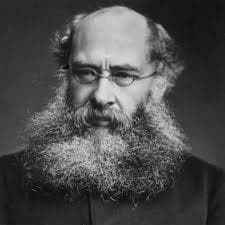
Anthony Trollope was an English novelist and civil servant of the Victorian era. Among his best-known works is a series of novels collectively known as the Chronicles of Barsetshire, which revolves around the imaginary county of Barsetshire. He also wrote novels on political, social, and gender issues, and other topical matters.







