“A mountain is not a mountain until you have climbed it.”
— Rudi's father, a famous guide, explaining the essence of mountaineering.

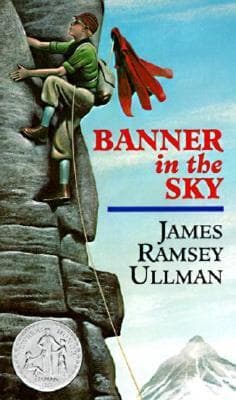
James Ramsey Ullman (1954)
Genre
Children's / Historical Fiction / Young Adult
Reading Time
360 min
Key Themes
See below
Sign in to track this book
A determined Swiss boy climbs the unconquered Citadel, the same dangerous mountain that killed his father, to honor his memory and plant his own banner in the sky.
Sixteen-year-old Rudi Matt, a dishwasher in his uncle's hotel in Kurtal, Switzerland, wants to climb the Citadel mountain, the peak where his father, Josef Matt, died years ago. His uncle Franz forbids climbing, but Rudi secretly goes up the mountain. He tries to cross the 'Fortress,' a dangerous icefall, but slips into a crevasse. Captain John Winter, a famous English mountaineer who knew Rudi's father, finds and rescues him. Winter is impressed by Rudi's courage and natural climbing skill, seeing his talent despite his lack of formal training.
After the rescue, Captain Winter says he wants to climb the Citadel, a feat no one has done. He thinks Rudi, with his skill and knowledge of the mountain (from his father), could be a good guide. Winter asks Rudi to join his expedition. This news causes talk in Kurtal. Some, like the old guide Teo, see possible glory for the village. Others, especially Uncle Franz, are strongly against it, still affected by Josef Matt's death. Franz fears Rudi will die on the same mountain, which causes a conflict between Rudi's goals and his family's wish to protect him.
Rudi starts training with Captain Winter, learning climbing techniques and mountain safety. Winter quickly sees Rudi's talent and potential as a climber. But Uncle Franz still opposes it. He tries to stop Rudi by offering him a better job at the hotel and even threatens to fire him if he continues climbing. Despite the pressure, Rudi's desire to honor his father's memory and reach the summit stays strong, creating a rift in the family.
As Winter and Rudi get ready for their climb, a Swiss-German climbing team, led by Emil Saxo from the nearby village of Broli, arrives in Kurtal with the same goal: to be the first to climb the Citadel. This creates a competitive atmosphere between the two villages and teams. Saxo, known for his ambition, sees Winter and Rudi as competition, adding challenge to Rudi's goal of reaching the summit first and planting his father's banner.
Captain Winter decides to join forces with Saxo's team for the first parts of the climb, believing more people make them stronger for the lower, known sections. Rudi, Winter, Saxo, and other guides set out. They make good progress, but a sudden, bad storm hits the mountain, forcing them back to their high camp. During the dangerous descent, one of Saxo's porters, Lizzi, slips and hangs precariously. Rudi, showing bravery and quick thinking, risks his life to save Lizzi, earning respect even from Saxo, who had called him a beginner.
After the storm and Lizzi's rescue, the combined expedition keeps climbing. But during a hard crossing, Captain Winter badly injures his leg, so he cannot continue. He insists that Rudi, now recognized for his skill and strength, take over leading his team and continue to the summit. This unexpected event puts a large responsibility on Rudi, forcing him to make important decisions and guide the remaining climbers, including Saxo, towards their goal.
With Winter unable to move, Rudi leads his group, climbing with Saxo's team. As they get near the summit, the terrain gets more dangerous. Saxo, wanting to be the first to climb the Citadel, becomes reckless and tries to go ahead alone, risking himself and everyone. Rudi, despite being young, must use his authority and make hard choices to keep the climbers safe and together, often disagreeing with Saxo's stubborn ambition and challenging his experience.
After days of climbing and overcoming many problems, Rudi, Saxo, and the remaining guides reach the final ridge to the Citadel's summit. The weather is clear, and the peak is close. But at this stage, Saxo slips and hangs by a rope, badly hurt and unable to move. Rudi faces a hard choice: he can cut Saxo's rope to save his own energy and continue to the summit, securing his place in history, or he can risk his life and the chance to reach the peak to save his rival. This moment shows the main idea of the story.
In an act of compassion and true mountaineering spirit, Rudi chooses to save Saxo. He spends hours and a lot of energy to pull the injured Saxo to safety, giving up the immediate chance to stand on the summit. This decision, while costing him the chance to be the first to plant his banner on the peak, shows his character and a deep understanding of human life and friendship over personal glory. The other climbers, though disappointed, are moved by Rudi's heroic act.
Rudi and the other climbers eventually go back down the mountain, carrying the injured Saxo. They return to Kurtal, where people feel both relief and disappointment. They did not climb the Citadel, but the story of Rudi's rescue of Saxo spreads fast. Captain Winter, now recovering, praises Rudi's actions, saying he achieved a greater victory than just reaching the summit. Rudi, though he did not plant his father's banner on the peak, has grown into a true mountaineer, showing honor, courage, and selflessness. He earns his community's respect and fulfills his father's memory in a meaningful way.
The Protagonist
Rudi transforms from an impulsive, untrained youth seeking personal glory to a selfless, skilled mountaineer who prioritizes human life and camaraderie above all else.
The Supporting
Winter acts as a catalyst for Rudi's development, guiding him and then stepping aside to allow Rudi to forge his own path and demonstrate his true character.
The Supporting
Franz's initial rigid opposition to Rudi's climbing gradually gives way to a grudging respect and understanding of Rudi's passion and maturity.
The Antagonist/Supporting
Saxo's journey is from a proud, competitive rival to a humbled man indebted to Rudi's selflessness, forcing him to re-evaluate his values.
The Mentioned
Josef's legacy shifts from a burden of unfulfilled ambition to an inspiration for Rudi's moral and personal growth.
The Supporting
Teo remains a consistent source of support and wisdom for Rudi, helping to ground him and connect him to his heritage.
The Supporting
Lizzi's role is primarily to be rescued, serving as a catalyst for Rudi's display of heroism and earning respect from his rivals.
The Mentioned
Her arc is subtle, moving from quiet worry to a sense of pride in Rudi's maturity, despite the dangers.
The Citadel mountain is a main part of the story, showing the greatest challenge and the power of nature. This theme looks at humanity's drive to push limits and achieve what seems impossible. Rudi's focus, his father's death, and Winter's ambition all come from the mountain's strong pull. The book shows both the beauty and the deadly nature of the mountain, highlighting the courage and skill needed to face such a strong force. The mountain tests physical limits, mental strength, and moral character, shaping the climbers.
““The Citadel. It was a mountain. It was a goddess. It was a devil. It was the dream and the despair of all men who loved the high places.””
Rudi's climb up the Citadel is a search for who he is. He wants to understand his father's past, prove his own worth, and find out who he is beyond being 'Josef Matt's son.' Through the challenges of climbing and the moral choices he faces, Rudi learns about his own courage, compassion, and leadership. His choice to save Saxo instead of claiming the summit shows his true character. It proves his identity is shaped not just by what he does, but by the values he holds.
““He had climbed not for himself alone, not for the village, not for the fame that might come with conquest, but for something far greater: for the truth of himself.””
The memory of Rudi's father, Josef Matt, and his unfinished climb of the Citadel, is a strong motivator. Rudi feels he must honor his father's memory and finish what he started, symbolized by the red shirt. But the book takes this idea beyond just finishing a task to explore what true honor means. Rudi redefines his father's memory not by reaching the summit, but by showing compassion, selflessness, and integrity. These traits show the best parts of mountaineering, proving true honor is in character, not just in winning.
““It was not the mountain that was unconquered, but the spirit of man that had been put to the test.””
The story shows physical courage when facing extreme danger, from Rudi's first solo attempt to the dangerous storm. But it also shows compassion as an even higher form of courage. Rudi's decision to risk his life to save Lizzi and later, to give up his summit attempt to save Saxo, shows this idea. It suggests that true strength is not just about overcoming outside problems, but about the inner moral strength to put human life and friendship before personal ambition and fame. This act of compassion defines Rudi's true victory.
““To turn back when the summit was so close... this was a greater courage than any he had shown on the upward climb.””
The relationship between Rudi and Captain Winter is important to this theme. Winter sees Rudi's talent and gives him the training, wisdom, and encouragement he needs to become a skilled mountaineer. He acts like a father figure, teaching not just technical skills but also the ethical rules of climbing. The guidance from other experienced climbers like Teo also supports the idea of passing on knowledge and helping the next generation with their goals, creating a community of shared experience.
““He had shown the boy the way, but the boy, in the end, had shown him the meaning.””
The unconquered mountain, serving as both goal and antagonist.
The Citadel is more than just a setting; it is a powerful symbolic entity. It represents the ultimate challenge, the unconquered frontier, and a testing ground for human spirit. Its treacherous slopes, the 'Fortress' icefall, and its unpredictable weather serve as the primary antagonist, constantly pushing the characters to their physical and mental limits. It also acts as a mirror, reflecting the climbers' deepest desires, fears, and moral character. The mountain's unconquered status creates the central conflict and driving force of the narrative.
A powerful symbol of legacy, ambition, and eventual redefinition of honor.
Josef Matt's red shirt, intended to be planted as a banner on the summit, is a potent symbol. Initially, it represents Rudi's direct link to his father's unfulfilled ambition and his personal quest for glory. It embodies the legacy he feels compelled to complete. As the story progresses and Rudi matures, the shirt's symbolism evolves. While it remains a reminder of his father, Rudi's eventual decision to save Saxo, foregoing the chance to plant the shirt, redefines what 'planting the banner' truly means – not just conquering a peak, but upholding the highest ideals of humanity. The shirt ultimately symbolizes a different kind of victory.
A specific geographical feature symbolizing an impassable barrier and personal fear.
The 'Fortress' is a particularly dangerous and difficult icefall on the Citadel, where Rudi's father met his end. It serves as a physical and psychological barrier. For Rudi, it represents the specific place where his father's dream ended and a personal challenge he must overcome to confront his family's past. Conquering the Fortress is a major milestone in the climb and for Rudi's personal growth, demonstrating his developing skill and courage. It is a tangible representation of the mountain's perils and the specific trauma associated with Josef Matt's death.
A narrative device to heighten stakes and provide external conflict.
The long-standing rivalry between the two Swiss villages, Kurtal and Broli, particularly embodied by Rudi's team (representing Kurtal) and Saxo's team (representing Broli), serves to heighten the stakes of the first ascent. It adds an element of competitive pressure and local pride to the already dangerous endeavor. This rivalry not only provides external conflict, but also underscores the eventual triumph of camaraderie and human values over narrow village pride, particularly when Rudi saves Saxo, a climber from the rival village.
“A mountain is not a mountain until you have climbed it.”
— Rudi's father, a famous guide, explaining the essence of mountaineering.
“The Citadel is not just a mountain. It is a dream.”
— Rudi reflecting on the unconquered peak that symbolizes his aspirations.
“Fear is a good thing. It keeps you alive.”
— Teo, the old guide, advising Rudi on the dangers of the mountains.
“You do not conquer a mountain. You climb it, and it lets you pass.”
— Rudi's realization about humility in the face of nature's grandeur.
“The rope is not just a rope. It is a bond between climbers.”
— Emphasizing teamwork and trust during a climb.
“Every step upward is a step toward the sky.”
— Rudi's inner thoughts during his ascent, capturing the journey's spirit.
“In the mountains, there are no shortcuts.”
— A lesson learned from a dangerous situation on the climb.
“The wind does not care if you are tired.”
— Describing the relentless challenges of the mountain environment.
“To climb is to remember those who came before.”
— Rudi honoring his father's legacy and other fallen climbers.
“The summit is only halfway. The descent is where many fail.”
— A cautionary reminder about the ongoing dangers after reaching the top.
“Snow has a voice if you listen.”
— A poetic observation about being attuned to the mountain's signs.
“A true guide leads not with his feet, but with his heart.”
— Reflecting on the qualities of leadership and compassion in guiding.
“The mountain does not forgive mistakes.”
— A stark warning about the consequences of carelessness in climbing.
“Hope is the last piece of equipment you pack.”
— Rudi's thought as he prepares for a difficult section of the climb.
Ready to see how well you understood this book? Take our interactive quiz with 10 questions.

Dan Gemeinhart
4.5

Kate O'Hearn
4.4

Jeanne Birdsall
4.4

Jen Wang
4.4

Wendelin Van Draanen
4.3

John Marsden
4.3

Chris Van Allsburg
4.3

Jennifer A. Nielsen
4.2