“Hope for the best, plan for the worst.”
— Reacher's general philosophy on preparation.

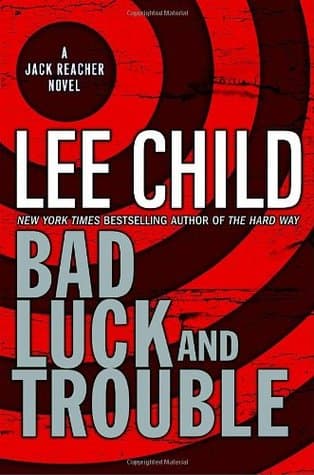
Lee Child (1984)
Genre
Thriller / Mystery
Reading Time
7-8 hours
Key Themes
See below
Sign in to track this book
Jack Reacher reunites with his elite ex-army team to unravel a deadly conspiracy when their former comrades start turning up dead, leading them from the California desert to the neon glow of Las Vegas and the shadows of international terrorism.
The novel opens with Stephen Dustin, a former member of Jack Reacher's elite 110th Special Investigations Unit, thrown from a helicopter high above the California desert. He dies upon impact. Meanwhile, Frances Neagley, another former member of the 110th, uses a specific financial signal to contact Jack Reacher. Reacher, living his usual nomadic life in Portland, recognizes the signal instantly. Neagley informs him of Dustin's death, which she believes is no accident, and alerts him to a potential threat against their old unit, prompting Reacher to join her in investigating.
Reacher meets Neagley in Chicago, where she explains the unusual circumstances of Dustin's death. They confirm that Dustin had been working as a private investigator. Their initial inquiries lead them to discover that another former member of their unit, Calvin Franz, has also died under suspicious circumstances, officially ruled a mugging in Los Angeles. The pattern of deaths, coupled with their precise execution, convinces Reacher and Neagley that someone is systematically targeting the surviving members of the 110th Special Investigations Unit, prompting them to gather the remaining team.
Reacher and Neagley decide to call upon the remaining members of their old unit: Karla Dixon, David O'Donnell, Tony Swan, and Maria Ghali. Dixon and O'Donnell readily agree to join the investigation, meeting Reacher and Neagley in Las Vegas. However, they are unable to locate Tony Swan or Maria Ghali, who appear to have vanished. This disappearance heightens their concern, suggesting that Swan and Ghali might either be victims themselves or involved in the conspiracy. The team establishes a base in Las Vegas to coordinate their efforts.
The reunited team, Reacher, Neagley, Dixon, and O'Donnell, begin investigating Tony Swan's disappearance. They discover that Swan had been working for a private defense contractor named New Age. Their inquiries into New Age reveal a secretive and potentially illicit operation. They learn that Swan had been involved in a project that seemed to involve shipping large quantities of something valuable, but the specifics are hidden. The team suspects Swan's work with New Age is directly connected to the murders of Dustin and Franz and his own disappearance.
The team's investigation into New Age leads them deeper into the underbelly of Las Vegas. They discover that New Age, under the guise of legitimate defense contracts, is involved in a massive counterfeiting operation, producing fake U.S. currency on an industrial scale. They realize that Tony Swan, likely unknowingly, was a key figure in the logistics of this operation, moving the counterfeit money. The team also learns that Maria Ghali was working for New Age in a seemingly unrelated capacity, adding another layer to the mystery.
The team eventually uncovers the full truth about Tony Swan. He was not a victim but a willing participant in the counterfeiting ring, corrupted by the promise of wealth. He was instrumental in setting up the logistics for the operation, using his military expertise. The murders of Dustin and Franz were ordered by the counterfeiters to eliminate anyone who might expose their operation, as Dustin was close to uncovering it, and Franz was targeted to send a message. Swan's disappearance was a ruse to cover his involvement and escape with a share of the profits.
Through investigation, including tracking financial transactions and observing key personnel, the team identifies the mastermind behind the counterfeiting operation: a ruthless and intelligent individual named Rochus. Rochus has been using New Age as a front for his illegal enterprise, exploiting the vulnerabilities of the global financial system and utilizing ex-military personnel like Swan for their specialized skills. The revelation of Rochus's identity gives the team a clear target for their revenge and justice.
Reacher, Neagley, Dixon, and O'Donnell execute a meticulously planned operation to dismantle Rochus's counterfeiting ring. They locate the main production facility and confront Rochus and his security forces. A violent confrontation ensues, showing the team's combined military training and combat prowess. They systematically neutralize Rochus's men and destroy the counterfeiting equipment. Reacher personally confronts Rochus, ensuring that the mastermind is brought to justice, not through legal channels, but through Reacher's own brand of retribution.
With Rochus defeated and his operation dismantled, the team turns their attention to ensuring all responsible parties face consequences. They track down Tony Swan, who had been attempting to escape with his share of the counterfeit money. Reacher confronts Swan, delivering a brutal end for his betrayal of their unit. Maria Ghali, whose involvement was more complex and less malicious, is dealt with differently, highlighting Reacher's nuanced understanding of culpability. The team ensures that the illicit funds are recovered and the evidence is secured, though outside official channels.
After the dust settles, Reacher, Neagley, Dixon, and O'Donnell reflect on the grim events. They acknowledge the pain of losing their comrades and the shock of Swan's betrayal. Despite the trauma, their bond as a unit is reaffirmed. They ensure that their actions leave no traceable evidence back to them, preserving their anonymity and Reacher's nomadic lifestyle. The team shares a final meal, a silent acknowledgment of their shared past and the unique code that binds them, before each member once again goes their separate ways, returning to their individual lives.
The Protagonist
Reacher's arc reinforces his core identity as a lone wolf driven by justice, highlighting his deep loyalty to his past unit despite his nomadic present.
The Supporting
Neagley's arc solidifies her role as Reacher's most reliable and indispensable partner, demonstrating her unwavering loyalty and strategic brilliance.
The Supporting
Dixon's arc showcases her intellectual prowess and quiet courage, solidifying her bond with the team and hinting at a deeper connection with Reacher.
The Supporting
O'Donnell's arc reinforces his role as the team's reliable and formidable combat expert, underscoring the enduring loyalty among the unit's members.
The Antagonist
Swan's arc is a tragic descent from a respected colleague to a ruthless betrayer, serving as a cautionary tale within the unit.
The Antagonist
Rochus's arc is one of escalating criminal enterprise leading to his ultimate downfall at the hands of Reacher and his team.
The Mentioned
Dustin's death serves as the inciting incident, revealing the threat to the 110th Unit.
The Mentioned
Franz's death reinforces the urgency and confirms the pattern of attacks against the unit.
The Supporting
Ghali's arc shows her as a victim of circumstance, caught in the periphery of a criminal operation, ultimately spared by Reacher's nuanced judgment.
The novel explores the theme of loyalty, particularly the unbreakable bond among the members of the elite 110th Special Investigations Unit. Reacher's immediate response to Neagley's signal and the quick reunion of the surviving team members show this loyalty. Conversely, the theme of betrayal is presented through Tony Swan's actions. His corruption and willingness to facilitate the murders of his former comrades highlight the devastating impact of personal greed overriding deep-seated trust and shared history. This betrayal is arguably the most painful aspect of the investigation for Reacher and the team, as seen in Reacher's personal pursuit and execution of Swan.
““The 110th was a unit. It was a family. And you don’t mess with family.””
A central theme in 'Bad Luck and Trouble' is Reacher's commitment to justice, even if it means operating outside the law. The 110th Unit, in their pursuit of Rochus and Swan, takes matters into their own hands, conducting their own investigation, interrogation, and ultimately, retribution. They do not report to the police or FBI, instead relying on their military training and unique code to deliver what they deem appropriate justice for their fallen comrades. This shows Reacher's belief that some wrongs are so egregious that official channels are insufficient or too slow, requiring a more direct and often violent resolution.
““Some things, you just do. No matter what the rules say.””
The novel shows how military service, particularly in an elite unit like the 110th, shapes individuals long after they leave active duty. The skills, discipline, and camaraderie forged in combat remain integral to the characters' identities. Reacher's nomadic lifestyle is a direct consequence of his military experiences, while Neagley, Dixon, and O'Donnell all use their specialized training in their civilian lives and, more critically, in their reunion. The shared history and unspoken understanding among the team members are key to their effectiveness, demonstrating that the bonds and lessons of military service are not easily broken or forgotten.
““They were soldiers. They always would be.””
The book looks at the nature of evil, appearing in both calculated, large-scale criminal enterprise (Rochus's counterfeiting ring) and personal corruption (Tony Swan's betrayal). Rochus embodies a cold, economic evil, driven by greed and a willingness to commit murder for profit. Swan, on the other hand, represents a more tragic form of corruption, a former good man who succumbs to temptation and betrays everything he once stood for. The story explores how such evil can infiltrate seemingly legitimate operations and how individuals can be swayed by the promise of wealth, even at the cost of their honor and the lives of their friends.
““The only thing necessary for the triumph of evil is for good men to do nothing.””
A unique, untraceable financial transaction used to contact Reacher.
The Reacher Signal is a highly specific, almost untraceable financial transaction used by Frances Neagley to alert Jack Reacher to danger. It involves a small, precise deposit into Reacher's otherwise dormant bank account, a number that only the eight members of the 110th Special Investigations Unit would recognize. This device is crucial for initiating the plot, as it is the only way Reacher, living off the grid, can be contacted. It immediately establishes the deep trust and unique bond among the former unit members and signals the urgency and severity of the threat.
The gathering of Reacher's old military investigation team.
The reunion of Reacher's former 110th Special Investigations Unit (Neagley, Dixon, O'Donnell) is a key plot device. It allows for a diverse set of skills to be brought to bear on the complex investigation, showcasing the combined strengths of military training, intelligence, and specialized knowledge. This device also serves to highlight Reacher's leadership and the profound loyalty within the unit. It creates a sense of camaraderie and shared purpose, contrasting sharply with the betrayal they uncover and making the stakes even higher due to the personal connection to the victims.
A former trusted ally who becomes a central antagonist.
The corruption and betrayal of Tony Swan, a former member of Reacher's elite unit, is a powerful plot device. Initially appearing as a missing person, his eventual reveal as a willing participant in the counterfeiting ring and complicit in the murders of his former comrades adds a profound layer of personal stakes and emotional complexity to the narrative. This betrayal elevates the conflict beyond a simple criminal investigation, turning it into a deeply personal quest for justice and revenge for Reacher and the surviving team members, challenging their understanding of loyalty and trust.
A legitimate defense contractor used as a front for an illegal operation.
The use of 'New Age,' a seemingly legitimate defense contractor, as a front for a massive international counterfeiting operation is a crucial plot device. This double-layered cover provides the antagonists with plausible deniability and makes their illicit activities difficult to uncover. It allows for the recruitment of individuals like Tony Swan and Maria Ghali, who possess specialized skills but may not initially realize the true nature of their employment. This device adds complexity to the investigation, requiring the team to peel back layers of deception to expose the truth.
“Hope for the best, plan for the worst.”
— Reacher's general philosophy on preparation.
“The army taught him to think like a hunter, not a target.”
— Describing Reacher's mindset and training.
“It's always the quiet ones you have to watch out for.”
— A recurring theme about underestimated individuals.
“He didn't carry a watch. He didn't need one. Time meant nothing to him.”
— Highlighting Reacher's detachment from conventional constraints.
“Some things, once broken, can never be truly fixed.”
— Reflecting on the irreversible nature of certain events.
“Reacher didn't like surprises, unless he was the one delivering them.”
— Illustrating Reacher's preference for control.
“The world was full of bad people. Reacher was good at dealing with them.”
— A concise summary of Reacher's role.
“He moved like a man who knew exactly what he was doing, even when he didn't.”
— Describing Reacher's confident demeanor.
“Silence could be a weapon, or a shield.”
— Reflecting on the strategic use of quiet.
“You don't get to choose your family, but you do get to choose your friends.”
— A comment on loyalty and chosen relationships.
“The past is a foreign country; they do things differently there.”
— A general observation about the irrelevance of past rules.
“He knew about leverage. He knew about pressure points. He knew about pain.”
— Highlighting Reacher's practical knowledge of coercion.
“There are no accidents, only failures of planning.”
— Another quote emphasizing Reacher's belief in thorough preparation.
“Sometimes the best defense is a good offense.”
— A classic tactical principle applied by Reacher.
Ready to see how well you understood this book? Take our interactive quiz with 10 questions.

Biography coming soon.







