“The greatest enemy of knowledge is not ignorance, it is the illusion of knowledge.”
— The Dream Dealer often used this phrase to explain the difficulty in making people understand new concepts.

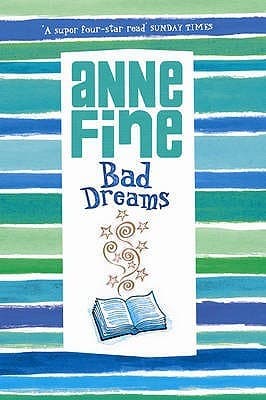
Anne Fine (2000)
Genre
Fantasy / Children's / Science Fiction / Young Adult
Reading Time
90 min
Key Themes
See below
Sign in to track this book
A solitary bookworm who prefers fictional worlds over real-life interactions finds her ordered existence upended when a new girl's terrifying dreams begin to bleed into reality, forcing her to confront a 'gift' she initially dismisses as a curse.
Mel, a bookworm and social recluse, finds her carefully constructed world disrupted when she is assigned to be the first-week minder for the new girl, Imogen. Mel dislikes this duty, preferring books to the unpredictable nature of people. Imogen immediately seems odd to Mel and her classmates, with her quiet manner, unusual clothes, and a general air of mystery. Mel tries to keep her distance, burying herself in reading, but Imogen's presence is an undeniable new factor, hinting at an unsettling change to her routine. Mel's first interactions with Imogen show her trying to ignore the new girl, but Imogen's silent observation of Mel begins to break down her defenses.
One day, a planned school trip to the local animal park is suddenly canceled due to an unforeseen 'catastrophe.' Mel overhears teachers discussing unexpected and severe damage to the park's facilities, making the trip impossible. Later, Mel learns from Imogen, almost in passing, that she had a vivid and terrifying dream about the animal park being destroyed. The precise details Imogen recounts from her dream match the official explanation for the cancellation. This coincidence is the first hint to Mel that Imogen's dreams might have an uncanny connection to reality, unsettling her rational, book-based view of the world.
Imogen begins to describe a recurring, upsetting dream about a lost ginger cat. She details its distinctive features and the specific location where it is lost. Shortly after, Mel's classmate, Fiona, is distraught because her beloved ginger cat, which perfectly matches Imogen's dream description, has gone missing. Fiona's frantic search efforts fail, deepening Mel's unease. The similarities between Imogen's dream and the real-world event become too strong to dismiss. Mel starts to feel a chilling premonition, realizing that Imogen's dreams are not just vivid, but potentially predictive, and in this case, destructive.
Overcome by her secret, Imogen finally confides in Mel, revealing the truth about her family's 'gift.' She explains that certain family members can make their dreams manifest in reality, an ability she has inherited. Imogen describes this power not as a blessing, but a curse, as she has little control over which dreams become real, especially her terrifying bad dreams. Mel, initially skeptical and horrified, struggles to accept this fantastic revelation. Imogen's vulnerability and genuine distress begin to convince Mel of her claims, drawing her further into Imogen's strange situation.
Mel starts to watch Imogen more closely, noticing the physical and emotional toll her dreams take on her. Imogen often appears tired and withdrawn, clearly affected by the vivid nightmares she experiences. Mel witnesses more minor manifestations: a school play prop mysteriously breaking after Imogen dreams about it, a teacher's lost item reappearing in an unexpected place after Imogen dreams of finding it there. The casual destruction and disruption caused by Imogen's uncontrolled dreams weigh heavily on Mel. She feels an increasing sense of responsibility, knowing she is the only one who knows Imogen's secret and therefore, the only one who might be able to help.
The nature of Imogen's bad dreams begins to escalate. Instead of just affecting inanimate objects or pets, her nightmares start to involve other students directly. One dream involves a classmate falling and breaking an arm, which then happens the next day. Another dream depicts a minor accident during a sports lesson, which also comes to pass. Mel is terrified by the increasing severity and closeness of these incidents. The stakes are rising, and Mel realizes that if Imogen's darkest, most violent dreams were to manifest, the consequences could be catastrophic. The need to find a solution becomes urgent.
Desperate to help Imogen, Mel turns to her most trusted companions: books. She reads every fantasy, science fiction, and folklore book she can find, searching for any mention of dream manipulation, curses, or magical remedies. Mel scours ancient myths and modern tales, hoping to uncover a forgotten spell, a hidden ritual, or even a logical explanation that could provide a clue. Her bedroom becomes a sanctuary of knowledge as she reads late into the night, driven by determination. She believes that if such things can exist in stories, there must be a way to solve Imogen's real-life horror story.
After countless hours of searching, Mel finds a recurring idea in several stories: that positive magic or good intentions can counteract negative forces. Specifically, a fairy tale about a princess whose good deeds bring about good fortune, even when cursed, sparks an idea. Mel theorizes that if Imogen's bad dreams are manifesting, perhaps good dreams, or at least neutral, peaceful ones, could also become real. The challenge is not to stop Imogen from dreaming, but to influence the *content* of her dreams, focusing on positive or mundane scenarios to overwrite the destructive ones.
Mel presents her theory to Imogen, suggesting they try to actively influence Imogen's dreams. Her plan is simple yet challenging: before Imogen goes to sleep, Mel will spend time with her, talking about pleasant, calm, and uneventful things. They discuss peaceful landscapes, happy memories, and ordinary events, hoping to fill Imogen's subconscious with positive imagery. The goal is to crowd out the anxieties and fears that fuel Imogen's nightmares. Imogen, though skeptical, is desperate enough to try anything, putting her trust in Mel's unconventional solution. This marks a turning point in their relationship, changing from reluctant acquaintances to a team with a shared, urgent mission.
Mel and Imogen begin their nightly routine. Mel visits Imogen, talking for hours about calm and ordinary things: a sunny day, a walk in the park, a simple drawing. Slowly, subtly, they notice a shift. Instead of minor destructive incidents, small, positive manifestations begin to occur. A lost pencil reappears, a forgotten homework assignment is found, a small, harmless coincidence of good luck. These are not grand, miraculous events, but their quiet consistency offers hope. Mel and Imogen realize their efforts are working, however small, confirming their theory and strengthening their resolve to continue.
As they continue their nightly ritual, Mel and Imogen spend more and more time together. The shared secret, the immense pressure of their mission, and the intimacy of discussing dreams and fears create an unexpected and powerful bond between them. Mel, who once avoided human connection, finds herself deeply invested in Imogen's well-being. Imogen, previously isolated by her 'gift,' finds solace and strength in Mel's unwavering support. Their friendship grows, built on trust, understanding, and a shared purpose, showing Mel that real-life relationships can be just as impactful as those found in her beloved books.
One night, Imogen experiences a truly terrifying nightmare: a vivid, destructive dream about a fire consuming a significant part of the school. The dream is so intense that both girls are deeply shaken. This nightmare is the ultimate test of their strategy. Mel and Imogen must work harder than ever to counteract this powerful negative vision. They spend the following evening focusing intensely on imagery of safety, water, and prevention, trying to overwrite the destructive dream. The fear of failure is strong, as the potential real-world consequences of this particular dream are far more severe than anything they have faced before.
The next morning, Mel and Imogen arrive at school with immense trepidation. Every shadow, every sound, makes them jump. They brace themselves for news of a disaster, their hearts pounding. However, to their immense relief, the school stands intact and peaceful. There are no signs of fire, no alarms, no panicked teachers. The usual morning bustle is undisturbed. Their efforts, their shared focus on good, peaceful dreams, had worked. They had successfully prevented Imogen's terrifying nightmare from manifesting. A wave of relief washes over them, confirming the power of their bond and their strategy, and solidifying their hope for a future free from uncontrolled bad dreams.
With the major threat averted, Imogen slowly gains more control over her dream manifestations. While the 'gift' remains, she learns to manage it with Mel's continued support, focusing on positive or benign outcomes. Mel, in turn, has changed. She has moved beyond her solitary existence, discovering the richness and complexity of real-life friendship. She still loves her books, but now she understands that the most extraordinary stories can unfold in reality, especially when shared with a true friend. Their journey has not only saved Imogen from her curse but has also opened Mel's eyes to a world beyond the pages, a world full of magic and connection.
The Protagonist
Mel transforms from an isolated bookworm who shuns reality into a compassionate friend who embraces the magic and challenges of the real world.
The Supporting/Protagonist
Imogen moves from being a fearful, isolated girl cursed by her dreams to a young woman who learns to manage her power with the help of a true friend.
The Supporting/Mentioned
Fiona's character does not have a significant arc, serving mainly as a plot device to illustrate the impact of Imogen's dreams.
This theme explores the blurred lines between imagination and reality. Mel initially lives entirely within books, where fantastical events are contained. Imogen's 'gift' forces Mel to confront a reality where imagination (dreams) directly impacts the physical world. The story suggests that while books offer escape and understanding, real life can hold its own magic and challenges, sometimes mirroring the fantastic elements found in fiction. The resolution highlights that embracing both the tangible and the intangible is crucial for a full understanding of the world, as seen when Mel uses her literary knowledge to solve a real-world fantastical problem.
“'I adore stories in which people have weird dreams, and strange things happen. But that's in books. Real life is supposed to be real, and I like my world to be solid around me . . . '”
At its core, the novel is about the transformative power of friendship. Mel begins as an isolated individual who actively avoids human connection, preferring books. Imogen, burdened by her secret, is equally isolated. Their forced proximity, and then the shared secret of Imogen's 'gift,' gradually breaks down Mel's walls and provides Imogen with the support she desperately needs. It is only through their collaboration and the deep trust they build that Imogen can begin to control her dreams. The story emphasizes that even the most difficult challenges can be overcome with the help of a true friend, highlighting the emotional and practical strength found in human bonds.
“'She certainly didn't want to be first-week minder for new girl, Imogen. And Imogen is odd. Slowly, Mel discovers that Imogen has a special talent - a family 'gift' that Mel thinks is more like a curse. And that's when she realizes that stories can happen in real life, too.'”
This theme shows Imogen's struggle with her uncontrolled 'gift.' Her bad dreams bring chaos and destruction into the real world, causing accidents, loss, and fear. Imogen is a victim of this chaos, unable to direct her power. Mel, a character who thrives on order and logic, is initially horrified by this lack of control. Their joint mission is an attempt to impose order on this chaotic ability, to shift from random, destructive manifestations to intentional, or at least benign, ones. The ultimate success in averting the school fire demonstrates their ability to bring control to an otherwise uncontrollable, fantastical phenomenon, restoring safety and predictability.
“'And only she can stop Imogen's private horror story - stop the bad dreams . . .'”
Mel's journey is rooted in her growing sense of responsibility and empathy. Initially, she resents being Imogen's minder, but as she learns about Imogen's curse and witnesses its destructive effects, her perspective shifts. She feels a moral obligation to help, recognizing that Imogen is suffering and that she is the only one who knows the truth. This responsibility compels her to search her books for solutions and to dedicate herself to helping Imogen. Her empathy for Imogen's plight changes her from a self-absorbed individual into a compassionate friend, highlighting how understanding another's suffering can lead to personal growth and selfless action.
“'It was a terrible secret to keep, but it felt even worse to know that Imogen was suffering and no one else knew why.'”
Imogen's dreams directly predict and cause real-world events.
The central plot device is Imogen's ability for her dreams to manifest. This serves as a consistent form of foreshadowing, as her nightmares directly precede and cause negative events in the waking world. The cancellation of the school trip and the disappearance of Fiona's cat are early examples. This device not only drives the plot by creating conflict and urgency but also establishes the fantastical premise of the story and the unique challenge Mel and Imogen face. It creates tension and a sense of impending doom, as the reader (and Mel) are aware that a bad dream could have real and immediate consequences.
Mel, an unwilling participant, is thrust into a heroic role.
Mel embodies the archetype of the reluctant heroine. She is not seeking adventure or friendship; she actively avoids both. Her involvement with Imogen is initially forced upon her, and she resists it at every turn. However, as the danger escalates and she realizes the unique burden Imogen carries, Mel's innate sense of responsibility and her problem-solving intellect compel her to act. Her reluctance makes her eventual embrace of the challenge and her friendship with Imogen all the more impactful, highlighting her personal growth and the unexpected ways heroism can emerge from ordinary individuals.
Mel uses her extensive literary knowledge to find a solution to a magical problem.
Mel's love for books is not just a character trait but a crucial plot device. Her vast knowledge of fantasy, folklore, and mythology, initially seen as an escape from reality, becomes the very tool she uses to understand and combat Imogen's 'gift.' When faced with a seemingly impossible magical problem, Mel turns to her library, treating it as a research resource. This device cleverly bridges the gap between the fantastical elements of the story and Mel's logical, book-bound worldview, demonstrating that even in a world where magic is real, knowledge and stories can provide the answers.
A seemingly magical ability is presented as a debilitating burden.
Imogen's ability to make dreams real is framed as a curse rather than a gift. This inversion of a common fantasy trope immediately raises the stakes and creates empathy for Imogen. Instead of wielding power, she is a victim of it, especially her bad dreams. This device highlights the uncontrolled and destructive nature of her ability, emphasizing the need for a solution. It also serves to differentiate Imogen's power from typical 'magic,' making it a source of fear and isolation rather than empowerment, thus driving the narrative towards finding a way to mitigate its negative effects.
“The greatest enemy of knowledge is not ignorance, it is the illusion of knowledge.”
— The Dream Dealer often used this phrase to explain the difficulty in making people understand new concepts.
“Dreams are but stories we tell ourselves when we are awake, and then forget.”
— A philosophical musing by the protagonist about the nature of dreams before he fully understood their power.
“Never underestimate the power of a good night's sleep, or a bad one.”
— The Dream Dealer explaining to a new apprentice the profound impact dreams can have on daily life.
“The mind is a garden. What you plant will grow.”
— A metaphor used to describe the influence of thoughts and dreams on one's reality.
“Fear is a dream that has taken root in your waking hours.”
— The Dream Dealer offering a unique perspective on the origin and nature of fear.
“To truly escape, you must first understand what holds you captive.”
— A piece of advice given to a character struggling to overcome a recurring nightmare.
“The quietest whispers often carry the loudest truths.”
— Referring to subtle signs and subconscious messages within dreams.
“Every bad dream is just a good dream waiting to be rewritten.”
— An optimistic outlook offered to someone disheartened by their nightmares.
“The lines between what is real and what is imagined are often drawn by the sharpness of our fears.”
— A reflection on how fear can distort perception and reality.
“Sometimes, the only way out is through the most terrifying door.”
— Encouragement for a character to confront their deepest fears within a dream.
“A dream denied is a part of yourself unacknowledged.”
— The Dream Dealer explaining the importance of paying attention to one's inner world.
“The fabric of reality is woven with the threads of our deepest desires and our darkest anxieties.”
— A profound statement about the interplay of conscious and subconscious influences on life.
“Even in the darkest night, a single spark of imagination can light the way.”
— A message of hope and the power of creative thought in overcoming difficulties.
“The most powerful magic is the one you believe in yourself.”
— The Dream Dealer imparting a final lesson about self-belief and inner strength.
Ready to see how well you understood this book? Take our interactive quiz with 10 questions.

Anne Fine is a celebrated British author known for her engaging and often humorous children's literature. Her notable works include "Bad Dreams" and "The Tulip Touch," the latter of which won the Carnegie Medal. Fine's writing is characterized by its wit, relatable characters, and exploration of complex emotional themes for young readers.







