“He was a man of power, and he was content.”
— Describing George F. Babbitt's self-perception in Zenith.


Sinclair Lewis (1922)
Genre
Literary Fiction / Historical Fiction
Reading Time
9-10 hours
Key Themes
See below
Sign in to track this book
In a city of conformity, George F. Babbitt, a prosperous realtor, grapples with the suffocating emptiness of his conventional life, yearning for an elusive authenticity beyond the Rotary Club and suburban sprawl.
George F. Babbitt, a successful real estate agent in the Midwestern city of Zenith, awakens to the familiar sounds and routines of his comfortable but unfulfilling life. He lives in a respectable house in the Floral Heights neighborhood with his wife, Myra, and their three children, Ted, Verona, and Tinka. As he shaves and dresses, Babbitt reflects on his status, his membership in various clubs like the Zenith Athletic Club, and his belief in the progress and prosperity of Zenith. Despite his outward conformity and boosterism, an unease bothers him, a sense of something missing from his organized, modern existence. He briefly fantasizes about a fairy girl, a fleeting escape from the mundane. He then heads to his office, ready for the day's business and social obligations, all while suppressing his deeper, unarticulated longings.
Babbitt immerses himself in the daily grind of his real estate business, 'Babbitt & Riesling,' where he works alongside his partner and friend, Paul Riesling. He is a master of sales rhetoric, confidently promoting Zenith's growth and the benefits of homeownership. His days are filled with meetings, lodge gatherings, and luncheons with fellow businessmen, all of whom share a similar mindset of optimism and material ambition. Babbitt attends a banquet for the Zenith Boosters' Club, where he delivers a speech praising Zenith and the American businessman, earning him accolades from his peers. Despite these public successes, his private conversations with Paul Riesling often reveal a shared dissatisfaction, a quiet yearning for something more artistic or authentic than their prescribed roles allow. Paul, in particular, expresses unhappiness with his own life and marriage.
Paul Riesling is Babbitt's closest friend, a sensitive and artistic man trapped in a conventional marriage and a career he dislikes. Paul's melancholic disposition and his love for music contrast with Babbitt's boisterous conformity. Their friendship provides Babbitt with an outlet for expressing his own doubts and frustrations, which he can't share with his wife or other associates. They often discuss their dreams of escaping Zenith for an idyllic wilderness retreat, a symbol of their desire for freedom and authenticity. Paul's unhappiness is clear, and he confides in Babbitt about his deteriorating marriage to Zilla. This bond with Paul, characterized by shared secrets and unspoken longings, is one of the few genuine connections Babbitt possesses, offering a temporary reprieve from the pressures of his public persona and the stifling expectations of Zenith society.
The simmering tensions in Paul Riesling's life boil over into tragedy. Driven to desperation by his wife Zilla's constant nagging and his own unhappiness, Paul shoots her. While Zilla survives, Paul is imprisoned, awaiting trial. This shocking event shatters Babbitt's comfortable world and leaves him reeling. He visits Paul in jail, offering support, but the incident deeply isolates him. Paul's fate is a warning about the consequences of rebelling against societal norms, even as it deepens Babbitt's own sense of alienation. The incident casts a shadow over his friendships and social life, making him question the foundations of his existence. He feels a loss for his closest confidant and struggles to reconcile the tragic event with his understanding of their shared, seemingly stable, middle-class lives.
Following Paul's incarceration, a restless and disillusioned Babbitt begins to question the values he has always upheld. He starts associating with a more bohemian and critical crowd, including figures like Seneca Doane, a liberal lawyer, and various artists and intellectuals who openly challenge Zenith's conventional wisdom. He also embarks on a clandestine affair with Tanis Judique, a charming and somewhat free-spirited widow. This period marks a conscious effort by Babbitt to step outside his prescribed social role. He enjoys the novelty of their company and the thrill of the illicit relationship, seeing it as an escape from the suffocating expectations of his wife and the Zenith Athletic Club. However, these attempts at rebellion are ultimately superficial, driven more by a desire for novelty and self-pity than a genuine ideological shift.
Babbitt's brief foray into nonconformity quickly draws the disapproving gaze of his established social circle. His liberal leanings, his association with the 'radicals,' and rumors of his affair begin to jeopardize his business and his standing in the community. Members of the Good Citizens' League, a powerful conservative organization, pressure him, threatening his reputation and livelihood. His wife, Myra, falls ill, further highlighting his responsibilities and the precariousness of his position. Faced with the threat of social and economic ruin, Babbitt gradually retreats from his rebellious phase. He breaks off his affair with Tanis Judique and distances himself from his liberal friends. The allure of individual freedom proves no match for the ingrained power of societal expectation and the comfort of belonging.
Myra Babbitt, George's wife, falls gravely ill, requiring surgery and a long period of recovery. This crisis forces Babbitt to re-evaluate his priorities and the superficiality of his recent escapades. He feels a sense of guilt and responsibility, realizing how much he has neglected his family in his search for personal fulfillment. During Myra's illness, Babbitt dedicates himself to her care, demonstrating a tenderness and commitment that had been absent during his rebellious phase. This period of vulnerability and genuine care brings him closer to Myra than they have been in years, rekindling a sense of marital intimacy and shared purpose. The seriousness of Myra's condition highlights the real-world consequences of his actions and the value of the stability he had so casually cast aside.
With Myra recovering, Babbitt makes a concerted effort to fully reintegrate into Zenith society. He publicly renounces his former liberal associates and dedicates himself to the Good Citizens' League, becoming an even more vocal and enthusiastic proponent of their conservative values. He gives speeches, attends meetings, and actively participates in campaigns against 'radicalism,' eager to prove his loyalty and regain the trust of his peers. He even takes up golf with renewed vigor, embracing the symbols of middle-class success. This period marks a complete surrender to the forces of conformity, a calculated move to secure his social and professional standing. He finds comfort in the familiar routines and the approval of his community, even if it means sacrificing his fleeting glimpses of individual expression.
Towards the end of the novel, Babbitt's son, Ted, a young man who has always chafed under his father's expectations and the pressures of Zenith's commercialism, elopes with Eunice Littlefield, a girl from a lower social standing. This act of rebellion, mirroring Babbitt's own suppressed desires for freedom, initially angers him. However, after confronting Ted, Babbitt finds himself surprisingly understanding and even empathetic. He recognizes in Ted's independent spirit a reflection of his own youthful aspirations and the longing for authenticity that he himself had been forced to suppress. Instead of condemning his son, Babbitt offers his blessing, acknowledging that Ted is choosing a path true to himself, even if it deviates from societal expectations. This moment reveals a deeper, more human side to Babbitt, suggesting a quiet acceptance of individual choice, even if he couldn't fully embrace it for himself.
Babbitt concludes the novel having fully returned to his role as a successful, conforming Zenith businessman. He has regained his social standing, his business is thriving, and his family life is stable. The wild longings and brief rebellions of his middle age have subsided, replaced by a resigned acceptance of his lot. He continues to participate in the rituals of Zenith society, though perhaps with a subtle cynicism. The 'fairy girl' of his dreams is gone, but the brief glimpse of an alternative life, the shared confidences with Paul, and the understanding he showed his son, Ted, have left an indelible mark. He may not be a rebel, but he has, in his own way, come to terms with the complexities of his life and the compromises he has made. He finds a quiet, if somewhat bittersweet, peace in his established routine, forever changed by his journey.
The Protagonist
Babbitt attempts to rebel against the stifling conformity of his life after a personal tragedy, but ultimately succumbs to social pressure and returns to his established role, albeit with a newfound, quiet understanding.
The Supporting
Myra remains largely static, representing the stable, conventional home life that Babbitt simultaneously desires and resents.
The Supporting
Paul descends into despair and ultimately commits a violent act, serving as a tragic warning for Babbitt about the consequences of unfulfilled desires.
The Supporting
Ted rebels against his father's expectations by eloping, ultimately finding his own path and earning his father's respect.
The Supporting
Verona navigates post-college life, trying to find purpose while ultimately leaning towards conventional societal roles.
The Supporting
Tinka remains a child, largely unaffected by the adult struggles around her.
The Supporting
Tanis briefly offers Babbitt an escape from conformity, but their relationship dissolves as he returns to his established life.
The Supporting
Zilla's nagging contributes to Paul's mental decline and tragic act, but she remains largely unchanged.
The Supporting
Chum Frink remains a static symbol of commercialized art and intellectual conformity.
The Supporting
Seneca Doane's influence on Babbitt is temporary, representing a path not taken by the protagonist.
This is the central theme of the novel, exploring the pressure on individuals to conform to societal expectations in middle-class America. George Babbitt is a prime example, torn between his genuine, though suppressed, desires for individuality and the need to fit in, succeed, and be accepted by his community. His brief rebellion—associating with liberals and having an affair—is ultimately crushed by the fear of social ostracism and economic ruin, as seen when the Good Citizens' League pressures him. The tragedy of Paul Riesling, who succumbs to despair because he cannot escape the expectations of his life, further highlights the destructive power of enforced conformity, while Ted's elopement offers a glimmer of hope for individual expression.
“He had been one of the bulwarks of the city, a pillar of the Church and the Republican Party, a model husband and father, a loyal friend, and a good sport. And he was sick of it.”
Sinclair Lewis critiques the superficiality of the American Dream as solely defined by material possessions and social status. Babbitt and his peers in Zenith relentlessly pursue wealth, larger houses, faster cars, and membership in exclusive clubs, believing these acquisitions equate to happiness and success. The novel demonstrates how this materialistic pursuit often leads to spiritual emptiness and a lack of genuine fulfillment. Babbitt's own real estate business thrives on selling this dream, yet he himself feels a dissatisfaction with the very lifestyle he promotes. The constant 'boosterism' of Zenith shows this theme, where progress is measured not by cultural or intellectual growth, but by economic expansion and the acquisition of more goods.
“He was a man who had 'made good'—made good in the best Zenith way, which means that he had got more money than he had any other way of getting.”
The novel offers a satire of the emptiness and hypocrisy in early 20th-century American middle-class life. Lewis exposes the lack of intellectual depth, the provincialism, and the rigid social codes that govern the lives of characters like Babbitt. Dinners, club meetings, and social gatherings are filled with clichés, empty rhetoric, and a fear of anything unconventional. The 'Good Citizens' League' exemplifies the moralistic and conservative forces that stifle genuine thought and creativity. The superficiality extends to marriage and family life, where relationships often lack deep emotional connection, as seen in Babbitt's relationship with Myra and Paul's tragic marriage to Zilla. This critique suggests that beneath prosperity, there is a spiritual and intellectual barrenness.
“He was an average man and his mind was a cage of average thoughts.”
Babbitt explores the rigid gender roles prevalent in the early 20th century. Men like Babbitt are expected to be breadwinners, ambitious businessmen, and public figures, while women like Myra are confined to the domestic sphere, expected to be supportive wives and mothers, managing the household and upholding social respectability. Myra's character, despite her quiet strength during her illness, largely embodies this subservient role, lacking an independent voice or ambition. The novel subtly critiques the limitations these roles impose on both men and women, contributing to the overall sense of dissatisfaction. Babbitt's brief affair with Tanis Judique, a more independent woman, represents a fleeting escape from these traditional expectations.
“He was a good husband, a good provider, and he never talked back to his wife. What more could a woman want?”
Underneath Babbitt's conformity and boosterism lies a search for authenticity and a life that feels genuinely his own. His fantasies about the 'fairy girl,' his deep friendship with Paul Riesling, and his brief rebellion are all manifestations of this longing. He yearns for a deeper connection, a more meaningful purpose, and an escape from the superficiality that defines his public life. While he ultimately fails to achieve lasting authenticity, his journey highlights the human need to reconcile one's inner self with external societal pressures. The novel suggests that true authenticity is a rare and often dangerous pursuit in a society that values conformity above all else.
“He was not content. He was not sure what he wanted, but he knew that he did not have it.”
The use of humor, irony, and exaggeration to expose and criticize the follies of American middle-class life.
Sinclair Lewis employs satire throughout 'Babbitt' to critique the materialism, conformity, and hypocrisy of early 20th-century American society. He uses exaggerated character types (the enthusiastic booster, the narrow-minded moralist), ironic descriptions of mundane events, and humorous portrayals of Babbitt's internal struggles to highlight the absurdity of the values held by Zenith's citizens. For example, Babbitt's grandiose speeches about Zenith's superiority are often undercut by the narrator's subtle observations of the city's mediocrity. The satire is not merely for comedic effect; it serves as a sharp social commentary, making the reader question the very foundations of the 'American Dream' as presented in the novel.
A character who contrasts with another character to highlight particular qualities of the other character.
Paul Riesling serves as a crucial character foil to George F. Babbitt. Where Babbitt is outwardly boisterous, conforming, and driven by material success, Paul is sensitive, artistic, melancholic, and deeply dissatisfied with his conventional life. Paul's unfulfilled artistic desires and his tragic descent into violence starkly illuminate Babbitt's own suppressed longings for individuality and the dangers of ignoring one's true self. Paul's fate acts as a cautionary tale, making Babbitt's eventual return to conformity understandable, if somewhat tragic, by demonstrating the severe consequences of outright rebellion in their society. Their friendship allows Babbitt to voice his deeper dissatisfactions, which he cannot express elsewhere.
The fictional city of Zenith symbolizes the idealized yet ultimately stifling nature of American progress and middle-class life.
The city of Zenith is not merely a setting; it functions as a powerful symbol of the American middle-class ideal and its inherent contradictions. It represents the relentless pursuit of progress, economic growth, and modern convenience, all celebrated with fervent 'boosterism.' However, beneath this shiny veneer, Zenith also symbolizes conformity, spiritual emptiness, and the suppression of individuality. Its perfectly planned neighborhoods, standardized homes, and predictable social circles embody the very forces that stifle Babbitt's spirit. The city is both the source of Babbitt's prosperity and the cage that prevents his true self from emerging, making it a character in itself.
The narrative technique of presenting a character's thoughts and feelings as they occur.
Lewis frequently uses internal monologue to provide insight into George Babbitt's inner world, contrasting his public persona with his private thoughts and doubts. We see Babbitt's fleeting fantasies about a 'fairy girl,' his unarticulated dissatisfactions, and his attempts to rationalize his conformity. This technique allows the reader to understand the complexity of his character—his moments of self-awareness, his yearning for something more, and his eventual resignation. Without access to these internal musings, Babbitt would appear as a one-dimensional, purely satirical figure, but the internal monologue reveals his humanity and the profound conflict within him.
“He was a man of power, and he was content.”
— Describing George F. Babbitt's self-perception in Zenith.
“It was the best of all possible cities, and the best of all possible countries.”
— Babbitt's patriotic and civic pride in Zenith and America.
“He loved his wife, he loved his children, he loved his home. He was a good provider.”
— Babbitt reflecting on his role as a family man.
“The Babbitt was a sound, reliable, go-getting, up-to-the-minute, 100 per cent American citizen.”
— A defining description of the archetypal Babbitt.
“He was not a hero. He was a Babbitt.”
— The narrator's direct assessment of Babbitt's character.
“But in the midst of the most vigorous and successful life, there was a vague, disquieting hunger.”
— Babbitt's internal dissatisfaction despite his outward success.
“He was not himself. He was the city. He was the age.”
— Highlighting Babbitt's embodiment of the era and its values.
“You're a great fellow, George. You're a regular human being.”
— Paul Riesling's affectionate but perhaps ironic comment to Babbitt.
“His wife was a good woman, a good housekeeper, a good mother. But she was not a companion.”
— Babbitt's unspoken feelings about his marriage to Myra.
“He was a good fellow, a good sport, a good mixer. He was a good American.”
— Another list of Babbitt's perceived virtues by his peers.
“He saw that he was not a man of destiny, but a man of facts.”
— Babbitt's moment of self-realization about his ordinary life.
“He was doing what he wanted to do, what he ought to do, what he had to do.”
— Babbitt's rationalization of his life choices and societal pressures.
“It isn't a game, it's a battle. It's a fight for existence.”
— The competitive and cutthroat nature of business and life in Zenith.
“He had wanted to be a knight, a crusader, a pioneer. He was only a real-estate broker.”
— Babbitt's youthful dreams contrasted with his adult reality.
“I've never done a thing I wanted to in my whole life!”
— Babbitt's rebellious outburst to his son, Ted, at the end of the novel.
Ready to see how well you understood this book? Take our interactive quiz with 10 questions.
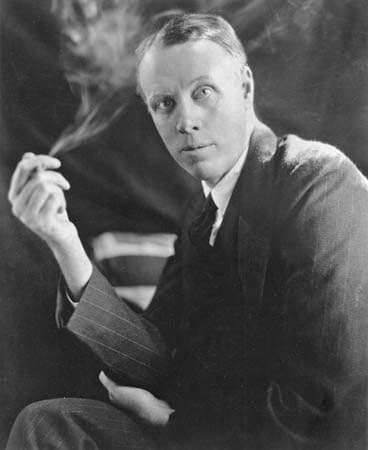
Harry Sinclair Lewis was an American writer and playwright. In 1930, he became the first author from the United States to receive the Nobel Prize in Literature, which was awarded "for his vigorous and graphic art of description and his ability to create, with wit and humor, new types of characters." Lewis wrote six popular novels: Main Street (1920), Babbitt (1922), Arrowsmith (1925), Elmer Gantry (1927), Dodsworth (1929), and It Can't Happen Here (1935).







