“The rule was very simple: always get the money up front. If you did the job and then asked for the money, you were a supplicant. If you had the money, you were a lord.”
— Cal Dexter's professional philosophy as a 'fixer' for hire.

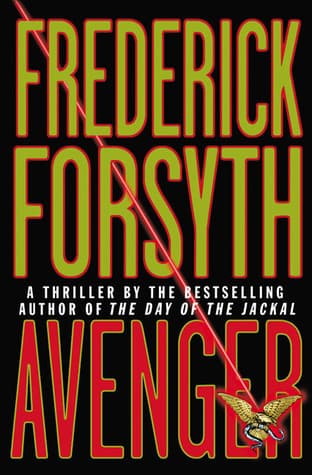
Frederick Forsyth (2003)
Genre
Thriller / Mystery
Reading Time
360 min
Key Themes
See below
Sign in to track this book
A New Jersey attorney, haunted by a past loss, hunts globally for the man responsible for an aid worker's disappearance, entering a high-stakes game with the CIA that threatens international stability.
In 1995, Ricky Colenso, a 20-year-old American, volunteers with an aid organization in Bosnia during the war. He is last seen in a small village near Srebrenica before disappearing. His wealthy grandfather, Stephen Metcalfe, a Canadian billionaire, becomes determined to find him. Despite extensive private investigations and inquiries with international groups, Ricky is never found. His fate remains unknown. Metcalfe is told that Ricky was likely murdered by a Serb paramilitary leader named Zoran Zilic, known as 'The Serb,' but there is no proof or body, leaving the family with lasting grief and uncertainty.
In 2001, Calvin Dexter lives a quiet life as a successful lawyer in New Jersey. He is also a triathlete, keeping himself in top physical shape. Dexter has a secret: he is a highly skilled former U.S. Army special operations soldier, trained in intelligence and combat. He works as a 'private avenger,' taking cases where official justice has failed, seeking retribution for victims of terrible crimes. His services are offered discreetly, and he only accepts cases he believes truly deserve his help, often involving people who have escaped legal accountability for murder or severe human rights abuses.
Stephen Metcalfe, still affected by Ricky's disappearance, finds an obscure online forum mentioning a 'private avenger' who delivers justice. Desperate, he contacts the intermediary, and after a strict vetting process, Calvin Dexter accepts his case. Metcalfe explains his belief that Zoran Zilic was responsible for Ricky's death and offers Dexter a large fee, a significant part of his fortune, to find Zilic, confirm his guilt, and bring him to justice. Dexter, after reviewing the extensive file on Ricky's disappearance and Zilic's known crimes, agrees to take on the mission, seeing it as a just cause.
Dexter begins his careful search for Zoran Zilic. Zilic, a brutal Serb paramilitary commander, went into hiding after the Bosnian War, rumored to be living under a new identity somewhere, protected by his ill-gotten gains and former associates. Dexter uses his wide network of contacts, intelligence gathering skills, and knowledge of covert operations. He meticulously examines old intelligence reports, war crime testimonies, and financial records, slowly putting together clues about Zilic's possible location and new identity. This initial phase involves extensive travel and data analysis, focusing on areas where war criminals often hide.
Through diligent investigation, Dexter eventually uncovers Zoran Zilic's new identity: Milan Zilic, a seemingly legitimate and wealthy businessman in Belgrade, Serbia. He has reinvented himself, investing his wartime profits into various businesses, and lives a life of luxury and respectability. Dexter confirms that 'Milan Zilic' is the notorious war criminal Zoran Zilic, responsible for many crimes, including the massacre of Bosnian Muslims and Ricky Colenso's likely murder. This discovery gives Dexter a clear target for the final stages of his mission.
Unbeknownst to Dexter, the CIA, specifically a covert operations team led by Paul Devereux, is also interested in Zoran Zilic. The U.S. government has a secret, critical objective: Zilic has vital intelligence about a planned al-Qaeda attack on American soil, code-named 'The Millennium Plot Reloaded.' Zilic, having made contacts in the criminal underworld, accidentally found this information. The CIA plans to abduct Zilic, extract the intelligence, and then quietly get rid of him, preventing him from facing justice for his war crimes, which would compromise their operation. Devereux is under immense pressure to secure Zilic and his information.
As Dexter gets closer to Zilic in Belgrade, the CIA's operation, codenamed 'The Nightingale,' also intensifies. Paul Devereux and his team prepare their snatch-and-grab operation, planning Zilic's abduction from his heavily guarded villa. The CIA becomes aware of Dexter's presence and activities, realizing he is also hunting Zilic. This creates a critical conflict: if Dexter 'avenges' Zilic, the CIA loses its source of crucial intelligence, potentially leading to a catastrophic terrorist attack in the U.S. Devereux is tasked with stopping Dexter without revealing why they are interested in Zilic.
Paul Devereux, a seasoned but morally conflicted CIA officer, tries to track and intercept Calvin Dexter. He understands Dexter's desire for justice but is bound by his duty to prevent the al-Qaeda attack. Devereux attempts to deter Dexter through various means, including subtle warnings and efforts to disrupt his movements, without directly engaging him or revealing the CIA's true agenda. He struggles with the ethics of letting a war criminal like Zilic escape justice for a greater good, but the stakes for American lives are too high for him to waver.
Dexter, using his training and resources, infiltrates Zilic's heavily protected villa in Belgrade. He carries out a flawless operation, neutralizing Zilic's bodyguards and capturing the war criminal. At the same time, the CIA team, led by Devereux, launches their own raid. They arrive just as Dexter secures Zilic. A tense standoff follows, with Devereux recognizing Dexter as a formidable opponent. Dexter, having expected such interference, has a backup plan. He is determined to complete his mission, even if it means confronting American intelligence operatives.
Dexter takes Zilic to a secure, remote location for questioning. He uses psychological pressure and physical intimidation to get the truth about Ricky Colenso's disappearance. Zilic, under duress, confesses to Ricky's murder, revealing he killed the young aid worker in a fit of rage after Ricky witnessed him executing a group of Bosniak civilians. Dexter secretly records this confession. The CIA, having tracked Dexter, monitors the situation remotely, desperate to get Zilic's intelligence about the al-Qaeda plot before Dexter acts on his vengeance.
Knowing the CIA needs Zilic alive, Dexter offers a deal: he will hand over Zilic in exchange for the CIA's promise that Zilic will face justice for his war crimes, or at least that his confession about Ricky is made public. Devereux, under immense pressure, agrees to a temporary truce. However, before Zilic can fully reveal the details of the al-Qaeda plot, a member of his own Serbian network secretly kills him. This person feared Zilic would betray them or reveal their operations under CIA questioning. This unexpected turn thwarts both Dexter's full vengeance and the CIA's complete intelligence acquisition.
Despite Zilic's assassination, Dexter ensures that the recorded confession of Ricky Colenso's murder is sent to Stephen Metcalfe, giving the grieving grandfather the closure he sought. The CIA, though losing Zilic, pieces together enough fragmented intelligence from Zilic's initial statements and other sources to understand the core of the al-Qaeda threat. They implement enhanced security measures. While the original 'Millennium Plot Reloaded' is disrupted, a modified, less severe attack still occurs, but with significantly fewer casualties due to the CIA's actions. Dexter, his mission partly accomplished, returns to his quiet life, still an avenger.
The Protagonist
Dexter's arc involves seeking and delivering justice for Ricky Colenso, confronting the ethical complexities of his avenger role when it clashes with national security interests, and ultimately finding a form of closure for the victim's family, even if his full vengeance is thwarted.
The Supporting
Metcalfe's arc is one of sustained grief and a relentless pursuit of justice, culminating in the bittersweet relief of finally learning his grandson's fate and seeing his killer held accountable, albeit posthumously.
The Mentioned
Ricky's arc is tragically cut short, serving as a symbol of innocent victimhood and the profound need for justice in a world riddled with impunity.
The Antagonist
Zilic's arc is one of successful evasion and reinvention, only to be ultimately hunted down and forced to confess his crimes, before being unexpectedly silenced by his own associates.
The Antagonist/Supporting
Devereux's arc involves navigating the ethical tightrope of his mission, attempting to outmaneuver Dexter, and ultimately achieving a partial success in averting disaster, but at a moral cost.
The Supporting
Quinn's arc remains largely consistent as a reliable and skilled supporter, enabling Dexter's mission.
The Mentioned
Petar's role is primarily to illustrate the systemic failures that allowed Zilic to escape justice, indirectly motivating Dexter's actions.
The Mentioned
The President's 'arc' is largely static, representing the highest level of authority and the difficult decisions made in the interest of national security.
The novel looks at the unclear line between seeking justice for crimes unpunished by the legal system and the personal, often violent, act of revenge. Calvin Dexter works as a 'private avenger,' believing that some wrongs need a direct, extra-legal response when official channels fail. Stephen Metcalfe's goal is justice for his grandson, but his chosen method, hiring Dexter, leans toward revenge. The story asks if true justice can be found outside the law, and if the satisfaction of personal retribution justifies the methods. This is especially clear when Dexter's pursuit of Zilic clashes with the CIA's practical national security goals.
““There are some crimes so heinous, so utterly beyond the pale, that the law simply cannot contain them. For those, there must be… an avenger.””
A main theme is the failure of international legal and political systems to hold war criminals accountable. Zoran Zilic, who committed horrific crimes, avoids justice for years, reinventing himself as a legitimate businessman in Serbia. This lack of punishment drives Stephen Metcalfe's desperation and Calvin Dexter's mission. The novel criticizes the bureaucratic slowness, political compromises, and complex jurisdictions that allow figures like Zilic to escape prosecution, showing the gap between moral duty and legal enforcement. The CIA's willingness to use Zilic's status as an unpunished criminal further highlights this failure.
““The tribunals moved too slowly, the politicians too cautiously, and the killers simply melted away into the shadows, their hands still dripping with blood.””
This theme is clear in Paul Devereux's difficult situation. The CIA's mission to get intelligence from Zoran Zilic to prevent a major terrorist attack directly conflicts with Dexter's pursuit of justice for Zilic's war crimes. Devereux must prioritize national security and saving potentially thousands of lives over the moral need to punish a war criminal. The novel makes readers face difficult ethical questions: Is it acceptable to let a murderer escape justice if it serves a greater good? What are the long-term effects of such compromises? This tension creates much of the novel's suspense and moral complexity.
““Sometimes, the choices we make aren't between right and wrong, but between one terrible right and another.””
The deep and lasting impact of trauma and loss is shown through Stephen Metcalfe. His grief over Ricky's disappearance and presumed murder consumes him for years, driving his relentless and costly search for answers. The novel shows how unresolved loss can shape a person's life, leading to an obsessive need for closure and accountability. Even years later, the pain remains fresh, demonstrating the deep emotional scars left by violence and injustice. Ricky's memory serves as a constant reminder of this enduring pain.
““A hole in the heart, a constant ache that no amount of money or time could ever truly fill.””
A highly skilled individual operating outside the law to deliver justice.
The 'private avenger' is the central plot device, personified by Calvin Dexter. This device allows the narrative to explore themes of justice and vengeance beyond the constraints of legal systems. Dexter's unique skills and moral code enable him to target individuals who have evaded conventional justice, creating a thrilling and morally ambiguous dynamic. It provides a means for the story to address complex international crimes that official bodies often fail to resolve, giving a sense of satisfying resolution to otherwise hopeless situations.
A hidden terrorist plot that creates a ticking clock and moral dilemma.
The al-Qaeda plot, 'The Millennium Plot Reloaded,' is a crucial plot device that introduces a ticking clock and forces the moral conflict between Dexter and the CIA. It elevates the stakes from a personal quest for vengeance to a matter of national security. This device creates a compelling reason for the CIA to protect Zilic, even a war criminal, and generates the intense cat-and-mouse game between Dexter and Devereux. It ensures that the story is not just about retribution but also about the complex interplay of global threats and difficult choices.
Two independent entities (Dexter and the CIA) unknowingly pursuing the same target for different reasons.
The 'double hunt' is a key structural device. Calvin Dexter is hunting Zoran Zilic for vengeance, while Paul Devereux and the CIA are hunting Zilic for critical intelligence. This parallel pursuit creates dramatic irony and a collision course that drives much of the novel's suspense. It allows Forsyth to explore multiple perspectives on Zilic's significance and the ethical dilemmas involved in dealing with him. The convergence of these two hunts leads to the central conflict and the novel's climax.
The target (Zilic) possesses crucial, time-sensitive information that complicates his capture.
Zoran Zilic's unwitting possession of vital intelligence about the al-Qaeda plot transforms him from a simple target of vengeance into an 'unreliable informant' or a highly valuable asset for the CIA. This device adds layers of complexity to the plot, as his capture or death by Dexter would mean the loss of crucial national security information. It creates the primary conflict for Paul Devereux and forces the CIA to try and save Zilic, rather than bring him to justice for his war crimes, leading to a profound moral dilemma.
“The rule was very simple: always get the money up front. If you did the job and then asked for the money, you were a supplicant. If you had the money, you were a lord.”
— Cal Dexter's professional philosophy as a 'fixer' for hire.
“There are people in the world who do not believe they can be bought. They are the most dangerous kind.”
— A reflection on the different types of individuals one might encounter in the world of espionage and covert operations.
“He knew the difference between a contract and a promise. A contract was something you signed; a promise was something you kept.”
— Cal Dexter's personal code of conduct regarding his commitments.
“The past, he had learned, was never truly past. It always had a way of catching up, often at the most inconvenient times.”
— A general observation on the lingering effects of past events and decisions.
“There are some things worth dying for, and others worth killing for. The trick is knowing the difference.”
— A contemplation on extreme actions and their justifications.
“Patience was not a virtue, it was a weapon. And he was a master of it.”
— Describing Cal Dexter's methodical approach to his missions.
“The greatest trick the Devil ever pulled was convincing the world he didn't exist. The second greatest was convincing people that justice was always swift.”
— A cynical view on the nature of justice and retribution.
“Information was power, but only if you knew what to do with it.”
— Highlighting the importance of analysis and application of intelligence.
“He had no hatred, only purpose. Hatred was a luxury he could not afford.”
— Cal Dexter's detached and focused mindset when pursuing his targets.
“The world was full of shadows, and sometimes, the only way to fight them was to become one.”
— A justification for operating outside conventional morality to achieve a desired outcome.
“Truth was often subjective, but facts were stubborn things.”
— A distinction between perception and objective reality.
“There was a fine line between courage and stupidity, and he often found himself walking it.”
— A self-aware reflection on the risks taken in his dangerous profession.
“Every man has a price, it's just a matter of finding what currency they deal in.”
— A cynical view on human susceptibility to temptation and manipulation.
“The first rule of survival was never to trust anyone completely, not even yourself.”
— A cautious approach to life in a world of deceit and betrayal.
Ready to see how well you understood this book? Take our interactive quiz with 10 questions.

Biography coming soon.







