“All the world’s a stage, and all the men and women merely players.”
— Elisabeth is thinking about Shakespeare, and the epigraph to the book.


Ali Smith (2016)
Genre
Literary Fiction / Creativity
Reading Time
240 min
Key Themes
See below
Sign in to track this book
As Britain struggles with its identity, an unlikely bond between a centenarian and a young art lecturer grows, connecting memory, history, and human connection through the changing seasons.
The story begins with Elisabeth Demand, a lecturer, waiting in a post office line in a troubling, post-Brexit Britain. She thinks about her childhood in the 1980s and her friendship with her much older neighbor, Daniel Gluck. Daniel, now 101 years old, is in a deep sleep, possibly dying, in a care home. Elisabeth’s mother, Carol, first did not approve of the bond between young Elisabeth and elderly Daniel, but later accepted it. Daniel helped Elisabeth's imagination and critical thinking, teaching her about art, literature, and time through games and talks. The current political situation, with its increased nationalism and division, is a background to Elisabeth's memories and present worries.
Elisabeth's memories often return to Daniel's influence, especially his love for art. He introduced her to different artists, with Pauline Boty, a pop artist, appearing often. Daniel and Elisabeth would talk about Boty's life and work, admiring her art and short life. Daniel encouraged Elisabeth to look deeper, to question and understand. He taught her about how life and art do not last forever, using Boty's story as an example of brilliance ending too soon. These talks built Elisabeth's intellectual growth and her understanding of creativity and death. She sees similarities between Boty's time and today's social and political changes.
Elisabeth visits Daniel regularly in the care home, where he is unconscious. She talks to him, reads to him, and remembers, hoping for some sign of recognition, though she knows it is unlikely. The staff, especially a kind nurse named Florence, are used to her presence. During these visits, Elisabeth often thinks about the state of the country, the clear sense of division and uncertainty after the referendum. She compares the intellectual world Daniel opened for her with the current atmosphere of fear and ignorance. The care home becomes a small picture of life and decay, a quiet place where the past and present meet.
Elisabeth's mother, Carol, who was first more traditional and conservative, changes in a small but important way. While she once dismissed Daniel's influence and art as silly, she slowly starts to engage with art herself, especially after Daniel's health declines. Carol becomes more aware of politics, though her views are often mixed and influenced by media. Her relationship with Elisabeth, though sometimes still difficult, shows signs of better understanding. Carol's character shows the wider societal shifts and how different people react to change and uncertainty. She begins to value connection and the arts in a way she had not before.
Elisabeth often faces frustrating bureaucratic problems, like the long line at the post office, which show the problems and breakdown of civil society. These everyday annoyances are tied to her growing disappointment with the political situation. She sees the rise of xenophobia and the acceptance of hateful talk, feeling very uneasy. Her academic work, about art history, feels more and more separate from the urgent issues around her. The daily struggles in a divided nation show the wider worries and the feeling of a world falling apart. She thinks about the loss of shared values and common ground.
While Daniel is in a deep sleep, the story sometimes moves to his inner world, showing his thoughts and memories as a stream of consciousness. These parts include observations about the care home staff, bits of conversations he hears, and clear memories from his long life, especially his youth and his time with Elisabeth. He experiences the seasons changing, hears the news, and thinks about time, art, and human connection. These sections blur the line between being awake and dreaming, suggesting he is still somewhat aware despite his physical state, and offer glimpses into the rich inner life of a dying man.
The main part of Elisabeth and Daniel's relationship is their shared intellectual and imaginative world, built through art and storytelling. Daniel's stories, often made up or exaggerated, taught Elisabeth about the power of narrative and the importance of questioning reality. He showed her how art, especially Pauline Boty's work, could challenge ideas and offer new ways of seeing the world. This connection, made over many years, goes beyond their age difference and becomes a source of comfort and intellectual stimulation for Elisabeth, particularly in the unsettling present. Their bond shows the lasting power of human connection and mentorship.
As autumn deepens, Elisabeth's thoughts become more sad. The changing leaves and colder weather reflect Daniel's declining health and the perceived decline of the nation. She thinks about how loss is certain, both personal and societal, but also about how life and seasons repeat. The book suggests that even in decay, there is beauty and the promise of new beginnings, like autumn leading to winter and then spring. Elisabeth deals with the idea of what lasts—art, memory, human connection—when things do not last and there is political trouble. She finds comfort in nature's continuity and the lessons Daniel taught her.
In one of the novel's most mysterious moments, Elisabeth believes she shares a dream or a deep connection with Daniel about Pauline Boty. She clearly imagines Boty's life and art, almost as if she is experiencing it through Daniel's memories or a shared mind. This event shows how deep their bond is and how Daniel's influence has shaped Elisabeth's inner world. It blurs the lines between individual experience and shared understanding, suggesting that their deep connection helps them go beyond physical limits. This shared imaginative space shows the power of art and memory to bring people together across time and circumstance.
Near the end of the novel, Daniel Gluck dies. Elisabeth gets the news with a sense of certainty, but also deep sadness. His death marks the end of an important part of her life and the loss of a mentor and friend. While he is physically gone, his teachings, his love for art, and their shared memories continue to live within Elisabeth. His death, happening with the harsh realities of a changing Britain, highlights themes of loss, change, and the lasting influence of human connection. Elisabeth is left to face a future shaped by Daniel's influence and the uncertain world around her.
The Protagonist
Elisabeth moves from a state of passive observation and anxiety to a more reflective acceptance of loss and the enduring power of memory and art.
The Supporting/Mentor
Though physically declining, Daniel's spiritual and intellectual presence continues to guide Elisabeth, representing the enduring power of mentorship beyond physical life.
The Supporting
Carol shifts from a somewhat narrow-minded and conventional perspective to one that is more open, politically aware, and appreciative of art and connection.
The Mentioned/Symbolic
Not a character with a personal arc, but her artistic legacy and life story are continuously reinterpreted and appreciated by Elisabeth and Daniel.
The Supporting
A static character who provides a consistent presence of care and humanity.
The Mentioned/Symbolic
A static, symbolic figure.
The novel explores the changing nature of time, putting Elisabeth's current worries next to her clear childhood memories and Daniel's long life. History, both personal and national (e.g., the 1960s versus post-Brexit 2016), is shown not as a straight line but as a repeating, layered experience. Daniel's declining state and Elisabeth's memories show how the past shapes the present, and how personal memories mix with wider historical stories. The story's structure, moving between different time periods, strengthens this theme, suggesting that time is not fixed but a personal experience.
“What happens when you can't remember what you've never forgotten?”
Art, especially Pauline Boty's life and work, is a main source of meaning and connection for Elisabeth and Daniel. Their bond is made and kept through their shared appreciation and discussion of art. Art helps them understand the world, question social norms, and find beauty and comfort amidst problems. It connects different generations and offers a kind of immortality, as artists' works continue to speak across time. In a world feeling more and more divided, art offers a connected, imaginative space.
“All art is political, if it's any good.”
The political and social situation of post-Brexit Britain is a constant background to the story. The novel subtly criticizes the division, nationalism, and uncertainty that came after the referendum. Elisabeth's experiences in lines, her observations of xenophobia, and her general uneasiness show a nation dealing with its identity and future. The 'autumn' in the title also suggests the perceived decline of civil society and shared values. The political events are not described in detail but are woven into daily life, affecting characters' moods and interactions, showing how national decisions impact people personally.
“It was the shortest day. The country was in pieces. The people were in pieces.”
The deep friendship between the centenarian Daniel Gluck and young Elisabeth lasts decades and shows how important connections between generations are. Daniel is a mentor, helping Elisabeth's intellectual and imaginative growth, passing on knowledge and a way of seeing the world. This mentorship goes beyond their large age gap, showing how wisdom and understanding can be shared across generations. The novel suggests that such connections are important for society's health, offering continuity and perspective, especially during times of fast change and division. It contrasts this rich exchange with how modern life can isolate people.
“He taught her how to look, how to see, how to read.”
The story jumps between Elisabeth's present and her childhood memories, and Daniel's internal thoughts.
The novel does not follow a chronological plot. Instead, it fluidly shifts between Elisabeth's adult life in post-Brexit 2016, her childhood memories of Daniel in the 1980s, and Daniel's fragmented stream of consciousness while in a coma. This technique mirrors the way memory functions, blurring past and present, and emphasizes the cyclical nature of time and history. It allows for thematic connections to be drawn across different eras and highlights the enduring impact of past relationships on the present. The reader is invited to piece together the narrative, reflecting the characters' own processes of making sense of their lives.
Daniel Gluck's internal monologue while comatose.
While Daniel Gluck is physically unresponsive in the care home, sections of the novel are presented as his internal thoughts and memories. This stream of consciousness technique provides insight into his rich inner life, his reflections on a century of living, and his continued (though perhaps unconscious) engagement with the world around him. It blurs the line between life and death, consciousness and unconsciousness, suggesting that the mind can remain active even when the body fails. These sections are often poetic and philosophical, offering a unique perspective on aging, memory, and the passage of time.
References to art history, literature, and contemporary culture.
Ali Smith weaves numerous allusions to art, literature, and popular culture throughout the novel, most notably the extensive discussions about Pauline Boty, but also references to Shakespeare, Kafka, and contemporary events. This enriches the narrative by adding layers of meaning and context, inviting readers to engage with the text on multiple levels. It reflects Daniel and Elisabeth's intellectual world and underscores the theme of art as a continuous dialogue across time. These references are not merely decorative; they often mirror or comment on the novel's central themes of identity, memory, and the state of the nation.
The season of autumn as a metaphor for decline, transition, and reflection.
The title itself, 'Autumn,' is a potent symbol that pervades the novel. Autumn represents a period of transition, decline, and preparation for winter, mirroring Daniel's physical decline and the perceived 'decline' or uncertainty of post-Brexit Britain. It evokes themes of maturity, introspection, the beauty of decay, and the inevitability of change. The changing leaves and the cooling weather reflect the melancholic yet beautiful atmosphere of the narrative, suggesting that even in endings, there is a certain richness and a quiet grace. It also hints at the cyclical nature of life, with winter followed by spring.
“All the world’s a stage, and all the men and women merely players.”
— Elisabeth is thinking about Shakespeare, and the epigraph to the book.
“What we feel now, and what we’re going to feel, is the present.”
— Daniel Gluck offers a perspective on time and experience.
“The past is a foreign country; they do things differently there.”
— Elisabeth reflects on the past, referencing a famous literary line.
“Art is not a mirror held up to reality but a hammer with which to shape it.”
— Elisabeth contemplates the purpose and power of art.
“That’s the thing about a story, isn’t it? It can be anything. It can be everything.”
— Daniel Gluck discusses the expansive nature of storytelling.
“There are no easy answers. There are only stories.”
— A reflection on the complexity of life and the role of narrative.
“We’re all just trying to make sense of things, aren’t we?”
— Elisabeth considers the universal human desire for understanding.
“The world is always changing. And we have to change with it.”
— A pragmatic observation about adaptation and the flow of life.
“Memory is not an archive but a landscape.”
— Elisabeth ponders the fluid and interpretative nature of memory.
“To be alive is to be in motion, to be in flux.”
— A philosophical statement about the essence of existence.
“Love is not a state, it’s a process.”
— Daniel Gluck offers a dynamic view of love.
“The future is not something we enter. The future is something we create.”
— A hopeful and empowering perspective on agency.
“What is real? What is not real? It’s all a matter of perspective.”
— A discussion on the subjective nature of reality.
“Books are not just stories, they are living things.”
— Elisabeth's deep appreciation for the vitality of literature.
“There’s always more to see, always more to know.”
— A sentiment reflecting curiosity and continuous learning.
Ready to see how well you understood this book? Take our interactive quiz with 10 questions.
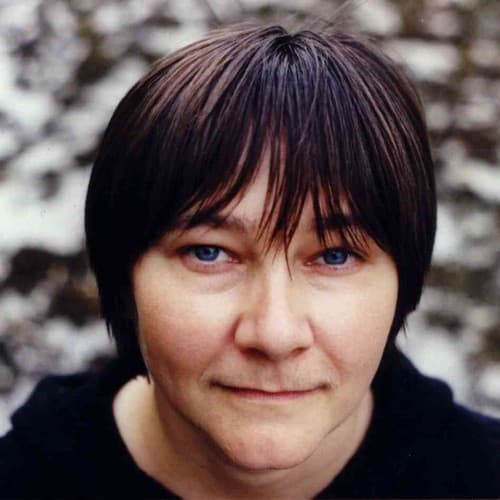
Ali Smith CBE FRSL is a Scottish author, playwright, academic and journalist. Sebastian Barry described her in 2016 as "Scotland's Nobel laureate-in-waiting".







