BookBrief
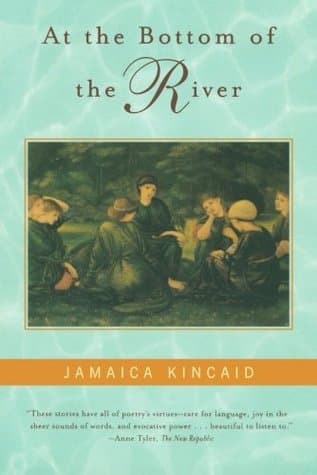
At the Bottom of the River cover
Archivist's Choice

At the Bottom of the River

Jamaica Kincaid (2020)

Genre

Literary Fiction

Reading Time

90 min

Key Themes

See below

Track Your Reading

Sign in to track this book

Jamaica Kincaid's collection of lyrical short stories captures the vivid, often unsettling memories of a Caribbean childhood, exploring family ties, nature's duality, and the quiet power of everyday things through a voice both whimsical and deeply resonant.

Synopsis

Jamaica Kincaid's "At the Bottom of the River" explores the inner world of a young girl in the Caribbean. Through fragmented, lyrical pieces, the narrator navigates her developing identity, her complex relationship with her mother, and her views of nature and the world. She deals with feelings of belonging and alienation, the shift from childhood innocence to a growing self-awareness, and the strong forces of memory and imagination. The book ends with her finding herself and accepting life's cycles, as she learns to define herself both within and beyond her past.
Reading time
90 min
Difficulty
Medium
Pacing
Slow
Mood
Atmospheric, Lyrical, Reflective, Dreamlike, Introspective
✓ Read this if...
You appreciate experimental, poetic prose that prioritizes mood and imagery over traditional plot, and enjoy exploring themes of childhood, mother-daughter relationships, and identity in a Caribbean setting.
✗ Skip this if...
You prefer linear narratives, clear character arcs, or a strong, conventional plot, or if you find highly abstract and symbolic language frustrating.

Plot Summary

Girl

The story 'Girl' is a single, continuous sentence of instructions from a mother to her daughter. The mother dictates how to do household chores, from washing and ironing clothes to preparing food. She gives advice on proper behavior, how to walk, how to speak to men, and how to avoid becoming 'the slut I know you are becoming.' The instructions are practical, cultural, and personal, showing the expectations placed on young women. The daughter speaks only twice, questioning an instruction and protesting the 'slut' accusation, both quickly dismissed by the mother's firm authority.

In the Night

The narrator, a young child, describes the world transforming at night. She talks about stars, the moon, and sounds of crickets and bats. There is wonder and slight unease as she considers the night's vastness and mystery. She imagines the earth as a giant spinning top and her own smallness within it. The child's view is innocent yet thoughtful, observing nature's delicate balance and how darkness changes familiar things, making them both beautiful and slightly frightening. She thinks about how even small things, like a blade of grass, have purpose.

At Last

The narrator describes the detailed process of preparing for a journey, packing belongings, and the physical feelings of leaving. She speaks of shedding her skin, a metaphor for leaving her past self and experiences. There is a sense of detachment from her surroundings and even her own body. She observes her hands and feet as if they belong to someone else, showing a deep sense of alienation. The journey seems to be not just physical, but an internal change, an attempt to escape or redefine herself, leaving the familiar for an unknown future, possibly to a place where she can be truly alone.

The Long Rain

The story describes a world of constant rain, a 'long rain' that has become nature's dominant force. The inhabitants, including the narrator, have adapted to this downpour, and their lives are shaped by it. The rain is both destructive and cleansing. It washes away the old, causing decay, but also brings renewal and a different beauty. People learn to live with the dampness, the constant sound, and the transformed landscape. The story focuses on the sensory experience of the rain—its smell, feel, sound—and how it affects every part of existence, blurring lines between familiar and alien.

A True Short Story

The narrator recounts her deep and changing relationship with a specific house. It is not just a dwelling but a living thing she connects with. She describes its features, sounds, and how it responds to her. Over time, her feelings for the house change; it becomes a place of memories, a witness to her life, and a reflection of her inner state. The house represents stability and continuity, but also the passage of time and inevitable change. She considers leaving it, the pain of separation, and how the house itself seems to hold onto her, making departure a deep emotional struggle.

The Letter

The narrator thinks about writing a letter, but the focus is less on the letter's content and more on the inner process. She struggles with what to say, how to express her feelings, and language's limits. Writing becomes a metaphor for her desire to connect, to show her inner world, and perhaps to bridge a gap with another person. She reflects on words' power, their ability to reveal and hide, and the vulnerability of putting thoughts on paper. The letter seems for someone important, perhaps a lover or parent, and her thoughts reveal her complex emotions and longing for understanding.

The Circling Hand

The narrator describes a 'circling hand' that represents a strong, often unclear, influence in her life. This hand is a source of comfort and security, always there, always offering guidance or solace. But it also feels restrictive, perhaps suffocating, preventing true independence. The hand could symbolize a parent, a lover, or a societal expectation that keeps the narrator within certain limits. She longs to break free from its embrace, to experience life without its constant presence, but also fears losing its protection. The image shows the complex dynamics of dependence and autonomy, and the conflict between safety and freedom.

My Mother

The narrator reflects on her mother, not in a story sequence, but through observations and feelings. Her mother is a strong, almost mythical figure whose presence is all-encompassing. The narrator describes her mother's physical traits, actions, and deep effect on her daughter's identity. There is admiration, fear, and a deep, complex bond. The mother is both a source of love and a force that shapes and sometimes limits the daughter's individuality. The reflections show the lasting influence of the mother, even when absent, and how this relationship forms the core of the daughter's understanding of herself and the world.

The Red Girl

The narrator observes and describes 'the red girl,' a character who stands out because of her unusual appearance, specifically her red skin or hair. This girl is an anomaly, someone who does not quite fit in. The description focuses on her distinct physical traits and how they set her apart. There is fascination and perhaps a touch of alienation in the narrator's gaze. The 'red girl' symbolizes otherness, being different in a captivating and isolating way. Her presence prompts thoughts on beauty, individuality, and the often unspoken judgments or curiosities that arise when someone deviates from the norm.

The Day-Picture

The narrator considers a 'day-picture,' a photograph, and its relationship with time and memory. She questions whether a photograph truly captures a moment or just offers a static, often misleading, representation of it. Looking at the picture brings up thoughts of the past, the people in it, and the emotions of that time. She thinks about how a photograph can both preserve and distort reality, freezing a moment while leaving out the context and feelings around it. The 'day-picture' prompts deeper thoughts on memory's subjective nature, time's passage, and truth's elusive quality.

Blackness

The narrator explores 'blackness' not just as an absence of light, but as a tangible, pervasive force. Blackness is described as something that can be felt, worn, and that permeates everything. It is linked with night, mystery, and a deep sense of depth. The narrator speaks of black skin, black clothes, and how blackness can both hide and reveal. There is pride and power in this description, but also an acknowledgment of its ability to absorb and transform. Blackness becomes a basic element of existence, shaping perception and identity, and carrying meaning beyond its literal definition.

The Sea-Net

The story focuses on the image of a 'sea-net,' likely used by a fisherman. The net is described in detail: its construction, purpose, and interaction with the sea. It symbolizes the effort and labor in sustaining life, the constant struggle against elements, and the hope for a catch. The sea is both generous and unpredictable, a source of life and a place of danger. The net is a metaphor for human effort, the tools we use to navigate our world, and the risks and rewards involved. There is a sense of cyclical existence, of casting out and drawing in, reflecting life's rhythm and reliance on nature.

Principal Figures

The Narrator (various personas)

The Protagonist

Her arc is less about linear development and more about a deepening exploration of self, identity, and the intricate ties to family, nature, and the past.

The Mother

The Supporting

Her character is largely static, serving as a powerful, enduring force rather than undergoing personal development.

The House

The Supporting

Its arc is tied to the narrator's evolving relationship with it, shifting from a simple dwelling to a profound symbol of identity and the past.

The Red Girl

The Mentioned

She does not have a personal arc, but rather serves as a catalyst for the narrator's reflections on difference.

The Circling Hand

The Symbolic/Antagonistic

Its 'arc' is in the narrator's struggle to define her relationship with it and potentially break free.

The Earth/Nature

The Supporting

Its 'arc' is cyclical and eternal, representing the unchanging yet constantly transforming aspects of existence.

Themes & Insights

The Complexities of Mother-Daughter Relationships

This theme is key to the collection, especially in 'Girl' and 'My Mother.' Kincaid explores the deep, often stifling, bond between a mother and daughter. The mother's love appears as a flood of instructions and expectations, shaping the daughter's identity while also threatening to consume it. There is a deep, almost primal connection, but also tension between the daughter's wish for independence and the mother's strong influence. The mother is both a source of knowledge and a symbol of entrapment, showing the lasting impact of this foundational relationship.

This is how to behave in the presence of men who don't know you very well, and this is how to behave in the presence of men who know you very well.

Mother in 'Girl'

Identity and Self-Definition

Many pieces explore the narrator's struggle to define herself amid outside pressures and inner thoughts. In 'At Last,' the narrator speaks of 'shedding her skin' to become someone new, showing a desire to escape past identities. The constant instructions in 'Girl' show a young woman whose identity is molded by another, while 'My Mother' reveals how deeply one's sense of self is tied to parents. The search for an authentic self, separate from family or societal expectations, is a recurring internal journey.

I was not myself, I was someone else, and I was not afraid.

Narrator in 'At Last'

The Power and Mystery of Nature

Nature is not just a setting but an active force and a source of deep thought. In 'In the Night,' the child marvels at the universe's vastness and the earth's movements. 'The Long Rain' shows nature as an overwhelming, transformative power that dictates human life, both destroying and renewing. The sea in 'The Sea-Net' symbolizes both bounty and challenge. Kincaid gives natural elements a spiritual or sentient quality, highlighting humanity's deep connection to, and vulnerability before, the natural world.

The earth is a place of many things, but it is not a thing to be played with.

Narrator in 'In the Night'

Memory, Time, and Perception

The collection often looks at how memories form, are recalled, and shape perception. 'A True Short Story' examines the house as a place of memories, while 'The Day-Picture' directly questions photographs' ability to capture truth, suggesting they can distort as much as they preserve. The lyrical, often fragmented style itself mirrors memory's subjective and fluid nature. Kincaid explores how the past informs the present and how our understanding of events is constantly reinterpreted through time and personal experience.

And the picture, after it is taken, is not the thing itself, but a memory of the thing.

Narrator in 'The Day-Picture'

Alienation and Otherness

A subtle but constant theme is the feeling of being an outsider or different from others. The 'red girl' is defined by her difference, prompting thoughts on how physical traits can isolate. The narrator's feeling of 'not being myself' in 'At Last' speaks to a sense of detachment from her own identity. This alienation can come from family dynamics, societal expectations, or a deeper existential sense of being apart, creating a longing for connection while also embracing one's unique perspective.

And the red girl, she was not like the others.

Narrator in 'The Red Girl'

Plot Devices & Literary Techniques

Stream of Consciousness

A narrative style mimicking unfiltered thought processes.

Kincaid frequently employs stream of consciousness, most notably in 'Girl,' where the entire story is a single, uninterrupted sentence representing the mother's continuous flow of instructions. This device immerses the reader directly into the character's mind, conveying the intensity and immediacy of their thoughts and feelings. It blurs the line between internal monologue and external dialogue, creating a raw and intimate reading experience that reflects the subjective nature of perception and memory.

Metaphor and Symbolism

The use of abstract ideas or objects to represent deeper meanings.

The collection is rich in metaphor and symbolism. The 'shedding of skin' in 'At Last' symbolizes transformation and letting go of a past self. The 'circling hand' represents a powerful, ambiguous influence—comforting yet restrictive. The house in 'A True Short Story' symbolizes memory and identity. These devices allow Kincaid to explore complex emotional and philosophical ideas without explicit exposition, inviting the reader to engage with the text on multiple layers of meaning and interpret the deeper significance of seemingly simple images.

Lyrical Prose

Poetic language characterized by rhythm, imagery, and emotional intensity.

Kincaid's writing is highly lyrical, employing evocative imagery, sensory details, and a distinct rhythmic quality that borders on poetry. This is evident in descriptions of nature ('In the Night,' 'The Long Rain') and internal states. The language often has a repetitive, incantatory quality, creating a hypnotic effect that draws the reader into the narrator's emotional landscape. This poetic style elevates the ordinary to the profound, making the mundane feel sacred and the internal world vibrantly alive.

Lack of Conventional Plot

Focus on internal states and atmosphere over traditional narrative progression.

Many of the pieces eschew a traditional plot structure with a clear beginning, middle, and end, or a defined conflict and resolution. Instead, they function more as meditations, vignettes, or extended reflections on a particular theme, image, or feeling. This narrative choice emphasizes atmosphere, psychological depth, and the exploration of internal states over external action. It allows Kincaid to delve into the nuances of human experience and emotion, creating a sense of timelessness and universal resonance rather than a specific story arc.

Critical analysis

Notable Quotes

I used to wonder if I would be able to love anyone. I used to wonder if I would be able to make anyone happy. I used to wonder if I would be able to make anyone laugh. I used to wonder if I would be able to make anyone feel good. I used to wonder.

From the story 'Girl', a mother's anxieties and hopes for her daughter.

This is how to make a good pumpkin fritter; this is how to make a good pumpkin fritter for a child; this is how to make a good pumpkin fritter for a man; this is how to make a good pumpkin fritter for yourself.

From the story 'Girl', a list of instructions for domestic duties.

But what if the baker won't let you feel the bread to see if it's fresh? You just have to walk on by.

From the story 'Girl', a mother's advice on navigating social situations.

I would like to be the wave, to rise and fall, to disappear and reappear, to be the sea.

From the story 'At the Bottom of the River', a desire for transformation and connection with nature.

I was walking along a road when I saw a woman sitting by the side of the road. She was a very old woman, and she was crying.

From the story 'The Woman with the Jar', an encounter with an elderly, weeping woman.

And then I saw a man walking toward me. He was a very tall man, and he was carrying a very large jar.

From the story 'The Woman with the Jar', the introduction of a mysterious male figure.

I did not know what to do. I did not know what to say. I did not know what to think. I just stood there.

From the story 'In the Night', a moment of confusion and paralysis.

My mother is a beautiful woman. She has long black hair and her skin is the color of caramel.

From the story 'My Mother', a child's idealized description of her mother.

And then I saw my father. He was sitting in a chair, and he was reading a book.

From the story 'My Father', a simple, domestic image of the father.

I could not sleep. I could not eat. I could not think. I could only remember.

From the story 'The Long Road', a state of being consumed by memory.

The trees were very tall, and their leaves were very green. The sky was very blue, and the sun was very bright.

From the story 'The Trees', a vivid description of nature.

I was tired of being me. I was tired of being here. I was tired of everything.

From the story 'The Day-Glo Fish', an expression of existential weariness.

I wanted to be a bird. I wanted to fly away. I wanted to be free.

From the story 'The Bird', a longing for escape and freedom.

And then I saw a house. It was a very small house, and it was made of wood.

From the story 'The House', a simple description of a dwelling.

Quiz

Test Your Knowledge

Ready to see how well you understood this book? Take our interactive quiz with 10 questions.

10
Questions
~5
Minutes
?
Best Score

Key Questions (FAQ)

'At the Bottom of the River' is characterized by its lyrical, almost poetic prose and stream-of-consciousness narratives. It explores themes of childhood, memory, nature, and the intricate relationships within families, particularly between mothers and children, often set against a Caribbean backdrop.

About the author

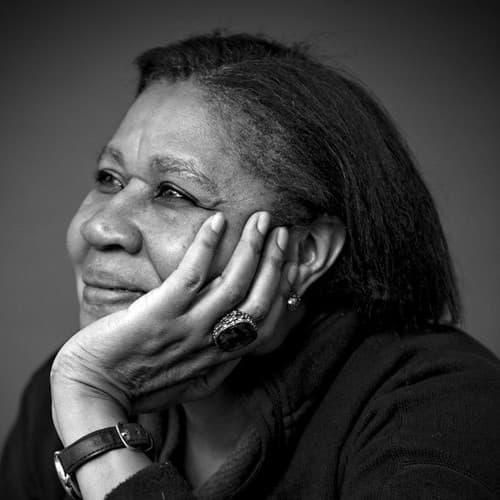
Jamaica Kincaid

Jamaica Kincaid is an Antiguan-American novelist, essayist, gardener, and gardening writer. She was born in St. John's, Antigua. She lives in North Bennington, Vermont and is Professor of African and African American Studies in Residence at Harvard University during the academic year.