“Sleep, little one, sleep. The wind is singing thee to sleep.”
— North Wind's comforting words to Diamond.

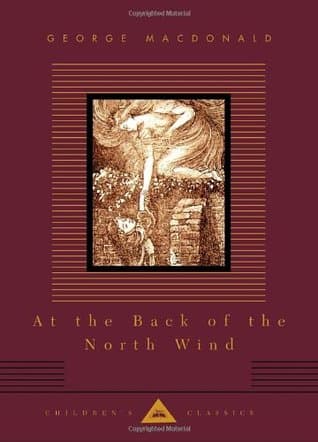
George MacDonald (1871)
Genre
Fantasy / Children's / Young Adult
Reading Time
360 min
Key Themes
See below
Sign in to track this book
A poor coachman's son finds his mundane Victorian life transformed by the ethereal, maternal spirit of the North Wind, who offers him glimpses into a beautiful, mystical land beyond the harsh realities of 19th-century England.
Diamond, a young boy living above a stable with his poor but loving family, often sleeps in a small attic room next to a broken window. One night, the North Wind, personified as a beautiful, powerful woman with long, flowing hair, enters his room through the gap. She initially frightens him but quickly befriends him. Her coldness does not harm him. She takes him on a short, exhilarating flight over London, showing him the city lights and the stars. This first encounter establishes their unique relationship. Diamond is the only human who can see and interact with her in her true form. This sets the stage for his extraordinary adventures and spiritual education.
On one of their nocturnal journeys, the North Wind takes Diamond high above the sea. To his horror, he watches as she deliberately wrecks a ship, causing it to sink and its passengers to drown. Diamond is deeply distressed and questions her actions, unable to reconcile her gentle demeanor towards him with this act of destruction. The North Wind explains that she is not cruel but a bringer of change and transition, guiding souls to 'the country at the back of the North Wind,' a place of peace and beauty beyond earthly suffering. This event introduces Diamond to death and suffering through a spiritual lens, shaping his understanding of life and eternity.
Diamond continues to accompany the North Wind on her nightly travels. She carries him across vast distances, showing him various places and people. He sees poverty, illness, and despair firsthand. Often, he sees the North Wind bring her cold comfort or usher souls away from their earthly suffering. Through these experiences, Diamond develops empathy and compassion. He learns that the North Wind, despite her often harsh methods, is ultimately benevolent, working towards a greater good that humans often cannot comprehend. These journeys solidify his unique position as her confidant and observer of her divine work.
During his travels with the North Wind, Diamond encounters a young, neglected orphan boy named Nello, who lives a miserable existence. Filled with pity, Diamond tries to help Nello by bringing him food and offering comfort. He even tries to bring Nello to his own home, but his parents, though kind-hearted, are too poor to take in another child. This episode shows Diamond's innate goodness and his desire to alleviate suffering, even when faced with his own limitations. It also foreshadows his later efforts to bring joy and hope to those less fortunate than himself.
Diamond falls ill, confined to his bed for a long time. During this time, his connection with the North Wind intensifies. She visits him frequently, comforting him and engaging him in deep conversations about life, death, and the nature of her country. His physical weakness seems to enhance his spiritual sensitivity, allowing him to perceive more clearly the truths she imparts. This illness is not just a physical trial but a crucible for his spiritual development. It prepares him for a deeper understanding of the world beyond the physical and strengthens his faith in the North Wind's ultimate goodness.
As Diamond grows older, he follows in his father's footsteps and becomes a coachman. He continues to live a simple, humble life, but his experiences with the North Wind have left a lasting mark on him. He maintains his ability to see and communicate with her, though these encounters become more subtle and spiritual rather than purely physical flights. His unique perspective allows him to see beauty and meaning in the ordinary. He often shares his wisdom and gentle spirit with those he meets, including the passengers in his coach. His outward life is conventional, but his inner life remains extraordinary.
As a coachman, Diamond encounters many people from different walks of life. He often shares his gentle philosophy and subtle insights, drawing upon the lessons learned from the North Wind, though he never directly reveals his secret. He particularly connects with children and those who are suffering, offering words of comfort and hope. His presence has a calming and uplifting effect on those around him. This shows how his spiritual understanding translates into practical kindness and compassion in his everyday life, making him a quiet beacon of light in a sometimes harsh world.
As Diamond reaches the end of his life, the North Wind's presence becomes more pronounced and comforting. She visits him more frequently, speaking to him about the beautiful country at her back and assuring him of the peace that awaits. She helps him to understand that death is not an end but a transition, a journey to a place of eternal joy and understanding. These final conversations are filled with love and reassurance, preparing Diamond for his ultimate departure and reinforcing the spiritual truths he has learned throughout his life.
In his final moments, Diamond's family gathers around him. He remains serene and unafraid, comforted by the knowledge of what awaits him. He sees the North Wind one last time, her beautiful form welcoming him. With a peaceful smile, Diamond passes away. His spirit is seemingly carried away by his beloved North Wind to the beautiful country at her back. His death is depicted not as a tragic end but as a joyful homecoming, a fulfillment of the spiritual journey he began as a young boy, leaving his family with a sense of wonder and comfort, despite their grief.
The Protagonist
Diamond begins as an innocent boy, gradually maturing in his understanding of life, death, and divine purpose through his unique relationship with the North Wind, ultimately achieving spiritual enlightenment and a peaceful transition.
The Deuteragonist/Supernatural Guide
The North Wind remains a consistent, powerful spiritual entity, her role being to guide Diamond's spiritual development and prepare him for his ultimate journey.
The Supporting
His character remains consistent, embodying the loving, working-class parent.
The Supporting
Her character remains consistent, embodying the nurturing, working-class mother.
The Supporting
His arc is limited, serving primarily to demonstrate Diamond's compassion.
The Supporting
His character remains consistent, representing benevolent authority.
The Supporting
Their roles are consistent, providing a glimpse into the working-class environment.
The book explores death not as an end, but as a transition to a more beautiful existence. Through the North Wind, Diamond learns that suffering and death are part of a larger, benevolent divine plan, guiding souls to 'the country at the back of the North Wind.' The North Wind's destructive acts, like the sinking of the ship, are explained as necessary for this transition. This challenges conventional understandings of good and evil and offers comfort in the face of loss. This theme is central to Diamond's spiritual education.
““I am not cruel, Diamond, but I am stern. And I do not destroy; I only change. Death is but a door. The country at my back is a beautiful country.””
Diamond's purity and innocence allow him to perceive spiritual truths and interact with the North Wind, a privilege denied to adults. His childlike faith and open-mindedness enable his spiritual growth. This contrasts with the often cynical or materialistic views of the adult world. The book suggests that true understanding comes not from worldly knowledge but from an innocent heart attuned to divine mysteries. Diamond's journey is one of spiritual awakening and deepening faith.
““It is only the pure in heart that can see me, Diamond. And you are one of them.””
Diamond's experiences with the North Wind, especially witnessing human suffering, cultivate compassion in him. He actively tries to alleviate the suffering of others, such as Nello, and as an adult coachman, he spreads kindness and comfort through his gentle demeanor and wise words. The book emphasizes the importance of empathy and acts of service as reflections of spiritual understanding and love. It shows how inner enlightenment translates into outward benevolence.
““If I could only carry him to the North Wind, she would take him to her own country,” thought Diamond, looking at the poor, shivering Nello.”
The story blends the harsh realities of Victorian London's poverty with the fantastical adventures of Diamond and the North Wind. Diamond lives a humble, everyday life as a coachman's son, yet he regularly journeys into a mystical realm. This juxtaposition highlights that spiritual wonder can be found within the ordinary, and that one's inner life can be rich despite external circumstances. The attic room and the broken window are portals, bridging these two worlds.
““His father was only a coachman, and he was only a coachman’s boy; but he had the North Wind for his friend, and that made all the difference.””
The North Wind embodies a powerful, benevolent, and complex spiritual entity.
The North Wind is not merely a weather phenomenon but a fully personified character—a beautiful, colossal woman with long, flowing hair and a dual nature. She represents a divine force that brings both destruction and comfort, acting as a guide for souls to the afterlife. This personification allows for direct dialogue and interaction, making abstract spiritual concepts tangible and creating a unique mentor-protégé relationship with Diamond, through whom complex theological ideas are explored in an accessible way.
A symbolic representation of heaven or the afterlife.
This mysterious, beautiful country is presented as the ultimate destination for souls, a place of peace, understanding, and eternal joy. It serves as a powerful symbol of the afterlife, offering comfort and hope in the face of death and suffering. Its abstract nature allows readers to project their own spiritual interpretations onto it, while its repeated mention reinforces the book's central theme of death as a transition rather than an end. It is the driving force behind the North Wind's actions and Diamond's spiritual journey.
A liminal space serving as a portal between worlds.
Diamond's small, humble attic room with its broken window is more than just a setting; it's a symbolic threshold. The broken window allows the North Wind to enter, transforming an ordinary, impoverished space into a gateway to extraordinary spiritual adventures. It represents the permeability between the mundane earthly world and the miraculous spiritual realm, suggesting that divine access is available even in the most unlikely and humble circumstances, especially to those with a pure heart like Diamond.
A fluid and episodic structure reflecting spiritual journeys and visions.
The narrative often shifts between Diamond's waking life and his ethereal journeys with the North Wind, which sometimes possess a dream-like quality. Events are not always strictly linear or bound by conventional realism; instead, they flow with a logic that prioritizes spiritual lessons and symbolic encounters. This structure mirrors the subjective nature of spiritual experience and allows for a seamless integration of fantasy and reality, enhancing the mystical atmosphere and focusing on the emotional and spiritual impact rather than strict plot progression.
“Sleep, little one, sleep. The wind is singing thee to sleep.”
— North Wind's comforting words to Diamond.
“I'm not a lady. I'm North Wind.”
— North Wind correcting Diamond's perception of her.
“The wind blows wherever it lists, and you hear the sound thereof, but canst not tell whence it cometh, and whither it goeth: so is every one that is born of the Spirit.”
— A biblical allusion used to explain North Wind's mysterious nature.
“It's the only way of getting to the back of the North Wind.”
— Diamond realizing the necessity of death/transition to reach North Wind's home.
“You are not to be a gentleman; you are to be a man.”
— Diamond's father offering guidance on his son's future.
“If you don't grow, you're dead.”
— North Wind's simple but profound statement about life.
“The loveliest thing God made is a tree.”
— Diamond's simple appreciation for nature's beauty.
“It is always good to have a good cry when you are sad.”
— A pragmatic view on expressing sorrow.
“To be clean is to be beautiful.”
— North Wind's lesson on inner and outer purity.
“The wind does not break the tree that bends.”
— A metaphor for resilience and adaptability.
“There is no end to the good that a man may do, if he does not care who gets the credit.”
— A lesson on selfless service and humility.
“It is only the good things that are true.”
— North Wind's philosophical assertion about truth and goodness.
“You must be very careful not to let your heart go to sleep.”
— A warning against spiritual or emotional complacency.
“The best thing is to be good.”
— A straightforward moral lesson.
Ready to see how well you understood this book? Take our interactive quiz with 10 questions.
Biography coming soon.







