“The past is a funny thing. We can try to bury it, but it always finds a way to dig itself out.”
— Dan reflects on the history of Brookline and its impact.

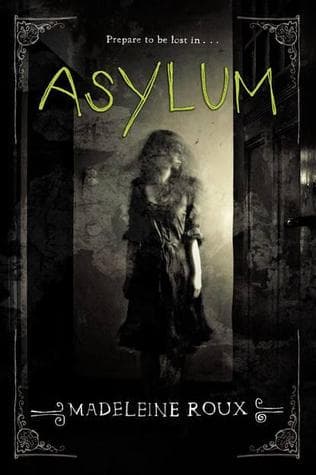
Madeleine Roux (2013)
Genre
Thriller / Psychology / Mystery
Reading Time
240 min
Key Themes
See below
Sign in to track this book
When a summer program places three teens in a former asylum for the criminally insane, they uncover a terrifying, shared past that refuses to stay buried, blurring the lines between their present and the institution's chilling history.
Sixteen-year-old Dan Crawford arrives at New Hampshire College Prep, a summer program for gifted students. His dorms are in Brookline, a former psychiatric hospital for the criminally insane. Dan, an outcast at his previous school, hopes for a fresh start. He quickly becomes friends with Abby, an artistic girl interested in the asylum's history, and Jordan, a quiet, intelligent boy. Their orientation includes a warning about restricted areas and a history lesson about Dr. Daniel Crawford, the asylum's controversial founder, and his assistant, Dr. Albright. Strange things begin almost immediately, with whispers and chilling sensations in their rooms.
Curious, Dan, Abby, and Jordan explore the abandoned parts of Brookline. They find hidden passages, old patient rooms, and a forgotten infirmary. Their investigations lead them to a restricted archive with disturbing patient files, photographs, and Dr. Crawford's notes. They learn about brutal treatments, unethical experiments, and the tragic fates of many patients, especially Dennis, who had extreme lobotomies. The more they uncover, the more they feel watched and haunted by the asylum's past. Abby sketches unsettling images from their findings, while Jordan researches historical records, finding discrepancies.
As they explore more, Dan, Abby, and Jordan start having vivid nightmares and unsettling hallucinations. Dan often dreams of being trapped in the asylum, seeing gruesome procedures and hearing screams. He sees a figure he believes is Dennis, the lobotomized patient, haunting the halls. Abby's artistic visions become darker, showing the horrors they found. Jordan, usually rational, also feels a pervasive sense of dread. The line between reality and the asylum's past blurs, making it hard to tell real threats from psychological manifestations of their fear. Other students also report strange things, though less intensely.
Through their archive research, Dan discovers a personal connection to Brookline. He finds old records and a family tree showing he is a direct descendant of Dr. Daniel Crawford, the asylum's founder. This revelation affects Dan deeply, as he struggles to accept his link to such a malevolent figure. The discovery intensifies his nightmares and feelings of being watched, making him wonder if his presence at Brookline is a coincidence. Abby and Jordan are also shocked, realizing Dan's bloodline might be a key to understanding the asylum's lasting evil.
Abby's artistic abilities connect more with the asylum's history. She starts sketching vivid, unsettling images that seem to be premonitions or visions of past events within Brookline, including detailed depictions of patient suffering and Dr. Crawford's experiments. Meanwhile, Jordan, with his sharp mind, continues to go through historical documents and news clippings. He finds that Dr. Daniel Crawford was not only an unethical doctor but also obsessed with transferring consciousness. He uncovers evidence of 'The Circle,' a secret society of doctors and patients within the asylum, hinting at a darker purpose behind the treatments.
As summer goes on, paranormal activity in Brookline increases. Objects move, whispers become clearer, and the feeling of being watched is constant. Dan, Abby, and Jordan feel more isolated from other students and even faculty, who dismiss their concerns as overactive imaginations. They often encounter a creepy janitor, who seems to know more than he says, and a strange, quiet girl named Lucy, who appears to have a unique connection to the asylum. The psychological toll on the trio intensifies; each questions their sanity, convinced the asylum is trying to communicate with or manipulate them.
Jordan's research leads to the discovery of 'The Circle'—a secret group within the asylum, led by Dr. Crawford, that sought to achieve immortality or transfer consciousness unethically. They learn that patients, especially Dennis, were not just subjects but sacrifices in a ritual. The group believes the asylum itself is a conduit for this dark energy. They realize Dr. Crawford's goal was to find a vessel for his own consciousness or to create a collective consciousness from the tortured souls in Brookline. This discovery explains the pervasive evil haunting the halls.
With their new knowledge, Dan, Abby, and Jordan decide to confront the asylum's evil. They follow clues to a hidden, sub-basement laboratory beneath Brookline, where Dr. Crawford conducted his worst experiments. There, they find more disturbing artifacts, surgical instruments, and evidence of the rituals. The atmosphere is thick with evil. They are confronted by the lingering spirit of Dennis and other patients, whose tormented presences are almost palpable. They also realize the janitor, Ben, has been watching them, and he hints at the asylum's enduring power, suggesting the past is far from over.
In the asylum's depths, the entity believed to be Dr. Crawford's consciousness or a collective of tormented souls tries to possess Dan, recognizing his bloodline. The asylum itself seems to come alive, its walls groaning, lights flickering, and doors slamming. Abby uses her artistic visions to understand and fight the entity, while Jordan tries to find a way to cut its connection to the physical world. Through a desperate struggle, they disrupt the ritualistic energy, causing a partial collapse in the hidden lab. They narrowly escape the crumbling section of the asylum, battered but alive, leaving Brookline's horrors behind, but not without scars.
After their escape, Dan, Abby, and Jordan are physically safe but deeply traumatized by their experiences at Brookline. The summer program ends early for them, and they return home. Despite trying to move on, the asylum's influence remains. Dan continues to have nightmares and feels a persistent unease, questioning if he truly escaped or if part of Dr. Crawford's legacy now lives within him. Abby struggles with her visions, which occasionally return, and Jordan remains haunted by the dark history he uncovered. They realize some secrets, once found, can never be fully buried, and Brookline will always be part of them.
The Protagonist
From a timid outsider, Dan evolves into a courageous leader who confronts his family's dark past and the asylum's malevolent spirit.
The Supporting
Abby embraces her artistic and intuitive gifts, using them to understand and combat the asylum's oppressive past.
The Supporting
Jordan's intellectual curiosity leads him to uncover profound and disturbing historical truths, challenging his rational worldview.
The Antagonist (historical)
His historical actions and lingering malevolence drive the plot, revealing the depths of human depravity.
The Supporting/Victim
His tragic past serves as a catalyst for the main characters' investigations and a manifestation of the asylum's pain.
The Supporting/Ambiguous
His character provides intermittent guidance and ominous foreshadowing, underscoring the asylum's pervasive influence.
The Supporting/Symbolic
Lucy's enigmatic presence highlights the asylum's pervasive influence and the vulnerability of its inhabitants.
The Mentioned
His historical role as an accomplice solidifies the pervasive evil within the asylum's past.
Identity is central to Dan's journey, especially after he learns he is related to Dr. Daniel Crawford. He struggles with being connected to such a malevolent figure, wondering if he will repeat his ancestor's mistakes or make his own path. This theme is explored through his internal struggle and his efforts to understand his infamous ancestor. The asylum's legacy itself shapes the identities and experiences of everyone who enters it.
“What if the past isn’t past at all? What if it’s right here, living inside of me?”
The book often blurs the lines between genius and madness. Dr. Crawford's experiments, though horrific, came from a twisted scientific ambition. The asylum, meant to 'cure' the insane, instead drove people deeper into madness. The protagonists, especially Dan, start to question their own sanity as they experience hallucinations and nightmares, making them wonder if the asylum's influence is psychological or supernatural. This theme explores how environment, trauma, and inherited tendencies can warp the mind.
“Sometimes the things we think are facts are just stories we tell ourselves.”
Brookline Asylum is a strong symbol of a past that refuses to stay buried. The building holds the suffering and evil of its history, actively influencing the present. The historical photos and patient files link directly to this past, showing its lasting impact on the characters. The trio's investigation confronts this theme, as they learn that understanding and facing historical atrocities is key to breaking free from their oppressive influence. The past is not just history but a living entity within the asylum's walls.
“The building was alive, and it remembered everything.”
Dr. Daniel Crawford's experiments at Brookline show the dangers of scientific ambition without ethical limits. His pursuit of consciousness transfer and immortality led to terrible acts against his patients. The patient files detail brutal treatments and a disregard for human life, serving as a warning about science becoming corrupted. This theme makes readers consider the moral responsibilities of those in power and the devastating results when those responsibilities are ignored for progress or personal gain.
“There are some things man was not meant to know, and some lines that should never be crossed, even in the name of progress.”
The book uses psychological horror heavily, creating fear with the asylum's unsettling atmosphere, jump scares, and the characters' declining mental states. The fear is not just of ghosts, but of losing one's mind, being trapped by a dark legacy, and the unknown. The combination of historical photos and the narrative creates a pervasive sense of dread, making the reader question what is real and what is imagined, much like the characters themselves. The horror comes from the subtle nature of the asylum's influence.
“The real monsters weren't under the bed, they were in the history books.”
Authentic vintage photographs used to enhance the creepy atmosphere and provide visual context.
The novel is interspersed with actual vintage photographs of abandoned asylums, old medical procedures, and unsettling portraits. These 'found photos' are a crucial plot device, serving to ground the fictional narrative in a sense of historical reality and amplify the creepy, unsettling atmosphere. They often depict scenes or characters that mirror the events in the story, such as lobotomized patients or the stark interiors of an asylum, making the horror feel more tangible and immediate for the reader. They act as visual clues and emotional triggers, deepening the immersion.
Brookline Asylum is not just a setting but a malevolent entity with its own will and memory.
Brookline Asylum functions as much more than just a setting; it is a living, breathing, malevolent entity. The building itself seems to possess a consciousness, remembering the suffering within its walls and actively influencing the characters. It manifests through whispers, temperature drops, moving objects, and psychological torment. This device creates a pervasive sense of dread and makes the antagonist less a single person and more the embodiment of the building's dark history, giving the physical space a powerful, active role in the narrative.
Dan's bloodline connection to Dr. Crawford drives the core conflict and personal stakes.
The discovery that Dan is a direct descendant of Dr. Daniel Crawford is a pivotal plot device. It transforms the general haunting into a deeply personal and inescapable conflict for Dan. This ancestral legacy introduces themes of inherited guilt, destiny, and the idea that one cannot escape their past. It raises the stakes significantly, suggesting that Dan is not just an observer but a target, potentially destined to repeat or rectify his ancestor's horrific actions, making his struggle for survival also a struggle for his identity.
The gradual breakdown of the characters' mental states blurs the line between reality and hallucination.
This device is central to the horror, as the asylum's influence gradually erodes the characters' sanity. Dan, Abby, and Jordan experience increasingly vivid nightmares, hallucinations, and paranoia, making it difficult for them to distinguish between genuine paranormal activity and their own psychological distress. This erosion of their mental state creates a deep sense of unease for the reader and heightens the tension, as the characters become unreliable narrators of their own experiences, questioning their perceptions and the very nature of reality within Brookline's walls.
“The past is a funny thing. We can try to bury it, but it always finds a way to dig itself out.”
— Dan reflects on the history of Brookline and its impact.
“Sometimes the things we're most afraid of are the things we need to confront the most.”
— Dan considers facing his fears about the asylum.
“Sanity is a fragile thing, easily shattered by the right amount of pressure.”
— A general observation about the psychological impact of Brookline.
“The more you look, the more you see. And sometimes, what you see isn't what you want to find.”
— Abby's warning to Dan about digging too deep into the asylum's secrets.
“Every secret has a shelf life. Eventually, it spoils.”
— Jordan talks about the inevitability of secrets coming to light.
“The line between genius and madness is often blurred, especially in places like this.”
— Dan muses on the nature of the asylum's former residents.
“You can't outrun your past, especially when your past is staring back at you from every shadow.”
— Dan feels haunted by the asylum's history.
“There are some places where the echoes of suffering never truly fade.”
— A description of the lingering atmosphere of the former asylum.
“Sometimes the greatest monsters are the ones we create ourselves, in our own minds.”
— Dan's internal struggle with his fears and perceptions.
“Curiosity can be a dangerous thing, especially when it leads you down dark corridors.”
— Abby warns Dan about the perils of investigating the asylum.
“The truth is rarely simple, and often far more disturbing than any lie.”
— Dan uncovers more unsettling facts about Brookline.
“We all have our demons. Some of us just keep them locked away better than others.”
— A general reflection on human nature and hidden struggles.
“The only way out is through. You have to face it, whatever 'it' is.”
— A piece of advice given to Dan about overcoming his challenges.
Ready to see how well you understood this book? Take our interactive quiz with 10 questions.

Biography coming soon.







