“It's a strange thing to discover that you've been leading your whole life under a delusion, and that the world isn't at all the way you'd imagined it.”
— Fitz's realization about his past and parentage.

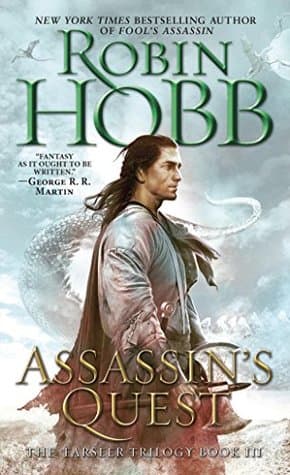
Robin Hobb (1997)
Genre
Fantasy
Reading Time
15-20 hours (approx. 757 pages at ~50 pages/hour)
Key Themes
See below
Sign in to track this book
Resurrected and scarred, the former assassin Fitz embarks on a desperate, magic-infused quest for vengeance against the treacherous Prince Regal, hoping to save his crumbling kingdom and the last vestiges of his soul.
FitzChivalry Farseer, believed dead by most, awakens in a frozen tomb beneath the dungeons of Buckkeep. He is brought back to life by Chade, Burrich, and the Fool, but the process leaves him severely disfigured, with a gaunt body, a scarred face, and a crippled left hand. His mind is also wounded, haunted by the memory of his daughter, Nettle, whom he believes was killed by Regal's men. The first weeks are a struggle for survival, both physical and mental, as he faces his new reality and the immense grief over his perceived loss, refusing to accept his identity as FitzChivalry.
As Fitz slowly recovers, he is informed about the dire state of the Six Duchies. King Regal has abandoned Buckkeep, relocating the capital to Tradeford and leaving the coastal regions vulnerable to the Red-Ship Raiders. The kingdom is in economic ruin, and the people suffer under Regal's oppressive taxes and neglect. Prince Verity remains absent on his quest to find the Elderlings, leaving Princess Kettricken alone to manage the remnants of the court and the desperate populace. Fitz's anger towards Regal grows, fueling a desire for vengeance for the wrongs against him and the kingdom.
Unable to sit idly by while Regal destroys the kingdom, Fitz resolves to kill the usurper king. He believes this is the only way to restore order and avenge the wrongs committed. He sheds his identity as FitzChivalry, adopting the guise of a scarred, simple man named 'Tom Badgerlock'. The Fool, ever loyal, insists on accompanying him, believing their destinies are connected. Starling, a minstrel who had been part of Fitz's life, also joins their company, seeking to document their journey and the truth of the Farseer line. Their journey south towards Tradeford is filled with danger and hardship, facing Regal's soldiers and the realities of a war-torn land.
On their way to Tradeford, Fitz and his companions meet various individuals. They briefly meet Patience, who, despite her grief, shows resilience. They also meet a group of Skill-users, including the eccentric Kettle, who is searching for Verity. These encounters expose Fitz to different parts of the Skill, particularly its potential for creation and destruction, and the dangers of uncontrolled use. He also begins to understand the bond between Skill-users and the responsibility that comes with such power. The journey forces Fitz to confront his own fractured identity and the lingering trauma of his past.
The group eventually reaches the Mountain Kingdom, Kettricken's homeland, only to find it devastated by the Red-Ship Raiders. The once strong people are now struggling to survive, their resources depleted and their spirit broken. Kettricken herself is a shadow of her former self, burdened by the responsibility of her people and the constant threat of Regal's actions. Fitz sees firsthand the consequences of Regal's tyranny and the vulnerability of the Six Duchies. This strengthens his resolve to find Verity and end Regal's reign, understanding that vengeance alone is not enough.
Realizing that killing Regal without Verity's return would only plunge the Six Duchies into further chaos, Fitz changes his focus. He joins Kettricken's desperate quest to find Verity, who is believed to be in the treacherous Skill-Roads, seeking the Elderlings. Kettle, a powerful but enigmatic Skill-user, is an invaluable guide, possessing knowledge of the ancient magic. The Fool, always present, continues to offer cryptic advice and unwavering support. Their journey takes them into increasingly dangerous and mystical territories, where the lines between reality and magic blur, and the burdens of the past weigh heavily on Fitz.
The journey through the Skill-Roads is difficult, both physically and mentally. The party faces illusions, traps, and the eroding effects of uncontrolled Skill. Fitz, with his connection to the Skill and the Wit, often acts as a bridge between the two magics, sensing dangers others cannot. They eventually discover the truth about the Elderlings: they are not a race of beings but immense, living stone dragons created by ancient Skill-users to protect the Six Duchies. Verity's quest is to awaken these dragons, hoping they will defend the kingdom against the Raiders. Fitz begins to understand the power and responsibility inherent in the Skill.
The party finally locates Verity, but he is barely alive, having poured all his life force into carving his own dragon. In a heartbreaking moment, Verity makes the ultimate sacrifice, merging his consciousness and remaining life energy into the stone dragon he has almost completed. This act awakens not only his dragon but also others nearby, fulfilling his quest. Fitz witnesses this act of selflessness, which deeply affects him. He feels the weight of Verity's sacrifice and the responsibility now placed upon him and the remaining Farseer loyalists to protect the kingdom in Verity's absence.
Empowered by Verity's sacrifice and the newly awakened dragons, Fitz, along with the Fool and Kettricken, leads the charge towards Tradeford. The dragons, imbued with Verity's memories and his love for the Six Duchies, unleash their destructive power upon Regal's forces. Fitz uses his Wit and Skill to coordinate the attack, focusing their efforts on Regal's stronghold. Regal's army is overwhelmed, and the capital falls. Regal is captured, stripped of his power, and imprisoned, marking the end of his tyrannical rule and the beginning of a long road to recovery for the Six Duchies.
With Regal deposed, Kettricken is crowned Queen of the Six Duchies, bringing stability back to the war-torn land. Fitz, having fulfilled his quest for vengeance and contributed to the kingdom's salvation, chooses to retreat from court life. He learns that his daughter, Nettle, is alive and well, having been hidden by Patience and Lacey. This revelation brings him immense relief and a renewed sense of purpose. Though forever scarred by his experiences, both physically and emotionally, Fitz finds peace living a quiet life with Nighteyes, the Fool, and his few remaining loyal friends, dedicating himself to healing and rebuilding.
The Protagonist
Fitz evolves from a vengeful, broken man into a more balanced individual, accepting his destiny and finding purpose beyond personal vendetta, ultimately finding a measure of peace.
The Supporting
The Fool's arc is less about personal change and more about fulfilling his prophetic role, guiding Fitz towards his destiny and ultimately achieving his purpose as a White Prophet.
The Supporting
Nighteyes remains a constant force, embodying loyalty and instinct, serving as a stable anchor for Fitz's tumultuous journey.
The Antagonist
Regal's arc culminates in his downfall, stripped of power and prestige, his tyranny ending in defeat.
The Supporting
Kettricken transforms from a grieving queen waiting for her husband to a decisive ruler, stepping up to lead her people in a time of crisis.
The Supporting/Mentioned
Verity's arc culminates in his ultimate sacrifice, becoming the heart of a stone dragon to save his kingdom, cementing his legacy as a true Farseer king.
The Supporting
Kettle fulfills her ancient purpose by guiding the Farseer heir to his destiny, ensuring the awakening of the Elderlings.
The Supporting
Starling evolves from a detached observer to an active participant, her chronicling becoming a testament to the Farseer's struggle and the kingdom's resilience.
The Supporting
Burrich remains a steadfast figure, his loyalty and practicality providing a consistent anchor for Fitz throughout his trials.
The Supporting
Chade continues his lifelong role as the shadowy protector of the Farseer line, his influence shaping events from behind the scenes.
Fitz struggles with his identity throughout the book. After his 'death' and resurrection, he is no longer the FitzChivalry Farseer he once was, both physically and emotionally. He adopts the name 'Tom Badgerlock' to escape his past and the pain associated with it. His journey forces him to confront his multiple identities: the royal bastard, the assassin, the Wit-user, the Skill-user, and the broken man. Ultimately, he must learn to integrate these parts of himself and accept who he has become, scars and all, to find peace. This is clear in his internal monologue about his disfigurement and his eventual acceptance of his name and past.
“I was not FitzChivalry Farseer. He was dead, and I was only a ghost of him. A new man, a new name, a new purpose.”
The theme of sacrifice is central to 'Assassin's Quest', especially through Prince Verity's actions. Verity dedicates his entire being to carving and awakening the stone dragons, ultimately sacrificing his life force to save the Six Duchies from the Red-Ship Raiders. Fitz, too, makes many personal sacrifices, including his identity, his body, and his emotional well-being, to protect the kingdom and avenge those he loves. This theme highlights the heavy cost of leadership and deep love for one's people, contrasting sharply with Regal's selfish rule. Verity's final moments are the epitome of this theme.
“I give my life to my people. My strength to my dragons. My love to my queen. Remember me.”
The book explores different facets of power – political, magical (Skill and Wit), and personal – and the responsibility that comes with it. Regal uses political power for selfish gain, leading to the kingdom's ruin. In contrast, Verity uses his Skill and royal authority to protect his people, even unto death. Fitz grapples with the power of both the Skill and the Wit, learning to control and integrate them rather than be consumed by them. The Elderlings represent an ancient, powerful magic that requires great sacrifice and understanding, emphasizing that true power is not about domination but stewardship and protection. The dangers of uncontrolled Skill are shown through various encounters on the Skill-Roads.
“Power is not a thing to be desired, but a burden to be borne. And a heavy one, at that.”
Fitz's journey is rooted in grief and a desire for vengeance. He mourns the loss of his perceived daughter, Nettle, and the betrayal by Regal. This grief fuels his initial quest to assassinate Regal. However, as the story progresses, his motivation evolves beyond mere vengeance. He sees the suffering of the Six Duchies and understands that true healing for himself and the kingdom requires more than just retribution. He learns to channel his pain into purpose, contributing to the greater good and eventually finding solace in the revelation that Nettle is alive, allowing him to begin the long process of emotional healing. His disfigurement is a constant physical reminder of his trauma.
“Vengeance is a hollow meal. It fills you, but it does not nourish.”
Loyalty is a foundational theme, shown by characters like the Fool, Nighteyes, Burrich, and Kettricken, who remain devoted to Fitz and the Farseer line despite hardship and personal risk. Their unwavering support contrasts sharply with the betrayal embodied by King Regal, who betrays his family, his kingdom, and his people for personal gain. Fitz himself struggles with his loyalties, torn between his duty as a King's Man and his personal desires, but ultimately his loyalty to the Six Duchies and the Farseer legacy prevails. These enduring bonds of loyalty are what ultimately allow the kingdom to be saved.
“A man's true worth is measured by the loyalty he inspires.”
Mystical pathways of ancient magic, leading to the Elderlings.
The Skill-Roads are ancient, magically constructed pathways used by powerful Skill-users to travel vast distances and access hidden knowledge. They are not physical roads but rather mental and spiritual conduits, filled with illusions, traps, and the lingering echoes of past Skill-users. They serve as a literal and metaphorical journey into the heart of the Skill, revealing its dangers and its immense potential. Fitz and his companions must navigate these perilous roads to find Prince Verity and the Elderlings, facing challenges that test their minds and spirits, and deepening their understanding of this powerful magic.
Ancient, sentient stone creatures capable of defending the Six Duchies.
The Elderlings are revealed to be not a race of beings, but immense, sentient stone dragons, carved by ancient Skill-users and imbued with life and memory. Prince Verity's quest is to awaken these dragons, hoping they will defend the Six Duchies from the Red-Ship Raiders. The dragons represent a powerful, ancient magic tied to the land and the Farseer bloodline. Their awakening through Verity's ultimate sacrifice is the turning point in the war against Regal and the Raiders, embodying the theme of sacrifice for the greater good and the enduring power of the Farseer legacy. They are both destructive force and protectors.
Physical and emotional manifestations of Fitz's trauma and rebirth.
Fitz's severe physical disfigurement—his gaunt body, scarred face, and crippled hand—after his 'death' and resurrection is a powerful plot device. It visually represents his profound trauma, loss of identity, and the heavy price he pays for his life as a King's Man. These scars force him to adopt a new identity ('Tom Badgerlock') and serve as a constant reminder of his past suffering, fueling his initial vengeance. However, they also become a symbol of his resilience and rebirth, embodying the idea that one can be broken and yet still find strength and purpose. The scars are a physical manifestation of his internal struggle and transformation.
A telepathic and empathic link providing comfort, insight, and a source of wild magic.
Fitz's Wit-bond with Nighteyes is a crucial plot device, offering him not just companionship but also a unique perspective and emotional anchor. Through Nighteyes, Fitz gains access to raw instinct, heightened senses, and an unfiltered emotional connection that often grounds him when his human mind is overwhelmed by trauma or Skill-induced chaos. The bond allows for telepathic communication and shared experiences, making Nighteyes an integral part of Fitz's decision-making and emotional support system. It also highlights the inherent power and sometimes dangerous nature of the Wit, contrasting with the more refined Skill.
“It's a strange thing to discover that you've been leading your whole life under a delusion, and that the world isn't at all the way you'd imagined it.”
— Fitz's realization about his past and parentage.
“There are no easy paths in this life. And few of them are straight.”
— Chade giving advice to Fitz about his future.
“A man who chooses to be a king is a man who chooses to be a target.”
— Verity reflecting on the burdens of kingship.
“The Skill is a tool. A knife can be used to carve a beautiful statue, or to stab a man in the back.”
— Chade explaining the dual nature of the Skill to Fitz.
“Sometimes the best way to get what you want is to let people think you don't want it.”
— Burrich's cynical wisdom about manipulation.
“The wolf is always with me, even when I am alone.”
— Fitz reflecting on his bond with Nighteyes.
“To be truly alone, you must be alone inside your own head.”
— Fitz's internal struggle with his thoughts and memories.
“There is a vast difference between what is right and what is easy.”
— Fitz contemplating a difficult moral choice.
“Love is not a thing to be earned. It is a thing to be given.”
— Molly's simple yet profound understanding of love.
“A man's worth is not measured by his possessions, but by his heart.”
— Burrich offering a different perspective on value.
“The past is a stubborn thing. It clings to you, no matter how hard you try to shake it off.”
— Fitz's struggle to escape his past actions and identity.
“Sometimes, the greatest strength is not to fight, but to endure.”
— Fitz learning resilience in the face of adversity.
“The world does not care what you feel. It cares what you do.”
— Chade's pragmatic view on action versus emotion.
“Hope is a dangerous thing. It can make you believe in things that aren't real.”
— Fitz's cynical view after multiple disappointments.
Ready to see how well you understood this book? Take our interactive quiz with 10 questions.
Biography coming soon.







