“Every man has his price, but some men's prices are higher than others.”
— Reflecting on the nature of ambition and corruption in business dealings.

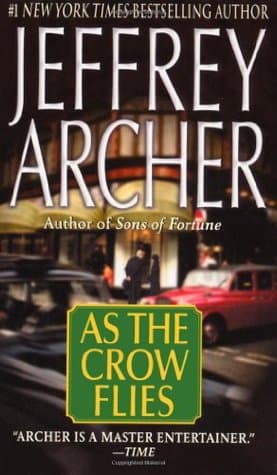
Jeffrey Archer (1991)
Genre
Thriller / Historical Fiction / Mystery
Reading Time
1600 min
Key Themes
See below
Sign in to track this book
From the fruit stalls of East End London to the battlefields of World War I and beyond, Charlie Trumper's pursuit of an honest empire is shadowed by a generational vendetta that threatens to unravel his every triumph.
The story begins in East End London with young Charlie Trumper, an orphaned boy living with his grandparents. He dreams of taking over his grandfather's fruit and vegetable barrow. His grandfather, an honest but struggling trader, teaches Charlie about hard work and integrity. Charlie's world changes when his grandfather suddenly dies. Though only a boy, Charlie, with his grandmother's reluctant blessing, decides to continue the business, determined to honor his grandfather's memory and make a success of the 'Honest Trader' stall in Borough Market. This early ambition sets the stage for his lifelong pursuit of business success.
Struggling to manage the stall alone, Charlie meets Becky Salmon, a sharp and ambitious young woman from a neighboring stall. Becky sees Charlie's potential and honesty, offering to help him with accounts and marketing. Together, they form an unlikely but effective partnership. Becky's business sense complements Charlie's hard work, and their combined efforts help 'The Honest Trader' grow. Their collaboration is marked by mutual respect and a growing affection, laying the groundwork for a deep and complex relationship that will span decades.
As Charlie and Becky's business grows and their personal relationship deepens, World War I casts a dark shadow over Britain. Charlie, driven by duty and patriotism, enlists in the army, leaving Becky to manage 'The Honest Trader' stall alone. His departure is a poignant moment, filled with promises and anxieties. This decision marks a significant turning point, taking Charlie away from London into the brutal realities of trench warfare, where he will face dangers and encounter figures who will shape his destiny.
Charlie's experiences on the Western Front are harrowing. He sees the horrors of war firsthand and distinguishes himself through bravery and resourcefulness. During a brutal engagement, he has a direct, traumatic encounter with a ruthless German officer named Jean-Pierre. This is not a simple skirmish; it is a personal clash that leaves a lasting impression on Charlie, igniting a deep animosity. Jean-Pierre becomes a recurring antagonist, his presence a dark thread weaving through Charlie's life, even after the war, symbolizing a persistent evil Charlie must confront.
Charlie returns from the war a changed man, but his ambition remains strong. He reunites with Becky, who skillfully kept 'The Honest Trader' alive during his absence. Their love, tested by separation and war, leads to their marriage. With renewed energy and Becky's shrewd business sense, Charlie expands his vision beyond the single market stall. He begins acquiring properties and diversifying into wholesale, laying the foundation for a larger enterprise. This period marks the transition from a humble market trader to a budding entrepreneur, setting his sights on greater heights.
Charlie's drive and innovative ideas lead to the establishment of 'Trumper's' — a chain of modern grocery stores. He pioneers new retailing concepts, emphasizing quality, fair prices, and excellent customer service, much to the initial skepticism of established competitors. Despite obstacles and fierce competition, Charlie's honest approach and Becky's meticulous management help 'Trumper's' rapidly gain popularity and expand across London. He becomes a respected, though sometimes resented, figure in the city's business world, challenging traditional norms and building an empire from scratch.
As Charlie's business empire grows, so do his personal challenges. He and Becky raise a family, but face internal conflicts and misunderstandings, particularly with his son, Harry, who struggles to live up to his father's legacy. At the same time, the shadow of Jean-Pierre resurfaces, not on a battlefield, but in the cutthroat world of international business. Jean-Pierre, now a powerful and unscrupulous magnate, seeks to undermine Charlie's ventures through cunning tactics, extending their wartime rivalry into a new, more insidious arena.
The outbreak of World War II brings new trials for the Trumper family and their business. Harry, Charlie's son, and other members of the younger generation are drawn into the conflict, mirroring Charlie's experiences in the first war. While the family business navigates wartime rationing and destruction, the personal vendetta with Jean-Pierre continues to escalate. The German's influence extends into illicit wartime dealings, impacting Trumper's and forcing Charlie to protect his legacy and family from an enemy who seems determined to destroy everything he has built.
Following World War II, Charlie, now an elder statesman of British business, continues to expand 'Trumper's' globally, venturing into new markets and industries. His pursuit of excellence and expansion takes the family business to unprecedented heights, making it a household name across continents. However, Jean-Pierre's machinations also grow in scale and sophistication, extending his network of influence across the world. The rivalry between the two men becomes a multi-generational struggle, impacting not only Charlie but also his children and grandchildren, as they inherit the fight for honesty and integrity against ruthless ambition.
As Charlie ages, leadership falls to his grandson, Raymond. Raymond, inheriting Charlie's integrity and business acumen, faces the challenge of modernizing 'Trumper's' while upholding its founding principles. Jean-Pierre's legacy also manifests in his descendants, who continue their family's tradition of ruthless business practices and their vendetta against the Trumpers. Raymond finds himself in a climactic struggle against the new generation of his family's adversaries, fighting to protect the empire and the values his grandfather built from a single market stall.
In his later years, Charlie Trumper reflects on a life lived with purpose and integrity. He sees his family, particularly Raymond, successfully navigating the complexities of the modern business world and continuing the 'Honest Trader' ethos. Despite the wealth and power he has accumulated, Charlie remains grounded in the values his grandfather instilled. The long-standing rivalry with Jean-Pierre, though still a dark undercurrent, has ultimately failed to corrupt his family's core principles. Charlie's story concludes with a sense of fulfillment, knowing that his legacy of honesty and hard work will endure through future generations.
The Protagonist
From a young, orphaned market boy, Charlie rises to become a powerful and respected business magnate, always upholding his core values despite personal and professional challenges.
The Supporting
Becky evolves from an independent market trader to the matriarch of a powerful business family, consistently providing strength and wisdom.
The Antagonist
Jean-Pierre remains consistently ruthless and determined to undermine Charlie, his ambition and malice never wavering, ultimately extending his vendetta through his family.
The Supporting
Harry matures from a son struggling in his father's shadow to a capable leader who contributes significantly to the family business.
The Supporting
Raymond rises to successfully lead the Trumper's empire into a new era, continuing his grandfather's fight against their enduring enemies.
The Supporting
Though his physical presence is brief, his moral and ethical teachings profoundly shape Charlie's entire life and business philosophy.
The Supporting
She provides initial emotional and practical support to Charlie, allowing him to begin his entrepreneurial journey.
The Supporting
She integrates into the Trumper family, bringing new strengths and perspectives to the later generations of the business.
The novel is a rags-to-riches story, detailing Charlie Trumper's rise from an impoverished East End market boy to a global business magnate. This theme highlights the power of ambition, hard work, and integrity in overcoming social and economic barriers. Charlie's pursuit of success, starting with a humble fruit barrow and expanding into a vast chain of stores and international enterprises, shows that anyone, regardless of their origins, can achieve greatness through determination and a commitment to their values. The story often shows Charlie's innovative spirit and his ability to see opportunities where others see only obstacles, such as when he first envisions a chain of modern grocery stores. This arc reinforces the idea that true success is built on effort and ethical practice.
“From a barrow boy to a baron, Charlie Trumper proved that the best currency was not gold, but an honest day's work and a promise kept.”
Family is at the heart of 'As the Crow Flies,' both a source of strength and, at times, conflict. The novel explores how Charlie's initial ambition is rooted in honoring his grandfather's legacy and how he later builds an empire for future generations. The challenges faced by his son, Harry, in living up to Charlie's shadow, and the eventual triumph of his grandson, Raymond, in carrying on the family business and its values, illustrate the complexities of inherited legacy. The ongoing feud with Jean-Pierre and his descendants also shows that family connections, whether positive or negative, can shape destinies across decades. The Trumper family's resilience and their commitment to their shared values are central to their long-term success.
“A man's true wealth is not in his ledger, but in the family he leaves behind, and the values they carry forward.”
A central conflict in the novel is the battle between Charlie Trumper's integrity and the corruption embodied by Jean-Pierre. Charlie builds his empire on principles of honesty, fair dealing, and quality service, earning him the name 'The Honest Trader.' In contrast, Jean-Pierre operates through deception, manipulation, and ruthless ambition, often engaging in illicit activities. This theme is explored through their multi-generational rivalry, which extends from the battlefields of World War I to cutthroat business dealings. The novel consistently champions Charlie's ethical approach, suggesting that while corruption may offer short-term gains, lasting success and moral victory come from upholding one's principles. This contrast provides a moral compass for the narrative, reinforcing the idea that character ultimately defines destiny.
“Some men build their empires on sand, with foundations of deceit. Others, like Charlie, build on rock, with the bedrock of honesty.”
The novel spans over sixty years, with World War I and World War II serving as backdrops that shape Charlie's life and the world around him. The wars are not just historical events but catalysts for personal growth, tragedy, and character development. Charlie's experiences in the trenches, for instance, are formative, exposing him to hardship and creating his lifelong enemy, Jean-Pierre. The economic and social changes brought about by these conflicts, such as rationing, post-war reconstruction, and evolving societal norms, directly influence the business landscape and the challenges faced by the Trumper family. The narrative uses these historical periods to show how grand historical events can intimately affect individual lives and generational destinies, highlighting resilience in the face of global upheaval.
“The roar of the cannons faded, but the echoes of war, and the enemies it made, would reverberate through lives for generations.”
The relationship between Charlie Trumper and Becky Salmon forms an emotional and professional backbone of the story. Their partnership, initially born out of necessity in the market, grows into a deep and enduring love that sustains them through decades of challenges. Becky's intelligence, business acumen, and unwavering support are essential to Charlie's success, showing that true partnership involves mutual respect, shared ambition, and emotional resilience. Their love story is not just a romantic subplot but a testament to the power of a united front in both personal life and entrepreneurial endeavors. Their ability to work together, trust each other, and overcome adversity as a team is a recurring idea that strengthens the narrative.
“Beside every great man, there is often a woman, not behind him, but shoulder to shoulder, building the future together.”
The classic story structure of a protagonist rising from poverty to immense wealth.
This device is central to 'As the Crow Flies,' charting Charlie Trumper's journey from an orphaned market boy to a powerful business tycoon. It establishes a clear trajectory of ambition and achievement, allowing readers to root for Charlie against overwhelming odds. The narrative meticulously details each step of his ascent, from the initial struggle with a single fruit barrow to the expansion into a national chain and international ventures. This arc emphasizes themes of hard work, perseverance, and the pursuit of the 'British Dream,' making Charlie's success feel earned and inspiring.
The story spans multiple generations, following the impact of initial events and characters on their descendants.
The novel utilizes a generational saga structure, extending the narrative across over sixty years and involving Charlie, his children, and his grandchildren. This allows for the exploration of enduring themes like legacy, inherited ambition, and the long-term consequences of past actions. The ongoing rivalry between the Trumper family and Jean-Pierre's descendants is a prime example of this device, showing how a conflict initiated in one generation can reverberate and evolve through subsequent ones. This broad scope provides a rich tapestry of interwoven lives and destinies, giving the story depth and historical context.
A recurring, personal antagonist whose conflict with the protagonist spans their entire lives.
Jean-Pierre serves as Charlie Trumper's arch-nemesis, a personal and enduring antagonist whose rivalry with Charlie is a driving force throughout the novel. Their conflict begins on the battlefields of World War I and evolves into a decades-long struggle in the business world. This device heightens the stakes, providing a constant external threat that challenges Charlie's integrity and resilience. The personal nature of their animosity, rather than just professional competition, adds emotional intensity and fuels much of the plot's tension, underscoring the battle between good and evil, honesty and corruption.
Major historical events directly influence character development and plot progression.
The two World Wars are not merely settings but active catalysts in 'As the Crow Flies.' World War I sends Charlie to the front lines, where he encounters Jean-Pierre and experiences profound trauma, shaping his character and creating his lifelong enemy. World War II then presents new challenges for the next generation of Trumpers and the business, forcing adaptation and resilience. These historical events inject realism and gravity into the narrative, demonstrating how global conflicts can profoundly impact individual lives, family fortunes, and the course of business, pushing characters to their limits and forcing them to evolve.
“Every man has his price, but some men's prices are higher than others.”
— Reflecting on the nature of ambition and corruption in business dealings.
“The greatest battles are fought not on fields of war, but in the hearts of men.”
— A character contemplating the internal struggles of love, betrayal, and forgiveness.
“Wealth, like water, always finds its own level.”
— Discussing the cyclical nature of fortunes and the enduring power of money.
“Revenge, like a poison, slowly consumes the one who administers it.”
— A character grappling with the consequences of seeking vengeance.
“Sometimes, the only way to move forward is to leave a part of yourself behind.”
— Reflecting on the necessity of letting go of the past to embrace the future.
“A secret is only safe when it is known by no one.”
— A character realizing the fragility of hidden truths and their potential to unravel.
“The past is a foreign country; they do things differently there.”
— A general observation on how historical events and societal norms differ from the present.
“Loyalty is a rare commodity, easily bought but seldom truly earned.”
— Examining the nature of alliances and the true cost of fidelity.
“Even the strongest chains can be broken with enough will.”
— A character's determination to overcome seemingly insurmountable obstacles.
“Justice is a slow-moving river, but it always reaches the sea.”
— A comment on the eventual triumph of right, even if delayed.
“The greatest risks often yield the greatest rewards.”
— A character making a bold decision that could lead to significant gains or losses.
“A man's true character is revealed not in his moments of comfort, but in his moments of challenge.”
— Observing how individuals behave under pressure and adversity.
“Hope is a dangerous thing, but it's often all we have.”
— A character clinging to optimism in a dire situation.
“Power is not given, it is taken.”
— A character's philosophy on achieving influence and control.
Ready to see how well you understood this book? Take our interactive quiz with 10 questions.

Jeffrey Howard Archer, Baron Archer of Weston-super-Mare is an English novelist, life peer, convicted criminal, and former politician. Before becoming an author, Archer was a Member of Parliament (1969–1974), but did not seek re-election after a financial scandal that left him almost bankrupt.







