“There are some books, after all, that are too dangerous to read.”
— Belle reflects on the forbidden nature of certain stories.

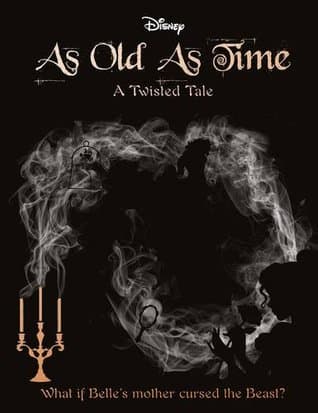
Liz Braswell (2015)
Genre
Fantasy / Young Adult / Romance
Reading Time
9-10 hours
Key Themes
See below
Sign in to track this book
When Belle touches the enchanted rose, she's thrust into a forgotten past, revealing a shocking truth: her own mother may be the one who cursed the Beast.
Belle, living in the Beast's enchanted castle, constantly seeks knowledge and explores its large library. One day, she finds a secret, hidden room with neglected, dust-covered objects, including a withered, yet still glowing, enchanted rose under a bell jar. The Beast warns her not to touch it, but Belle's curiosity wins. As her fingers brush the delicate petals, a powerful surge of magic surrounds her, filling her mind with vivid, confusing visions. These are not random images; they are fragmented memories of a woman she vaguely recognizes as her mother, a woman her father, Maurice, always said had died when Belle was an infant.
The visions continue, becoming clearer and more frequent. Belle sees her mother, Rosalind, not as a helpless victim, but as a powerful enchantress, connected to the royal family and the curse that changed the prince into the Beast. Rosalind appears to be a healer and a magic-user who served the previous Queen, the Beast's mother. Belle sees Rosalind trying to cure the Queen of a mysterious illness, and later, her growing worry about the Prince's arrogance and cruelty. The visions suggest that Rosalind was there when the curse was cast, and perhaps had a part in it, or at least understood its true nature, a contrast to the simple fairy tale Belle had always known.
Belle, disturbed by these revelations, tries to tell the Beast, hoping he can explain her mother's past and the curse. However, the Beast at first dismisses her, angered by her questions and her looking into his painful past. He prefers to avoid the subject, fearing the memories it brings up. Meanwhile, in Villeneuve, Gaston, still obsessed with Belle, sees Maurice's increasingly strange behavior and claims of enchanted objects as a chance. He plans to have Maurice declared insane, forcing Belle to marry him to save her father from the asylum. Gaston gathers the villagers, spreading rumors and fear, manipulating them.
Belle continues to touch the enchanted rose, seeking more visions. She discovers that her mother, Rosalind, was not only a gifted enchantress but also a member of an ancient group preserving magic and balance. Rosalind had warned the Prince's mother, Queen Aurelia, about her son's growing cruelty and the dangers of unchecked power. As Belle puts together the fragmented memories, the Beast, seeing her efforts and the visions, begins to remember Rosalind and the events leading up to the curse. He remembers her gentle way and her attempts to guide him, and the final confrontation.
Through a particularly clear and long vision, Belle finally understands the full truth. Rosalind, far from being a villain, had cursed the Prince as a last resort. The Prince, influenced by dark magic and his own cruelty, was about to become something far more destructive – a being that would drain life and magic from the land. Rosalind, acting for her magical society and out of love for the Queen and the kingdom, transformed him into the Beast. This curse was not just punishment but a protection, a way to contain his destructive power and give him a chance at redemption, while preventing a wider magical disaster.
The Beast, now fully remembering Rosalind and the true weight of his actions, is overcome with guilt and sorrow. He confesses his past arrogance and cruelty to Belle, acknowledging that Rosalind's actions were justified. Belle, on the other hand, realizes the immense sacrifice her mother made. Rosalind did not simply cast the curse and leave; she had bound her own life force to the enchanted rose, using her magic to sustain the curse and, in turn, keep the Prince alive and contained. This act of self-sacrifice explained her disappearance and Maurice's belief that she had died, as her essence had become entwined with the castle's magic.
Meanwhile, Gaston's plan in Villeneuve grows. He convinces the fearful and superstitious villagers that the Beast is dangerous, and that Maurice's stories of an enchanted castle are proof of dark magic. Inciting them with horror stories and promising to rid them of the 'beast,' Gaston leads a mob with torches and weapons towards the enchanted castle. His true reason is to kill the Beast and force Belle to marry him, believing her to be his rightful prize. The enchanted objects of the castle prepare for battle, knowing their master's life, and their own, are at risk.
The villagers storm the castle gates, fighting the enchanted objects who defend their home and master. The Beast, at first resigned to his fate, finds new resolve to fight, not just for himself, but for Belle and his loyal servants. Belle, torn between her love for her father, now imprisoned by Gaston, and her growing love for the Beast, knows she must act. She confronts Gaston, trying to reason with him and tell him the truth about the Beast, but Gaston is too full of ego and hatred to listen. During the chaos, Belle must make a difficult decision that will affect everyone she cares about.
In the middle of the battle, as the Beast is gravely wounded by Gaston, Rosalind's magical essence, sustained by the rose and Belle's connection, appears. She is a shimmering, ethereal figure, revealing the final condition of the curse: the Beast would only truly be free, and fully human, if he could love another and be loved in return, and also if he truly understood and accepted the purpose of her curse – to prevent a greater evil. As Belle declares her love for the Beast, and the Beast, through his pain, finally accepts his past and Rosalind's sacrifice, the last petal falls. The magic surges, changing the Beast back into the Prince, whole and redeemed.
With the Beast's transformation, Gaston, weakened and confused, is defeated (either by falling from the castle or being overcome by the enchanted objects). Maurice is freed and reunited with Belle. The curse is broken, the castle's inhabitants revert to their human forms, and the castle itself is restored. Belle and the now-human Prince, having faced their pasts and found love, begin a new life together. They understand and honor Rosalind's difficult but necessary sacrifice, realizing her actions saved not only the Prince but the entire kingdom. Belle, having found her mother's true story, embraces her own heritage and future with the Prince.
The Protagonist
Belle evolves from a curious but naive girl to a determined woman who understands the complexities of love, sacrifice, and magic, accepting her own magical heritage.
The Protagonist/Love Interest
The Beast transforms from a self-absorbed, cursed creature into a compassionate, redeemed prince who understands the value of humility and true love.
The Supporting/Central to Plot
Though largely seen through flashbacks, Rosalind's character arc is revealed as one of profound sacrifice, moving from a concerned advisor to a powerful protector.
The Supporting
Maurice remains largely static in personality but is forced to confront and accept the magical truth about his wife that he had suppressed for years.
The Antagonist
Gaston's character remains static in his villainy, escalating his destructive behavior until his ultimate downfall.
The Supporting
Lumière's character largely remains consistent, serving as a loyal and hopeful presence throughout the curse.
The Supporting
Cogsworth remains a steadfast, if sometimes anxious, servant, consistently upholding order amidst chaos.
The Supporting
Mrs. Potts consistently provides maternal support and hope throughout the unfolding events.
The Supporting
Chip remains a symbol of innocence and hope, eagerly awaiting the curse's end.
The Mentioned/Supporting
Seen through flashbacks, her arc is one of declining health and increasing worry over her son's path.
The Supporting
LeFou's character remains largely static, serving as Gaston's loyal, if bumbling, follower.
This theme is central to Belle's journey as she learns her mother's hidden past and her own magical heritage. Belle's constant questioning and exploration help her understand that her identity is not just her village or her father's inventions, but also her mother Rosalind's powerful legacy. The Beast also deals with his identity, moving from a cruel prince to a monstrous form, and then, through self-reflection and love, back to a redeemed human. Both characters must confront who they were, who they are, and who they are meant to be.
“Perhaps I am meant for more than this provincial life... Perhaps I am meant to understand the magic my mother left behind.”
'As Old As Time' redefines the traditional understanding of the Beast's curse. It is shown not as simple punishment but as a complex act of protective magic and sacrifice. Rosalind's curse was a desperate measure to save the Prince from a darker, more destructive fate and to prevent a magical disaster. Her binding her life force to the enchanted rose shows that true magic, and true love, often require great personal cost and selflessness. The curse becomes a sign of a mother's love and a powerful enchantress's duty, rather than just revenge.
“The curse was not meant to punish, child. It was meant to save. To contain. And to give a chance at redemption.”
The story constantly challenges what characters believe to be true versus the hidden reality. Belle's entire understanding of her mother's death and the Beast's curse is based on a false story. Maurice's suppressed memories and the villagers' superstitions show how easily truth can be twisted or hidden. The Beast himself believes he is beyond saving. Only by actively seeking and accepting the difficult, complex truth – that Rosalind was a powerful enchantress and her curse a sacrifice – can Belle and the Beast break free from their prisons of ignorance and despair.
“What we believe to be true can sometimes be the most powerful enchantment of all, for it blinds us to what truly is.”
The book explores various kinds of love: Belle's strong family love for Maurice, her romantic love for the Beast that looks past appearances, and Rosalind's sacrificial love for her daughter, her husband, the Queen, and even the Prince. Rosalind's actions come from a deep, protective love for the kingdom and a desire to save a soul, even if it meant a difficult choice. The enchanted objects' loyalty to the Beast also shows strong devotion. Ultimately, selfless love breaks the curse and brings balance.
“Love, true love, is not always gentle. Sometimes it is the most difficult choice, the most profound sacrifice.”
Prince Adam's initial arrogance and cruelty cause his curse, showing how destructive unchecked pride is. His inability to see beyond appearances and his disregard for others' feelings lead to his monstrous change. Similarly, Gaston is ignorant and arrogant, refusing to believe anything that challenges his view or threatens his ego. His manipulation of the villagers, who are ignorant and easily swayed by fear, leads to the violent attack on the castle, showing how collective ignorance can be as dangerous as individual pride.
“He saw only what was on the surface, and in doing so, he became a reflection of his own shallow heart.”
A magical artifact that serves as a portal to memories and the key to the curse.
The enchanted rose is not merely a timer for the curse but a powerful magical conduit. When Belle touches it, it grants her visions and access to Rosalind's suppressed memories and the true history of the curse. It is directly linked to Rosalind's life force, sustained by her sacrifice, and acts as a central point of magical energy for the castle. Its petals falling represent not just time running out, but the gradual weakening of Rosalind's protective magic and the increasing danger to the Prince if he doesn't find redemption.
A narrative technique used to reveal Belle's mother's past and the curse's true origin.
Belle's visions, triggered by touching the enchanted rose, serve as the primary mechanism for revealing the hidden backstory. These fragmented, often disorienting, flashbacks piece together Rosalind's life, her connection to the royal family, and her role in casting the curse. This device allows the reader to experience the past alongside Belle, gradually uncovering the complex truth and challenging the established narrative of the original fairy tale. It also forces the Beast to confront his own suppressed memories, creating a shared journey of discovery.
A reinterpretation of the classic song lyrics as a magical prophecy.
The title 'As Old As Time' refers to the lyrics of the iconic song, but in this book, it's subtly recontextualized as a deeper magical prophecy or truth. It alludes to the ancient nature of the magic involved, Rosalind's powerful lineage, and the timeless struggle between good and evil, selfishness and love. It suggests that the events surrounding the curse and its breaking are part of a larger, older magical tapestry, implying that the 'tale as old as time' is more profound and complex than just a simple love story.
A psychological plot device affecting Maurice and the Beast.
Both Maurice and the Beast suffer from suppressed memories related to Rosalind and the curse. Maurice subconsciously blocked out the traumatic truth of his wife's magical sacrifice, leading him to believe she died and contributing to his perceived 'madness' when he tries to recall details. The Beast, overwhelmed by guilt and pain, pushed away his memories of Rosalind and the events leading to his transformation. The unlocking of these suppressed memories is crucial for both characters to heal, understand their pasts, and move forward, driving much of the internal conflict and plot progression.
“There are some books, after all, that are too dangerous to read.”
— Belle reflects on the forbidden nature of certain stories.
“The world was not a fairy tale, and sometimes, the prince never came.”
— Belle's pragmatic view of reality, contrasting with romantic ideals.
“Magic was not a gift; it was a curse, a burden, a mark.”
— Belle's initial perception of the magical elements in her life.
“True love wasn't about grand gestures, but about quiet moments and shared understanding.”
— Belle's evolving understanding of love, moving beyond superficiality.
“Sometimes, the only way to save someone was to let them go.”
— A difficult lesson Belle learns about sacrifice and freedom.
“A beast wasn't born; it was made, often by those who claimed to love it.”
— Belle's insight into the Beast's past and the origins of his curse.
“Fear was a powerful weapon, but hope was stronger.”
— Belle's internal struggle and her resilience in the face of adversity.
“The greatest prison was not made of stone and iron, but of prejudice and misunderstanding.”
— Belle's reflection on societal judgments and the nature of true confinement.
“Even in the darkest of tales, there was always a spark of light, if you knew where to look.”
— Belle's enduring optimism amidst the grim circumstances.
“To truly know someone, you had to look beyond their appearance, beyond their mistakes, to the heart of who they were.”
— Belle's journey of seeing the Beast for who he truly is.
“A library was not just a collection of books, but a collection of worlds, waiting to be explored.”
— Belle's deep love for books and the escapism they offer.
“Sometimes, the most dangerous magic was the magic of the human heart.”
— Belle pondering the complexities and power of human emotions.
“The past was not something to be forgotten, but understood, so that the future could be different.”
— Belle's efforts to unravel the curse's origins and change destiny.
“Courage wasn't the absence of fear, but the decision to act in spite of it.”
— Belle facing her fears to save those she cares about.
Ready to see how well you understood this book? Take our interactive quiz with 10 questions.







