“As meat loves salt, so I love thee.”
— A recurring phrase expressing deep, visceral love between characters.

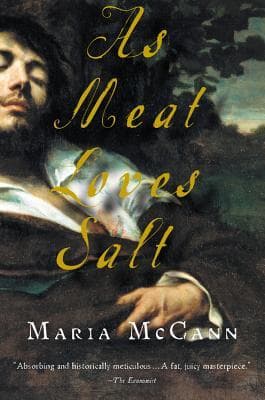
Maria McCann (2001)
Genre
Historical Fiction / Romance
Reading Time
12-15 hours
Key Themes
See below
Sign in to track this book
During the English Civil War, a soldier's wish for a new life turns into a dark obsession, threatening his sanity.
The novel begins with Jacob Cullen, a young man from Oakhall, committing a murder. In a fit of rage after arguing with his sister's boyfriend, Tom, Jacob hits him with a spade. Panicked, he leaves Oakhall, his family, and his old life. On his journey, Jacob meets Ferris, a persuasive older man who offers him shelter and a new identity. Ferris, a recruiting sergeant for the Parliamentarian army, convinces Jacob to join, promising him purpose and a chance to escape his past. Jacob, desperate and alone, accepts, taking the name 'Jacob Combe' to hide his crime. This meeting starts a complicated and destructive relationship between the two men, linking their lives in the English Civil War.
Jacob 'Combe' adjusts to military life in the Parliamentarian New Model Army. He learns to drill, fight, and endure the hardships of war with his fellow soldiers. Ferris, often acting as his mentor and protector, takes Jacob under his wing, and their bond grows. Ferris's influence over Jacob becomes a mix of guidance, intense friendship, and a disturbing, almost obsessive attachment. Jacob finds himself increasingly dependent on Ferris, drawn to his strength and intelligence, but also unsettled by his intensity. Ferris, an educated man, often discusses religion, politics, and the Parliamentarian cause with Jacob, further shaping Jacob's views and dependence.
As the war continues, Jacob sees and takes part in many battles and skirmishes, experiencing the full horror of 17th-century warfare. These experiences leave him deeply scarred, both physically and mentally. Amid the chaos, Ferris’s protective nature towards Jacob becomes obsessive. He grows more possessive, keeping Jacob from other friendships and demanding his loyalty and attention. Jacob, emotionally vulnerable and traumatized by the war, struggles to balance his gratitude and affection for Ferris with a growing feeling of unease and entrapment. The line between care and control blurs, and Jacob feels increasingly confined by Ferris's intense gaze and constant presence.
During a time of calm or leave, Jacob returns, perhaps briefly, near Oakhall, the village he left. Memories of his crime and fear of being found haunt him. Ferris, not wanting Jacob out of his sight, goes with him or follows closely, strengthening his control. This return to his past shows Jacob's inability to truly escape his actions and the changes caused by the war and his relationship with Ferris. The short visit is a reminder of the life he lost and his new identity's fragility, all under Ferris's watchful, possessive eye.
In a fierce battle, Ferris is badly wounded, seemingly left for dead. Jacob, upset and unable to imagine life without his companion, refuses to leave him. Driven by a desperate, almost insane loyalty and love, Jacob carries Ferris from the field, risking his own life. He then makes a difficult decision: to save Ferris's life from gangrene, he performs a crude amputation of Ferris's leg himself, using only his bayonet and a burning stick to stop the bleeding. This brutal act, born of desperation and an intense bond, further ties Jacob to Ferris, confirming his role as his caretaker and showing the depth of his devotion, however distorted.
The English Civil War ends, and the New Model Army is disbanded. However, Jacob's freedom is short-lived. Ferris, now severely disabled by the loss of his leg, depends entirely on Jacob for his care. They settle in a small cottage, where Jacob struggles to find work and provide for both of them. Ferris's intellectual and emotional needs, along with his physical helplessness, create a new form of entrapment for Jacob. Their relationship, once fueled by shared war experiences, changes into a mix of resentment, duty, and lasting, though strained, affection. Jacob carries the burden of their daily life and Ferris's constant presence.
Jacob, perhaps needing companionship beyond Ferris, or feeling a sense of duty, takes in a young orphan named Pip. Pip's arrival changes the isolated, intense dynamic between Jacob and Ferris. While Jacob initially finds comfort and new purpose in caring for the boy, Ferris reacts with jealousy and resentment. He sees Pip as an intruder, a rival for Jacob's attention and affection, and actively tries to lessen the child's presence. This new home arrangement strains their already fragile relationship, showing Ferris's possessiveness and Jacob's desire for a more conventional life and family.
Ferris, confined to his bed or chair, continues to control Jacob psychologically. He uses his intelligence, wit, and knowledge of Jacob's past to manipulate him, playing on his guilt, loyalty, and fears. Ferris's constant intellectual demands and emotional blackmail wear down Jacob's mental state. Jacob becomes more withdrawn, troubled by his past crime, his current burdens, and Ferris's relentless pressure. His grip on reality begins to loosen, and he experiences periods of despair and confusion, made worse by Ferris's subtle influence. The once strong soldier is slowly being broken by the man he saved.
In a cruel turn, Ferris tells Jacob he has known all along about the murder Jacob committed in Oakhall. This devastating news shatters Jacob's last bit of peace, confirming his deepest fears and solidifying Ferris's hold over him. Ferris uses this knowledge as a powerful weapon, reminding Jacob that he is forever bound to him, not just by shared experience and duty, but by the secret that could destroy him. Jacob realizes he can never truly escape Ferris, as his past is now linked to his tormentor, increasing his feelings of entrapment and hopelessness.
Pushed to the edge of madness by Ferris's constant psychological torture, the weight of his past, and his bleak future, Jacob finally breaks. The constant demands, accusations, and knowledge of his secret are too much. In a final act, Jacob kills Ferris, perhaps out of mercy, rage, or a deep desire for freedom. The exact details are tragically ambiguous, but the result is clear: Jacob's long journey through war, obsession, and guilt ends in another act of violence, mirroring his first crime. The novel closes with Jacob's ultimate decline, making the reader consider the devastating psychological impact of war, guilt, and destructive relationships.
The Protagonist
From a desperate murderer seeking escape, he becomes a loyal, traumatized soldier, then a devoted but tormented caretaker, eventually succumbing to madness under the weight of guilt and obsession.
The Antagonist/Supporting
From a powerful, charismatic mentor, he becomes a physically disabled but psychologically dominant figure, using his intellect and knowledge to torment and control Jacob until his death.
The Supporting
Serves as a catalyst for revealing Ferris's jealousy and Jacob's yearning for normalcy, but his story remains largely unfulfilled within Jacob's tragic narrative.
The Mentioned
His death is the inciting incident, and his memory serves as a constant reminder of Jacob's crime.
The Mentioned
Her role is to provide the context for Jacob's initial act of violence.
The Supporting
Remains largely static, serving as a point of reference for military life and authority.
The Supporting
Serve as a collective background, emphasizing the shared experience of war and Jacob's eventual isolation.
The Mentioned
Provide a backdrop of normal society that Jacob and Ferris cannot fully integrate into.
Jacob's journey involves identity. He changes his name and past from 'Jacob Cullen' to 'Jacob Combe,' a soldier, then a caretaker. His identity is constantly shaped by his experiences, especially his relationship with Ferris. He struggles to define himself outside his crime and Ferris's influence, often losing himself. The war removes his former self, and Ferris tries to make him a reflection of his own desires, leaving Jacob with a broken and lost sense of who he is. His inability to accept his past actions with his present self leads to his psychological breakdown.
“"He was Jacob Combe now, a man without a past, carved anew by the army's hand and Ferris's steady gaze."”
The main theme is the intense, destructive, and obsessive relationship between Jacob and Ferris. Ferris's possessiveness and manipulation create a co-dependent bond Jacob feels unable to leave, despite his growing despair. Jacob's loyalty, gratitude, and a distorted form of love tie him to Ferris, even as Ferris's demands push him to his limit. This theme explores the dark side of devotion, showing how a relationship can become a prison when one person's needs consume the other's freedom and sanity. The amputation scene clearly shows the depth of this co-dependency, where Jacob performs a brutal act to save the person who will eventually destroy him.
“"As meat loves salt, so I love you. And if you are not salt, I do not love you."”
The novel shows the severe mental and emotional impact of the English Civil War on its soldiers. Jacob sees and participates in horrific violence, leading to trauma, guilt, and disillusionment. The constant threat of death, the brutality of combat, and the moral ambiguities of war damage his sanity. Even after the fighting ends, the psychological scars remain, making it impossible for Jacob to return to civilian life or find peace. The war creates the conditions for his vulnerability, making him open to Ferris's influence and contributing to his eventual madness.
“"The war had eaten into him, not just with shot and blade, but with the endless, grinding fear that hollowed out a man's soul."”
Jacob's entire journey starts with his initial act of murder and the guilt that follows him. He constantly tries to escape his past, but the memory of Tom's death haunts him, making him vulnerable to manipulation. Ferris, by knowing his secret, has ultimate power over him, preventing any chance of true redemption or peace. The novel questions if redemption is possible for such a crime, especially when attempts to make amends (like saving Ferris) only lead to more entanglement and suffering. Jacob's final act suggests a tragic failure to achieve either forgiveness or escape.
“"The spade's blow was a sound that echoed in his head, louder than any cannon, a secret he carried like a stone in his gut."”
The novel closely examines the power dynamics in the relationship between Jacob and Ferris. Ferris, with his superior intellect and charm, constantly manipulates Jacob, using his vulnerabilities, guilt, and need for affection. He uses intellectual arguments, emotional blackmail, and eventually the revelation of Jacob's past to maintain control. Even after being physically disabled, Ferris keeps psychological dominance, turning his helplessness into a tool for manipulation. The story explores how power is exerted not just through physical strength, but through intellectual superiority, emotional leverage, and knowing another's deepest secrets.
“"Ferris did not need legs to hold a man captive; his mind was the most fearsome weapon."”
Provides intimate access to Jacob's deteriorating mental state
The story is told entirely from Jacob Cullen's point of view, immersing the reader directly into his thoughts, fears, and observations. This subjective perspective is crucial for understanding his gradual descent into madness, as we experience his internal struggles, his growing paranoia, and his warped perceptions of reality firsthand. It allows the author to explore the themes of guilt, obsession, and psychological torment with profound intimacy, making Jacob's unreliability as a narrator increasingly apparent as his mental state deteriorates. The reader is confined within Jacob's troubled mind, mirroring his own entrapment.
Provides a chaotic, violent setting that mirrors Jacob's internal turmoil
The historical setting of the English Civil War is more than just a chronological marker; it functions as a powerful metaphor for Jacob's internal conflict and the breakdown of order in his own life. The widespread violence, religious fervor, and political upheaval of the war mirror Jacob's personal chaos, his violent origins, and his unraveling sanity. The war physically and psychologically scars him, creating the conditions for his vulnerability and his subsequent entanglement with Ferris. The army provides a temporary escape from his past but ultimately plunges him into deeper trauma, reflecting the idea that external chaos can amplify internal turmoil.
A physical disability that becomes a tool for psychological manipulation
Ferris's injury – the loss of his leg – is a significant plot device. While it renders him physically dependent on Jacob, it paradoxically increases his psychological power. His helplessness binds Jacob to him out of duty and guilt, and Ferris uses his disability to manipulate Jacob's emotions and reinforce his sense of responsibility. It transforms their relationship from one of comradeship to one of a caretaker and his demanding charge, intensifying Ferris's control and Jacob's entrapment. The physical wound becomes a symbol of the emotional shackles placed upon Jacob.
A constant source of guilt and a powerful tool for manipulation
Jacob's initial murder of Tom is the inciting incident and a pervasive plot device throughout the novel. It serves as Jacob's 'original sin,' driving his flight and his constant fear of discovery. This secret acts as a heavy burden of guilt that Jacob carries, making him emotionally vulnerable. When Ferris reveals he knows this secret, it becomes the ultimate leverage, cementing Ferris's power over Jacob and extinguishing any hope of escape or true freedom. The secret is not just a plot point; it's a psychological weight that prevents Jacob from achieving peace or a new identity.
A pivotal, visceral act that symbolizes Jacob's complete devotion and entrapment
Jacob's crude, desperate amputation of Ferris's leg is a highly visceral and symbolic scene. It represents the depth of Jacob's loyalty and his willingness to commit extreme acts for Ferris, even against his own nature. This act physically and metaphorically binds Jacob to Ferris forever, as he literally saves Ferris's life, thereby ensuring his own continued enslavement. It is a moment of profound horror and devotion, highlighting the intensity of their co-dependent relationship and sealing Jacob's fate as Ferris's perpetual caretaker and captive. It marks a point of no return for Jacob's psychological state.
“As meat loves salt, so I love thee.”
— A recurring phrase expressing deep, visceral love between characters.
“We are all meat, and we all love salt.”
— Reflection on human nature and desire in the turbulent 17th century.
“In this world, a man must choose his own path, or have it chosen for him.”
— Jacob Cullen contemplating freedom and fate during the English Civil War.
“The heart has its reasons, which reason knows not.”
— A character justifying irrational love amidst societal constraints.
“War makes beasts of men, and love makes men of beasts.”
— Observation on the transformative effects of conflict and affection.
“To be known is to be loved, and to be loved is to be known.”
— Dialogue about intimacy and acceptance in a secret relationship.
“There is no peace for the wicked, nor for the righteous in these times.”
— Comment on the moral ambiguity and chaos of the era.
“A kiss is a secret told to the mouth instead of the ear.”
— Poetic description of physical intimacy between lovers.
“The body remembers what the mind forgets.”
— Reflection on trauma and memory in the aftermath of violence.
“We are bound by chains of our own making, and call it love.”
— Critique of possessive relationships and societal expectations.
“In darkness, we find our true selves, stripped of pretense.”
— Moment of vulnerability and honesty between characters.
“To live is to hunger, and to love is to feast.”
— Metaphor for desire and fulfillment in life and romance.
“The past is a ghost that haunts the present.”
— Jacob grappling with his history and its impact on his current life.
“Courage is not the absence of fear, but the will to act despite it.”
— Encouragement during a moment of peril or moral dilemma.
Ready to see how well you understood this book? Take our interactive quiz with 10 questions.







